

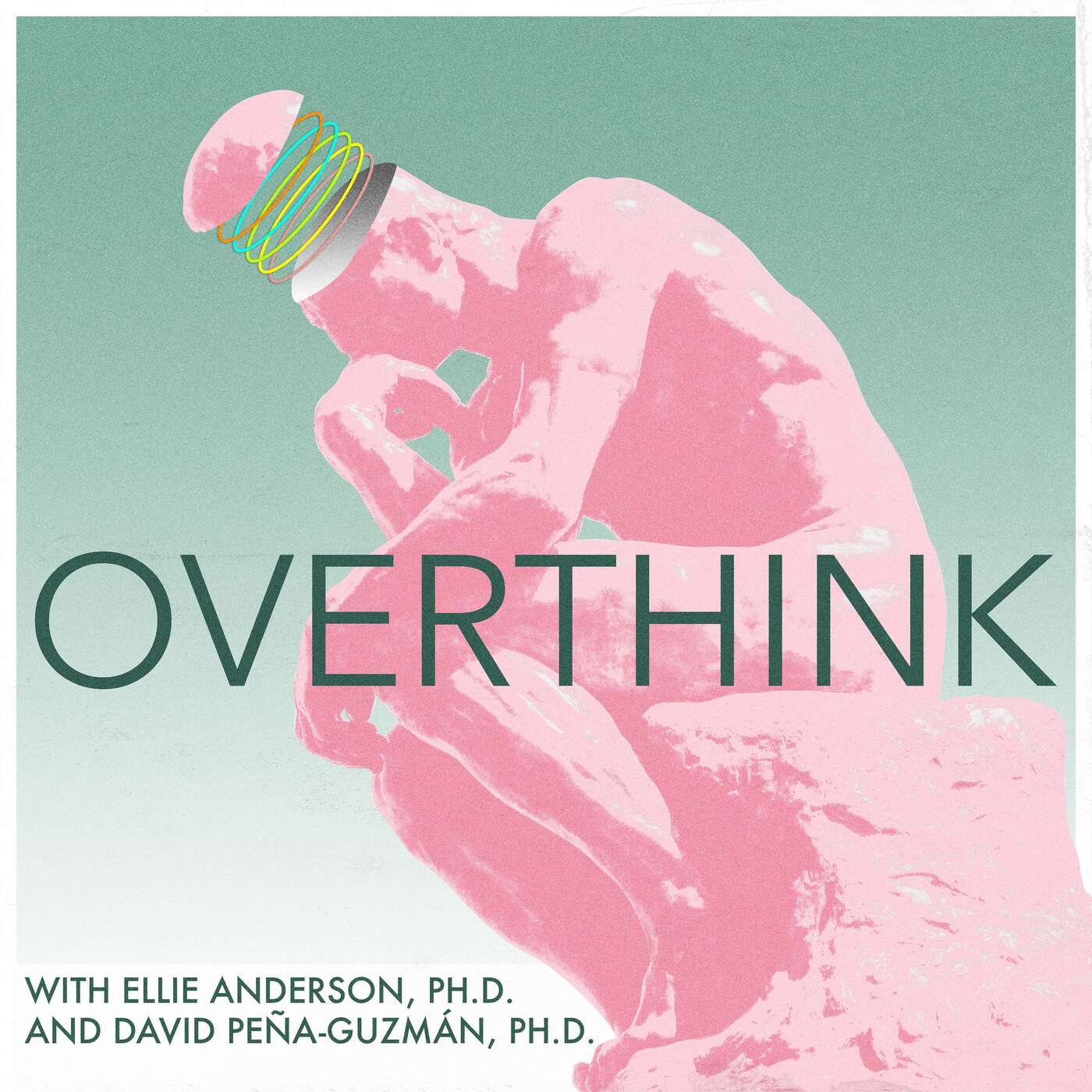
Overthink
Ellie Anderson, Ph.D. and David Peña-Guzmán, Ph.D.
The best of all possible podcasts, Leibniz would say. Putting big ideas in dialogue with the everyday, Overthink offers accessible and fresh takes on philosophy from enthusiastic experts. Hosted by professors Ellie Anderson (Pomona College) and David M. Peña-Guzmán (San Francisco State University).
Episodes
Mentioned books

May 12, 2026 • 56min
Theft
They debate moral ambivalence about theft, from survival-based Robin Hood cases to childhood stories of shame and empathy. Race, gender, and class shape who gets blamed and which defenses succeed. They trace theft through history: feudal expropriation, settler colonial land grabs, and property as dispossession. They also contrast corporate data scraping with piracy and the shift from heist films to grift dramas.
May 5, 2026 • 59min
Closer Look: Fanon, Wretched of the Earth
A close reading of Fanon’s The Wretched of the Earth, probing his controversial defense of violence and why he sees nonviolence as insufficient under colonial rule. They trace Fanon’s life as psychiatrist and revolutionary and examine how colonial power warps subjectivity and mental health. The conversation also tackles who drives liberation, post-independence traps, reparations, and notable criticisms like gender and ritual blind spots.
10 snips
Apr 28, 2026 • 52min
Butts
A playful deep dive into why humans have prominent rear ends and how gluteal anatomy shaped movement. They trace the pop culture rise of larger butts from rap to celebrities and the social pressures behind cosmetic surgery. The conversation also covers historical exploitation and racialized sexualization, plus shifting attitudes toward anal sex in law, culture, and theory.
Apr 21, 2026 • 49min
Care with Premilla Nadasen
Premilla Nadasen, historian of social movements and care politics, author of Care: The Highest Stage of Capitalism, explores who gets left out of care. She discusses how care work has been commodified and racial capitalism’s role in expanding the care economy. Short takes cover emotional labor expectations, two-tiered care systems, and radical collective alternatives.
32 snips
Apr 14, 2026 • 58min
Discipline
They debate why discipline feels toxic in hustle culture and how political currents reject it in different ways. They trace historical shifts from corporal punishment to children's rights. They unpack Foucault’s ideas on surveillance, normalization, and how institutions train behavior. They contrast punishment-based approaches with scaffolding and creative models of self-discipline.
Apr 7, 2026 • 60min
Closer Look: Levinas, On Escape
They probe why humans try to flee from themselves and what that flight might mean. They explore nausea, shame, need, and pleasure as moments that reveal our urge to escape. They contrast inward shame with social accounts and consider whether pleasure briefly relieves or simply postpones the malaise.
28 snips
Mar 31, 2026 • 55min
Evil
They trace evil from childhood villains and Disney coding to the gendered, racialized, and queer-coded signs that shape our imaginaries. They tackle classic theodicies, Manichaeism, and Augustine’s idea of evil as a lack of good. They debate Leibniz’s “best of all possible worlds,” Voltaire’s critique, and Hannah Arendt’s banality of evil in modern politics.
Mar 24, 2026 • 53min
Pedantry with Arnoud Visser
Arnoud S. Q. Visser, historian and professor of textual culture in the Renaissance, author of On Pedantry. He traces pedantry from sophists and medieval teachers to Enlightenment salons. They probe why pedantry is often seen as male, how it ties to pride and anti-intellectualism, and how modern annoyances like mansplaining and dilettantism fit the story.
10 snips
Mar 17, 2026 • 59min
Pornography
A wide-ranging conversation about pornography’s place in visual culture and how it shapes youth sexual expectations. They trace feminist debates about porn, explore performer experiences from empowerment to coercion, and examine how platforms like OnlyFans change power and risk. The episode also looks at AI, deepfakes, and the material harms pornography can produce for women.
Mar 10, 2026 • 57min
Closer Look: Haraway, Cyborg Manifesto
They explore Donna Haraway’s notion of the cyborg as a hybrid of organism and machine. They examine collapsing boundaries like human/animal and mind/body, and how tech reshapes labor and the “homework economy.” They debate whether AI and LLMs count as cyborgs and consider miniaturization, feminization of work, and cultural examples that reveal both promise and risk.

