

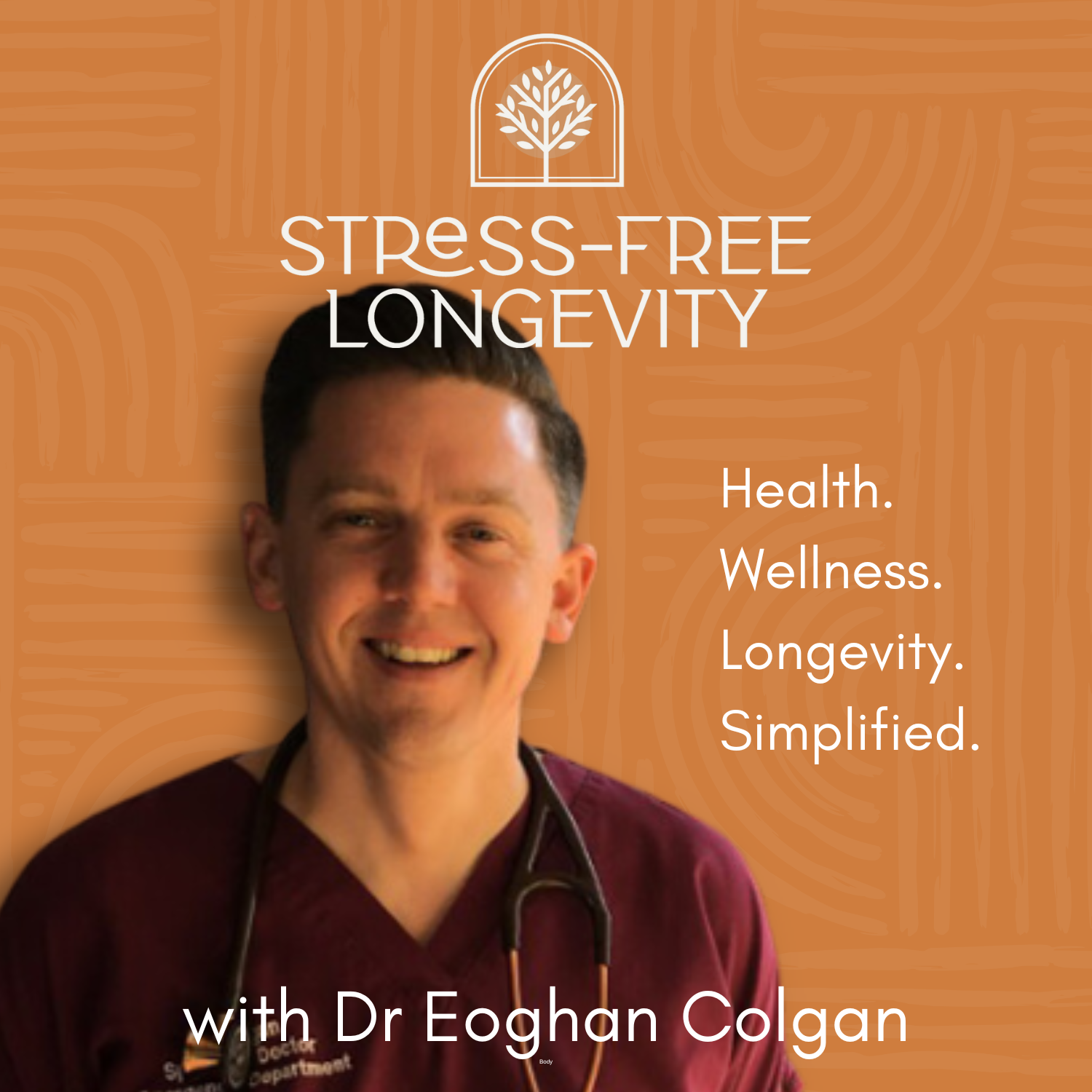
Stress-Free Longevity
Dr Eoghan Colgan
Feeling overwhelmed by conflicting health advice? Join Dr. Eoghan Colgan and leading scientists as they cut through the noise to uncover what really works. We explore the science behind life’s essential pillars, finding simpler paths to wellness. No rigid rules – just clear, evidence-based insights you can trust. For curious minds seeking better ways to live well.
Episodes
Mentioned books

Mar 31, 2026 • 56min
Episode 23: Understanding Microplastics with Professor Richard Thompson
Episode Overview
Professor Richard Thompson — the marine biologist who coined the term "microplastics" — reveals what three decades of research have uncovered about these microscopic particles now found in our food, water, and air. Prof. Thompson explains how microplastics move from the environment into our bodies, why the chemicals associated with them pose a growing threat to human health, and what practical steps we can all take to reduce our exposure.
Key 'Microplastics' Insights:
The Scientist Who Named the Problem: Prof. Thompson published the first paper using the term "microplastics" in Science in 2004. There are now over 7,000 scientific publications on the topic.
Microplastics Are Literally Everywhere: Microscopic plastic particles have been found on every continent, 4,000 metres deep in the ocean, and in Arctic ice cores — often in greater quantities in remote locations than near major cities.
Your Kitchen Air Is a Bigger Source Than Your Fish Supper: The quantity of microplastics in your kitchen air during meal preparation exceeds the amount present in the fish itself. Household dust is a major source of human exposure.
16,000 Chemicals, 4,000 Potentially Harmful: Over 16,000 chemicals are associated with plastic production, more than 4,000 of which are known to be potentially harmful — yet very few are regulated.
The Health Costs May Equal the Entire Plastic Market: Research suggests that global health costs from plasticizer chemicals alone could match the entire annual value of the plastics industry.
Today's Plastic Items Are Tomorrow's Microplastics: Even if all pollution stopped today, microplastic levels would continue rising for decades as existing large items fragment into smaller pieces.
Want the complete framework?
Get The Vital 3 Method guide free — the evidence-based system for sustainable health after 40.
Download the Free Guide
Expert 'Microplastics' Takeaways
Reduce single-use plastic where possible — carry a refillable bag, water bottle, and coffee cup
Drink tap water instead of bottled water where it's safe to do so
Refuse unnecessary plastic packaging in shops, restaurants, and bars — consumer resistance sends a powerful market signal
Check which plastics your local authority actually accepts for recycling, as this varies significantly between areas
Wash synthetic clothes less frequently — half of all fibre emissions come from everyday wear rather than laundering
Maintain car tyres properly, as each set releases roughly 4–5kg of microplastic dust into the environment before replacement
Recognise that individual changes alone cannot solve this — the biggest impact comes from better product design, stronger policy, and industry accountability
About Our Guest
Professor Richard Thompson OBE is a marine biologist at the University of Plymouth who coined the term "microplastics" in his landmark 2004 paper in Science. He is co-coordinator of the Scientists' Coalition for an Effective Plastics Treaty, a network of 400 scientists bringing independent evidence to global policy negotiations.
Visit Professor Thompson's Academic Profile
Watch the 'Gut-Brain Connection' Interview
'Microplastics' Resources
Key Research Discussed:
Thompson et al. 2004, "Lost at Sea: Where Is All the Plastic?" (Science) — The landmark paper coining the term "microplastics": https://www.science.org/doi/10.1126/science.1094559
Thompson et al. 2024, "Twenty Years of Microplastic Pollution Research — What Have We Learned?" (Science) — The 20-year review paper: https://www.science.org/doi/10.1126/science.adl2746
Relevant Organisations:
Scientists' Coalition for an Effective Plastics Treaty: https://ikhapp.org/scientistscoalition/
Marine Conservation Society: https://www.mcsuk.org/
It's not about willpower
A doctor's guide to healthy living and making it stick
What's inside
Why healthy living matters for you and your loved ones
The actions that make a difference - not 100 biohacks that don't!
My exact program that helped me lose 14kg in weight, reverse my metabolic age, and feel in the best shape of my life
Tips on using AI to supercharge your lifestyle changes
First Name
Please enter your name.
Email Address
Please enter a valid email address.
Send me the Free PDF!
Please check your email for further instructions. Check your junk mail if you cannot find the email in the next few minutes.
Something went wrong. Please check your entries and try again.
I will not share your details with any third party
Additional Interviews
Are you interested in other expert interviews on health, wellness and longevity topics? Click on the links below to discover more.
Sleep
The most under-rated life pillar of all!
Sleep Content
Exercise
The foundation of lasting health
Exercise Content
Nutrition
The fuel that shapes your wellbeing
Nutrition Content
The post Episode 23: Understanding Microplastics with Professor Richard Thompson first appeared on Stress-Free Longevity.

Mar 17, 2026 • 42min
Episode 22: Understanding the Gut-Brain Connection with Professor John Cryan
Episode Overview
Professor John Cryan — Vice President for Research at University College Cork and a pioneer of microbiome-gut-brain science — reveals how trillions of gut microbes directly influence your mood, stress resilience, and long-term brain health. From coining the term "psychobiotic" to leading research linking gut bacteria to social behaviour and neurodegenerative disease, Prof. Cryan explains what the gut brain connection means for anyone looking to support their mental health and healthy aging through what they eat.
Key 'Gut-Brain Connection' Insights:
Your Gut Has Its Own Brain: The enteric nervous system contains more nerve cells than your spinal cord. This "second brain" sends signals directly to your brain via the vagus nerve, influencing how you feel moment to moment.
Three Pathways Link Gut to Brain: Gut bacteria communicate with the brain through metabolites that cross the blood-brain barrier, immune cells that signal to the brain, and hormones including GLP-1.
Your Microbiome Follows a Daily Rhythm: UCC research revealed that the gut microbiome shifts across the day with circadian rhythms. When the microbiome was depleted, normal daily stress regulation collapsed entirely — suggesting when you eat may matter as much as what.
Stress Reshapes Your Gut — And Vice Versa: Chronic stress alters gut bacteria composition, and those altered bacteria amplify the stress response. Feeding stressed students a diet rich in fibre and fermented foods dampened their stress response.
Parkinson's May Begin in the Gut: In many cases, gut symptoms like constipation appear years before brain symptoms. Pathological changes may travel from the gut to the brain via the vagus nerve, opening new avenues for early detection.
Social Behaviour Depends on Gut Microbes: Mice without gut microbes lose interest in social interaction entirely. When Prof. Cryan's team transplanted microbes from social anxiety patients into healthy mice, those mice developed elements of social anxiety — a causal link.
Most Commercial Probiotics Are Untested: The majority of probiotic products have never been tested for clinical benefit, and some don't survive stomach acid. Always ask whether the specific strain has published evidence behind it.
Want the complete framework?
Get The Vital 3 Method guide free — the evidence-based system for sustainable health after 40.
Download the Free Guide
Expert 'Gut-Brain Connection' Takeaways
Prioritise dietary fibre — it feeds beneficial gut bacteria that produce short-chain fatty acids critical for gut lining health and brain signalling
Increase colour and diversity in your diet — polyphenols in berries, green tea, dark chocolate, and onions are broken down by microbes into brain-beneficial chemicals
Add fermented foods daily — kefir, kombucha, sauerkraut, and fermented vegetables introduce beneficial bacteria affordably
Reduce ultra-processed food, artificial sweeteners, and emulsifiers — all shown to negatively impact microbiome diversity
Scrutinise probiotic supplements — demand published evidence for the specific strain, not general marketing claims
Support breastfeeding and minimise unnecessary antibiotics in early life — the microbiome largely settles by age two to four, and early disturbances can have lasting effects
Protect your sleep and circadian rhythms — sleep disturbances and jet lag harm your microbiome and disrupt its role in daily stress regulation
Consider getting a dog — emerging research links pet ownership to improved microbiome diversity and better mental health, with recent studies suggesting the benefit is mediated through the microbiome
About Our Guest
Professor John Cryan is Vice President for Research and Innovation at University College Cork and a Principal Investigator at APC Microbiome Ireland. A stress neurobiologist who co-coined the term "psychobiotic" and co-authored The Psychobiotic Revolution, his pioneering research on the gut brain connection has shaped our understanding of how gut bacteria influence mood, stress, social behaviour, and brain health across the lifespan.
Visit Professor Cryan's Academic Profile
Watch the 'Gut-Brain Connection' Interview
'Gut-Brain Connection' Resources
Key Research Discussed:
Psychobiotic Diet and Stress Study — Berding, Cryan, Dinan et al. (2022), Molecular Psychiatry. Four-week psychobiotic diet (high fibre + fermented foods) reduced perceived stress in healthy adults
Microbiota Is Essential for Social Development in the Mouse — Desbonnet, Clarke, Shanahan, Dinan & Cryan (2014), Molecular Psychiatry. First study showing germ-free mice display social deficits
Social Interaction and the Amygdala in Microbiome-Deficient Mice — Stilling, Moloney et al. (2018), eLife. Molecular basis for how the microbiome is crucial for normal social behaviour
Gut Microbiota Composition Correlates with Diet and Health in the Elderly — Claesson, Jeffery, O'Toole et al. (2012), Nature. Landmark ELDERMET study of 178 elderly subjects linking dietary diversity to microbiome diversity and health
MAEVE Polyphenol Trial — Ongoing study with University of Ulster and UCLA on berry polyphenols in people at risk for Alzheimer's
Relevant Resources
APC Microbiome Ireland — The UCC research centre leading gut brain connection research
The NiMe Diet: Scientific Principles and Recipes — Free online cookbook by Anissa Armet and Prof. Jens Walter (UCC) based on ancestral dietary patterns
Books Mentioned:
The Psychobiotic Revolution by Scott C. Anderson, John F. Cryan and Ted Dinan (National Geographic Press, 2017)
Amazon UK
Amazon USA
It's not about willpower
A doctor's guide to healthy living and making it stick
What's inside
Why healthy living matters for you and your loved ones
The actions that make a difference - not 100 biohacks that don't!
My exact program that helped me lose 14kg in weight, reverse my metabolic age, and feel in the best shape of my life
Tips on using AI to supercharge your lifestyle changes
First Name
Please enter your name.
Email Address
Please enter a valid email address.
Send me the Free PDF!
Please check your email for further instructions. Check your junk mail if you cannot find the email in the next few minutes.
Something went wrong. Please check your entries and try again.
I will not share your details with any third party
Additional Interviews
Are you interested in other expert interviews on health, wellness and longevity topics? Click on the links below to discover more.
Sleep
The most under-rated life pillar of all!
Sleep Content
Exercise
The foundation of lasting health
Exercise Content
Nutrition
The fuel that shapes your wellbeing
Nutrition Content
The post Episode 22: Understanding the Gut-Brain Connection with Professor John Cryan first appeared on Stress-Free Longevity.

Feb 2, 2026 • 42min
Episode 21: Understanding Protein and Muscle with Professor Luc Van Loon
Episode Overview
In this evidence-rich conversation, Professor Luc Van Loon, one of the world's leading researchers on protein and muscle metabolism at Maastricht University, cuts through the noise to reveal what the science actually shows. With over three decades of research spanning elite athletes to intensive care patients—and approximately 40 million euros of research investment—Prof. Van Loon explains the relationship between protein and muscle, why the protein aisle in supermarkets is mostly marketing, and the surprisingly simple factors that affect how well we absorb what we eat. This interview separates genuine nutritional science from social media hype and provides practical guidance on protein and muscle health at any age.
Key 'Protein and Muscle' Insights:
Your Muscles Completely Renew Every Few Months: Muscle proteins turn over at 1-2% per day, meaning your entire muscle mass is broken down and rebuilt roughly every 50-100 days. This constant refurbishment is why protein and muscle health are so closely linked—and why muscle loss becomes apparent so quickly during illness or immobility.
The WHO Minimum Isn't the Optimum: The WHO guideline of 0.83g protein per kilogram body weight per day represents the minimum to maintain nitrogen balance, not optimal intake. Most healthy, active people naturally consume 1-1.2g/kg, while athletes easily reach 1.5g/kg simply by eating more food.
20-25 Grams Per Meal Is the Sweet Spot: This amount of protein stimulates muscle protein synthesis for four to six hours. That's equivalent to half a litre of milk, two to three eggs, 70-100g of meat or fish, or a coffee cup full of nuts.
Plant Proteins Work—You Just Need More: While plant-based proteins have lower digestibility and may lack certain amino acids, eating a diverse range of plant foods compensates for these limitations. As Prof. Van Loon puts it: "Similar to cheap beer, you can compensate for lesser quality by greater quantity."
Sitting Upright and Chewing Well Aren't Just Manners: Research shows body position and chewing have measurable effects on protein digestion—comparable in magnitude to the differences between whey and casein proteins. Studies hanging participants upside down revealed dramatically impaired gastric emptying.
Hospital Patients Are Severely Underproteinised: People recovering from elective surgery consume only 0.5g protein per kilogram body weight daily—roughly one third of the 1.2-1.5g/kg recommended for recovery. Most food provided simply isn't eaten.
Age-Related Muscle Loss Is Largely Preventable: The demographic decline in muscle mass as we age isn't inevitable biology—it's the accumulated impact of successive periods of illness and immobility where people lose more muscle than they regain during recovery.
Want the complete framework?
Get The Vital 3 Method guide free — the evidence-based system for sustainable health after 40.
Download the Free Guide
Expert 'Protein and Muscle' Takeaways
Include 20-25 grams of protein at each main meal, paying particular attention to breakfast where most people fall short
Sit upright while eating and chew your food thoroughly—these simple habits meaningfully improve protein digestion and absorption
Consume some protein after evening exercise sessions, whether as a snack or a later meal, to support overnight muscle recovery
Combine different plant-based protein sources if eating predominantly plant-based, rather than relying on any single source, to ensure complete amino acid coverage
Focus on your overall diet before considering supplements—most people using protein powders don't actually know how much protein they're already consuming from food
If using GLP-1 agonist medications for weight loss, prioritise protein-dense foods since reduced eating makes nutrient quality even more critical
Recognise that most "high protein" products in supermarkets were already high in protein before the label was added—it's often education rather than fortification
Maintain physical activity during periods of illness or recovery, as the combination of exercise and protein creates a synergistic effect on muscle building that neither achieves alone
About Our Guest
Professor Luc Van Loon leads the protein and muscle metabolism research group at Maastricht University in the Netherlands. With over 30 years of research spanning elite athletes to intensive care patients, his work has fundamentally shaped our understanding of protein and muscle, including protein timing, digestion, and absorption.
Visit Prof. Luv van Loon's Academic Profile
Watch the 'Protein and Muscle' Interview
'Protein and Muscle' Resources
Key Research Discussed:
WHO/EFSA Protein Guidelines — The recommendation of 0.83g protein per kilogram body weight per day for nitrogen balance: https://www.efsa.europa.eu/en/press/news/120209
Body Position and Protein Digestion — The "inversion table" study showing posture affects gastric emptying and amino acid availability: https://pubmed.ncbi.nlm.nih.gov/27089362/
Upright vs Lying Position Study — Follow-up research on sitting upright versus lying down during meals: https://pubmed.ncbi.nlm.nih.gov/28212491/
Pre-Sleep Protein Ingestion — Research on protein before sleep and overnight muscle protein synthesis: https://pubmed.ncbi.nlm.nih.gov/22330017/
Pre-Sleep Protein Review — Comprehensive update on pre-sleep protein and exercise adaptation: https://www.frontiersin.org/journals/nutrition/articles/10.3389/fnut.2019.00017/full
Relevant Organisations:
M3 Research Group, Maastricht University — Prof. Van Loon's research laboratory: https://www.researchgate.net/lab/M3-Research-Group-Luc-J-C-van-Loon
It's not about willpower
A doctor's guide to healthy living and making it stick
What's inside
Why healthy living matters for you and your loved ones
The actions that make a difference - not 100 biohacks that don't!
My exact program that helped me lose 14kg in weight, reverse my metabolic age, and feel in the best shape of my life
Tips on using AI to supercharge your lifestyle changes
First Name
Please enter your name.
Email Address
Please enter a valid email address.
Send me the Free PDF!
Please check your email for further instructions. Check your junk mail if you cannot find the email in the next few minutes.
Something went wrong. Please check your entries and try again.
I will not share your details with any third party
Additional Interviews
Are you interested in other expert interviews on health, wellness and longevity topics? Click on the links below to discover more.
Sleep
The most under-rated life pillar of all!
Sleep Content
Exercise
The foundation of lasting health
Exercise Content
Nutrition
The fuel that shapes your wellbeing
Nutrition Content
The post Episode 21: Understanding Protein and Muscle with Professor Luc Van Loon first appeared on Stress-Free Longevity.

Jan 6, 2026 • 48min
Episode 20: Understanding Ultra Processed Foods with Dr Euridice Martinez-Steele
Episode Overview
In this eye-opening conversation, Dr Euridice Martinez-Steele, who has spent 12 years researching ultra processed foods at NUPENS (University of Sao Paulo), explains how these industrial food formulations are driving chronic disease worldwide. Drawing on evidence from almost 10 million participants and the gold-standard randomised controlled trials, Dr Martinez-Steele reveals how ultra processed foods increase our eating rate, disrupt our gut microbiome, and expose us to additives with unknown long-term effects. This interview challenges the assumption that approved food additives are necessarily safe and provides practical guidance for navigating the modern food environment.
Key 'Ultra Processed Foods' Insights:
They're Formulations, Not Food: Ultra processed foods are industrial formulations of food-derived substances (oils, fats, sugars, starches) containing little or no whole food. They combine molecules in proportions never found in nature, with synthetic additives our bodies may not know how to metabolise.
Linked to 32 Health Conditions: A 2024 umbrella review evaluating almost 10 million participants found evidence that ultra processed food consumption is associated with mortality, obesity, type 2 diabetes, cardiovascular disease, certain cancers, depression, dementia, and gastrointestinal disease.
RCTs Prove Overconsumption: Two randomised controlled trials demonstrated that participants eating ultra processed diets consumed significantly more calories per minute and gained more weight over just two weeks—providing causal evidence beyond observational studies.
Soft Texture Drives Fast Eating: The deconstructed food matrix of ultra processed foods makes them soft, meaning they're eaten faster with more calories consumed per mouthful. You don't feel full until long after you've finished, driving overconsumption.
Additives Have Unknown Effects: Over 10,000 additives are approved in the US alone, yet their long-term effects, cumulative daily intake effects, and interactions between multiple additives remain largely unknown. Most safety testing uses short-term studies in mice.
Your Gut Microbiome Suffers: The lack of fibre in ultra processed foods starves beneficial gut bacteria, forcing them to consume the protective mucus lining instead. This erodes the gut barrier, potentially allowing harmful bacteria to leak into the bloodstream.
Children Face Greatest Risk: Children consume more additives relative to their body size, begin exposure at an early age, and face a lifetime of cumulative effects. Pregnant women's consumption may also affect fetal development.
Want the complete framework?
Get The Vital 3 Method guide free — the evidence-based system for sustainable health after 40.
Download the Free Guide
Expert 'Ultra Processed Foods' Takeaways
Avoid buying ultra processed foods in the first place—if they're not in your home, you won't consume them in moments of convenience
Skip the ultra processed food aisles in supermarkets entirely and shop at local markets where fresh fruits and vegetables are more prominent
Read ingredient lists on packaged foods—a long list of unfamiliar ingredients indicates ultra processed food, and fewer additives is always better
Fill your plate with whole foods first, as these are satiating and naturally reduce your consumption of ultra processed alternatives
Eat slowly to give your body time to register satiety signals, countering the fast eating rate that ultra processed foods encourage
Avoid eating alone, as solitary eating tends to involve more ready-to-eat ultra processed foods consumed mindlessly
Learn to cook and involve the whole family—regaining cooking skills is one of the most effective ways to reduce ultra processed food dependence
Teach children to read ingredient lists as a form of food education, helping them navigate the ultra processed food environment for life
About Our Guest
Dr Euridice Martinez-Steele is a researcher at NUPENS (Centre for Epidemiological Research in Nutrition and Health) at the University of Sao Paulo, Brazil, where she has studied ultra processed foods for over 12 years. She works closely with the team that developed the NOVA food classification system and her research has helped inform dietary guidelines in Brazil and other countries now recommending reduced ultra processed food consumption.
Visit Dr Euricice Martinez-Steele's Academic Profile
Watch the 'Ultra Processed Foods' Interview
'Ultra Processed Foods' Resources
Key Research Discussed:
The 2024 Umbrella Review — Comprehensive analysis of almost 10 million participants linking ultra processed food consumption to 32 health outcomes
The NOVA Classification System — Developed by Professor Carlos Monteiro at the University of Sao Paulo, categorising foods by extent and purpose of industrial processing
Randomised Controlled Trial on UPFs — The seminal paper by Kevin Hall et al, on UPF and calorie consumption
Relevant Organisations:
NUPENS (Centre for Epidemiological Research in Nutrition and Health) — University of Sao Paulo research centre leading global UPF research
Brazilian Dietary Guidelines — First national guidelines to recommend avoiding ultra processed foods
Policy Initiatives Mentioned:
Chile's Marketing Regulations — Comprehensive ban on marketing foods with nutrient warning labels to children under 14
Colombia's UPF Tax (2023) — First law in Latin America taxing ultra processed foods with warning labels
Brazil's School Lunch Policy — Requires 75% of school lunch funds be spent on unprocessed foods
It's not about willpower
A doctor's guide to healthy living and making it stick
What's inside
Why healthy living matters for you and your loved ones
The actions that make a difference - not 100 biohacks that don't!
My exact program that helped me lose 14kg in weight, reverse my metabolic age, and feel in the best shape of my life
Tips on using AI to supercharge your lifestyle changes
First Name
Please enter your name.
Email Address
Please enter a valid email address.
Send me the Free PDF!
Please check your email for further instructions. Check your junk mail if you cannot find the email in the next few minutes.
Something went wrong. Please check your entries and try again.
I will not share your details with any third party
Additional Interviews
Are you interested in other expert interviews on health, wellness and longevity topics? Click on the links below to discover more.
Sleep
The most under-rated life pillar of all!
Sleep Content
Exercise
The foundation of lasting health
Exercise Content
Nutrition
The fuel that shapes your wellbeing
Nutrition Content
The post Episode 20: Understanding Ultra Processed Foods with Dr Euridice Martinez-Steele first appeared on Stress-Free Longevity.

Dec 9, 2025 • 1h 13min
Episode 19: Understanding Non-Alcoholic Fatty Liver Disease with Professor Bernadette Moore
Episode Overview
In this essential conversation, Professor Bernadette Moore, a nutritional biochemist at the University of Liverpool with over two decades researching obesity and liver health, explains why fatty liver disease has become a silent epidemic affecting nearly one in three people globally. Prof. Moore reveals how this condition—now renamed metabolic dysfunction-associated steatotic liver disease—dramatically increases cardiovascular risk and can progress to serious complications, yet remains reversible with surprisingly modest interventions. Challenging the all-or-nothing diet culture, she shares evidence-based strategies focusing on adding beneficial foods rather than restriction, and explains why even 3-5% weight loss can transform liver health. This interview offers practical, sustainable approaches for anyone concerned about metabolic health and longevity.
Key 'Fatty Liver Disease' Insights:
It's Now a Global Epidemic: Approximately 30% of the world's population now has steatotic liver disease, with prevalence closely tracking obesity rates. In the UK, around 24-25% of people are affected.
Cardiovascular Risk Is the Real Danger: While liver cirrhosis is concerning, fat in the liver more significantly increases risk of heart attacks, stroke, and reduced overall mortality. It's a whole-body metabolic problem, not just a liver issue.
Genetics Load the Gun, Environment Pulls the Trigger: Multiple genetic variants affect liver disease susceptibility, but they're not destiny. Environmental factors—diet, activity levels, weight—determine whether those genetic risks ever manifest.
Women's Risk Surges After Menopause: While men have higher overall prevalence, women's risk dramatically increases with menopause due to the loss of protective estrogen. Post-menopausal women also tend to develop more severe disease than men.
Small Weight Loss Delivers Big Results: You don't need to become slim—just 3-5% body weight loss can significantly improve liver health. This is far more achievable than the dramatic transformations diet culture promotes.
Saturated Fat Particularly Harms the Liver: Despite social media debates, the evidence is clear: saturated fat is particularly damaging to both liver and heart health. Switching to olive oil or cold-pressed rapeseed oil offers genuine benefits.
Don't Drink Your Calories: Liquid calories from sugary drinks, juice, alcohol, or even sugar in tea access the liver rapidly and are among the quickest wins for improving liver health.
Want the complete framework?
Get The Vital 3 Method guide free — the evidence-based system for sustainable health after 40.
Download the Free Guide
Expert 'Fatty Liver Disease' Takeaways
Focus on adding beneficial foods—vegetables, nuts, seeds, beans, and fruit—rather than obsessing over what to eliminate, as this naturally crowds out less helpful choices
Stop drinking your calories as a first priority: eliminate or reduce sugary drinks, fruit juice, alcohol, and sugar in tea or coffee
Take a 20-minute walk after dinner to improve glycemic response and support liver metabolism—simple activity that doesn't require gym membership
Monitor your waist circumference or trouser size rather than obsessing over scales; this is a better proxy for metabolic risk than weight alone
Switch from saturated fats to olive oil or cold-pressed rapeseed oil for cooking—the fatty acid profile is nearly identical to olive oil at lower cost
Weigh yourself weekly rather than daily to track trends without becoming obsessive, and use the data to make small adjustments before weight creeps up
Consider hormone replacement therapy if you're a woman who has gained significant weight during perimenopause without dietary or lifestyle changes—discuss cardiovascular and liver protection with your healthcare provider
If prescribed GLP-1 medications, pair them with nutrition and lifestyle changes to maintain benefits if you eventually discontinue the drugs
About Our Guest
Professor Bernadette Moore is a nutritional scientist at the University of Liverpool, specialising in nutritional biochemistry with a PhD from Florida. With over 20 years researching obesity and metabolic disease, her work focuses on how dietary nutrients interact at a cellular level to influence either health and longevity or disease development. Prof. Moore's research group has conducted comparative studies on exercise versus dietary interventions for liver disease, contributing to our understanding of how lifestyle modifications can reverse steatotic liver disease. Her passion for nuanced, evidence-based communication stands in contrast to the polarised debates dominating social media, making her a vital voice for accessible metabolic health science.
Visit Professor Moore's Academic Profile
Watch the 'Fatty Liver Disease' Interview
'Fatty Liver Disease' Resources
Key Research Discussed:
The DiRECT Trial approach — Referenced as the Roy Taylor and Mike Lean intensive weight loss protocol using meal replacements that can put type 2 diabetes and fatty liver disease into complete remission
WHO New Obesity Diagnostic Criteria (2023) — Updated criteria combining BMI with waist circumference for better adiposity assessment
2023 Nomenclature Consensus — The international process that renamed non-alcoholic fatty liver disease to metabolic dysfunction-associated steatotic liver disease (MASLD)
Programmes & Approaches Mentioned:
Continuous Glucose Monitoring — For real-time feedback on how walking after meals affects glycemic response
Relevant Organisations:
University of Liverpool — Prof. Moore's research institution
NICE (National Institute for Health and Care Excellence) — UK body recommending HRT as first-line therapy for menopausal symptoms
It's not about willpower
A doctor's guide to healthy living and making it stick
What's inside
Why healthy living matters for you and your loved ones
The actions that make a difference - not 100 biohacks that don't!
My exact program that helped me lose 14kg in weight, reverse my metabolic age, and feel in the best shape of my life
Tips on using AI to supercharge your lifestyle changes
First Name
Please enter your name.
Email Address
Please enter a valid email address.
Send me the Free PDF!
Please check your email for further instructions. Check your junk mail if you cannot find the email in the next few minutes.
Something went wrong. Please check your entries and try again.
I will not share your details with any third party
Additional Interviews
Are you interested in other expert interviews on health, wellness and longevity topics? Click on the links below to discover more.
Sleep
The most under-rated life pillar of all!
Sleep Content
Exercise
The foundation of lasting health
Exercise Content
Nutrition
The fuel that shapes your wellbeing
Nutrition Content
The post Episode 19: Understanding Non-Alcoholic Fatty Liver Disease with Professor Bernadette Moore first appeared on Stress-Free Longevity.

Nov 11, 2025 • 47min
Episode 18: Understanding Type 2 Diabetes with Professor Mike Lean
Episode Overview
In this groundbreaking conversation, Professor Mike Lean, the only doctor in the UK on the GMC Specialist Register for Human Nutrition, reveals how type 2 diabetes can be reversed through targeted weight loss. With over 40 years of medical experience and as lead investigator of the landmark DiRECT trial, Prof. Lean explains why diabetes isn't the permanent condition we were taught it was, how fat in vital organs drives the disease, and the practical steps people can take to achieve remission. This interview challenges decades of conventional medical advice and offers genuine hope for millions living with type 2 diabetes.
Key 'Type 2 Diabetes' Insights:
Type 2 Diabetes Is Reversible: The disease is no longer considered permanent. The DiRECT trial demonstrated that 86% of people who lost 15kg achieved remission, fundamentally changing how we understand and treat type 2 diabetes.
Ectopic Fat Is the Real Problem: It's not total body weight that matters—it's fat accumulating inside vital organs (liver, pancreas, heart) that causes diabetes. Subcutaneous "cuddly" fat is metabolically safe.
Personal Fat Threshold Varies: Everyone has a different genetic threshold determining when fat enters organs. Asian and Indigenous populations develop diabetes at BMI 22-23, whilst Europeans typically need higher BMIs before experiencing problems.
The "Big Bang" Approach Works Best: Intensive weight loss (800-850 calories daily for 8-12 weeks) proves more effective than slow, gradual changes because dramatic results create motivation to maintain the effort.
Snacking Is a Manufactured Habit: Fifty years ago, snacking culture didn't exist. We're now consuming 300-400 calories more daily than previous generations, driven by food industry marketing rather than biological need.
Exercise Won't Reverse Diabetes: Whilst excellent for overall health and wellbeing, exercise alone cannot reverse type 2 diabetes or achieve the weight loss needed for remission. Diet is the primary tool.
Want the complete framework?
Get The Vital 3 Method guide free — the evidence-based system for sustainable health after 40.
Download the Free Guide
Expert 'Type 2 Diabetes' Takeaways
If diagnosed with type 2 diabetes within the first six years, losing 10-15kg can potentially put the disease into remission and allow you to stop medications
Focus on dietary intervention rather than exercise as your primary strategy for diabetes reversalConsider an intensive short-term approach (with proper nutritional support) rather than attempting gradual weight loss over many months
Return to three structured meals per day without snacking between them—recognise that hunger between meals is normal and manageable
If you have diabetes risk factors (family history, Asian/Indigenous background, gestational diabetes history), focus on weight management even if you're not visibly "overweight"
Test for prediabetes and intervene early—losing just one stone at the prediabetes stage can prevent progression for up to 30 years
Use person-first language: "people living with diabetes" rather than "diabetics" to reduce stigma
Seek online support from trained dietitians if intensive weight loss is needed—it's often more effective than in-clinic consultations
About Our Guest
Professor Mike Lean is a General Physician and specialist on the GMC Specialist Register for Diabetes, Endocrinology, and Human Nutrition—the only doctor in the UK with this specific registration for Human Nutrition. With over 40 years of medical experience, he was the lead investigator of the landmark DiRECT (Diabetes Remission Clinical Trial) study, which demonstrated that type 2 diabetes can be reversed through substantial weight loss. His research has fundamentally changed NHS policy across the United Kingdom, with all four national health services now offering diabetes remission programmes. Professor Lean's work has shifted the paradigm from managing type 2 diabetes as a chronic condition to treating it as a reversible disease.
Visit Professor Lean's Academic Profile
Watch the 'Type 2 Diabetes' Interview
'Type 2 Diabetes' Resources
Key Research Discussed:
The DiRECT Trial - Diabetes Remission Clinical Trial demonstrating type 2 diabetes reversal through weight loss
Counterweight Plus Programme - The evidence-based weight loss programme developed in Scotland and used in the DiRECT trial
Relevant Organisations:
NHS Diabetes Remission Programmes - Information on accessing diabetes remission support through the NHS
Diabetes UK - Patient-led research priorities and diabetes remission information
It's not about willpower
A doctor's guide to healthy living and making it stick
What's inside
Why healthy living matters for you and your loved ones
The actions that make a difference - not 100 biohacks that don't!
My exact program that helped me lose 14kg in weight, reverse my metabolic age, and feel in the best shape of my life
Tips on using AI to supercharge your lifestyle changes
First Name
Please enter your name.
Email Address
Please enter a valid email address.
Send me the Free PDF!
Please check your email for further instructions. Check your junk mail if you cannot find the email in the next few minutes.
Something went wrong. Please check your entries and try again.
I will not share your details with any third party
Additional Interviews
Are you interested in other expert interviews on health, wellness and longevity topics? Click on the links below to discover more.
Sleep
The most under-rated life pillar of all!
Sleep Content
Exercise
The foundation of lasting health
Exercise Content
Nutrition
The fuel that shapes your wellbeing
Nutrition Content
The post Episode 18: Understanding Type 2 Diabetes with Professor Mike Lean first appeared on Stress-Free Longevity.

Oct 21, 2025 • 1h 3min
Episode 17: Understanding Probiotics and Prebiotics with Professor Colin Hill
Episode Overview
In this comprehensive discussion, Professor Colin Hill, a leading microbiologist from University College Cork, demystifies the science of probiotics and prebiotics and their crucial role in gut microbiome health. With 30 years of research experience, Professor Hill explains how these microscopic organisms function as a "virtual organ" in our bodies, influencing everything from digestion and immunity to longevity and mental wellbeing. This evidence-based conversation cuts through marketing hype to deliver practical, science-backed guidance on fermented foods, supplementation, and maintaining a healthy gut microbiome throughout life.
Key 'Probiotics and Prebiotics' Insights:
Embrace fermented foods: Incorporate yoghurt, kefir, kimchi, sauerkraut, kombucha, and aged cheeses into your diet regularly for their live microbe content and nutritional benefits.
Eat high-fibre foods: Include root vegetables, dates, figs, and other complex carbohydrates that feed your existing beneficial gut bacteria.
Follow Mediterranean diet principles: Eat mostly plants, increase fruit and vegetable intake, reduce processed foods, and moderate meat consumption—advice that benefits both you and your microbiome.
Choose supplements strategically: If supplementing, look for products with high CFU counts (at least 10⁹ or one billion), multiple bacterial strains, and reputable manufacturers. For specific health conditions, research which strains have clinical evidence.
Be thoughtful about antibiotics: Take prescribed antibiotics when necessary, but don't avoid them to protect your microbiome—your microbiome will recover. Consider probiotics if you experience antibiotic-associated diarrhoea.
Focus on dietary diversity: Vary your food choices to support a diverse microbiome ecosystem. "You have the microbiome you deserve" based on your lifestyle choices.
Don't rush microbiome testing: Unless you have specific health concerns, microbiome testing currently offers more curiosity value than actionable health decisions. Focus on the fundamentals of diet and lifestyle first.
Exercise regularly: Physical activity positively influences gut microbiome diversity and overall gut health, adding another reason to maintain an active lifestyle.
Want the complete framework?
Get The Vital 3 Method guide free — the evidence-based system for sustainable health after 40.
Download the Free Guide
Expert 'Probiotics and Prebiotics' Takeaways
Avoid buying ultra processed foods in the first place—if they're not in your home, you won't consume them in moments of convenience
Skip the ultra processed food aisles in supermarkets entirely and shop at local markets where fresh fruits and vegetables are more prominent
Read ingredient lists on packaged foods—a long list of unfamiliar ingredients indicates ultra processed food, and fewer additives is always better
Fill your plate with whole foods first, as these are satiating and naturally reduce your consumption of ultra processed alternatives
Eat slowly to give your body time to register satiety signals, countering the fast eating rate that ultra processed foods encourage
Avoid eating alone, as solitary eating tends to involve more ready-to-eat ultra processed foods consumed mindlessly
Learn to cook and involve the whole family—regaining cooking skills is one of the most effective ways to reduce ultra processed food dependence
Teach children to read ingredient lists as a form of food education, helping them navigate the ultra processed food environment for life
About Our Guest
Professor Colin Hill is a microbiologist based at University College Cork in the south of Ireland, where he has conducted research and taught for 30 years. His work focuses on the microbiome, probiotics, prebiotics, and postbiotics, contributing significantly to our understanding of how these microscopic ecosystems influence human health. Professor Hill is recognised internationally for his expertise in gut microbiome science and has worked extensively with industry whilst maintaining independent scientific perspectives. His research explores the complex relationships between gut bacteria and health outcomes, from digestion and immunity to aging and longevity.
Visit Professor Hill's Academic Profile
Watch the 'Probiotics and Prebiotics' Interview
'Gut Microbiome' Resources
Key research and concepts discussed in the episode:
Nature Metabolism - Gut Microbiome and Healthy Ageing Study - Research showing unique gut microbiome patterns linked to healthy ageing and increased longevity
Jeffrey Gordon's Twin Study on Obesity and the Microbiome - Landmark research demonstrating how microbiome composition affects weight gain
NiMe Diet (New Ancestral Diet) - Developed by Professor Jens Walter, based on Papua New Guinea dietary patterns to promote beneficial gut bacteria
NHANES Dietary Study Analysis - Large-scale American nutritional survey linking live microbe consumption to health outcomes
Michael Pollan's Food Rules - Referenced principle: "Eat food, not too much, mostly plants"
International Scientific Association for Probiotics and Prebiotics (ISAPP) - Consensus definitions for probiotics, prebiotics, synbiotics, and postbiotics
It's not about willpower
A doctor's guide to healthy living and making it stick
What's inside
Why healthy living matters for you and your loved ones
The actions that make a difference - not 100 biohacks that don't!
My exact program that helped me lose 14kg in weight, reverse my metabolic age, and feel in the best shape of my life
Tips on using AI to supercharge your lifestyle changes
First Name
Please enter your name.
Email Address
Please enter a valid email address.
Send me the Free PDF!
Please check your email for further instructions. Check your junk mail if you cannot find the email in the next few minutes.
Something went wrong. Please check your entries and try again.
I will not share your details with any third party
Additional Interviews
Are you interested in other expert interviews on health, wellness and longevity topics? Click on the links below to discover more.
Sleep
The most under-rated life pillar of all!
Sleep Content
Exercise
The foundation of lasting health
Exercise Content
Nutrition
The fuel that shapes your wellbeing
Nutrition Content
The post Episode 17: Understanding Probiotics and Prebiotics with Professor Colin Hill first appeared on Stress-Free Longevity.

Sep 30, 2025 • 46min
Episode 16: Understanding Nutrition with Professor Emilie Combet
Episode Overview
In this comprehensive conversation, Professor Combet, a leading nutrition expert, explores the complex landscape of understanding nutrition science and the obesity epidemic. With extensive research experience in cardiometabolic health, Professor Combet delivers evidence-based nutrition insights into macronutrients, plant-based eating, ultra-processed foods, and the microbiome. This episode cuts through nutrition confusion using scientific evidence to deliver practical, sustainable approaches to healthy eating and weight management. Whether you're new to understanding nutrition or seeking evidence-based guidance for healthy eating habits, this conversation provides accessible insights without obsessive calorie counting or restrictive dieting.
Key 'Understanding Nutrition' Insights:
The Obesity Epidemic's Social Context: The rise in obesity isn't solely about individual willpower—it's fundamentally shaped by the food environment our society creates, where high-calorie options are omnipresent and genetic predispositions interact with environmental factors.
Macronutrients vs. Food Groups: Rather than obsessing over precise macronutrient ratios, focusing on whole food groups provides a more practical and sustainable approach to healthy eating, incorporating vegetables, wholegrains, proteins, and dairy whilst avoiding excessive restriction.
Ultra-Processed Foods Nuanced View: The ultra-processed food category is poorly defined and overly broad, encompassing everything from fizzy drinks to fortified plant-based alternatives. A more useful approach focuses on foods high in fat, sugar, and salt (HFSS) rather than processing level alone.
The Microbiome's Metabolic Role: Gut bacteria play a crucial role in processing bioactive compounds we can't digest ourselves, producing beneficial molecules like short-chain fatty acids that influence inflammation, appetite, and overall cardiometabolic health.
Appetite Control and Satiety: Understanding the difference between hunger and appetite, and how food texture, volume, and processing affect fullness signals, provides better tools for natural weight management than calorie restriction alone.
Sustainability Over Perfection: Long-term dietary success comes from finding eating patterns you can maintain rather than pursuing perfect adherence to the latest nutritional trend or eliminating entire food groups.
Want the complete framework?
Get The Vital 3 Method guide free — the evidence-based system for sustainable health after 40.
Download the Free Guide
Expert 'Understanding Nutrition' Takeaways
Increase fiber intake through beans, lentils, avocados, and diverse fruits and vegetables to support gut health and natural appetite regulation
Reduce alcohol consumption as it provides significant calories without nutritional benefit—swap for water, tea, or low-calorie alternatives
Avoid eliminating entire food groups to prevent unintended micronutrient deficiencies that can be difficult to correct
Choose frozen vegetables as a nutritionally equivalent, convenient, and often more affordable alternative to fresh produce
Focus on food diversity rather than restriction, ensuring variety across the week to maximise different bioactive compounds
Practice mindful eating by slowing down meals and eating in appropriate environments rather than on-the-go to support natural satiety signals
Consider fiber supplementation if struggling to reach 30g daily through food alone, using options like psyllium husk
Prioritise plant-forward eating whilst being mindful of potential nutrient gaps in fortified alternatives to animal products
About Our Guest
Professor Combet is a distinguished nutrition expert specialising in cardiometabolic health and the complex relationships between diet, obesity, and chronic disease. Her research encompasses the social determinants of nutrition, micronutrient requirements, and evidence-based approaches to dietary interventions. Professor Combet brings a balanced, science-driven perspective to nutrition controversies, emphasising inclusivity and the recognition that effective dietary solutions must work for diverse populations with varying circumstances and constraints.
Visit Prof. Combet's Academic Profile
Watch the 'Understanding Nutrition' interview
'Understanding Nutrition' Resources
UK Eat Well Guide
Scottish Dietary Goals
It's not about willpower
A doctor's guide to healthy living and making it stick
What's inside
Why healthy living matters for you and your loved ones
The actions that make a difference - not 100 biohacks that don't!
My exact program that helped me lose 14kg in weight, reverse my metabolic age, and feel in the best shape of my life
Tips on using AI to supercharge your lifestyle changes
First Name
Please enter your name.
Email Address
Please enter a valid email address.
Send me the Free PDF!
Please check your email for further instructions. Check your junk mail if you cannot find the email in the next few minutes.
Something went wrong. Please check your entries and try again.
I will not share your details with any third party
Additional Interviews
Are you interested in other expert interviews on health, wellness and longevity topics? Click on the links below to discover more.
Sleep
The most under-rated life pillar of all!
Sleep Content
Exercise
The foundation of lasting health
Exercise Content
Nutrition
The fuel that shapes your wellbeing
Nutrition Content
The post Episode 16: Understanding Nutrition with Professor Emilie Combet first appeared on Stress-Free Longevity.

Sep 9, 2025 • 50min
Episode 15: Understanding Dietary Supplements with Professor Joann Manson
Episode Overview
In this comprehensive discussion about dietary supplements, Professor Joann Manson from Harvard Medical School shares groundbreaking insights from leading the world's largest supplements trials. As principal investigator of the landmark VITAL study and co-investigator of the COSMOS trial, Prof. Manson provides evidence-based guidance on when supplements are beneficial and when they're not. This conversation cuts through supplement marketing hype to reveal what rigorous science actually shows about supplement effectiveness and safety.
Key Dietary Supplements Insights:
Dietary Supplements Regulation: Over 90,000 supplements exist on the market without requiring proof of safety or efficacy, unlike pharmaceutical drugs
Most People Don't Need Supplements: The majority of healthy adults can obtain necessary nutrients from a well-balanced diet without dietary supplements
Vitamin D Supplements: Large-scale trials show benefits for autoimmune diseases and advanced cancers, but limited benefits for most people with adequate intake
Omega-3 Supplements: Marine omega-3 supplements reduced heart attacks by 28%, but primarily benefit those with low fish consumption
Multivitamin Supplements: Clinical trials demonstrate significant benefits for age-related memory loss and cognitive decline
Targeted Approach to Supplementation: Benefits occur mainly in people with deficiencies or specific health conditions rather than the general population
Want the complete framework?
Get The Vital 3 Method guide free — the evidence-based system for sustainable health after 40.
Download the Free Guide
Expert Dietary Supplements Takeaways
Prioritise a healthy, predominantly plant-based diet before considering supplements
Understand that dietary supplements will never substitute for proper nutrition and healthy lifestyle
Look for quality control seals when purchasing supplements to ensure content accuracy
Consider a multivitamin supplement as "insurance" for cognitive health in older adults
Only take omega-3s if you consume less than 1.5 servings of fish weekly
Discuss vitamin D need with your healthcare provider for specific conditions
Avoid mega-dosing any dietary supplements - excess amounts can be harmful
Remain sceptical of supplements without robust clinical trial evidence
About Our Guest
Professor Joann Manson is Professor of Medicine at Harvard Medical School and Chief of the Division of Preventive Medicine at Brigham and Women's Hospital. She is an endocrinologist with extensive training in epidemiology, specialising in preventing chronic diseases through research on dietary supplements and lifestyle interventions. Prof. Manson has led groundbreaking large-scale randomised trials testing supplements, including serving as principal investigator of the VITAL trial (testing vitamin D and omega-3s) and co-principal investigator of the COSMOS trial examining multivitamins.
Visit Prof. Manson's Academic Profile
Watch the 'Dietary Supplements' Interview
Dietary Supplements Resources
U.S. National Institutes of Health Office of Dietary Supplements - Professor Manson specifically recommended this as having "good summaries of many of these dietary supplements" and called it out as a primary reliable source.
U.S. Pharmacopeia (USP) - Critical for supplement safety. She emphasised looking for this quality control seal to ensure supplements contain what they claim and are free from contaminants.
American Heart Association - She specifically mentioned this as a reliable source for health information, and given the cardiovascular focus of much supplement research, it's highly relevant.
VITAL Trial - Her own landmark study that provides the key evidence base for vitamin D and omega-3 supplements that she discusses extensively in the interview.
COSMOS Trial - Her multivitamin study showing cognitive benefits, which represents some of the most compelling recent evidence for supplement benefits.
It's not about willpower
A doctor's guide to healthy living and making it stick
What's inside
Why healthy living matters for you and your loved ones
The actions that make a difference - not 100 biohacks that don't!
My exact program that helped me lose 14kg in weight, reverse my metabolic age, and feel in the best shape of my life
Tips on using AI to supercharge your lifestyle changes
First Name
Please enter your name.
Email Address
Please enter a valid email address.
Send me the Free PDF!
Please check your email for further instructions. Check your junk mail if you cannot find the email in the next few minutes.
Something went wrong. Please check your entries and try again.
I will not share your details with any third party
Additional Interviews
Are you interested in other expert interviews on health, wellness and longevity topics? Click on the links below to discover more.
Sleep
The most under-rated life pillar of all!
Sleep Content
Exercise
The foundation of lasting health
Exercise Content
Nutrition
The fuel that shapes your wellbeing
Nutrition Content
The post Episode 15: Understanding Dietary Supplements with Professor Joann Manson first appeared on Stress-Free Longevity.

Aug 19, 2025 • 1h 8min
Episode 14: Understanding Sleep Health with Doctor Allie Hare
Episode Overview
In this comprehensive conversation, Dr Allie Hare, one of the UK's leading sleep specialists and current president of the British Sleep Society, explores the fascinating connections between our gut bacteria, lifestyle choices, and sleep quality. Dr Hare challenges conventional wisdom about sleep optimisation, revealing why trying too hard to perfect your sleep can actually make it worse, and shares evidence-based insights on everything from the gut-brain-sleep connection to why women's sleep struggles don't have to be accepted as normal. This episode offers a refreshing perspective on sleep health that prioritises simplicity and science over trends and gadgets.
Key Sleep Health Insights:
The Gut-Brain-Sleep Connection: How trillions of bacteria in your gut produce neurotransmitter-like substances and follow their own circadian rhythm, directly influencing your sleep quality and timing
Sleep Perfectionism Backfires: The phenomenon of "orthosomnia" - where obsessing over sleep data and trying to optimise every aspect of sleep actually creates sleep problems in people who previously slept well
Regular Schedule Trumps Sleep Hacks: Why having consistent bedtimes and wake times matters more than avoiding caffeine or screens, and how irregular schedules disrupt your body's natural zeitgebers (time givers)
Exercise Timing Matters: New research from 15,000 participants showing that intense exercise within four hours of bedtime delays sleep onset, whilst any exercise done earlier improves sleep quality
Focus on Joy as well as Stress Management: A revolutionary approach to sleep health that emphasises cultivating positive emotions alongside managing stress, as happy people naturally engage in sleep-promoting behaviours
Women's Sleep Challenges Have Solutions: From menopause-related sleep disruption affecting 70% of women to newborn sleep chaos, these issues aren't inevitable and evidence-based treatments exist
Want the complete framework?
Get The Vital 3 Method guide free — the evidence-based system for sustainable health after 40.
Download the Free Guide
Expert Sleep Health Takeaways
Maintain consistent bedtimes and wake times - this helps reset your circadian clock and supports your gut bacteria's natural rhythm
Avoid intense exercise within four hours of bedtime - but any exercise done earlier in the day will improve your sleep quality
Trust how you feel over sleep tracker data - if you wake up refreshed and function well during the day, ignore what your device says
Eat Mediterranean-style foods regularly - focus on fibre, healthy fats, and plant polyphenols to support your gut-brain-sleep connection
Stop eating two hours before bedtime - allow your digestive system to rest whilst you sleep
Pursue activities that bring you joy - spend time with friends, listen to music, engage in real-world connections rather than focusing on stress management
Keep sleep routines simple - avoid becoming dependent on multiple supplements, gadgets, or complex rituals
Seek professional help if needed - if you're doing the basics right but sleep still isn't satisfying, don't just accept it
About Our Guest
Dr Allie Hare is a consultant in sleep medicine based in London and the current president of the British Sleep Society. She is also co-founder of Grace London and Grace Sleep, where she helps individuals with sleep disorders and those wanting to improve their sleep health for long-term wellbeing. Dr Hare's clinical practice focuses on treating patients with complex sleep issues, whilst her research interests include the relationship between sleep, gut health, and overall wellness. Her expertise spans everything from sleep disorders and women's sleep health to the psychological factors that influence sleep quality.
Visit Dr Allie Hare's Academic Profile
Watch the 'Sleep Health' Interview
Sleep Health Resources
The UK's premiere private sleep clinic: https://gracesleep.clinic/
It's not about willpower
A doctor's guide to healthy living and making it stick
What's inside
Why healthy living matters for you and your loved ones
The actions that make a difference - not 100 biohacks that don't!
My exact program that helped me lose 14kg in weight, reverse my metabolic age, and feel in the best shape of my life
Tips on using AI to supercharge your lifestyle changes
First Name
Please enter your name.
Email Address
Please enter a valid email address.
Send me the Free PDF!
Please check your email for further instructions. Check your junk mail if you cannot find the email in the next few minutes.
Something went wrong. Please check your entries and try again.
I will not share your details with any third party
Additional Interviews
Are you interested in other expert interviews on health, wellness and longevity topics? Click on the links below to discover more.
Sleep
The most under-rated life pillar of all!
Sleep Content
Exercise
The foundation of lasting health
Exercise Content
Nutrition
The fuel that shapes your wellbeing
Nutrition Content
The post Episode 14: Understanding Sleep Health with Doctor Allie Hare first appeared on Stress-Free Longevity.

