

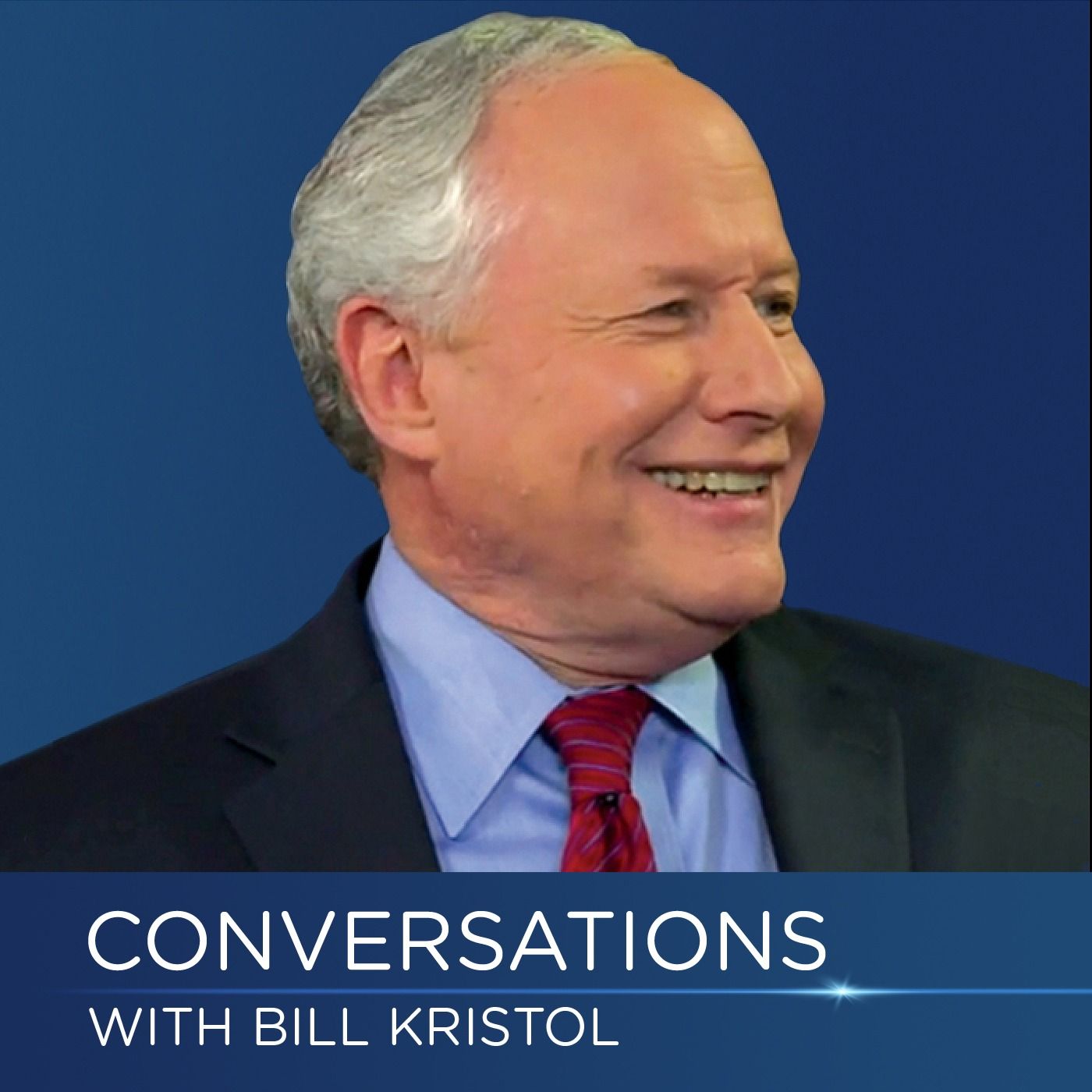
Conversations with Bill Kristol
Bill Kristol
Conversations with Bill Kristol features in-depth, thought-provoking discussions with leading figures in American public life.
Episodes
Mentioned books

Jun 19, 2017 • 1h 11min
Martin Feldstein on America’s Economic Vitality
Martin Feldstein is a professor of economics at Harvard University, former president of the National Bureau of Economic Research, and was chairman of the Council of Economic Advisers under President Reagan (1982-1984). In this Conversation, Feldstein discusses the financial crisis of 2008, the policy mistakes that led to it, and the risks we face today from a sustained policy of low interest rates. Feldstein then shares his perspective on other important questions of political economy—including the costs and benefits of trade, the impact of technological innovation, as well as the need for tax and regulatory reform. Finally, Feldstein recalls his experiences as chairman of the Council of Economic Advisers and explains what we can learn from how Reagan managed the serious economic challenges of the early 1980s.

Jun 3, 2017 • 1h 21min
Josh Bolten on Managing the White House in Moments of Crisis
Josh Bolten was White House Chief of Staff from 2006-2009, having served as Deputy Chief of Staff (2001-2003) and Director of the Office of Management and Budget (2003-2006). In this Conversation, Bolten reflects on his tenure in the George W. Bush administration, particularly his experiences in the White House on September 11, 2001 and responding to the financial crisis of 2008. Bolten and Kristol also discuss the role of chief of staff in the modern presidency more generally and the challenges of creating processes that lead to effective decision making. The Conversation offers a fascinating insider's account of one of the most important and least understood positions in contemporary politics.

May 22, 2017 • 1h 8min
John Walters on the Nation’s Opioid Epidemic
A veteran of the Reagan and George H.W. Bush administrations, John Walters was “Drug Czar” of the George W. Bush administration (director of the White House Office of National Drug Policy from 2001-2009). In this Conversation, Walters discusses the opioid epidemic and the country's shocking passivity about addressing the crisis seriously and comprehensively. Reflecting on the devastating consequences of the opioid threat, Walters makes a compelling case for fighting back—through urgent changes to the way we approach law enforcement, combatting foreign sources of supply, education about drug abuse, and treatment for addiction.

May 8, 2017 • 1h 1min
Senator Ben Sasse on American Society and Culture
Elected in 2014, Ben Sasse is a U.S. Senator from Nebraska. In this Conversation, Sasse shares his thoughts on the state of American society and culture. Drawing on themes from his forthcoming book, The Vanishing American Adult, Sasse highlights an erosion of American civic life and a corresponding decline in work ethic. Along with Bill Kristol, he argues for the importance of a culture that promotes self-reliance and rewards meaningful work. Sasse also reflects on his first years in the Senate and the politics of Washington.

Apr 24, 2017 • 40min
Harvey Mansfield on the Neil Gorsuch Confirmation Hearings
In his twelfth Conversation with Bill Kristol, Harvey Mansfield discusses the Senate’s confirmation hearings for Neil Gorsuch. This event, says Mansfield, “turned out to be a lesson in politics. You were learning from people actually in politics about the issue: What’s the relationship between law and politics?” Beginning from the arguments of Senate Democrats and Republicans, Mansfield explains how the hearings captured the opinions of each party about the proper relationship of politics and law. Mansfield and Kristol also discuss how Aristotle’s reflection on the limits of politics and law might inform our own understanding of politics, law, and the Constitution.

Apr 9, 2017 • 1h 6min
N. Gregory Mankiw: America’s Economy and the Case for Free Markets
Greg Mankiw is a professor of economics at Harvard University and was chairman of the Council of Economic Advisers under President George W. Bush (2003-2005). In this Conversation, Mankiw analyzes the American economy and shares his perspective on current public policy debates about trade, immigration, technological innovation, jobs, and economic growth. Reflecting on the economic challenges the U.S. faces today, Mankiw makes the case for a robust commitment to free markets—both for the sake of America and for the world.

Mar 27, 2017 • 1h 17min
Christopher Caldwell on the Situation in Europe
A senior editor at The Weekly Standard, Christopher Caldwell is one of America’s leading journalists and most thoughtful commentators on Europe. In this Conversation, Caldwell reflects on the difficult situation in Europe today, highlighting what he calls its “demographic, economic, and military weakness.” Caldwell points to demographic decline, stagnant economies, the migrant crisis, the failure to integrate immigrants, and the rise of Islamism as major challenges facing the continent. Finally, Caldwell and Kristol analyze the populist movements and parties in Britain and various European countries and consider how they might shape Europe’s future.

Mar 13, 2017 • 1h 34min
Vin Weber on American Internationalism, Trump, & Our Parties
Vin Weber is a former congressman from Minnesota, a respected political strategist, and a thoughtful analyst of American politics. In this Conversation, Weber reflects on Reaganite conservatism and makes the case for continued American leadership in the world. Kristol and Weber also discuss the Trump presidency, its implications for the Republican Party, and whether Trump’s election portends a breakup of the two party system.

Feb 27, 2017 • 1h 22min
David Axelrod on the Democrats, the Republicans, and President Trump
Former Obama senior adviser David Axelrod discusses the 2016 elections, particularly at the presidential level, and reflects on Hillary Clinton’s campaign and the victory of Donald Trump. He also considers challenges and opportunities for the Democrats and Republicans during the Trump presidency and possible paths forward for both parties. Finally, Kristol and Axelrod discuss the early days of the Trump White House and consider the prospects for his presidency.

Feb 11, 2017 • 1h 27min
Christopher DeMuth And Adam White on Reforming the Administrative State
On how the president, Congress, and courts might go about reforming the administrative state. Christopher DeMuth of the Hudson Institute and Adam J. White of the Hoover Institution diagnose the problems of the modern administrative state and reflect on the often harmful role it plays in our politics. Both lawyers, they offer significant insight into how administrative agencies of the federal government have become increasingly unchecked during the last few decades. DeMuth and White then consider how the Trump administration, Congress, and the courts might go about reforming the administrative state and restoring its accountability.

