

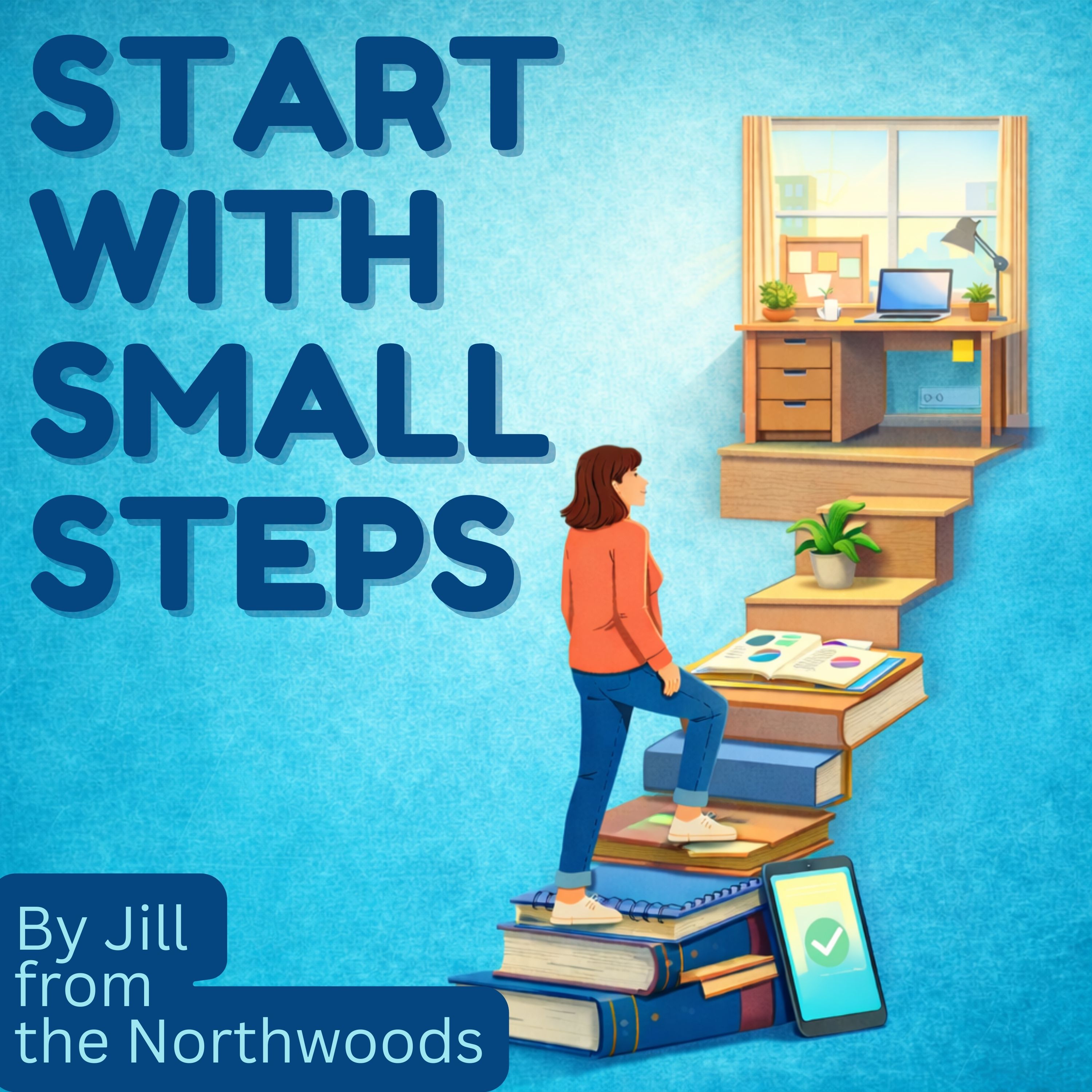
Start with Small Steps
Jill from The Northwoods
Start With Small Steps is a practical, thoughtful podcast about making meaningful progress in everyday life—without overwhelm. Each episode breaks big ideas into small, manageable steps you can actually use, whether you’re working on habits, health, productivity, faith, or personal growth.
Instead of chasing quick fixes or perfect systems, this podcast focuses on steady change, reflection, and realistic action. You’ll hear clear explanations, relatable examples, and simple frameworks designed to help you think better, choose wisely, and keep moving forward—even when life feels complicated or slow.
Start With Small Steps is for anyone who wants growth that fits real life: small actions, honest reflection, and progress that lasts.
Instead of chasing quick fixes or perfect systems, this podcast focuses on steady change, reflection, and realistic action. You’ll hear clear explanations, relatable examples, and simple frameworks designed to help you think better, choose wisely, and keep moving forward—even when life feels complicated or slow.
Start With Small Steps is for anyone who wants growth that fits real life: small actions, honest reflection, and progress that lasts.
Episodes
Mentioned books

Sep 17, 2024 • 30min
204 - The World Through the Five Senses
204 - The World Through the Five Senses
In this episode, we read about the fascinating world of senses based on Gretchen Rubin's book Life in Five Senses. We explore how being more mindful of sight, sound, smell, taste, and touch can profoundly change how we experience life.
Sight: Vision is more than what meets the eye. Our brain fills in the gaps, making sense of incomplete or ambiguous images. We also learn how perception changes based on context, like hunger influencing our view of objects as food.
Sound: Rubin talks about the contrast between city noise and natural quiet. Even silence has its own "noise" if we listen closely. She explores how focusing on everyday sounds, like the hum of traffic or the chop of vegetables, can offer new insights into our surroundings.
Smell and Taste: These senses are strongly linked, guiding our food choices and triggering memories. Rubin reveals how scents like freshly baked cookies can create emotional responses, even influencing decisions like buying a house.
Touch: The pandemic made us realize how much we crave human touch, whether it's a hug or a pat on the shoulder. Touch extends beyond physical connection, including the vibrations of a car or the feel of soft fabrics.
Takeaways:
-Becoming more aware of our senses enriches our experience of the world.-Small steps, like focusing on one sense at a time, can deepen mindfulness.-Rubin encourages us to journal our sensory experiences to enhance memories and appreciation for everyday life.
https://startwithsmallsteps.com/204-the-world-through-the-five-senses/
https://gretchenrubin.com/books/life-in-five-senses/
Jill’s Links
https://abetterlifeinsmallsteps.com
https://affiliate.notion.so/NorthwoodsJill
https://affiliate.notion.so/NorthwoodsAI
https://www.youtube.com/@startwithstartwithsmallstepscast
https://www.buymeacoffee.com/startwithsmallsteps
https://twitter.com/schmern
Email the podcast at jill@startwithsmallsteps.com
Sep 3, 2024 • 16min
203 - Rediscovering Life Through Our Senses
203 - Rediscovering Life Through Our Senses
In this episode, we explore the fascinating world of our senses with insights from Gretchen Rubin's book Life in Five Senses. We discuss how our senses shape our understanding of the world, the ways in which they adapt when one is lost, and how paying attention to them can enhance our everyday experiences.
The Role of Senses in Perception: We explore how our brain processes sensory information to create a complete picture of the world, combining inputs like sight, sound, and smell to form our understanding.
Adaptability of Senses: Rubin shares her experience of losing her sense of smell due to COVID-19 and how this impacted her perception of taste. This temporary loss highlighted the interconnectedness of our senses and their adaptability when one is compromised.
Unique Sensory Experiences: Everyone experiences the world differently through their senses. We discuss how personal preferences, such as taste and smell, vary and how our brain's biases influence these sensory experiences.
Enhancing Sensory Awareness: Rubin's daily visits to the Metropolitan Museum of Art were an attempt to immerse herself fully in sensory experiences. We discuss how such practices can deepen our appreciation of the world around us and bring us more into the present moment.
Takeaways:
Our senses are powerful tools that shape our perception of the world. By paying closer attention to them, we can enhance our experiences and find more joy in everyday life.
The adaptability of our senses is remarkable, showing how our body compensates when one is lost or diminished.
Each person's sensory experience is unique, shaped by their preferences and brain's biases. Embracing these differences can lead to a deeper understanding of ourselves and others.
https://startwithsmallsteps.com/203-rediscovering-life-through-our-senses/
Jill’s Links
https://abetterlifeinsmallsteps.com
https://affiliate.notion.so/NorthwoodsJill
https://affiliate.notion.so/NorthwoodsAI
https://www.youtube.com/@startwithstartwithsmallstepscast
https://www.buymeacoffee.com/startwithsmallsteps
https://twitter.com/schmern
Email the podcast at jill@startwithsmallsteps.com
Aug 20, 2024 • 23min
202 - Wear the Six Thinking Hats
202 - Wear the Six Thinking Hats
In this episode, we explore Edward de Bono’s revolutionary framework, "The Six Thinking Hats." This method offers a structured approach to problem-solving and decision-making by encouraging participants to adopt different mindsets, each represented by a colored hat. We explore how this technique can be applied in various scenarios, from corporate meetings to family discussions, to foster better collaboration and innovative solutions.
Blue Hat: The Blue Hat is all about control and organization. It sets the agenda, defines the problem, and ensures that the discussion remains focused.
White Hat: Focused on facts and information, the White Hat calls for data-driven thinking. It eliminates biases, enabling a clear view of the situation.
Green Hat: Creativity flourishes under the Green Hat. It encourages thinking outside the box, exploring new possibilities and ideas.
Yellow Hat: This hat embodies optimism. It looks at the positives, seeking the benefits and opportunities in any scenario.
Red Hat: The Red Hat allows for the expression of emotions and feelings, which are crucial but often overlooked in decision-making.
Black Hat: Lastly, the Black Hat introduces caution. It highlights potential pitfalls, helping teams to avoid hasty, ill-considered decisions.
Introduction to the Six Thinking Hats: We start by explaining the core concept of the Six Thinking Hats, detailing each hat's role in the decision-making process. Learn how the Blue Hat manages the flow of the discussion, while the White Hat focuses on facts, and the Green Hat unleashes creativity.
Real-Life Applications: Discover how the Six Thinking Hats can be applied to everyday situations, like planning a vacation or making strategic business decisions. We share examples that highlight how this method can transform complex, contentious discussions into productive and inclusive decision-making processes.
The Benefits of Using the Hats: We discuss why the Six Thinking Hats are effective in fostering balanced thinking. By separating emotions from facts and allowing space for creative ideas, this method ensures that all aspects of a problem are considered, leading to well-rounded solutions.
Key Takeaways:
-The Six Thinking Hats method encourages exploring different perspectives to enhance problem-solving and decision-making.-This approach fosters collaboration by ensuring that every viewpoint is considered in a structured manner.-Using the Six Thinking Hats can lead to more innovative, practical, and inclusive solutions, whether in a corporate setting or personal life.
https://startwithsmallsteps.com/202-wear-the-six-thinking-hats/
https://www.debonogroup.com/services/core-programs/six-thinking-hats/
https://www.youtube.com/watch?v=GOMDQgjb360
https://en.wikipedia.org/wiki/Six_Thinking_Hats
Jill’s Links
https://abetterlifeinsmallsteps.com
https://affiliate.notion.so/NorthwoodsJill
https://affiliate.notion.so/NorthwoodsAI
https://www.youtube.com/@startwithstartwithsmallstepscast
https://www.buymeacoffee.com/startwithsmallsteps
https://twitter.com/schmern
Email the podcast at jill@startwithsmallsteps.com
Aug 6, 2024 • 26min
201 - Creating Your Own Luck
201 - Creating Your Own Luck
The intriguing concept of luck as presented in A.H.Z. Carr’s book "How to Attract Good Luck and Make the Most of It in Your Daily Life." challenges the traditional notion of luck as mere chance or superstition, Carr offers a practical approach to creating luck through preparedness and the right mindset.
Redefining Luck: Carr redefines luck as not a mystical force but a product of our responses to opportunities. He emphasizes that luck arises when we are prepared for chance events. For instance, if a piece of paper blows in our path, our decision to pick it up or ignore it can lead to different outcomes. This proactive response is what transforms chance into luck.
Attracting Opportunities: The first step to creating luck is attracting opportunities. Carr argues that being likable and maintaining a zest for life are key factors. Friendly and generous people tend to draw others to them, increasing their chances of encountering opportunities. He also warns against traits like greediness and anxiety, which can repel luck.
Recognizing and Responding to Opportunities: Recognizing opportunities when they arise is crucial. Being alert and attuned to the rhythms of life helps us identify potential in everyday events. Once recognized, acting on these opportunities is vital. Carr shares personal stories and examples to illustrate the importance of timely and appropriate responses to opportunities.
Adapting to Your Environment: Carr highlights the importance of adapting to the rhythms of your environment. Whether in a bustling city or a quiet rural area, recognizing and responding to the unique opportunities in your surroundings can enhance your luck. Understanding and adapting to these rhythms is essential for creating luck.
Takeaways:Luck is about being prepared and responsive to opportunities. By being likable, recognizing opportunities, and acting on them, you can create your own luck. Additionally, adapting to your environment helps in identifying and seizing opportunities, further enhancing your chances of experiencing good luck.
https://startwithsmallsteps.com/creating-your-own-luck/
https://www.goodreads.com/book/show/18079569-how-to-attract-good-luck
Jill’s Links
https://abetterlifeinsmallsteps.com
https://affiliate.notion.so/NorthwoodsJill
https://affiliate.notion.so/NorthwoodsAI
https://www.youtube.com/@startwithstartwithsmallstepscast
https://www.buymeacoffee.com/startwithsmallsteps
https://twitter.com/schmern
Email the podcast at jill@startwithsmallsteps.com
Jul 23, 2024 • 19min
200 - The MEEPS Method for Problem-Solving
The MEEPS Method for Problem-Solving
Change is hard, but with the right strategy, it becomes manageable. The MEMPS method—Motivate, Equip, Nudge, Push, and Shove—offers a structured approach to tackling problems and achieving goals. Here’s how you can apply this method to your own life. The system takes into account the book by Richard Thaler and Cass Sunstein, Nudge.
Motivate The first step is to inspire excitement. Create a vision board, set clear goals, and involve your friends and family for support. Motivation is about fostering a desire for the end result, making the journey towards it exciting and desirable.
Equip Preparation is crucial. Ensure you have everything you need before starting. For example, if you’re aiming to exercise more, have the right clothes, shoes, and a gym plan ready. Properly equipping yourself prevents loss of momentum and sets a solid foundation for success.
Nudge Subtle reminders and small incentives help keep you on track. Whether it’s setting reminders on your phone or using apps like Streaks, gentle nudges maintain progress without overwhelming pressure. They serve as friendly prompts to keep you moving in the right direction.
Push Sometimes, a firmer approach is necessary. Set clear, measurable benchmarks and involve others to hold you accountable. If mornings aren’t working for your exercise routine, adjust the plan. Direct actions, like placing alarm clocks away from your bed, ensure you take the necessary steps towards your goals.
Shove This is the last resort. It involves significant consequences or commitments that make it almost impossible not to follow through. For instance, committing to give away money if you don’t achieve a goal can be a powerful motivator. While harsh, shoves ensure that critical goals are met.
The MEMPS method is versatile and can be tailored to various goals, from health and fitness to professional development. By following these steps, you create a structured pathway to success, ensuring that every effort you make brings you closer to your desired outcome. Start with motivation, prepare yourself, nudge gently, push when needed, and reserve the shove for when it’s absolutely necessary.
https://www.youtube.com/watch?app=desktop&v=Y7BoHeGhB0I
https://startwithsmallsteps.com/the-meeps-method-for-problem-solving/
Jill’s Links
https://abetterlifeinsmallsteps.com
https://affiliate.notion.so/NorthwoodsJill
https://affiliate.notion.so/NorthwoodsAI
https://www.youtube.com/@startwithstartwithsmallstepscast
https://www.buymeacoffee.com/startwithsmallsteps
https://twitter.com/schmern
Email the podcast at jill@startwithsmallsteps.com
Jul 9, 2024 • 27min
199 - Overcoming Costs and Creating Incentives
199 - Overcoming Costs and Creating Incentives
This episode examines how costs, incentives, and biases influence our behavior and decision-making processes. Drawing from both economics and psychology, we discuss strategies to identify and manage these factors effectively, ensuring better outcomes in personal a nd professional scenarios.
The Role of Incentives: We explore how incentives, whether financial, social, or intrinsic, significantly impact behavior. From bonuses at work to rewards for good grades, incentives motivate us by offering tangible or intangible benefits. Stephen Levitt’s work highlights how even small incentives can drive substantial changes in behavior. We discuss various examples and the importance of creating effective incentive structures.
Understanding Costs: Costs are not limited to financial expenses; they also include time, stress, and opportunity costs. We delve into how evaluating these costs helps in making more informed decisions. Real-life examples illustrate the hidden costs we often overlook. Understanding the full spectrum of costs associated with our decisions is crucial for making better choices.
Psychological Influences: Behavioral economics combines psychology and economics to understand decision-making biases. We discuss common biases, such as resistance to change and the preference for immediate rewards, and how they affect our choices. By recognizing these biases, we can develop strategies to overcome them and make more rational decisions.
Managing Costs and Enhancing Incentives: To make better decisions, it’s essential to identify and manage costs effectively. We cover strategies for recognizing direct and indirect costs and mitigating them through informed planning.
Additionally, we discuss the importance of clear goals and rewards, visible progress tracking, and regular reassessment of incentive programs to ensure they lead to desired behaviors without unintended negative consequences.
Takeaways:
Understanding and balancing costs and incentives is essential for making informed decisions and fostering positive behavior changes. By recognizing the true costs of our actions and strategically implementing incentives, we can improve our personal and professional lives. Join us as we explore these concepts and learn how to navigate costs and incentives for better decision-making.
https://startwithsmallsteps.com/199-overcoming-costs-and-creating-incentives/
Jill’s Links
https://abetterlifeinsmallsteps.com
https://affiliate.notion.so/NorthwoodsJill
https://affiliate.notion.so/NorthwoodsAI
https://www.youtube.com/@startwithstartwithsmallstepscast
https://www.buymeacoffee.com/startwithsmallsteps
https://twitter.com/schmern
Email the podcast at jill@startwithsmallsteps.com
Jun 25, 2024 • 25min
198 - Navigating the Challenges of People Pleasing
198 - Navigating the Challenges of People Pleasing
In this episode, we explore the often-overlooked downside of being too nice. Drawing from "Anxious to Please: Seven Revolutionary Practices for the Chronically Nice" by James Rapson and Craig English, we discuss how chronic people pleasing can impact mental health, relationships, and personal fulfillment. We offer practical strategies to help listeners find a balance between kindness and self-respect.
The Hidden Costs of People Pleasing: Chronic people pleasing can lead to low self-esteem, depression, and strained relationships. It often involves second-guessing oneself and constantly seeking approval.
Recognizing Over-Accommodation: Awareness is the first step towards change. It is crucial to identify situations where one is overly accommodating and reflect on the emotions and thoughts behind these behaviors.Steps to Reclaim Your Authenticity:
Small Acts of Self-Assertion: Start with minor actions like suggesting a restaurant or declining additional work.
Forgiveness and Patience: Changing ingrained habits takes time. Be kind to yourself throughout the process.
The Desert Practice: Spending time alone helps one reconnect with one’s personal desires and needs. This practice encourages listening to one's own voice away from external influences.
Developing a Personal Ethic: Adopt a mindset similar to a warrior who acts based on personal ethics rather than automatic niceness. This involves making conscious decisions aligned with personal values.Takeaways:
Balance Kindness with Self-Respect: It's essential to be kind without compromising one’s own well-being. Awareness and small steps towards self-assertion can help achieve this balance.
Practice Solitude: Regularly spending time alone helps you understand and prioritize your needs.
Conscious Decision Making: Acting based on personal ethics rather than habitual niceness leads to a more authentic and fulfilling life.
https://startwithsmallsteps.com/198-breaking-free-from-people-pleasing/
https://www.amazon.com/Anxious-Please-Revolutionary-Practices-Chronically-ebook/dp/B001U29UDK
Jill’s Links
https://abetterlifeinsmallsteps.com
https://affiliate.notion.so/NorthwoodsJill
https://affiliate.notion.so/NorthwoodsAI
https://www.youtube.com/@startwithstartwithsmallstepscast
https://www.buymeacoffee.com/startwithsmallsteps
https://twitter.com/schmern
Email the podcast at jill@startwithsmallsteps.com
Jun 17, 2024 • 19min
197 - Seven Key Questions to Be Self-Aware
197 - Seven Key Questions to Be Self-Aware
Understanding our essential self is a journey, one that requires introspection and a willingness to ask challenging questions. We look into these questions, drawing from Dain Dunston's book, Being Essential: Seven Questions for Living and Leading with Radical Self-Awareness. This two-part series emphasizes the importance of self-awareness in navigating life's journey and achieving personal growth.
1 Where Are You? This foundational question urges listeners to evaluate their current life position, not just physically but emotionally and psychologically. It sets the stage for understanding one’s starting point in the journey of self-awareness.2 Why Are You Here? Delving into the meaning behind our existence and actions, this question helps listeners identify their life’s purpose, providing a clear direction and making everyday challenges more manageable.3 Who Are You Being? Examining the roles we play in life, this question distinguishes between our essential and synthetic selves, encouraging authentic living.4 What Do You Want? Understanding our desires and goals is crucial. This question helps listeners align their actions with their true aspirations, creating a cohesive path forward.5 What Wants to Happen? This metaphysical inquiry explores the broader direction of our lives, encouraging alignment with the larger movements of the world or our community.6 What Don’t You Know? Acknowledging knowledge gaps and seeking to fill them is essential for growth. Confronting the unknowns that hinder progress is a key aspect of self-awareness.7 How Does This Feel? Assessing our emotional responses to our journey helps us navigate its complexities. Mixed feelings are natural, and understanding them aids in personal development.
Takeaways:• Reflecting on these seven questions can lead to a deeper understanding of oneself, promoting personal growth and a more fulfilling life.• Small steps towards self-awareness, as emphasized by Burroughs, can significantly impact overall well-being.Authenticity in our roles and understanding our true desires are essential components of a meaningful life journey.
https://startwithsmallsteps.com/seven-key-questions-to-be-self-aware/
https://daindunston.com/books/
Jill’s Links
https://abetterlifeinsmallsteps.com
https://affiliate.notion.so/NorthwoodsJill
https://affiliate.notion.so/NorthwoodsAI
https://www.youtube.com/@startwithstartwithsmallstepscast
https://www.buymeacoffee.com/startwithsmallsteps
https://twitter.com/schmern
Email the podcast at jill@startwithsmallsteps.com
Jun 10, 2024 • 13min
196 - Your Essential Being
196 - Your Essential Being
In this episode, we explore the concept of radical self-awareness, a transformative practice that allows us to reconnect with our core identity. Inspired by Dane Dunstan's book "Being Essential: Seven Questions for Living and Leading with Radical Self-Awareness," we delve into how understanding our essential self can help us navigate life with clarity and purpose.
Key Takeaways:
Understanding Radical Self-Awareness: It's a practice that combines emotional intelligence, perceptiveness, and critical thinking. It involves recognizing our strengths, weaknesses, and motivations to lead our minds effectively.
Overcoming External Labels: We often get boxed into outdated perceptions by those around us. Embracing our evolved selves requires breaking free from these labels and understanding our true identity.
The Essential Child: Revisiting childhood passions and moments of pure joy can guide us in understanding what makes us feel alive. These core desires help align our lives with our authentic selves.
Identifying Genuine Aspirations: Many pursue goals imposed by societal norms, leading to unfulfillment. Identifying what we genuinely want allows us to set meaningful goals and make authentic choices.
Reflective Questions: Dunstan suggests using introspective questions to explore our essential self. Reflecting on where we feel most alive and what excites us provides insights into our true nature.
https://startwithsmallsteps.com/196-your-essential-being/
Jill’s Links
https://abetterlifeinsmallsteps.com
https://affiliate.notion.so/NorthwoodsJill
https://affiliate.notion.so/NorthwoodsAI
https://www.youtube.com/@startwithstartwithsmallstepscast
https://www.buymeacoffee.com/startwithsmallsteps
https://twitter.com/schmern
Email the podcast at jill@startwithsmallsteps.com
Jun 3, 2024 • 23min
195 - Shortcuts in Achieving Goals
195 - Shortcuts in Achieving Goals
In our pursuit of goals, the question often arises: is it acceptable to use shortcuts? This topic is more nuanced than it appears, blending practical considerations with ethical ones. Let's explore the implications of using shortcuts to achieve goals and how they impact our learning, integrity, and success.
Shortcuts are often perceived negatively, equated with cheating or avoiding hard work. However, not all shortcuts are created equal. Tools like AI, productivity apps, and medical interventions can provide a leg up without compromising our values. For instance, scheduling software helps organize tasks and bills, improving efficiency without undermining our skills. This raises an essential question: when do shortcuts hinder personal growth, and when do they facilitate it?
Consider health and weight loss. Tools like Ozempic or gastric bypass surgery offer quick results but can bypass the critical learning process associated with lifestyle changes. This perspective is echoed by many who argue that reliance on such tools may lead to regaining weight once the shortcut is removed. The key issue here is whether these shortcuts help achieve long-term, sustainable health improvements or merely provide a temporary fix.
Similarly, in education and work, tools like AI can aid learning and productivity. For example, using Grammarly to improve writing can be educational, offering insights into common mistakes. However, outsourcing tasks like writing a book or completing assignments can lead to dependency and a lack of skill development. Using apps like Merlin to learn bird calls can be instrumental in finding and learning more about birds. People who already know the birds can scorn the app, but instead, they should look at it as an educational tool if people use it correctly.
For instance, I experience with weight loss—both through structured programs and gradual, self-directed efforts—demonstrates the importance of balancing immediate results with long-term habits. The same principle applies to financial management, where learning through experience often proves more valuable than quick fixes like debt bailouts.
Yet, shortcuts are not inherently negative. They can be beneficial when they provide necessary support without completely replacing personal effort. AI tools for content creation, for instance, can enhance productivity while still requiring user input and creativity. Similarly, health apps and wearable technology can promote fitness by offering motivation and tracking progress.
Ultimately, the decision to use shortcuts should be guided by their impact on learning and personal development. If a shortcut merely offers a temporary solution without fostering growth or understanding, it may be counterproductive. However, if it serves as a stepping stone towards greater efficiency and knowledge, it can be a valuable tool.
In conclusion, shortcuts can be both beneficial and detrimental, depending on their application and the individual’s approach. Balancing the use of shortcuts with a commitment to personal growth and ethical considerations ensures that they serve as aids rather than crutches in achieving our goals.
https://startwithsmallsteps.com/195-shortcuts-in-achieving-goals/
Jill’s Links
https://abetterlifeinsmallsteps.com
https://affiliate.notion.so/NorthwoodsJill
https://affiliate.notion.so/NorthwoodsAI
https://www.youtube.com/@startwithstartwithsmallstepscast
https://www.buymeacoffee.com/startwithsmallsteps
https://twitter.com/schmern
Email the podcast at jill@startwithsmallsteps.com

