

The Modern Manager
Mamie Kanfer Stewart
Host Mamie Kanfer Stewart shares practical approaches to help you be a great manager. Learn more at: https://themodernmanager.com/
Solo episodes are like mini-courses, providing actionable tips based on experience and research. Guest episodes are engaging conversations that elicit insights and suggestions for how to apply the ideas.
Learn more about effective meeting practices, communication skills, managing conflict, team building, time management, group dynamics, goal setting and accountability, team competencies, productivity and collaboration technologies, organizational culture, and more.
Be sure to follow the podcast on your favorite platform so you never miss a new episode!
Solo episodes are like mini-courses, providing actionable tips based on experience and research. Guest episodes are engaging conversations that elicit insights and suggestions for how to apply the ideas.
Learn more about effective meeting practices, communication skills, managing conflict, team building, time management, group dynamics, goal setting and accountability, team competencies, productivity and collaboration technologies, organizational culture, and more.
Be sure to follow the podcast on your favorite platform so you never miss a new episode!
Episodes
Mentioned books
May 10, 2022 • 40min
203: Cultivating Psychological Safety with Teresa Mitrovic
People that don't feel safe in their work can't reach their full potential. Psychological safety can make the difference between a productive and innovative workplace, and one where employees feel the need to keep their heads down. As managers, it's our responsibility to create a culture of psychological safety so our team members can communicate well, produce better results, and be their authentic selves.
Today’s guest is Teresa Mitrovic. Teresa is the founder of ORO Collective, as well as a consultant, coach, course creator, and author specializing in performance, psychological safety, and trust. In her past life as a corporate leader, when the increasing demands of senior leadership clashed with single parenthood, Teresa pivoted her career to coaching leaders.
Teresa and I talk about psychological safety and how to foster an environment in which people speak up, give feedback, show up authentically, and act without fear.
Members of the Modern Manager community get Teresa’s Coaching as a Manager guide. This video walk-through will help you refine the relationship you have with your team and begin the process of converting emotional tension into creative tension, while helping your team to learn, fail and continually develop with greater psychological safety. Get it when you join the Modern Manager community.
Subscribe to my newsletter to get episodes, articles, and free mini-guides delivered to your inbox.
Read the related blog article: Foster Psychological Safety Within Your Team
KEEP UP WITH TERESA
Website: https://www.orocollective.space/
Instagram: https://www.instagram.com/teresamitrovic/
Facebook: https://www.facebook.com/orocollectiveteam
LinkedIn: https://www.linkedin.com/newsletters/the-psych-safety-project-6892397826123423744/
Key Takeaways:
Psychological safety is the feeling that you can speak up and be vulnerable in front of your boss and colleagues without fear of judgment or repercussions.
When we feel safe, we go into “Connect Mode” which activates the prefrontal cortex. We think creatively, expansively, and feel confident sharing our thoughts.
When stressed, we go into “Protect Mode” which activates the limbic brain. We go into flight/fright/freeze and feel afraid to speak up.
Have individual conversations with employees about why they are hesitating to speak. Tell them you value their opinions and ask what they would contribute to the conversation.
People from different cultures build trust differently. Also, trauma experiences impact one’s ability to build trust.
Pay attention to signs that employees feel unsafe. What perceived risks might they see?
Deep internal conditioning of how managers and employees would act (all-knowing or obedient) may affect one’s mindset about what’s appropriate to share.
Celebrate when your team speaks up, even if it’s hard to hear. Acknowledge the truth of their lived experiences. Give yourself time to digest and get back to them if you disagree.
A psychologically safe environment means that all team members show respect for one another’s contributions.
If someone speaks in a disrespectful manner, thank them for sharing while asking them to express themselves differently. When damaging behavior is caught and corrected, people will feel safer being vulnerable.
Additional Resources:
Episode 56: It all Boils Down to Psychological Safety
mamie@mamieks.com
instagram.com/mamieks
May 3, 2022 • 34min
202: Managing the Boundaries of Personal and Professional with Deborah Grayson Riegel
For many people, the pandemic blurred the lines between personal and professional spaces. While this had many benefits such as bringing people closer together, it also created ambiguity that is challenging for managers to navigate. How can managers best create and maintain boundaries while supporting their team members’ whole selves?
Today’s guest is Deborah Grayson Riegel. Deborah is a keynote speaker, executive coach, and consultant who has taught leadership communication for Wharton Business School, Duke Corporate Education, Columbia Business School’s Women in Leadership Program, and the Beijing International MBA Program at Peking University. She is the co-author of “Go to Help: 31 Ways to Offer, Ask for, and Accept Help” and "Overcoming Overthinking: 36 Ways to Tame Anxiety for Work, School, and Life” — both written with her daughter Sophie, who is Junior at Duke.
Deborah and I talk about how to navigate the tricky situation of personal life bleeding into work life. We discuss setting boundaries and building relationships as well as how to support someone who is struggling in their personal life and what to do when it starts impacting their performance at work.
Get Deborah’s guide How To Have A C.A.L.M.E.R. Conversation About Mental Health At Work. This guide includes an overview of the C.A.L.M.E.R. approach that makes these difficult conversations easier for both parties. Get it when you join the Modern Manager community.
Subscribe to my newsletter to get episodes, articles and free mini-guides delivered to your inbox.
Read the related blog article: How to Take Care of Stressed Out Employees
KEEP UP WITH DEBORAH:
LinkedIn: https://www.linkedin.com/in/deborahgraysonriegel/
Facebook: https://www.facebook.com/deborahgraysonriegel
Book: Go To Help
Book: Overcoming Anything
Key Takeaways:
Be intentional and explicit about setting personal boundaries at work. Connect with each person about what feels right for them.
If you’re shifting from a peer to a manager role, talk abou what will change and what will stay the same about your relationship.
Follow the APGAR acronym to notice early warning signs of stress in colleagues.
A= Appearance. Notice signs of stress and ask how they’re sleeping.
P= Performance. Ask how they feel about their workload.
G= Growth. Is there anything exciting for them at work to do?
A= Affect Control. What is stressing them at work?
R= Relationships. Who do they have at work/home to support them?
When someone comes to you for support or to unload personal issues, switch your mindset from “What Can I Do” to “Who Do I Want To Be” in this moment.
You don’t need to solve your employee’s personal problems. You are a bridge to other resources.
Give your stressed employee flexibility and then ask your manager for advice on picking up the slack. Speak with your team to decide together how to handle the shift in workload. Offer the extra work as a growth opportunity to someone who might benefit from the added or expanded responsibility.
Establish a timeframe about when work pace will go back to normal. Check in frequently about progress and how they’re doing.
mamie@mamieks.com
www.instagram.com/mamieks
Apr 26, 2022 • 31min
201: Developing a Work Ecosystem That Works for Everyone with Emily Esterly
Organizations across the globe are reconsidering how, when, and where work gets done. As offices reopen and employees desire more flexibility, now is the time for teams and organizations to design a work ecosystem that meets today's needs while setting people up for the future.
Today’s guest is Emily Esterly. Emily has nearly 15 years of experience in roles spanning HROD, corporate strategy, economic development, workforce development, and corporate sustainability. At GOJO, her HROD and Enterprise Strategy roles have focused on advancing innovative ways of working across its highly collaborative networked organization to ensure the company stays adaptive as it grows in a highly complex and ever-changing world. Her aim is to ensure both teams and individuals at GOJO reach their full potential, thriving personally and professionally, and delivering on the company’s Purpose of Saving Lives and Making Life Better out in the world.
Emily and I talk about the new Work Ecosystem that GOJO is rolling out to address new ways of collaborating, flexible work, and bringing the organization into the future.
Members of the Modern Manager community get a detailed diagram that explains GOJO’s work ecosystem. Get it, along with dozens of other guest bonuses and episode guides, when you join the Modern Manager community.
Subscribe to my newsletter to get episodes, articles and free mini-guides delivered to your inbox.
Read the related blog article: A New Work Ecosystem for the Future
KEEP UP WITH EMILY
LinkedIn: https://www.linkedin.com/company/gojo-industries/
Website: www.gojo.com
Key Takeaways:
Organizations need to design a work ecosystem that combines remote and onsite workers so that people thrive and work is done effectively.
The four role types to consider are: mostly onsite, mostly virtual, blended weekly, and blended monthly. These roles are based on what an employee needs in order to complete their work.
Mostly onsite workers need access to special equipment or facilities, and spend 80% of their time in the office.
Mostly virtual workers spend 80% of their time working remotely.
Blended weekly workers need to be in the office 40-60% of their time to partake in important relationships building activities and work that needs in person collaboration or oversight.
Blended monthly workers go to the office a few times a month for ‘moments that matter’ such as project kick offs and relationship building activities.
Assume that meetings will always include at least one remote participant. Design meetings as hybrid from the start even if you are hoping it will be entirely in person, just to be prepared.
Think about what types of equipment and interactions will make the hybrid meeting a success. Consider using screens, videos, audio, and activities that will create an inclusive experience for both in person and remote participants.
An effective work ecosystem begins with improving daily digital collaboration tools. Use live shared documents, chat, and survey tools rather than defaulting to meetings all the time.
As you collaborate more asynchronously, you build a case for hybrid work schedules and effective remote teaming.
Additional Resources:
GOJO Work Ecosystem Blog Post
GOJO Work Ecosystem Video
mamie@mamieks.com
instagram.com/mamieks
Apr 19, 2022 • 24min
200: Mamie’s Favorite Takeaways from 200 Episodes
Today I’m celebrating 200 episodes. This feels like a major accomplishment. When I launched the show in May 2018, just getting to 10 episodes felt a little overwhelming. Now, looking back, I’m so proud of what I was able to do and how many managers like yourself I’ve been able to help. It’s because of you that I create this show week after week.
For this special 200th episode, I looked back over the guest episodes and thought about what ideas really stood out for me. While every episode has golden nuggets, I chose 5 key takeaways that have impacted or stayed with me in some way. I hope you find these ideas useful, but more importantly, I hope you’ll scroll back into the feed and check out older episodes even if you have already listened to them. There are some truly great conversations and solo episodes in the archive. And listening to a show for a second time helps us hear new things because we’ve grown and evolved since we first listened.
Get 20% off all levels of The Modern Manager annual membership. Use code CELEBRATE200 at www.themodernmanager.com/join. Offer expires on May 1, 2022.
The full episode guide includes details on how to take action on each learning’s next step. Get it when you join the Modern Manager community or purchase the full guide at www.themodernmanager.com/shop.
Get the free mini-guide at themodernnmanager.com/miniguides.
Subscribe to my newsletter to get episodes, articles and free mini-guides delivered to your inbox.
Read the related blog article: 5 Management Takeaways From 200 Episodes
Key Takeaways:
A heartfelt thank you to my listeners, members of The Modern Manager community and all my guests!
Reflection is thinking about what you could have done better. Introspection is asking yourself why you had that reaction. Use introspection to get to the root of your challenges.
When driving a car, an intersection dictates rules the driver obeys. A stoplight has strong control rules that reduce driver autonomy. A roundabout puts more trust and responsibility on the driver to make his own decisions. Roundabouts are more effective, safer, and cheaper.
Apply the stoplight / roundabout metaphor at work. Create more roundabout processes at work for an increase in motivation, critical thinking, and ownership.
If your reaction to an opportunity isn’t a Hell Yeah (super excited response), you’re likely best off turning it down. We can easily rationalize all the things we should do, but it’s these activities that eat up our valuable time, often with little return.
Exercising new DEIB muscles is uncomfortable because of fear of doing the wrong thing. It’s okay to feel awkward or make mistakes. Model taking risks and learning from missteps. Put together a board of advisors or a single trusted individual who can give you honest feedback when you misstep.
Balancing on a bike is only good if you want to keep going in the same direction. To change course, you need to lean to one side and then counterbalance. Do the same with all of your responsibilities. Don’t try to do everything all at once. Choose what to focus on and go for it. Then, lean into the next when appropriate.
Additional Resources:
Episode 52: Looking Back, Looking Forward
Episode 167: Cultivate A Culture Of Love With Mohammad Anwar and Frank Danna
Episode 53: Moving Beyond Modern Management with Aaron Dignan
Episode 179: Free Your Time For What Matters Most with Dorie Clark
Episode 89: Growing into an Inclusive Leader with Jennifer Brown
Episode 106: Living Your Most Productive Life with Tonya Dalton
mamie@mamieks.com
Instagram: mamieks

Apr 12, 2022 • 34min
199: How to Get Thoughtfully Fit with Darcy Luoma
Athletes train their bodies with intention. They practice their chosen activity but also take time to develop the skills needed for high performance. If our bodies benefit from both “playing the game” and “training in the gym”, why wouldn’t that same approach be true for our brains?
Today’s guest is Darcy Luoma. Darcy is the author of Thoughtfully Fit® and a highly sought-after coach and consultant who has worked with more than five hundred organizations in forty-eight industries to create high-performing people and teams. She balances her thriving business with raising her two energetic teenage daughters and competing in triathlons.
Darcy and I talk about lessons from her book Thoughtfully Fit: Your Training Plan for Life and Business Success. As you’ll hear, she uses the metaphor of being physically fit and applies it to how we think about our mental and emotional fitness so that we can be effective managers and effective humans in general.
Members of the Modern Manager community can win one of two available signed copies of Darcy’s book, Thoughtfully Fit: Your Training Plan for Life and Business Success. To be eligible, you must be a member. Join by visiting the Modern Manager community.
Subscribe to my newsletter to get episodes, articles and free mini-guides delivered to your inbox.
Read the related blog article: Train Your Brain to Succeed at Work
KEEP UP WITH DARCY
Facebook: https://www.facebook.com/darcyluoma/Facebook Group: https://www.facebook.com/groups/thoughtfullyfitTwitter: @DarcyLuomaInstagram: @darcyluomacoachingLinkedIn Personal - https://www.linkedin.com/in/darcyluoma/LinkedIn Company - https://www.linkedin.com/company/darcy-luoma-coaching-&-consulting-llcYoutube: https://www.youtube.com/channel/UCaMLTzKl2YO5olR6V23aaXAPinterest: https://www.pinterest.com/darcyluoma/Book: Thoughtfully Fit on Amazon
Key Takeaways:
Just as athletes train to succeed, managers and employees can train to succeed at work.
There are six main skills to develop in order to achieve high performance in the workplace; stillness, strength, endurance, flexibility, balance, and agility.
For rest, create scheduled breaks in your day to recharge and think more clearly.
For strength, develop self-management techniques to shake off stress and interact positively with colleagues.
For endurance, learn how to get unstuck by sticking with problems and looking for creative solutions.
For flexibility, stretch yourself to accept others how they are and work with what you have.
For balance, try to align what you need with what your teammates need to reach a common goal.
For agility, respond thoughtfully instead of defensively or chaotically when faced with upset colleagues or a surprising situation.
Build your “core” by learning to (1) pause, (2) reflect, and (3) respond thoughtfully as issues come up. Set scheduled times during the day to do this which will help tap into this practice when you need it during a tough moment.
Teach your team to create boundaries and respect them. Creating times of stillness is essential so they don’t get overwhelmed and quit.
mamie@mamieks.com
instagram.com/mamieks
Apr 5, 2022 • 33min
198: Elevate Yourself and Your Team Through Coaching with Dr. Richard Levin
Whether you're a leader or a manager, the chances are that you occasionally (or regularly) find yourself dealing with difficult situations. Coaching is an increasingly popular way of helping people develop the skills, habits, and mindsets needed to reach their full potential by better understanding themselves, their goals, and the situations they encounter.
Today’s guest is Dr. Richard Levin. Richard is widely recognized as one of the first executive coaches. He is one of a half-dozen global leaders who have created and shaped the coaching profession since its inception in the 1980’s.
As the founder and principal of Richard Levin & Associates (the first executive coaching firm, and the first network of independent executive coaches); as co-author of the popular and powerful book Shared Purpose: Working Together to Build Strong Families and High Performance Companies; and as a founder of Boston University’s Center on Work and Family, Richard has stretched the boundaries of creativity, inclusiveness, and collaboration to build extraordinary organizations.
Richard and I talk about coaching - what coaching is, how it's different from therapy or advising, who should get coaching, the future of coaching, and what to do if you or a team member want coaching but your organizanization doesn't have the budget for it.
Members of the Modern Manager community get a resource packet that consists of CFAR’s boldest thinking on executive coaching, strategy, culture, and organizational behavior. This valuable resource includes learnings and writings of CFAR’s top leaders and has never before been available to the public. Get it when you join the Modern Manager community.
Subscribe to my newsletter to get episodes, articles and free mini-guides delivered to your inbox.
Read the related blog article: Executive Coaching Isn’t Just for Executives
KEEP UP WITH RICHARD
Website: www.cfar.com
LinkedIn: https://www.linkedin.com/in/richardjlevin/
Website Bio: https://www.cfar.com/Levin/
Key Takeaways:
Dr. Richard Levin, a psychologist by training, founded the world’s first “executive coaching firm” in the 1980’s. Since then, the field has grown exponentially.
Coaching helps leaders become their best selves. It can include everything from avoiding burnout to communication skills.
Coaches act as thought partners to figure out solutions togethers. Experienced coaches can offer advice but the best solutions tend to come from within the client.
Coaches can observe managers and their teams in real time in order to get first-hand information. Nowadays they can do it virtually via Zoom.
Professional coaches are not just for C-Suite executives but for any employee who wants to develop.
Large organizations are starting to hire coaches for each manager. This allows managers to keep confidences with their client while also working with other coaches to identify systemic issues and trends within the organization.
Consultants and coaches are starting to work together to make large-scale changes that uplift the entire organization.
Ask your manager about the possibility of working with a coach to support your growth. Be specific about what you want to develop and how coaching could enable you to better deliver results.
Suggest a team member work with a coach only if they can identify their areas for growth, have a desire to change, and believe in coaching as an approach.
Additional Resources:
Explore coaching with Mamie
mamie@mamieks.com
instagram.com/mamieks
Mar 29, 2022 • 16min
197: Coordinating Synchronous and Asynchronous Communications
It seems like every day there is a new communications app or an advance in communications technology capabilities. These tools are intended to help us collaborate more effectively with our team, but they can also lead to a tangled web of information and a messy communication system. Plus, teams are exploring new ways of working as hybrid work slowly replaces fully remote teaming. Given the foundational nature of communications, intentionally designing your communication practices can elevate and streamline your effectiveness.
Today's episode is about synchronous and asynchronous communication. In short, synchronous means we’re all physically present at the same time. Asynchronous means each person is communicating independently of others’ timing. Communication is at the heart of how people work together, so getting the right tools, processes, and norms in place for your team to facilitate effective synchronous and asynchronous communication is essential. I’ll share 3 key principles to consider when designing how your team will use its various communication modes, and then I’ll walk through the approach to create a communication guide so your team can get aligned on how you’ll communicate and document it for future reference.
The full episode guide includes more details on the process and principles along with my thoughts on which synchronous and asynchronous practices are most effective for what types of activities and why. I also include some of my favorite tools in case you’re looking to add some to your toolbox and want a short list to start with. Get the episode guide when you join the Modern Manager community or purchase the full guide at www.themodernmanager.com/shop.
Get the free mini-guide at themodernnmanager.com/miniguides.
Subscribe to my newsletter to get episodes, articles and free mini-guides delivered to your inbox.
Read the related blog article: Harmonize Synchronous and Asynchronous Communications
Key Takeaways:
Synchronous communication is being present at the same time together (i.e. a meeting). Asynchronous communication is independent of others' timing.
The fewer the tools your team uses to communicate, the better. The goal is to identify the right communication method and use the simplest tools with minimal overlap.
Create templates to streamline everything from meetings and agendas to email subject lines.
Experiment with trying asynchronous communications first until it’s no longer working. Think of meetings as a last resort rather than a starting point, except for relationship building and discussing sensitive topics.
When making a Communications Guide, start by discussing with your team why it’s important and what you hope to achieve by clarifying the communication norms.
Explore what’s working and what’s breaking down in terms of communication in order to identify what practices and tools to keep and what new to try.
Make preliminary decisions for new communication approaches and follow through on them. Check in weekly as a team to see how it’s working and adjust as needed.
Additional Resources:
Episode 63: Creating a Team Playbook with Millie Blackwell
mamie@mamieks.com
instagram.com/mamieks
Mar 22, 2022 • 39min
196: Improve Performance by Improving Executive Functioning with Michael Delman
How we go about our work can make or break our productivity and effectiveness. The ability to meet deadlines, stay calm under pressure, develop a project plan and focus on a task without checking email every five minutes are all part of the skillset known as executive functioning. While this part of our brain develops throughout childhood, many of us still struggle with executive functioning as adults. Luckily, like any skill, we can develop them.
Today’s guest is Michael Delman. Michael is the CEO of Beyond BookSmart and WorkSmart Coaching. Author, Executive Function Coach, and School Founder, his career has been centered for three decades on helping people become more effective.
Michael and I talk about the four groups of executive functioning skills, how these show up in the workplace, what you can do to better perform in your role and how to better engage with your team using executive functioning strategies.
Members of the Modern Manager community get $100 off their executive functioning coaching membership or a staff training engagement. Get it when you join the Modern Manager community at the Sprout level or above.
Subscribe to my newsletter to get episodes, articles and free mini-guides delivered to your inbox.
Read the related blog article: Learn The Art Of Self-Management
KEEP UP WITH MICHAEL
Website for kids: https://www.beyondbooksmart.com/
Website for adults: https://www.worksmartcoaching.com/
Facebook: https://www.facebook.com/beyondbooksmart
Book: You're Kid's Gonna Be Okay: Building the Executive Function Skills Your Child Needs in the Age of Attention
Key Takeaways:
Executive functioning skills are habits for self-management. They can be broken down into four categories, known as COPS. Calm, Organize, Plan and Prioritize, Start and Stay focused.
The prefrontal cortex doesn’t function well under stress. Prepare adequately to reduce stress buildup. Use breathing techniques to calm down your emotions. Use cognitive thinking tricks like having perspective to see the big picture, to take the pressure off.
Organization includes the elements of STOP; Space, Time, Objects, and People.
Consider how to set up your environment to help you be most effective. Allot yourself enough time to accomplish projects. Have all objects you need at your disposal and put away distracting objects. Know who you can go to when stuck; whether a colleague or a website.
Prioritize by deciding on the most important thing you need to get done that day. Consider what is blocking your organization or team’s success.
Communicate all decisions, expectations, and roles clearly to all team members. Put it in writing in a central location so everyone can refer to it.
When overwhelmed or procrastinating, break down large tasks into smaller ones. Set a timer for 5 minutes and start a task.
When talking with a colleague about improving their executive functioning skills, normalize their difficulties by expressing that it’s common.
Additional Resources:
Episode 178: What Are Executive Functioning Skills
Episode 182: Improve Your Executive Functioning Skills
mamie@mamieks.com
Follow me on instagram.com/mamieks
Mar 15, 2022 • 31min
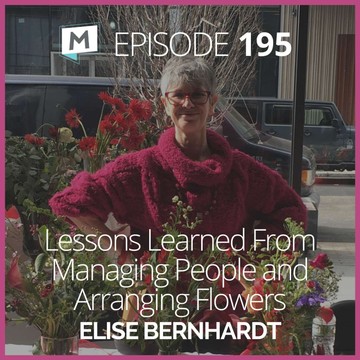
195: Lessons Learned From Managing People and Arranging Flowers with Elise Bernhardt
Managers know the value of team building, but not all activities are effective or right for your people. Traditional team-building activities like ropes courses, paintball games, or scavenger hunts often don’t speak to millennials or employees in other generations. They can also be competitive instead of collaborative, or require physical abilities that not everyone is capable of. Instead, managers can look for activities that are fun, accessible, and translate into productive relationships in the workplace, like floral design.
Today’s guest is Elise Bernhardt. Elise served as CEO or Executive Director of multiple non-profit cultural organizations during her 30 year career. She then reinvented herself as a floral designer and facilitator which combined her passion for flowers and bringing people together through her flower design workshops.
Elise and I talk about the lessons she’s learned from years of leading people and organizations of different sizes, as well as her unusual approach to team building that includes flowers, and what we can learn from that process.
Three members of the Modern Manager community get a discount on Elise’s floral design workshops. Get one of these when you join the Modern Manager community.
Subscribe to my newsletter to get episodes, articles, and free mini-guides delivered to your inbox.
Read the related blog article: How Floral Design Can Strengthen Your Team’s Relationships.
KEEP UP WITH ELISE
Website: www.fleurelisebkln.com
Instagram: @fleur_elise_bkln
Key Takeaways:
Many common team-building exercises can be stressful and competitive, making the experience feel less inclusive.
Ikebana is the Japanese art of floral design. It is considered a spiritual practice and a life skill. Flowers have also been shown to reduce blood pressure.
Floral design team building workshops are non judgemental and relaxing. They create opportunities for bonding, creativity, and self-expression because there is no right answer.
After completion, everyone shares observations about each others’ work such as color and placement. This is different from sharing feedback on what you like or dislike, or what you think would make the arrangement better.
Observational dialogue shifts how people reflect and share. It is a useful tool to carry over into workplace feedback. It focuses on what you notice and conveying that in a neutral tone.
The best team building exercises help us see our colleagues in a new light and realize unknown qualities about them.
Floral design can be done remotely. It can also be done separately and then collectively shared afterwards.
You can DIY a floral design team-building workshop by getting supplies from a local grocer and looking up online videos for inspiration, if needed. The only rule is that no stems can be the same length! Consider who can facilitate during the presentation portion so that it engages everyone and follows the observation (not criticism) approach.
mamie@mamieks.com
instagram.com/mamieks
Mar 8, 2022 • 13min
194: Build a Culture of Accountability
Accountability, when done right, isn't about exerting power or authority. It’s not about enforcing punishments or negative consequences. Instead, it’s about making sure that everyone does what they commit to doing through shared responsibility for success. Managers who do this develop strong teams with strong performance. Those who don’t do this end up with extra pressure on themselves and disengaged employees who are underperforming or unhappy in their jobs - both of which are downright unhealthy for everyone.
Today's episode is about how to create a culture of accountability. Accountability often feels hard, in part because it's the thing we do when something goes wrong. Instead, you can make accountability ever-present on your team so that everyone holds themselves and each other accountable.
The full episode guide contains more detailed actions, questions for reflection, and worksheets to help you foster a culture of accountability with your team. Get it when you join the Modern Manager community or purchase the full guide at www.themodernmanager.com/shop.
Get the free mini-guide at themodernmanager.com/miniguides.
Subscribe to my newsletter to get episodes, articles, and free mini-guides delivered to your inbox.
Read the related blog article: 5 Steps to Creating a Culture of Accountability
Key Takeaways:
Accountability at work is not an individual burden on the manager but about creating a culture of accountability that is shared by the team.
Without a culture of accountability, the best workers leave and performance suffers.
Articulate and model your team’s values and expected behaviors. Own your mistakes when you misstep to foster trust.
People take seriously what they feel responsible for. It’s essential to connect accountability to celebrating successes and to give credit when it’s due.
Teammates who care about each other and feel valued by their manager don’t want to let each other down. Shared accountability means they will push each other even when the boss isn’t around.
Explain why the expectations matter and how it impacts them, you, the team, and/or the organization’s success.
Create a safe space for your team to admit their mistakes. Encourage questions, provide support, and don’t blame when things go off track.
Have organic, real-time conversations and scheduled 1-on-1s to provide positive feedback and address concerns.
Additional Resources:
Episode 76: Bring Team Values to Life
Episode 72: Align Your Team By Creating Shared Values
Episode 138: Managing Four Types of Accountability
mamie@mamieks.com

