

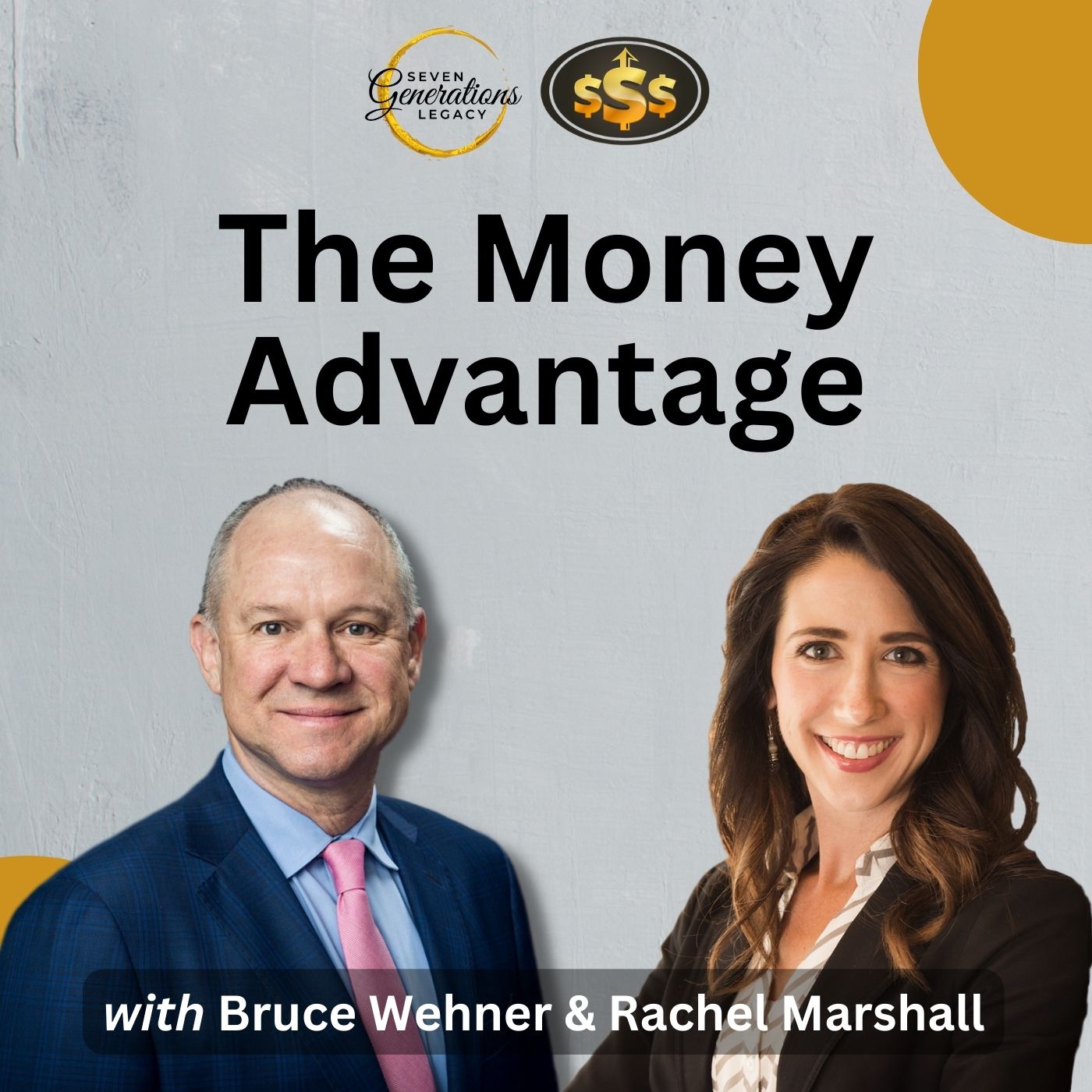
The Money Advantage Podcast
Bruce Wehner & Rachel Marshall
Personal Finance for the Entrepreneurially-Minded!
Episodes
Mentioned books

Nov 16, 2020 • 52min
Deferred Sales Trust: Defer Capital Gains Taxes With More Flexibility Than a 1031 Exchange
Do you want the freedom to sell real estate at the top of the market and wait to invest until the right time, without having to rush cash into a new property with a 1031, but still be able to defer taxes? A deferred sales trust may be for you - this capital gains tax deferral strategy offers investors unprecedented flexibility.
https://www.youtube.com/watch?v=SvbmzY7Xqw4
In this episode, we’re talking with Brett Swarts about why investors need to know about the Deferred Sales Trust.
If you want out of the box solutions to capital gains, a rescue from a failed 1031, or to find out how to save capital gains taxes over the deferral limits, so you can maximize your real estate investing progress and momentum, in your own timing and on your own terms … tune in below!
What You'll Learn About Deferred Sales Trusts:
Why capital gains taxes can devastate your profits - and the legal strategies the IRS encourages to minimize them
How deferred sales trust benefits outperform 1031 exchanges - no time limits, no like-kind restrictions, complete investment flexibility
The exact step-by-step process of how a deferred sales trust works to defer your capital gains taxes
When to set up a DST - including the three critical windows that can save a failing 1031 exchange
Expert insights from Brett Swarts - CEO of Capital Gains Tax Solutions and leading DST specialist
What is Capital Gains Tax?
Capital gains tax can seriously reduce profits from your investments when you sell them. And there are any number of reasons you might be selling an investment.
On investment real estate, you pay capital gains taxes on appreciation over your cost basis and the recaptured depreciation of the asset sold.
However, the tax rate for capital gains is why strategies exist to defer and diminish their effect. These are legal tax incentives that the IRS actually encourages entrepreneurs and investors to use, to continue to stimulate the economy. If you can overcome a big payment now, you set yourself up to take advantage of bigger and better opportunities.
1031 Exchange Limitations
You’ve likely heard of the 1031 Exchange, which allows you to defer capital gains tax. However, the 1031 has limits. You have 45 days to identify the new property, and 180 days to close. And, it requires an equal trade—a like-kind asset of equal or greater value.
When it makes sense, it’s a great provision, but results depend on the market.
Then, there’s the deferred sales trust—which allows you to play the long game.
What is a Deferred Sales Trust?
So what is a deferred sales trust exactly? It's a powerful alternative to traditional 1031 exchanges that gives investors complete control over their timing and investment choices.
The Problem with Traditional 1031 Exchanges
When investors sell their properties, a 1031 Exchange is a popular choice and allows them to transfer ownership without realizing capital gains.
However, in a market like 2008, it isn’t nearly as effective. Investors who had taken on too much debt and overpaid for their properties were finding themselves selling high and then buying high.
If a 1031 exchange doesn’t seem right for you, or you're unable to complete your exchange, you won’t want to sit on your cash.
Otherwise, you’ll be paying up to 20% in federal capital gains taxes, plus there could be additional state and Medicare taxes, depending on which state you live in. On top of that, you'll owe depreciation recapture taxes at ordinary income tax rates.
The DST Solution
With a DST, you work with an outside trustee to sell the property within the trust. Rather than receiving a big payout upon closing, the money goes into a trust. From there, you’re only taxed as the money is distributed.
The funds from the sale allow you to diversify your investments, giving you the chance to wait for the right deal. There’s no pressure to purchase another property. Where a 1031 is quick, a deferred sales trust allows patience.
By setting up a trust, a trustee can re-invest the money from your sale in a diversified portfolio, use up to 80% of the funds to purchase new properties (without it needing to be of equal or greater value), and provides liquidity.
Deferred sales trusts put time on your side.
1031 Exchange vs. Deferred Sales Trust
Feature1031 Exchange
Deferred Sales Trust
Primary PurposeDefer capital gains taxes when selling investment or business property by reinvesting into “like-kind” property.
Defer capital gains taxes by selling to a trust and receiving payments over time.
Time Limits45 days to identify, 180 days to close
No time restrictions
Eligible AssetsReal estate only
Diversified portfolio options
Control of ProceedsA qualified intermediary must hold proceeds until reinvestment.
Proceeds are held by the DST trustee and invested per the trust agreement.
Tax TreatmentDeferred until sale
Taxed only on distributions
Best ForInvestors who want to stay in real estate and follow strict timelines.
Sellers who want diversification, liquidity, or exit from active management without immediate reinvestment.
How Does a Deferred Sales Trust Work?
A deferred sales trust can seem overwhelming with all the moving parts. Fortunately, you don’t have to do it alone. The IRS requires that you have a 3rd party “trustee” to oversee the management. This means you can partner with professionals, such as Brett Swarts, to find a buyer, make the sale, and set up investments.
The Deferred Sales Trust Process: Step by Step
Here's how a deferred sales trust works in practice:
Seller transfers asset into trust - You work with a qualified trustee to establish the trust before the sale
Trust sells to the buyer - The trustee handles the sale transaction on behalf of the trust
Proceeds remain in trust - Instead of receiving a lump sum, the sale proceeds stay in the trust
Seller receives installment payments - You receive distributions over time according to your preferred schedule
Income is taxed as distributed - You only pay taxes on the amounts you actually receive, not the full sale amount
Investment Flexibility
And if you find a real estate deal that you’re interested in, you can partner with your trust as an LLC to take the deal. You can do so immediately, or ten years down the road—you have the freedom to make the call. And you have more investment options with a deferred sales trust, unlike a 1031 exchange.
When Should You Put a Deferred Sales Trust in Place?
If you are selling an investment property, you have three windows in which you can set up your trust:
at the close of escrow (as long as that language is put in place to establish the trust before the buyer removes all contingencies)
day 46 (as long as you send to a qualified intermediary)
and day 181 of a failing 1031 Exchange
If you attempt a 1031 exchange and can’t find a property—or otherwise don’t think you can complete the exchange within the 180-day window—your qualified intermediary can move it to a DST. That gives you more time to find a suitable property. Otherwise, you can end up paying the taxes you were working to defer.
Even if you feel that a 1031 exchange is a better fit for you now, being informed about DSTs can give you an efficient exit strategy instead of a tax nightmare.
Commercial Real Estate and Syndication
If you’re investing within a commercial real estate syndication, selling your property can be a headache. In a traditional syndication, the whole group has to agree when moving into a new deal. With a deferred sales trust, you can have a seamless move, and anyone who wants out can take their cut, pay their taxes, and be done. Not everyone needs to agree on the outcome, making it an efficient move.
A DST Gives you Options
Whether the real estate market is down, you’re looking to leave the market or you’re shifting from a failed 1031, a deferred sales trust gives you flexibility. It’s also a useful tool in your estate planning, as it can be a part of your living trust and passed on to your beneficiaries.
The real estate market isn’t always roses. Just like any asset class, it moves through a cycle. Don’t feel like you’re backed into a corner if you want to sell and don’t know where to reinvest right away.
Common Questions About Deferred Sales Trusts
Is a DST actually legal, or is it some kind of loophole?
It's 100% legal, built on IRS Code §453 (installment sale rules), and not a gray-area trick. It’s a tax strategy the IRS already knows about and allows, provided it’s structured correctly.
What reporting requirements do I have for my DST with the IRS?
You'll receive annual tax documents showing your distributions, but the trust itself handles most compliance requirements through the trustee.
What happens to my DST if I die before receiving all the payments?
The trust doesn’t just disappear; it can keep paying your beneficiaries under the terms you’ve set. They’ll pay taxes as they receive distributions, so the deferral benefit can continue across generations if managed correctly.
What happens if the IRS says my DST wasn’t done right?
If it’s poorly structured as an example, if you have a related-party trustee or control the funds directly, the IRS could call it a sham and hit you with the full tax bill. This is why working with an experienced DST professional is important.
About Brett Swarts
Brett Swarts is the CEO of Capital Gains Tax Solutions and every year equips hundreds of business professionals with the Deferred Sales Trust tool.
His experience includes numerous Deferred Sales Trusts, Delaware Statue Trusts, 1031 exchanges. He has also closed $85,000,000 in commercial real estate brokerage transactions.
Brett is an active commercial real estate broker and investor himself with experience and holdings in Multifamily, Senior Housing, Retail, Medical Office,
Nov 9, 2020 • 31min
When Should You Use a 1035 Exchange with Life Insurance?
Do you have a life insurance policy you’re concerned may not last, lacks guarantees, or may lapse, and you’re wondering how you could trade it in for a better model? The good news is that you have options, and you’re not stuck forever! Enter: the 1035 exchange. But, a strong word of caution: you need to understand what this entails and when it might hurt instead of help you.
https://www.youtube.com/watch?v=xzmzl8TkMDM
In this episode, Bruce and I discuss when you should use a 1035 exchange with life insurance. If you want to know the pros and cons of a 1035 Exchange--tune in below!
In this episode, you’ll learn:
What a 1035 exchange is and how it works.The reasons why (or why not) to do a 1035 exchange.Challenges you may face during the process.And more!
Table of contentsWhere Whole Life Insurance Fits Into the Bigger PictureUnderstanding the 1035 ExchangeReasons for ExchangingReasons Against ExchangingWhat You Really Should KnowThe 1035 Exchange ProcessIs a 1035 Exchange Right for You?
Where Whole Life Insurance Fits Into the Bigger Picture
A 1035 Exchange could be what allows you to ensure your life insurance is there for your entire life, however, Privatized Banking with whole life insurance is just one part of the bigger journey.
That’s why we’ve developed the 3-step Cash Flow System. It’s your roadmap to go from just surviving, to a life of significance, purpose, and financial freedom.
The first stage is the foundation. You first keep more of the money you make by fixing money leaks, becoming more efficient and profitable.
Then, you protect your money with insurance and legal protection and Privatized Banking.
Finally, you put your money to work, increasing your income with cash-flowing assets.
Understanding the 1035 Exchange
A 1035 Exchange is available through a provision in the IRS tax code, which allows you to transfer specific assets into assets of a like-kind without having to pay tax. Today, we’re talking specifically about the transfer of life insurance policies and why you would want to do a 1035 exchange in the first place.
Most often, a 1035 exchange is on the table when you have a policy that no longer seems like an ideal fit for you. If your insurance policy was not designed with you in mind or lacks guarantees, you are likely a candidate for a 1035. Regardless, if a policy isn’t working for you, know that you’re not stuck—you have options.
That said, it’s not always ideal to exchange a policy. It’s important to be informed about what a 1035 can and cannot do so that you’re not taken advantage of down the road.
Reasons for Exchanging
In some cases, it’s possible that you have a less-than-ideal policy design, and it feels like you’re continuing to pour in money with few guarantees. We see this often with universal life insurance. The problem is in the language of how some advisors pitch these products—flexible premiums aren't all that flexible.
In the later years of an in-force IUL, the cost of maintaining your policy can increase because premiums are non-guaranteed. So even though you can make flexible premium payments, you could be under-funding it and lose your policy.
To get a better idea of how your policy is performing, we recommend requesting an in-force illustration of your life insurance policy from your company. This will show you how your policy has performed and the projections for future performance. You will also see which guarantees you have, and which ones you do not. Use this information to assess whether or not your policy is doing what you want it to do.
Ultimately, we see people exchanging policies that just aren’t living up to their expectations. If you don’t currently have a life insurance policy, take some time to think about what you want to accomplish—leaving a legacy, protecting your family, leveraging your cash value, or more? And if you do have a policy, check-in and make sure it’s accomplishing what you want.
Reasons Against Exchanging
Though the tax benefits of a 1035 exchange are important, we recommend erring on the side of caution when it comes to exchanging a policy. This often boils down to cost. When you first open a new life insurance policy, you’re paying for the cost of insurance upfront—this is why your cash value takes a few years to “break even.” After a certain point, your cash value breaks even and surpasses the amount you have paid in premium.
When you do an exchange, you start over with a new life insurance policy. Which means paying the costs up-front. And if you’re not yet at the break-even point on your first policy, you could be giving up alot of capital that you'll never recover on that policy.
Another instance where the 1035 exchange may not be helpful? When the cost of insurance in your new policy is greater. You’ll have guarantees but at a much steeper cost. In which case other solutions might have better results. Regardless, know that you have options when a policy isn’t right for you. You’re not stuck.
What You Really Should Know
When it comes to a 1035 exchange, it’s important to note a few hoops you’ll have to jump through. The first is that you must still qualify for your new policy. You’ll have to go through the health exam and other application requirements to be insured. In some cases, you may qualify, but with a rated status. A "rated" insurance policy places more risk on the insurance company for insuring you, so the cost increases. However, in many cases, this doesn't pose a problem large enough to prevent you from exchanging the policy. But, if the cost of insurance is too high, you may be better off keeping your insurance and do what you can to keep it from lapsing.
Additionally, in a 1035 exchange, you can’t expect to have 100% of your premium available to you. However, you can expect to access more than 90% of the cash value that is transferred.
The 1035 Exchange Process
The process of doing a 1035 exchange is time-consuming, and commissions are low so that advisors are not incentivized to do 1035 exchanges more than necessary. Insurance companies are, first and foremost, built to protect the interests of the insured (you).
Once you and your advisor have determined that this process makes sense for you, it’s time to start the exchange. Although cumbersome, the steps of the process are in your best interest.
You’ll start by applying for your new insurance policy as you normally would. Then on the application, you’ll list the policies you own and state that you want to 1035 a specific amount of money from a particular company.
The new company will then contact the old company, who will contact you for confirmation. They will list all the pitfalls of the exchange, as well as the regulations. Once you’ve agreed, the process will continue similarly to any other insurance application process.
Is a 1035 Exchange Right for You?
You should feel confident in your decision, and a financial advisor who listens to you and helps you learn is a good starting point. They can help you determine the best path, and how it fits into your entire financial picture.
At The Money Advantage, we exist to help wealth creators build time and money freedom with cash flow strategies, privatized banking, and alternative investments free of stock market volatility so you never have to worry about running out of money. Find out your next best steps by grabbing a slot on our calendar.
Follow us by subscribing and rating us on Apple Podcasts, or The Money Advantage on YouTube and Facebook to join us for live conversations.
Learn more about how Privatized Banking is an ideal place to store cash that gives you the most safety, liquidity, and growth, so you can leverage your cash and earn returns in 2 places at the same time.
Nov 2, 2020 • 55min
Family Banking Strategy with Whole Life: An 11-Year Case Study, with John Moriarty
This week, we welcome John Moriarty back to the Money Advantage Podcast. In Part 1, we talked about building a family bank on a conceptual level. Now, we pull in real facts and figures to show you how private family banking looks in action.
https://www.youtube.com/watch?v=ghvEU4tXzw8
If you have considered implementing family banking and didn't know where to start or what it looked like, this is your chance to pull back the curtain. And this is not speculation. John is showing us how he personally implements the Infinite Banking Concept to be the banker and build his family bank.
Now is your opportunity to see behind the scenes! You’ll see a high level of funding, cash value, how he is using policy loans, the internal growth of each whole life policy, the death benefit, and how he's getting a front-row seat to opportunities. Why? It's all because of this family banking system and tool for storing cash reserves.
Table of contentsIn This Episode, you'll learn:Where Private Family Banking Fits into Your Cash Flow SystemThe "Mystery” of the Family BankThe Basics of a Family Banking SystemEnjoying Your MoneyPrivate Family Banking with Whole Life InsuranceWhy Would You Want to Borrow Your Own Money?The Long GameStart Your Family BankGet the Moriarty 11-Year Case StudyBook A Strategy Call
In This Episode, you'll learn:
What it takes to become your own banker and start a family bank
How to build a family bank with whole life insurance policies over time
What you can and cannot do with a whole life insurance policy
Why you should not fear interest charges
How to structure your repayment strategy
Where Private Family Banking Fits into Your Cash Flow System
Family Banking is just one step in the greater Cash Flow System.
It fits into Stage 2, a part of keeping and protecting your money.
We said before that Privatized Banking is like the peanut butter to your cash flow sandwich. It’s wedged between Stage 1 – keeping more of the money you already make – and Stage 3 – increasing your cash flow from investments.
And it helps you do everything else better. Infinite Banking increases your financial efficiency, enables you to keep more of what you already make, amplifies your cash-flowing asset strategy, and accelerates your time and money freedom.
The Infinite Banking Concept is the how of keeping and protecting your money. And a whole life insurance policy is the what.
The "Mystery” of the Family Bank
The idea of Infinite Banking, and thus family banks, is often shrouded in mystery. Mainstream financial advice makes it seem more difficult and unattainable than it is. Yet we know that what it boils down to is sound money principles--how you take control of the banking function yourself.
If you consider yourself to be a disciplined person, you can implement and benefit from family banking strategies.
The Basics of a Family Banking System
While saving is the first component of private family banking, Infinite Banking can be considered a system for cash flow management. A whole life insurance policy offers a way to take your savings and optimize it from a cash flow standpoint. While this concept is not new, whole life insurance policies became more publicized when Nelson Nash wrote Becoming Your Own Banker.
The benefit is that you can customize whole life insurance to perform in ways suited to your goals. Then, you can leverage the cash value of your life insurance to take out loans against your policy, instead of going to the bank. And all the while, your policy cash value continues to grow, uninterrupted.
With the right strategies, you can finance virtually anything you can imagine. Can you say the same for banking institutions? Your personal and business economies can both benefit from your ability to leverage your assets.
Enjoying Your Money
In a well-structured strategy, not all of your “moves” have to be related to wealth accumulation or investments. John himself tells us, and those he works with, that his strategies allow him to do the things that he wants to do as well. In many instances, the way that he utilizes his cash value helps him to participate in activities that he enjoys, too—like take family vacations or go on golf trips.
Because your private family banking System makes your money more efficient, it excels as a fund for both emergencies and opportunities. A well-executed strategy gives you limitless possibilities. The optimization of your dollars provides one of the most rewarding benefits—the ability to finance things that bring you joy, too.
Private Family Banking with Whole Life Insurance
Since 2009, $1.9 million has been saved into the Moriarty family bank. His family has borrowed roughly $2 million from the family bank. And overall, they have repaid only $1 million to the family bank.
Rather than a linear system--put in, take out, replenish--he has established a process. John repays some life insurance loans more quickly because they do not add to his net worth—like vacations. Investments with monthly cash flow are an opportunity to make incremental payments. Other times, there are long term investments with an expectation of future liquidity. Those “windfall” moments are opportunities to pay down life insurance loans in a lump sum and cycle money into the system.
The benefit of a whole life policy loan is that you can pay back whenever and however your choose—the important part is that you have a strategy to do so. Being reckless in how you borrow against your whole life insurance policy can put you in a precarious position.
Rather than treating your family banking system as a linear process, consider it a living system.
Why Would You Want to Borrow Your Own Money?
This is an important question—and one that can be difficult to understand when typical financial advice trains you to view interest as something to avoid at all costs.
However, think of the opportunities that arise when you have access to your cash—and have the diligence to pay yourself back. You lessen your risk of depleting your emergency/opportunity fund because there’s more incentive to be disciplined. When all your savings are in the bank, how likely are you to repay yourself in addition to continued savings?
Furthermore, private family banking enables you to leverage the power of your money on investments that a bank may be hesitant to finance. More options are available to you when you become your own banker.
And then, of course, there is a mathematical component. In John’s example, he was able to receive financing at 5%. It’s easy to look at that and be skeptical. In the bigger picture of his personal economy, however, that 5% should not be a deterrent. He can use that life insurance policy loan to invest in opportunities that earn far higher rates of return. Additionally, his life insurance policy continues to earn uninterrupted compound interest, so he is earning a return in 2 places at the same time. So the whole time he has this loan, his cash value is still working for him and increasing over time. More money becomes available to him regardless of how quickly he pays down his loans.
Ultimately, he has a repayment strategy that allows him to make the most of what he has.
The Long Game
In the first few years, building a private family banking system of whole life insurance policies can be difficult to wrap your head around. It’s a long-term wealth-building journey, and the first few years offer limited liquidity. While you can still utilize your policy, it does not have the same wow-factor as a policy that has been around for more than 10 years. Yet somewhere between the 5th and 9th year, you hit your break-even point—and everything after that is pure growth. Meaning that from that point on, your cash value will be worth more than you put into it.
Private family banking is about the long game. It takes patience and work; though the best things in life rarely come without effort. When you buy assets and finance them with a financial institution, you often need a down payment or other collateral. Conceptually, that is no different than what happens with a whole life insurance policy. On the front end, you relinquish some of your access to capital, which covers the cost of insurance. On the back end, you reap the long-term rewards. Your banking system continues to improve over time.
Start Your Family Bank
A whole life insurance policy is not a stagnant asset—it is not an account where you lock your money away until you turn 65. Your cash value is money that you get to use and enjoy over your lifetime—earning uninterrupted compound interest on money you can also use is something to celebrate. On top of that, the extra protection a death benefit provides for your loved ones is priceless.
Get the Moriarty 11-Year Case Study
Annual statements from the life insurance company for each whole life policy in the Moriarty family bank
Policy cash values
Death benefit
Policy loans
Interest payments on policy loans
Book A Strategy Call
Do you want to coordinate your finances so that everything works together to improve your life today, accelerate time and money freedom, and leave the greatest legacy? We can help!
We spend a lot of time and attention educating and sharing the benefits of private family banking, so it can come across like we’re the whole life insurance people. However, when it comes to working with clients directly, we don’t start with products.
Family Banking is the middle of the process, not the start, not the end, and not the complete picture. Helping you think differently about your money starts with your individual financial picture and goals.
Book an Introductory Call with our team today https://themoneyadvantage.com/calendar/, and find out how Private Family Banking, alternative investments,
Oct 26, 2020 • 50min
Wealth Transfer Risks that Can Cost You Big, with Ron Phillips
https://www.youtube.com/watch?v=jFbebed_F78
Want to know what happens to your real estate portfolio after you’re gone? In this episode, we’re talking with Ron Phillips—CEO of RP Capital, a real estate brokerage—about his client who passed away. It turns out, his family didn’t even know what assets he had, or what to do with them, and it almost cost them a fortune in taxes. Tune in to hear what hoops they had to jump through, and how to avoid the same wealth transfer risks, so you and your family can be much better prepared.
Table of contentsIn this episode with Ron Phillips, you’ll learn:Where Legacy Fits In The Bigger PictureLegacy & Wealth Transfer Risks, Conversation Highlights from Ron PhillipsHow Mindset Affects Your Real Estate DealsRon’s Real Estate BusinessPlaying to WinRon's ClientsWealth Transfer RisksWills and ProbateWhat is a Legacy?Who is Ron Philips?Links and MentionsWant to Talk About Family Banking with Whole Life Insurance?Thanks for Tuning In!
In this episode with Ron Phillips, you’ll learn:
The importance of managing your mindset in lifeThe costs of not preparing and communicating your legacy wellHow to ensure your assets do the most good for your family even after you’re goneWhy it’s crucial that your heirs know what you haveThe wealth transfer risks of putting off your estate planningHow to make leaders in business and in your family
Where Legacy Fits In The Bigger Picture
Creating a legacy is the capstone of a life well-lived. It’s the end goal of a life and business you love, and the greatest mission of our lives. But we need an entire financial system to support our ability to do the most good.
That’s why we’ve put together the 3-step Entrepreneur’s Cash Flow System.
The first step is keeping more of the money you make. This includes tax planning, debt restructuring, cash flow awareness, and restructuring your savings so you can access it as an emergency/opportunity fund. This step frees up and increases your cash flow, so you have more to save, and consequently, more to invest.
Then, you’ll protect your money with privatized banking, insurance, and legal protection.
Finally, you’ll put your money to work and get it to make more by investing in cash-flowing assets to build time and money freedom and leave a rich legacy.
Legacy & Wealth Transfer Risks, Conversation Highlights from Ron Phillips
How Mindset Affects Your Real Estate Deals
Once you figure out how to help others, you’ll begin to reap benefits in your own life. You’ve likely heard, “If you help enough people get what they want, you’ll get what you want.” In practice, you often get 10x that!
(7:40) When Ron’s deal was rejected, he felt destroyed. Yet he woke up the next day, he reflected on what he had learned and studied. He knew as long as he could solve the problem at hand, he could make a worthwhile deal. Then, he ended up launching his career, which has only continued in its success.
(10:05) Real estate, life business, relationships—everything throws wrenches into your world. Nothing goes the way it’s supposed to, all the time. You have two choices in how you proceed. You can think that the world is against you, and that you can’t win, or you can figure out a way through it.
Ron’s Real Estate Business
(12:38) Until 2005, Ron was in the business of rehabbing houses, until HUD changed the guidelines. So he “went out of business” virtually overnight. He essentially became a landlord, though it was not his goal. So Ron adapted.
What he discovered was, many people don’t want to be landlords (much like himself). Though they do have an interest in real estate. Ron had the teams and the know-how, and now he helps other people find success when they lack the right resources. This started before turnkey operators were really a thing. However Ron resists the urge to describe his business as a turnkey operation.
(20:20) … people think when something is turnkey that they don’t have to do anything. It’s not that the property isn’t ready to go, or that the property doesn’t have a tenant in it. All of that is true. But turnkey just gives this feeling of, “I don’t have to check my bank account because this thing is going to just magically happen.” And that’s just not how real estate works. It’s not how anything works.
Playing to Win
(23:30) If you want to play the money game to win, you must move your assets according to what the markets are telling you. Enjoy your market in its prime, and then move when the winds change. You increase your income, cash out, and do it again.
If you wait around in one market, watching it go up and down like so many do, you stunt your growth. Your exponential power lies in the ability to watch multiple markets and shift your assets for growth.
The power behind this strategy is that if you have capital and you’re looking to have an additional source of income, you can do it while you work.
(24:45) And once somebody gets to this point, there are all these really cool layers you can add. If you can take your income and then dump it into your own bank through cash value life insurance, you’re now double arbitraging your money, and the engine just goes faster. Yet it means nothing if you don't have an estate plan that negates wealth transfer risks.
Ron's Clients
When you build your legacy, what happens when you pass away? How do you make sure that the goals that you have and the life you choose to have continue through your legacy?
(30:33) Recently, two people that Ron worked closely with passed away. The first was a lender his company had done hundreds of deals with him. He was a young guy, with young kids, and he was an integral part of their team.
No one really expects to pass on young, but it is critical to have to plan that mitigates wealth transfer risks, should it happen. The last thing you want is for your legacy to be a problem for your loved ones. And if you don’t plan for this event, you’re more likely to leave a financial mess—especially if you have significant assets.
Wealth Transfer Risks
The other death was a long-term client, and one of Ron’s earliest clients. He died with a significant net worth, leaving his family clueless about the small empire he built. In fact, his wife wasn’t in a capacity to be handling the financials. And the reason Ron caught this was because they were in the middle of a 1031 exchange, so he reached out to the kids to discuss the next steps.
The client told Ron all the time that he had invested for his grandchildren. His investments were providing monthly cash flow.
But, his kids wanted to sell and be done with it because they didn’t know what they inherited. They had no concept of the scope of what they were given.
If you don’t provide specifications, your heirs will do what they want or think is best, even if it’s not best.
That's why it's not a good idea to keep your assets quiet from your family because you run the risk of your legacy disappearing (despite your intention).
Wills and Probate
Often, people believe they’re fully protected because they have a will in place. Yet there are other crucial aspects of a sound estate plan.
Trusts are a crucial element. And trusts are not as expensive as you’d think. What you don’t want is for your will to be contested after you pass because you hadn't communicated your plan effectively.
Anyone can contest a will, and then it must go to probate. And then probate lawyers receive a portion of the estate. In order to divide an estate, assets must be liquidated. That means the impact of your legacy plan will be minimized or rendered null.
If you don’t have a legacy plan, yet you’re investing and accumulating assets, consider what you really want from your assets. What is the point of working so hard if you don’t have an idea of what you want?
What is a Legacy?
One scenario, without properly communicated plans, is that your wealth disappears. Say your heirs do sell everything in a fire sale, and distribute the money. It dries up at rapid speed because your heirs aren’t invested in the process of wealth creation. If they were kept in the dark, they will lack the know-how to continue your legacy. This is the largest wealth transfer risk you run, by not planning your estate.
When you have a wealth creator on one hand, and they don’t transfer that knowledge along with the assets, the heirs don’t have the knowledge to be good stewards of that money.
If you do not pass on your knowledge, your legacy will not continue. In business, if you do not create leaders, you’re not a leader yourself. It’s the same within your family. If you hoard and keep secrets about your assets, yet intend to pass them on, then you’re setting your legacy and your family up for failure.
Wealth comes from creation, it’s not something you just have. If you can’t teach others to be creators, your legacy of wealth stops with you.
We don’t get to take our wealth with us when we pass. It will either benefit the people we love when we’re gone, or it won't. The proper channels make your legacy a reality.
Who is Ron Philips?
Ron Phillips is a leader among leaders... a trainer, coach, and mentor in the real estate investment world. He has an unstoppable passion for helping busy professionals & and business owners increase their income and net worth, and play the real estate investment game and WIN.
Ron is the Founder and CEO of RP Capital ‒ a Real Estate Brokerage specializing in residential income-producing properties. More than a brokerage, RP Capital is Ron’s platform for educating, training, and empowering emerging and seasoned investors. Ranked in the top 25% on the INC 5000 list of America’s Fastest-Growing Companies in 2015,
Oct 19, 2020 • 51min
How Safe are Life Insurance Companies?
We frequently discuss high cash value life insurance here at the Money Advantage, yet with the financial uncertainties of COVID-19, how safe are life insurance companies?
https://www.youtube.com/watch?v=j9TZZf6hYjY
How strong is the life insurance industry really? What impacts do today's low-interest rates, economic turmoil, and the pandemic have on my long-term growth rates and the policy guarantees? How do they affect the life insurance industry as a whole? Do insurance companies have enough reserves to weather low returns and higher costs? Are they able to maintain their guarantees? Are they still a safe place to put money?
If you want to see how low interest, low bond yields, and higher mortality can impact you as a policy owner, know if you can trust whole life guarantees for cash value and death benefit, and find out how strong this nearly indestructible industry is during unprecedented times, so you can know what to do, tune in now!
In this episode on the safety of life insurance companies, you'll learn:
How interest rates and bonds affect the life insurance industryWhy the US is better off right now than you'd thinkA brief history of the life insurance industryThe "checks and balances" of mutual insurance companiesAnd why COVID isn't impacting the industry as much as you'd expect
Right now, many financial products and systems are in flux. That uncertainty may not instill confidence in your financial future. COVID-19 has certainly impacted the financial sphere, so let's unpack what that means for life insurance.
The life insurance industry has long been a pillar of certainty and financial stability, and fortunately, we have high hopes that this will continue to be the case. Historically, these companies have outlasted even the toughest of financial straits.
Table of contentsThe Safety of Life Insurance Companies is a Part of the Bigger Picture of Creating WealthHow Safe Are Life Insurance Companies Facing Internal Challenges?The History of the Life Insurance IndustryLow Interest RatesBond Yields Follow Interest RatesMutual Companies Are Positioned for the Long-GameMortality Isn't a Current ConcernSo How Safe Are Life Insurance Companies? Resources to Evaluate the Financial Safety of Life Insurance CompaniesReady to Start Your Life Insurance?
The Safety of Life Insurance Companies is a Part of the Bigger Picture of Creating Wealth
While the safety of the industry is a critical piece of protecting and preserving your wealth, it’s just one small piece of the bigger journey to creating time and money freedom.
That’s why we’ve developed the 3-step Cash Flow System. It’s your roadmap to go from just surviving, to a life of significance, purpose, and financial freedom.
The first stage is the foundation. You first keep more of the money you make by fixing money leaks, becoming more efficient and profitable.
Then, you protect your money with insurance and legal protection and Privatized Banking.
Finally, you put your money to work, increasing your income with cash-flowing assets.
How Safe Are Life Insurance Companies Facing Internal Challenges?
Many of the current concerns around whole life insurance relate to the low interest, low bond yields, and low internal growth we're seeing right now. We don't blame people for translating this slow-down as a warning sign. In addition, there's a possibility of higher claims in a pandemic—and will the companies have enough capital to weather that storm?
If you're considering the impact of these factors on your life insurance policies, you're on the right track. It's important to stay ahead of the curve for your financial well-being. So, let's look into some of these concerns and find the truth in these statements.
The History of the Life Insurance Industry
Fortunately for policyholders, the life insurance industry has a long history of navigating tumultuous financial times. Historically, insurance companies have paid dividends each year for more than 100 years, despite dividends not being guaranteed. That means companies paid dividends in the 2008 crash, during multiple wars, and even the Great Depression.
Due to the actuarial nature of life insurance and their long history of data collection, mutual insurance companies have been very accurate in their assumptions. Even when they haven't paid exactly at their projected rates, the industry as a whole has year-in and year-out consecutively paid dividends. Therefore, these companies have a significantly long history of being profitable while paying claims through the worst of times.
So, let's look at what we're dealing with and see how it measures up to the life insurance industry's historical precedent.
Low Interest Rates
While interest rates are low, it's not an immediate cause for fear. There's a reason for low rates, and it all starts with banks.
If you look at the federal funds rate, what you're seeing is the rate at which banks and other institutions lend money to each other. By law, banks must keep a percentage of their customer's money on reserve—otherwise known as the money they can't earn interest on (by lending it to customers). As a result, banks toe the line as much as they can, lending money back and forth between banks.
The federal funds rate is used to control the supply of these reserves, and thus inflation and other rates.
Raising the federal funds rate makes it more expensive to borrow money. This lowers the supply of available money, thus increasing short-term interest rates and keeping inflation in check.
Lowering the rate has the opposite effect, and actually increases the money supply by lowering short-term interest rates.
The Federal Reserve is using these low rates to boost the economy. However, this means that not only is it hard to get a good rate on liquid money right now, but there's also an indirect impact on the life insurance companies.
While the low-interest rates are not ideal for the insurance companies, they're not detrimental. They're a temporary situation. The federal funds rate has, in fact, gone through an ebb and flow over the years.
Bond Yields Follow Interest Rates
Currently, the yields on bonds are low. The falling interest rates actually push the price on bonds higher, which, in turn, lowers the yield of the bonds. It's normal to speculate what happens to the life insurance companies at this point, as many companies are heavily invested in bonds. The lower their returns, the lower the dividends that companies can pay. So naturally, the low yield on bonds slows the growth of life insurance through interest and dividends.
The good news? Life insurance companies, by nature, have very conservative investment structures.
On top of that, the industry is highly regulated, with the bulk of their investments in investment-grade corporate bonds. These bonds all have varying term lengths, purchased in quantities not available to the individual investor, and have strategically overlapping maturity dates due to bond laddering. That means that there are always bonds paying out. And this provides the capital to purchase new bonds at current rates. The long-term bond diversification strategy increases overall returns and long-term stability.
While low bond yields are nothing to celebrate, mutual life insurance companies have successfully and masterfully navigated low rates for the last 20 years.
Mutual Companies Are Positioned for the Long-Game
Participating whole life insurance companies, where policy owners participate in the profits, are invested in the long-game. Because these companies offer certain guarantees, they have to be prepared. Stock-held companies, however, plan over shorter periods of time.
In fact, mutual companies work much in the same way we encourage policyholders to operate. They have large cash reserves, like a policy's cash value, in case of opportunities. And when relatively high-yield bonds were dumped on the market at low prices, these companies had the capital to jump on the opportunity. For carriers who made that move and are willing to wait, it should prove to be a good decision as the bonds mature.
Mutual companies also operate on a required minimum of a 1:1 ratio. That means that for every dollar allocated to paying claims, there's at least a dollar in the reserves.
Mortality Isn't a Current Concern
And now, we've come to one of the largest "what-if" scenario on everyone's mind. What if the increased death toll makes the industry unstable? And for the life insurance industry, it has proven not to be a huge concern.
Whole life insurance works because of a carefully designed system that supports death claims. After all, the death benefit is guaranteed as long as the policy is in force. And death is an event we all experience. Without the proper structure, life insurance companies would have felt the strain long ago.
One of those structural "balances" is that companies weigh the risks of insurance through health exams. Unfortunately, some health conditions can prove to be too high a risk for life insurance companies to insure. Disqualifying Conditions with a high chance of death (although some can still purchase insurance at a significant markup).
Of course, this matters because COVID-19 has had a greater effect on those with pre-existing health conditions. And while this can be the cause of unfortunate and pre-mature deaths, those conditions likely mean they're not insured.
And while this is not always the case, such as those who developed health conditions after becoming insured, COVID deaths have not proven to be disruptive to the life insurance industry. One carrier with a lot of business in New York confirmed that while there was an increase in death claims due to COVID, it was not significant enough to warrant structural changes within the company.
With the death rate of COVID in decline,
Oct 12, 2020 • 57min
Custom-Designed Estate Planning, with Stephen Haynes
https://www.youtube.com/watch?v=_KcOV9DhFkE
Considering estate planning, but not sure how to make it work best for your family? Wondering how to balance your unique age, stage, personalities, and goals? Does estate planning feel constrictive, or your ambitions seem bigger than what you can accommodate with a finite plan? Do you wonder how you could possibly know what’s best 30 years from now when you’re not sure who your children will become?
Today, we want to help you wrestle the giant octopus of long-range planning. Bruce and I are talking with my estate planning attorney, Stephen Haynes, about solving special considerations with your estate plan.
And this will be a special treat! We're not just going to talk theory about estate planning. We're inviting you in and showing a sneak peek into how we created an estate plan for our family.
So if you want to recognize the pros and cons of various estate transfer strategies, achieve the best balance of asset protection, creditor protection, control, and ownership, and find out how to design your estate plan to solve your needs best so you can strengthen your family with how you pass on wealth, instead of causing future challenges, tune in now!
In This Conversation about Custom-Designed Estate Planning with Stephen Haynes
Deciding how to transfer trust assets to children in a way that provides for their needs and helps them become empowered and not entitled.
Solving the tension of gifting assets outright vs. in trust, and why you may consider one over the other.
How to achieve the balance of asset protection and creditor protection with control and ownership, and reduce the risk of estate taxes.
The role of the trustee, the goal of the trust to be a relationship, how to select a trustee, and how to set up your children to have a good relationship with the trustee.
Hear how we're solving the potential problem of children seeing that a trustee is trying to keep them from their money.
Finding the middle ground between leaving direct guidance to the trustee with rigid wishes vs. leaving discretion to the trustee.
How to direct your money to be used the way you want, while also providing for the freedom and flourishing of each individual in generations beyond you.
How you can use life insurance to create perpetual, generational wealth.
Where Estate Planning Fits into Your Cashflow Creation System
Encircling your family and assets with a bulletproof estate plan will maximize your peace of mind. But it’s just one small step of a greater journey.
That’s why we’ve put together the 3-step Entrepreneur’s Cash Flow System.
The first step is keeping more of the money you make. This includes tax planning, debt restructuring, cash flow awareness, and restructuring your savings so you can access it as an emergency/opportunity fund. This step frees up and increases your cash flow, so you have more to save, and consequently, more to invest.
Then, you’ll protect your money with savings, privatized banking and legal protection. This is where estate planning fits in. You’ll know that no matter what happens to you, your wishes will be carried out, your assets will remain intact, and your wisdom will empower generations after you.
Finally, you’ll put your money to work and get it to make more by investing in cash-flowing assets to build time and money freedom and leave a rich legacy.
Take Action to Begin Your Family Legacy Today
Take the next steps today.
As Bruce says, "Make small steps, but quality steps."
You don't have to leap the whole chasm all at once.
Today's small step may look like taking a minute to write down what's important to you. This may become the start of your personal values or vision statement.
Or, if you are ready for a conversation about your estate planning or life insurance, your next step could be scheduling a conversation.
Find Out More About Stephen Haynes
Discover more about Stephen Haynes, Davis Law Group, or contact him directly at Stephen@dlgva.com.
Book a Strategy Call
We offer two powerful ways to help you create lasting impact:
Financial Strategy Call – Discover how Privatized Banking, alternative investments, tax-mitigation, and cash flow strategies can accelerate your time and money freedom while improving your life today. Let us show you how to align your financial resources for maximum growth and efficiency. Book a Strategy Call with our team today.
Legacy Strategy Call – If you want to uncover your family values, mission, and vision, and create a legacy that’s about more than just money, we can guide you through the process of financial stewardship and family leadership. Save time coordinating your family’s finances while building a legacy that lasts for generations. Book a Legacy Strategy Call to learn more about how we can help.
We specialize in working with wealth creators and their families to unlock their potential and build a meaningful, multigenerational legacy.
Thanks for Tuning In!
Thanks so much for being with us this week. Have some feedback you’d like to share? Please leave a note in the comments section below!
Don’t forget to subscribe to the show to get automatic episode updates for The Money Advantage podcast!
And, finally, please take a minute to leave us an honest review and rating on Apple Podcasts. They really help us out when it comes to the ranking of the show, and I make it a point to read every single one of the reviews we get.
Sep 28, 2020 • 56min
Estate Planning Strategies with Andrew Weinhaus
Today, we’re talking with Andrew Weinhaus about why you need an estate plan. He's an attorney who has worked in estate planning for 30 years. That means he knows it like the back of his hand. So, you get the tremendous value of hearing about estate planning in a way that's relatable, plain and simple!
https://www.youtube.com/watch?v=xvoTfp63rT4
Do you wonder what happens to all of your stuff when you die? Have you heard of estate planning, but are not really sure what it is and whether it’s for you?
No need to share your answers, but ... pssst ... this episode is for you! Here’s a sneak peek into estate planning from a distance. It's like browsing, but without the annoying sales clerk asking if you’ve found everything you didn’t even know what you were looking for in the first place.
You can dip your toe in to find out if it’s really as scary and overwhelming as you thought. I promise, you’ll feel less out of place and more at home in the estate planning conversation. So, whenever and however you decide to move ahead, you'll feel better about those uncomfortable conversations.
If you are concerned about what happens to your legacy, you’re certainly not alone. What’s more, you don’t need a million-dollar estate to start thinking about it. This episode explores why planning ahead is incredibly important for every family in America - not just the wealthy and how to approach the process with extreme confidence.
This conversation will help you make sense of the basics. That means you’ll know the why and the end goal. Those two things will automatically vacuum out the ambiguity in the process.
So if you want to understand what an estate plan is and does, see how it's relevant to your life to do the long-term planning, and differentiate whether this is an important thing to take action on so you can feel the benefit of planning before you embark on the journey, tune in now!
In this episode on estate planning, you’ll find out:
The two main reasons you need an estate plan: if you can't make decisions, and if you die.
The four reasons you want to avoid probate: cost, time-intensity, publicity, and creditor rights.
Why you might want to pay for your parents' estate planning.
The basic components of an estate plan and what they do: a medical directive, a power of attorney, a revocable living trust, and a pour-over will.
The cost of an estate plan is often much less than the cost of probate. The difference is whether you pay a fixed, known cost now, with an attorney who is a trusted advisor, or a potentially much higher cost later with an attorney you can't choose.
Concerns with real estate, businesses, and investments without an estate plan.
How life insurance is the perfect equalizer to allow you to transfer family assets without having to liquidate.
Why titling your assets correctly is one of the most critical steps of estate planning that most people miss.
Why estate planning spells out exactly what you want to happen.
How to plan for the care and financial needs of minor children.
Why your estate plan can never be perfect and how to get it done anyway.
Why Don’t More People Talk About Estate Planning?
Estate planning may sound slightly intimidating, with many people assuming it’s something only the wealthy need or that it involves complicated legal jargon and expensive lawyers. The reality is different, however: estate planning is about protecting your family, your choices, and your peace of mind, not just your money.
Another reason people put it off is the fear of cost or discomfort around discussing the uncomfortable subject of death. While it’s easy to push the topic aside when it feels far away, without a plan, the people you care about are left to sort things out on their own.
The problem is that in every sense of the word, that can be far more costly.
In short, estate planning is simply an act of care and well-deserved diligence. It ensures that what you have built, whether big or small, goes where you want it to go, without unnecessary stress or confusion for your loved ones.
Why Everyone Needs an Estate Plan
Regardless of your role in life - be it a parent, a business owner, or just someone who cares about what happens to your assets - you really need an estate plan. Having one is less about how much you have, but how well it’s protected.
The simple truth is that life throws the occasional curveballs, including (but not limited to) incapacity, unexpected death, and family emergencies. An estate plan provides written instructions so that someone you trust can step in when needed, without causing chaos or confusion.
It also shields your family from the four major threats: long, expensive probate proceedings, unnecessary legal fees, months (or years) of delays, and even creditor claims against your estate. A solid plan means more of what you’ve built actually reaches your family quickly, privately, and with far less stress.
Core Components of an Estate Plan
When most people hear the words estate plan, they immediately think of a will, or something similar, but that’s just the start. As estate planning attorney Andrew Weinhaus will attest, a well-structured plan usually includes a combination of tools that work together to carry out your wishes.
A basic will lets you name heirs and guardians. A pour-over will catch any leftover assets and route them into your trust. Trusts themselves can be either revocable (changeable) or irrevocable (locked in, but more protective).
Powers of attorney and medical directives make sure someone you trust can make decisions if you are unable to. Proper asset titling and beneficiary designations enable assets to pass directly to heirs without the need for court involvement.
And whole life insurance can be a smart way to equalize inheritances or cover taxes, especially if much of your estate is tied up in business or property.
Where Estate Planning Fits into Your Cashflow Creation System
Encircling your family and assets with a bulletproof estate plan will maximize your peace of mind. But it’s just one small step of a greater journey.
That’s why we’ve put together the 3-step Entrepreneur’s Cash Flow System.
The first step is keeping more of the money you make. This includes tax planning, debt restructuring, cash flow awareness, and restructuring your savings so you can access them as an emergency/opportunity fund. This step frees up and increases your cash flow, so you have more to save and consequently, more to invest.
Then, you’ll protect your money with savings, privatized banking and legal protection. This is where estate planning fits in. You’ll know that no matter what happens to you, your wishes will be carried out, your assets will remain intact, and your wisdom will empower generations after you.
It also works in tandem with other protect-stage tools like whole life insurance and trusts, ensuring your financial architecture doesn’t collapse under pressure. For a more comprehensive look into one of those tools, see our guide to Infinite Banking Explained
Finally, you’ll put your money to work and get it to make more by investing in cash-flowing assets to build time and money freedom and leave a rich legacy.
Common Estate Planning Strategies & Pitfalls
Once your estate plan is in motion, the next step is using strategies that maximise control, minimise tax exposure, and keep your wishes firmly respected and intact.
Some of the more advanced tools include grantor trusts, which allow assets to grow outside of your estate while maintaining income tax responsibility. Family limited partnerships are another strategy for managing and transferring family-owned businesses or real estate. And irrevocable life insurance trusts can remove the death benefit from your taxable estate, while still protecting your heirs.
But even the best-designed plan can be undermined by small missteps.
One common pitfall is failing to retitle assets in the name of your trust, thereby leaving them highly exposed to probate. Others include outdated beneficiary designations or failing to update your plan after major life changes.
In any event, estate planning isn’t a one-and-done task. It’s a living strategy that needs to be reviewed over time.
When & How to Start Your Estate Planning Process
In short, there is no perfect age (or net worth) for starting your estate plan.
Whether you’ve had kids, bought a home, launched a business, or just want more control over what happens, you almost certainly need one.
The process is relatively simple. Start by listing your assets and liabilities, before choosing guardians for minor children and trustees or executors you trust. Then, work with a qualified attorney to draft your documents, including your will, powers of attorney, and any trusts.
Finally, set a reminder to review your plan regularly, especially after major life changes.
You may need to modify it over time, but the most important thing is to create a clear plan that reflects your wishes and protects the people you care about. With the right attorney, your estate planning strategy should be straightforward to implement, legally sound, and tailored to your unique circumstances.
Who is Estate Planning Attorney Andrew Weinhaus?
Estate planning attorney Andrew Weinhaus is the managing member of The Law Office of Andrew Weinhaus, LLC, a Clayton, Missouri-based law firm. His practice focuses exclusively on estate planning, tax strategies, and business succession for closely-held entities.
Mr. Weinhaus is a member of the Missouri Bar Association, serving on the adjunct faculty for Washington University’s graduate tax law program, teaching a course on advanced deferred compensation.
Mr. Weinhaus is a graduate of Washington University in Saint Louis, Missouri.
Sep 21, 2020 • 57min
Building Family Wealth, with Jon and Missy Butcher
Do you want extraordinary relationships with your kids? Are you longing to build a family that’s strong and enduring, living life on purpose? Building family wealth is so much more than being a family with a lot of money.
https://www.youtube.com/watch?v=Bb-QZAHc-uA
So, if you aspire to do the most for your family, start with the building blocks. Family wealth is strong family relationships that start with flourishing individuals, combined with practicing the fundamentals of wealth creation. To get that, you have to know personally how you best provide value and contribute to others, and then instill that awareness and way of life into your kids. Those might seem like tall orders, but it is possible, and we'll show you how.
Here to discuss the principles that drive family wealth is a family who is right in the middle of doing this - extraordinarily. In this episode, we’re talking with Jon and Missy Butcher, creators of LifeBook, who are living out their ideal life, by design – and we’re discussing how to build exceptional family wealth.
So if you want to create the most positive and fulfilling family relationships, develop family strength that lasts for generations, and build family wealth that's more than money so you can carve out your family legacy, tune in now!
In This Episode on Building Family Wealth, You'll Discover:
Why core family values are so important for your home, and the four questions you need to ask yourself to discover them.
The fundamental truth of all wealth creation.
The difference between wealth and money.
The three core values of this exceptional family.
How to help your kids make money.
How to transform your own life, so you can transform your family relationships ... and grow family wealth.
Why consciousness is a process of self-discovery and self-creation.
Where Building Family Wealth Fits In The Bigger Picture
Building family wealth and creating a legacy is the capstone of a life well-lived. It’s the end goal of a life and business you love, and the greatest mission of our lives. But we need an entire financial system to support our ability to do the most good.
That’s why we’ve put together the 3-step Entrepreneur’s Cash Flow System.
The first step is keeping more of the money you make. This includes tax planning, debt restructuring, cash flow awareness, and restructuring your savings so you can access it as an emergency/opportunity fund. This step frees up and increases your cash flow, so you have more to save, and consequently, more to invest.
Then, you’ll protect your money with privatized banking, insurance, and legal protection.
Finally, you’ll put your money to work and get it to make more by investing in cash-flowing assets to build time and money freedom and leave a rich legacy.
Who Are Jon and Missy Butcher?
Jon and Missy Butcher created a life most people might call impossible. They have founded 19 impact-driven companies and philanthropic organizations together. They are financially free, enjoy a whirlwind romance, even after decades of marriage, and live in multiple countries a year, including the dream home they are building on a remote Hawaiian island. And they’re grandparents in their fifties - who look and feel a decade or two younger.
Every single aspect of Jon and Missy’s life appears to defy society’s expectations: not because they’re smarter, more gifted, or luckier than anyone else - but because they designed it that way.
Learn more about Jon and Missy's backstory of personal transformation here: LifeBook: Creating An Extraordinary Life.
When Jon and Missy’s life transformed dramatically, their friends and family started asking them for their secret. And so Lifebook was born: first as a series of private retreats, and ultimately as a methodology that anyone can now harness to envision, plan, and achieve their greatest lives.
Today, Jon and Missy’s mission is to spread Lifebook to at least one million people worldwide. And to keep reaching for the highest possible quality of life, while empowering others to do the same.
Learn More About Lifebook
Find out more about the 6-week Lifebook online self-study course today! When you do, you'll find out exactly how to design your ideal life in every category.
... And, it's free, with accountability.
Book A Strategy Call
Are you ready to take control of your finances and legacy? We offer two powerful ways to help you create lasting impact:
Legacy Strategy Call – If you want to uncover your family values, mission, and vision, and create a legacy that’s about more than just money, we can guide you through the process of financial stewardship and family leadership. Save time coordinating your family’s finances while building a legacy that lasts for generations. Book a Legacy Strategy Call to learn more about how we can help.
Financial Strategy Call – Discover how Privatized Banking, alternative investments, tax-mitigation, and cash flow strategies can accelerate your time and money freedom while improving your life today. Let us show you how to align your financial resources for maximum growth and efficiency. Book a Strategy Call with our team today.
Sep 14, 2020 • 44min
Life Insurance Agent Commission and Whole Life Policy Design, with Rodney Mogen
Not all whole life policies are designed equally. Some that show up better on an illustration actually have a higher risk. Rodney Mogen came back on the show to continue the conversation about life insurance agent commission and whole life policy splits.
https://www.youtube.com/watch?v=I4lq1Ltep2s
We address the “Fear, Uncertainty, and Doubt” in the IBC world around policy splits. We answer questions about illustrations, changing dividends, agent commissions, effects on the death benefit, and policy tax status.
Check out the first conversation here: 10/90 Premium Split & Blended PUA Rider Risks, with Rodney Mogen
Life Insurance Agent Commission
Why are we talking about life insurance agent commission? Because some people think that agents design policies based on how they are compensated. There are agents telling people that a 10/90 premium is the only one right way to design policies. According to them, anything else is just trying to earn a higher commission.
We design policies based on the client's unique situation, versus using a cookie-cutter approach and designing all polices the same. It's important to have an abundance mindset when looking for the best life insurance companies to work with. We believe compensation is a good thing and should be based on the amount of value you receive.
If someone bases their entire agency on the 10/90 split, then they are running their business based on volume. This approach is very similar to Walmart. There is absolutely nothing wrong with serving as many people as possible. The question is, how much value and time do you think you will get from that advisor?
Your agent's commission should be the last thing in the agent's mind and your mind when putting individualized strategies and recommendations in place.
Get Started with Privatized Banking
There is not a one-size-fits all policy design for everyone.
If you would like to find out exactly what policy will best help you accomplish your goals, book a call with our advisor team
We'll get to know you, learn your objectives, and consider your complete financial picture before recommending strategies for your unique situation.
Success leaves clues. Model the successful few, not the crowd, and build a life and business you love.
Sep 7, 2020 • 1h 3min
Complete Family Wealth, with Keith Whitaker
https://www.youtube.com/watch?v=gB_2RGtp_ts
Will the work you do create a foundation for your kids and grandkids to prosper? Then how do you create long-term complete family wealth that does the most good for as long as possible? How do you make sure the money you make, the business you build, and the real estate and investments you acquire do more than just benefit you during your lifetime? How do you create rich kids, grandkids, and great-grandkids? To answer these questions, we're discussing creating generational family wealth, with Keith Whitaker. Through Wise Counsel Research, he helps families grow into multi-generational enterprises, thriving together, preserving and growing family wealth.
Where Complete Family Wealth Fits In The Bigger PictureComplete Family Wealth Conversation Highlights from Keith WhitakerAvoiding the Pitfalls of Leaving an InheritanceThe Role of ExcellenceThe Role of CommunicationTrustsHow to Communicate The Meaning of Your LegacyFirst Generation MindsetThe Rising GenerationWho Is Keith Whitaker?Complete Family Wealth Links and MentionsBook A Strategy Call
In this episode with Keith Whitaker, you'll discover:
Why wealth is more than money and how to grow all five types of capital.
How to develop character so that generations after you will be wealth builders.
The three keys of prosperous families who pass on multi-generational legacies of more than money.
Easy, doable ways to write down and communicate the purpose of your trust.
Why it's essential to have a first-generation mindset.
The crucial role of the rising generation to prevent the crumbling and disintegration of family wealth.
How to develop your children's character - the habit of choosing wisely.
Why individual flourishing is the crux of complete family wealth.
So if you want to create strong and successful families, raise children to be stewards, and know that your money will do the greatest good long after you're gone so you can empower future generations with wealth and wisdom, tune in now!
Where Complete Family Wealth Fits In The Bigger Picture
Building family wealth and creating a legacy is the capstone of a life well-lived. It’s the end goal of a life and business you love, and the greatest mission of our lives. But we need an entire financial system to support our ability to do the most good.
That’s why we’ve put together the 3-step Entrepreneur’s Cash Flow System.
The first step is keeping more of the money you make. This includes tax planning, debt restructuring, cash flow awareness, and restructuring your savings so you can access it as an emergency/opportunity fund. This step frees up and increases your cash flow, so you have more to save, and consequently, more to invest.
Then, you’ll protect your money with privatized banking, insurance, and legal protection.
Finally, you’ll put your money to work and get it to make more by investing in cash-flowing assets to build time and money freedom and leave a rich legacy.
Complete Family Wealth Conversation Highlights from Keith Whitaker
Avoiding the Pitfalls of Leaving an Inheritance
[3:57] When we talk with family members and family leaders, we ask them what's really on your mind? What's keeping you up at night? You eventually get to the concern, what's this money going to do to my grandchildren and generations after that? Is it going to ruin them? And that's exactly the concern that we try to address.
The Role of Excellence
[5:41] Socrates said, "Wealth doesn't make a person or a city great and powerful and virtuous and excellent. It's excellence or virtue that makes an individual or a city wealthy."
[5:53] In other words, no matter how big your bank account, if you don't have excellence of mind and character, then, in fact, you're going to be poor.
[11:11] Families succeed in passing on complete family wealth, not just money, but also excellence, really do communicate. They communicate about their financial plans, estate plans, and their giving.
The Role of Communication
[11:36] If you're making gifts to your children or grandchildren without communicating about them, behind the scenes or with very little discussion, you're not really making a gift, you're making what we call a transfer. Even worse, these gifts are going to become meteors that blast into people's lives, without any preparation. That can be extremely destructive to young adults or even to older adults. So, people who do this well lay a foundation by developing character and financial literacy in their children.
[12:16] Look at the gift from the eyes of the recipient and ask, is this person ready to receive well? Is this person prepared to integrate the gift into his or her life? And if not, what can I do to help them develop that capacity?
[12:51] Silence is counterproductive. It's a big opportunity cost that parents incur by not talking. It can build up the anger, resentment, and confusion in children who eventually receive these gifts.
Trusts
[13:18] ... trusts are the number one vehicle for holding wealth and transferring wealth for lots of good reasons. But at the same time, trusts can be something that make it harder to do that well because family members look at them as just legal things, complicated documents they can't even read and understand. So, as a result, many beneficiaries grow up feeling controlled by trustees and fundamentally mistrusted by the existence of trusts.
[14:17] The answer to this problem is not to get rid of trusts, but to focus on making trusts human relationships.
[14:51] If the trust creator or creators are still alive, thoughtfully and clearly lay out your wishes for the trust. What kind of impact do you want to have in people's lives? Beyond the asset protection or estate tax efficiency, what do you want this trust to do in the lives of the beneficiaries?
[21:11] This trust is a gift of love. Its purpose is to enhance the lives of the beneficiaries.
How to Communicate The Meaning of Your Legacy
[22:19] You can write down letters of wishes or intent. It doesn't need to be a book. It can be a one-page document of five points or so. Another strategy I've seen people use is to write out, sometimes with the help of somebody interviewing them or recording them, something of their own life story. Where did this money come from? How did we acquire it? What were some of the disasters along the way that we had to overcome? They get across the values behind the family history and the growth of the wealth so that it isn't just fun stuff, nice vacations, nice vehicles, nice houses, and nice schools. It's a story of hard work of adversity of overcoming adversity of working with others, appreciating others, and being the recipient of others' kindness and help along the way.
First Generation Mindset
[36:44] Wealth in a family can have the effect of making everybody other than the wealth creator feel lesser or unimportant so that the whole focus becomes the wealth creator or the wealth creator's generation, and everything else is an afterthought. Having a first-generation mindset in your life means that your choices matter. So take them seriously.
The Rising Generation
[38:12] We use this term of rising generation rather than the next generation, saying that every generation has its room to rise, particularly for younger family members in a family with significant wealth or business. Rising means facing their own struggles, finding their own work, forging their own healthy relationships, and learning to communicate in a responsible way. That means not only listening, but also having and finding your voice. For the older or the controlling generation, this means making some room for the voice of rising generation family members.
[38:56] we see so often great respect and an almost sort of worship of the wealth creator in a family can cause everyone else to feel that I don't really have anything to say, or I don't really have anything worthwhile. Nobody really wants to hear from me anyway, they want to talk about dad or grandpa. So a silence falls on the rest of the family. And what happens if that silence continues from one generation to the next is that people feel that it's not really important for me to learn. It's not important for me to strive, I don't really matter. Eventually, then people deplete both the qualitative capital of the family, their skills, knowledge, abilities, and the quantitative capital of the family.
[39:49] We have seen the silence of the rising generation to be the absolutely crucial cause of the failure of families to continue from one generation to the next in successfully stewarding their wealth.
Who Is Keith Whitaker?
Keith Whitaker is President of Wise Counsel Research. He has consulted for many years with leaders of enterprising families, helping them plan succession, develop next-generation talent, and communicate around estate planning. With a background in education and philanthropy, he enables family leaders to understand their values and goals better, as well as to have a positive impact on the world around them. Family Wealth Report named Keith the 2015 "outstanding contributor to wealth management thought-leadership.
Keith has served as a Managing Director at Wells Fargo Family Wealth, an adjunct professor of management at Vanderbilt University, an adjunct assistant professor of philosophy at Boston College, and a director of a private foundation. He was also a special assistant to the President of Boston University.
Keith’s writings and commentary have appeared in The Wall Street Journal, The New York Times, The Financial Times, Claremont Review of Books, and Philanthropy Magazine. His Wealth and the Will of God appeared in 2010 from Indiana University Press and he is co-author of The Cycle of the Gift, The Voice of the Rising Generation, Family Trusts,

