

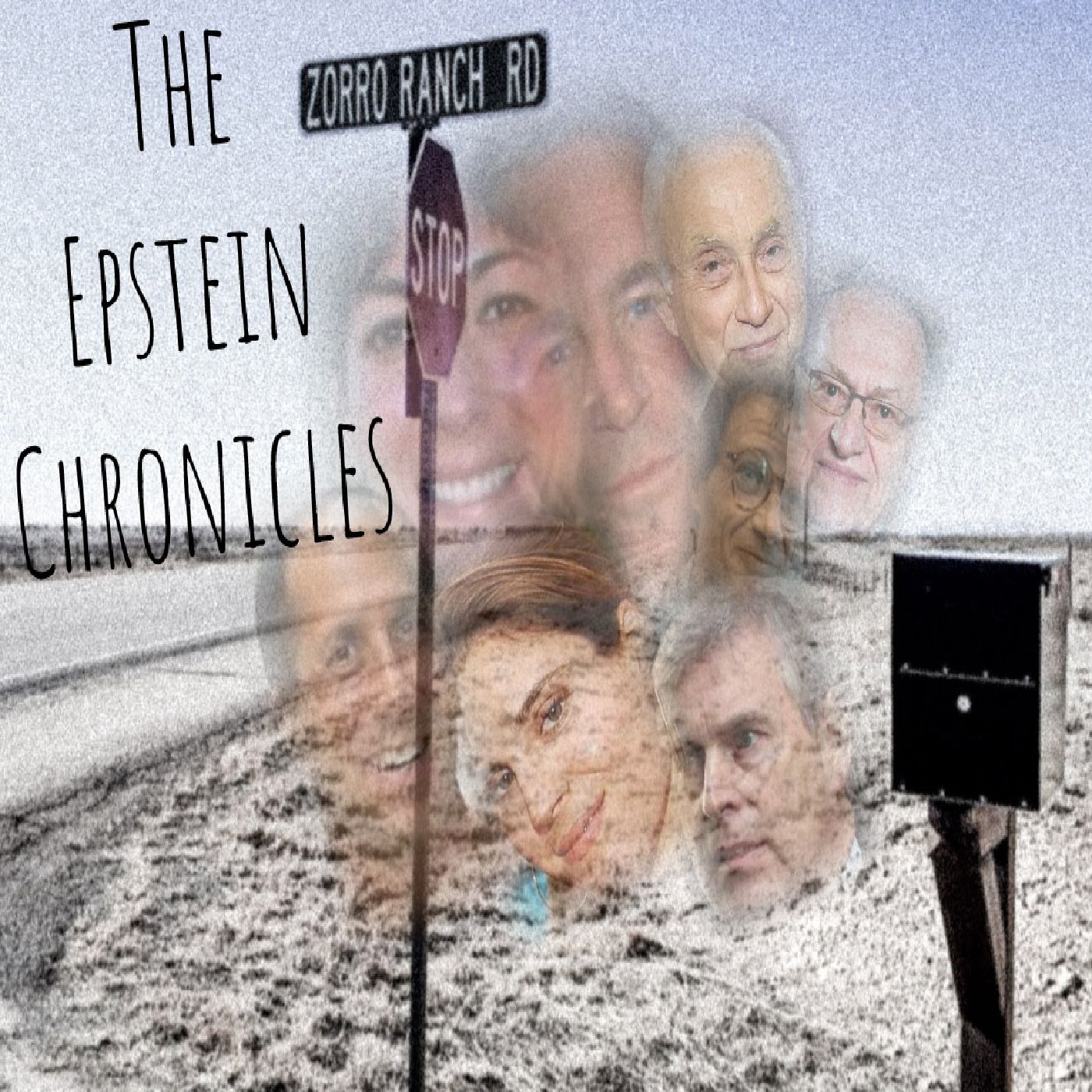
The Epstein Chronicles
Bobby Capucci
Jeffrey Epstein was a multi millionaire who had political and business ties to some of the most rich and powerful people in the world. From businessmen to politicians at the highest levels, Epstein broke bread with them all. Yet for years the Legacy media and the rest of high society looked the other way and ignored his behavior as multiple women came forward with allegations of abuse. Even after he was convicted and subsequently received a sweetheart deal those same so called elites welcomed him back with open arms. Now after his death and the arrest of Maxwell, the real story is starting to come together and the curtain has begun to be drawn back and what it has revealed is truly disturbing. From Princes to Ex Presidents, the cast of scoundrels in this play spans continents and political affiliations leaving us with a transcontinental criminal conspiracy possibly unlike any we have ever seen before. In this podcast we will explore all of the levels of Jeffrey Epstein and his criminal enterprise. From his most trusted assistants to obscure associates, we will leave no stone unturned as we swim through the muck searching for clarity and answers to some of the most pressing questions of the case. From interviews with people directly involved in the case to daily updates, the Epstein Chronicles will have it all. Just like our other project, The Jeffrey Epstein Show, you can expect no punches pulled and consistent content. We have covered the Epstein case daily(everyday since October 1st 2019) and will continue to do so until there are convictions. With a library of well over 1k shows, you can expect a ton of content coming your way including on scene reporting from the Maxwell trial and from places like Zorro Ranch. Thank you for tuning in and I look forward to having you all along for the ride.(Created and Hosted by Bobby Capucci)Become a supporter of this podcast: https://www.spreaker.com/podcast/the-epstein-chronicles--5003294/support.
Episodes
Mentioned books

Apr 18, 2026 • 13min
Inside the Cover-Up: "Agent X" On Why the Epstein Investigation Was Built to Collapse (Part 2)
We sit down with Agent X for a second time — not to rehash what was already said, but to dig deeper, press harder, and follow the paper trail farther into the parts of the story that were previously redacted or obscured. This follow-up conversation picks up where the first left off, sharpening lines of inquiry about who is being protected, how institutional mechanisms have worked to bury key records, and what concrete steps might finally force meaningful disclosure and accountability.The conversation with Agent X traced the Epstein investigation across its major fault lines: the current state of play, the suffocating role of politics, the systemic cover-up, and the powerful figures still being shielded. Agent X detailed how congressional hearings and DOJ disclosures amount to theater, offering redacted documents and staged outrage instead of prosecutions. Survivors have forced banks and institutions into settlements, but payouts have replaced accountability, and every redaction is another betrayal. The money trail — offshore accounts, banks turning a blind eye, hush payments disguised as philanthropy — remains the most dangerous evidence, one the system is determined to bury.Agent X described the machinery of the cover-up: the 2008 non-prosecution deal, sealed court filings, confidentiality clauses, compliant judges, cowardly prosecutors, political grandstanding, and media complicity. The likelihood of indictments for the most powerful players is slim without whistleblowers or leaks; the public should brace for more managed exposure and controlled disclosures. The core message was blunt — this case is a mirror showing that the system does not fail by accident but is structured to protect power. The only path to true accountability is relentless pressure: force the cracks wider, document by document, name by name.to contact me:bobbycapucci@protonmail.comBecome a supporter of this podcast: https://www.spreaker.com/podcast/the-epstein-chronicles--5003294/support.
Apr 18, 2026 • 17min
Inside the Cover-Up: "Agent X" On Why the Epstein Investigation Was Built to Collapse (Part 1)
We sit down with Agent X for a second time — not to rehash what was already said, but to dig deeper, press harder, and follow the paper trail farther into the parts of the story that were previously redacted or obscured. This follow-up conversation picks up where the first left off, sharpening lines of inquiry about who is being protected, how institutional mechanisms have worked to bury key records, and what concrete steps might finally force meaningful disclosure and accountability.The conversation with Agent X traced the Epstein investigation across its major fault lines: the current state of play, the suffocating role of politics, the systemic cover-up, and the powerful figures still being shielded. Agent X detailed how congressional hearings and DOJ disclosures amount to theater, offering redacted documents and staged outrage instead of prosecutions. Survivors have forced banks and institutions into settlements, but payouts have replaced accountability, and every redaction is another betrayal. The money trail — offshore accounts, banks turning a blind eye, hush payments disguised as philanthropy — remains the most dangerous evidence, one the system is determined to bury.Agent X described the machinery of the cover-up: the 2008 non-prosecution deal, sealed court filings, confidentiality clauses, compliant judges, cowardly prosecutors, political grandstanding, and media complicity. The likelihood of indictments for the most powerful players is slim without whistleblowers or leaks; the public should brace for more managed exposure and controlled disclosures. The core message was blunt — this case is a mirror showing that the system does not fail by accident but is structured to protect power. The only path to true accountability is relentless pressure: force the cracks wider, document by document, name by name.to contact me:bobbycapucci@protonmail.comBecome a supporter of this podcast: https://www.spreaker.com/podcast/the-epstein-chronicles--5003294/support.
Apr 18, 2026 • 12min
Inside The OIG Interview: The Warden's Statement Detailing The Death Of Jeffrey Epstein (Part 18) (4/18/26)
Lamine N'Diaye, in his interview with the Office of the Inspector General, essentially tried to turn the Metropolitan Correctional Center into a scapegoat while positioning himself as a bystander to its failures. He leaned heavily on the narrative that the facility was already broken—staff shortages, overtime abuse, infrastructure decay—as if that somehow absolved him of responsibility rather than underscoring the urgency of his role. What stands out is not just what he admitted, but what he avoided: there is little evidence in his account of decisive leadership, no clear record of aggressive intervention, and no meaningful acknowledgment that the buck was supposed to stop with him. Instead, he described a system failing in slow motion while he remained at the helm, fully aware of the cracks but unwilling—or unable—to reinforce them before they gave way.Even more troubling is how his interview reflects a pattern of deflection that mirrors broader institutional behavior in the wake of Jeffrey Epstein’s death. N’Diaye pointed to correctional officers missing rounds, falsifying logs, and working under extreme fatigue, but failed to explain why those conditions were tolerated under his command, especially after Epstein had already been flagged as a high-risk inmate following a prior incident. The responsibility didn’t disappear into the system—it sat squarely in his office, and his testimony reads less like accountability and more like damage control. The overall picture is not of a warden overwhelmed by circumstances, but of a leader who allowed a known crisis environment to persist unchecked, then attempted to retroactively frame it as inevitable once the worst-case scenario unfolded.to contact me:bobbycapucci@protonmail.comsource:EFTA00119019.pdfBecome a supporter of this podcast: https://www.spreaker.com/podcast/the-epstein-chronicles--5003294/support.
Apr 18, 2026 • 14min
Inside The OIG Interview: The Warden's Statement Detailing The Death Of Jeffrey Epstein (Part 19) (4/18/26)
Lamine N'Diaye, in his interview with the Office of the Inspector General, essentially tried to turn the Metropolitan Correctional Center into a scapegoat while positioning himself as a bystander to its failures. He leaned heavily on the narrative that the facility was already broken—staff shortages, overtime abuse, infrastructure decay—as if that somehow absolved him of responsibility rather than underscoring the urgency of his role. What stands out is not just what he admitted, but what he avoided: there is little evidence in his account of decisive leadership, no clear record of aggressive intervention, and no meaningful acknowledgment that the buck was supposed to stop with him. Instead, he described a system failing in slow motion while he remained at the helm, fully aware of the cracks but unwilling—or unable—to reinforce them before they gave way.Even more troubling is how his interview reflects a pattern of deflection that mirrors broader institutional behavior in the wake of Jeffrey Epstein’s death. N’Diaye pointed to correctional officers missing rounds, falsifying logs, and working under extreme fatigue, but failed to explain why those conditions were tolerated under his command, especially after Epstein had already been flagged as a high-risk inmate following a prior incident. The responsibility didn’t disappear into the system—it sat squarely in his office, and his testimony reads less like accountability and more like damage control. The overall picture is not of a warden overwhelmed by circumstances, but of a leader who allowed a known crisis environment to persist unchecked, then attempted to retroactively frame it as inevitable once the worst-case scenario unfolded.to contact me:bobbycapucci@protonmail.comsource:EFTA00119019.pdfBecome a supporter of this podcast: https://www.spreaker.com/podcast/the-epstein-chronicles--5003294/support.
Apr 18, 2026 • 14min
Inside The OIG Interview: The Warden's Statement Detailing The Death Of Jeffrey Epstein (Part 17) (4/18/26)
Lamine N'Diaye, in his interview with the Office of the Inspector General, essentially tried to turn the Metropolitan Correctional Center into a scapegoat while positioning himself as a bystander to its failures. He leaned heavily on the narrative that the facility was already broken—staff shortages, overtime abuse, infrastructure decay—as if that somehow absolved him of responsibility rather than underscoring the urgency of his role. What stands out is not just what he admitted, but what he avoided: there is little evidence in his account of decisive leadership, no clear record of aggressive intervention, and no meaningful acknowledgment that the buck was supposed to stop with him. Instead, he described a system failing in slow motion while he remained at the helm, fully aware of the cracks but unwilling—or unable—to reinforce them before they gave way.Even more troubling is how his interview reflects a pattern of deflection that mirrors broader institutional behavior in the wake of Jeffrey Epstein’s death. N’Diaye pointed to correctional officers missing rounds, falsifying logs, and working under extreme fatigue, but failed to explain why those conditions were tolerated under his command, especially after Epstein had already been flagged as a high-risk inmate following a prior incident. The responsibility didn’t disappear into the system—it sat squarely in his office, and his testimony reads less like accountability and more like damage control. The overall picture is not of a warden overwhelmed by circumstances, but of a leader who allowed a known crisis environment to persist unchecked, then attempted to retroactively frame it as inevitable once the worst-case scenario unfolded.to contact me:bobbycapucci@protonmail.comsource:EFTA00119019.pdfBecome a supporter of this podcast: https://www.spreaker.com/podcast/the-epstein-chronicles--5003294/support.
Apr 18, 2026 • 44min
Mega Edition: The Ghislaine Maxwell Fan Club And The Media (4/17/26)
Geraldo Rivera and Joana Spilbor both publicly voiced support for granting bail to Ghislaine Maxwell in the lead-up to her federal trial, framing their arguments around legal principles rather than the nature of the allegations. Rivera argued that, despite the severity of the charges tied to Jeffrey Epstein’s network, Maxwell was still entitled to the presumption of innocence and should not be held in pretrial detention under harsh conditions if a secured release could reasonably ensure her appearance in court. He emphasized that bail is not supposed to function as punishment, suggesting that denying it outright risked undermining foundational legal standards in high-profile cases.Spilbor echoed similar reasoning from a legal standpoint, pointing to the structure of the bail system and arguing that, in theory, conditions such as home confinement, electronic monitoring, and significant financial guarantees could mitigate flight risk. She suggested that the court should weigh Maxwell’s resources and circumstances within the framework of established bail law, rather than allowing public outrage to dictate the outcome. Their positions drew sharp backlash, with critics arguing that Maxwell’s wealth, international connections, and the gravity of the charges made her an extreme flight risk and an inappropriate candidate for release, reinforcing the broader controversy over whether the justice system applies its principles evenly in cases involving powerful defendants.to contact me:bobbycapucci@protonmail.comBecome a supporter of this podcast: https://www.spreaker.com/podcast/the-epstein-chronicles--5003294/support.
Apr 18, 2026 • 48min
Mega Edition: Paul Cassell's Deposition In Cassell/Edwards V. Dershowitz (Part 10-13) (4/17/26)
In the Broward County defamation litigation CACE 15-000072, the deposition at issue is sworn testimony from Paul Cassell, one of the attorneys representing Epstein survivors and a former federal judge. Cassell’s deposition focuses on his role in challenging the 2008 federal Non-Prosecution Agreement granted to Jeffrey Epstein, and on statements he made publicly about Alan Dershowitz that later became the basis for Dershowitz’s defamation claims. Cassell explains the factual foundation for his remarks, emphasizing that they were rooted in court filings, sworn victim testimony, investigative reporting, and contemporaneous evidence. He details how survivors’ allegations against Dershowitz emerged, how they were evaluated by legal teams, and why he believed it was appropriate and accurate to reference them in public advocacy surrounding Epstein’s secret plea deal. Cassell consistently frames his conduct as part of his duty to represent victims and expose prosecutorial misconduct, not as a personal attack.The deposition also addresses Dershowitz’s accusation that Cassell acted recklessly or with malice, which Cassell firmly rejects. He testifies that he never fabricated claims, never coached witnesses to lie, and never acted outside ethical or professional boundaries. Cassell underscores that his statements reflected allegations already made under oath by victims and contained in legal records, and that suppressing discussion of those allegations would further harm survivors. Throughout the testimony, Cassell situates the dispute within the larger Epstein cover-up, arguing that the real issue is not reputational discomfort among the powerful but the systemic failure to protect exploited minors. The deposition ultimately functions as a defense of victim-centered advocacy and transparency, directly countering Dershowitz’s narrative that survivor allegations were invented, coerced, or irresponsibly amplified.to contact me:EFTA00594390.pdfBecome a supporter of this podcast: https://www.spreaker.com/podcast/the-epstein-chronicles--5003294/support.
Apr 18, 2026 • 44min
Mega Edition: Paul Cassell's Deposition In Cassell/Edwards V. Dershowitz (Part 7-9) (4/17/26)
In the Broward County defamation litigation CACE 15-000072, the deposition at issue is sworn testimony from Paul Cassell, one of the attorneys representing Epstein survivors and a former federal judge. Cassell’s deposition focuses on his role in challenging the 2008 federal Non-Prosecution Agreement granted to Jeffrey Epstein, and on statements he made publicly about Alan Dershowitz that later became the basis for Dershowitz’s defamation claims. Cassell explains the factual foundation for his remarks, emphasizing that they were rooted in court filings, sworn victim testimony, investigative reporting, and contemporaneous evidence. He details how survivors’ allegations against Dershowitz emerged, how they were evaluated by legal teams, and why he believed it was appropriate and accurate to reference them in public advocacy surrounding Epstein’s secret plea deal. Cassell consistently frames his conduct as part of his duty to represent victims and expose prosecutorial misconduct, not as a personal attack.The deposition also addresses Dershowitz’s accusation that Cassell acted recklessly or with malice, which Cassell firmly rejects. He testifies that he never fabricated claims, never coached witnesses to lie, and never acted outside ethical or professional boundaries. Cassell underscores that his statements reflected allegations already made under oath by victims and contained in legal records, and that suppressing discussion of those allegations would further harm survivors. Throughout the testimony, Cassell situates the dispute within the larger Epstein cover-up, arguing that the real issue is not reputational discomfort among the powerful but the systemic failure to protect exploited minors. The deposition ultimately functions as a defense of victim-centered advocacy and transparency, directly countering Dershowitz’s narrative that survivor allegations were invented, coerced, or irresponsibly amplified.to contact me:EFTA00594390.pdfBecome a supporter of this podcast: https://www.spreaker.com/podcast/the-epstein-chronicles--5003294/support.
Apr 18, 2026 • 41min
Mega Edition: Paul Cassell's Deposition In Cassell/Edwards V. Dershowitz (Part 4-6) (4/17/26)
In the Broward County defamation litigation CACE 15-000072, the deposition at issue is sworn testimony from Paul Cassell, one of the attorneys representing Epstein survivors and a former federal judge. Cassell’s deposition focuses on his role in challenging the 2008 federal Non-Prosecution Agreement granted to Jeffrey Epstein, and on statements he made publicly about Alan Dershowitz that later became the basis for Dershowitz’s defamation claims. Cassell explains the factual foundation for his remarks, emphasizing that they were rooted in court filings, sworn victim testimony, investigative reporting, and contemporaneous evidence. He details how survivors’ allegations against Dershowitz emerged, how they were evaluated by legal teams, and why he believed it was appropriate and accurate to reference them in public advocacy surrounding Epstein’s secret plea deal. Cassell consistently frames his conduct as part of his duty to represent victims and expose prosecutorial misconduct, not as a personal attack.The deposition also addresses Dershowitz’s accusation that Cassell acted recklessly or with malice, which Cassell firmly rejects. He testifies that he never fabricated claims, never coached witnesses to lie, and never acted outside ethical or professional boundaries. Cassell underscores that his statements reflected allegations already made under oath by victims and contained in legal records, and that suppressing discussion of those allegations would further harm survivors. Throughout the testimony, Cassell situates the dispute within the larger Epstein cover-up, arguing that the real issue is not reputational discomfort among the powerful but the systemic failure to protect exploited minors. The deposition ultimately functions as a defense of victim-centered advocacy and transparency, directly countering Dershowitz’s narrative that survivor allegations were invented, coerced, or irresponsibly amplified.to contact me:EFTA00594390.pdfBecome a supporter of this podcast: https://www.spreaker.com/podcast/the-epstein-chronicles--5003294/support.
Apr 18, 2026 • 43min
Mega Edition: Paul Cassell's Deposition In Cassell/Edwards V. Dershowitz (Part 1-3) (4/17/26)
In the Broward County defamation litigation CACE 15-000072, the deposition at issue is sworn testimony from Paul Cassell, one of the attorneys representing Epstein survivors and a former federal judge. Cassell’s deposition focuses on his role in challenging the 2008 federal Non-Prosecution Agreement granted to Jeffrey Epstein, and on statements he made publicly about Alan Dershowitz that later became the basis for Dershowitz’s defamation claims. Cassell explains the factual foundation for his remarks, emphasizing that they were rooted in court filings, sworn victim testimony, investigative reporting, and contemporaneous evidence. He details how survivors’ allegations against Dershowitz emerged, how they were evaluated by legal teams, and why he believed it was appropriate and accurate to reference them in public advocacy surrounding Epstein’s secret plea deal. Cassell consistently frames his conduct as part of his duty to represent victims and expose prosecutorial misconduct, not as a personal attack.The deposition also addresses Dershowitz’s accusation that Cassell acted recklessly or with malice, which Cassell firmly rejects. He testifies that he never fabricated claims, never coached witnesses to lie, and never acted outside ethical or professional boundaries. Cassell underscores that his statements reflected allegations already made under oath by victims and contained in legal records, and that suppressing discussion of those allegations would further harm survivors. Throughout the testimony, Cassell situates the dispute within the larger Epstein cover-up, arguing that the real issue is not reputational discomfort among the powerful but the systemic failure to protect exploited minors. The deposition ultimately functions as a defense of victim-centered advocacy and transparency, directly countering Dershowitz’s narrative that survivor allegations were invented, coerced, or irresponsibly amplified.to contact me:EFTA00594390.pdfBecome a supporter of this podcast: https://www.spreaker.com/podcast/the-epstein-chronicles--5003294/support.

