

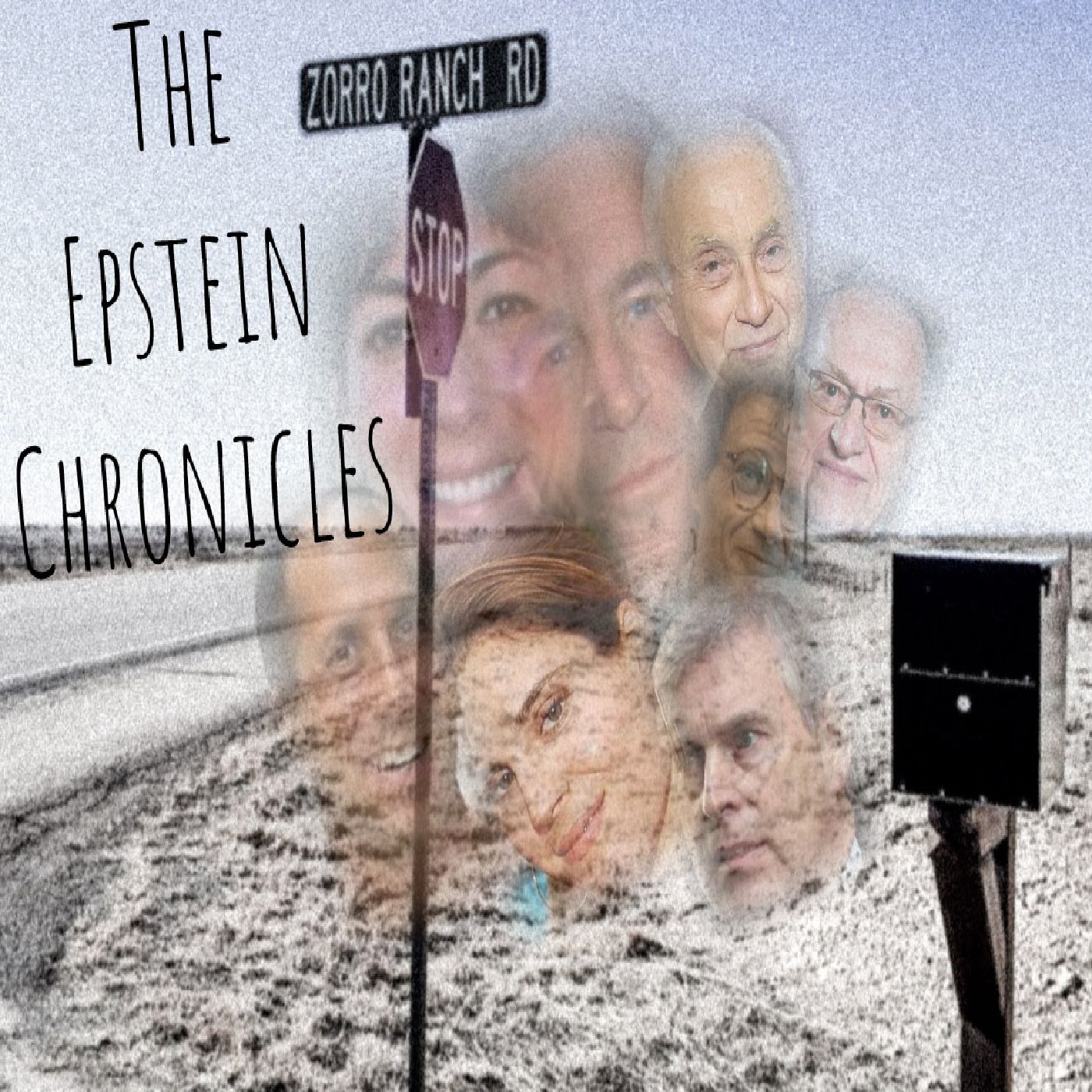
The Epstein Chronicles
Bobby Capucci
Jeffrey Epstein was a multi millionaire who had political and business ties to some of the most rich and powerful people in the world. From businessmen to politicians at the highest levels, Epstein broke bread with them all. Yet for years the Legacy media and the rest of high society looked the other way and ignored his behavior as multiple women came forward with allegations of abuse. Even after he was convicted and subsequently received a sweetheart deal those same so called elites welcomed him back with open arms. Now after his death and the arrest of Maxwell, the real story is starting to come together and the curtain has begun to be drawn back and what it has revealed is truly disturbing. From Princes to Ex Presidents, the cast of scoundrels in this play spans continents and political affiliations leaving us with a transcontinental criminal conspiracy possibly unlike any we have ever seen before. In this podcast we will explore all of the levels of Jeffrey Epstein and his criminal enterprise. From his most trusted assistants to obscure associates, we will leave no stone unturned as we swim through the muck searching for clarity and answers to some of the most pressing questions of the case. From interviews with people directly involved in the case to daily updates, the Epstein Chronicles will have it all. Just like our other project, The Jeffrey Epstein Show, you can expect no punches pulled and consistent content. We have covered the Epstein case daily(everyday since October 1st 2019) and will continue to do so until there are convictions. With a library of well over 1k shows, you can expect a ton of content coming your way including on scene reporting from the Maxwell trial and from places like Zorro Ranch. Thank you for tuning in and I look forward to having you all along for the ride.(Created and Hosted by Bobby Capucci)Become a supporter of this podcast: https://www.spreaker.com/podcast/the-epstein-chronicles--5003294/support.
Episodes
Mentioned books

Apr 22, 2026 • 35min
Mega Edition: Peter Mandelson And His Refusal To Apologize For His Epstein Ties (4/21/26)
Peter Mandelson initially faced sharp criticism after he declined to offer a direct apology to victims connected to the Jeffrey Epstein scandal, instead framing his response in a way that many interpreted as detached and overly cautious. His remarks appeared to prioritize distancing himself from the controversy rather than acknowledging the harm suffered by survivors, which only intensified backlash from advocates and the public. Critics argued that his response reflected a broader pattern among powerful figures—minimizing accountability while avoiding language that could imply responsibility or empathy for those affected.As pressure mounted, Mandelson shifted course and softened his stance, effectively walking back his earlier position by expressing regret and attempting to strike a more conciliatory tone. While not a full-throated apology in the eyes of many, the adjustment signaled recognition of the political and moral weight of the issue. The reversal underscored how public scrutiny can force even seasoned political figures to recalibrate their messaging, especially when initial responses are perceived as dismissive toward survivors of abuse.to contact me:bobbycapucci@protonmail.comBecome a supporter of this podcast: https://www.spreaker.com/podcast/the-epstein-chronicles--5003294/support.
Apr 22, 2026 • 36min
Mega Edition: Epstein, the Media, and the Hoax- How The Epstein Survivors Were Betrayed Twice (4/22/26)
The mishandling of Jeffrey Epstein’s story by left-leaning media created a chain reaction of distrust that continues to ripple outward. By dismissing survivor accounts and labeling the scandal as a “right-wing conspiracy” for years, they not only silenced victims but also misled their own audiences into complacency. When the truth finally broke open, people who leaned left politically were shocked to discover how horrifying Epstein’s crimes really were and how deeply entrenched the system protecting him had been. That betrayal of trust didn’t just harm survivors—it left the public vulnerable to political manipulation.Into this vacuum stepped Donald Trump and his allies, who now weaponize the media’s past failures by calling the entire Epstein affair a hoax. Because mainstream outlets once minimized or mocked the story, Trump can frame it as just another example of “fake news.” This tactic allows him and his base to dismiss the overwhelming evidence while undermining survivor testimony, further eroding accountability. The end result is a scandal that should have united people in outrage but instead has been twisted into partisan noise, leaving survivors betrayed yet again and the public more divided than ever.to contact me:bobbycapucci@protonmail.comBecome a supporter of this podcast: https://www.spreaker.com/podcast/the-epstein-chronicles--5003294/support.
Apr 22, 2026 • 53min
Mega Edition: Courtney Wild And Her Jeffrey Epstein Related Deposition From 2017 (Part 1-4) (4/21/26)
In the 2017 video deposition of Courtney E. Wild, taken as part of the civil case Epstein v. Rothstein in the Fifteenth Judicial Circuit Court of Florida, Wild testified under oath about her personal background, criminal history, and relevant circumstances before the court began substantive questions. The early portion of the deposition focuses on Wild’s identity and personal history, including her marriage, family situation, and her own past convictions, including a drug trafficking conviction for which she was serving a sentence at the Gadsden Correctional Facility in Florida at the time of the deposition. Wild was sworn in and answered basic biographical questions about her life prior to moving into the heart of the civil litigation against Epstein’s representatives and others, establishing her presence and credibility as a witness in the case’s factual recordto contact me:bobbycapucci@protonmail.comsource:1027.pdfBecome a supporter of this podcast: https://www.spreaker.com/podcast/the-epstein-chronicles--5003294/support.
Apr 22, 2026 • 15min
Incompetence Is the Cover Story: The Legacy Media’s Favorite Epstein Excuse
The Epstein scandal continues to be misrepresented by legacy media as a story of bureaucratic incompetence rather than one of systemic protection. By leaning on explanations like “risk-averse prosecutors,” poor inter-agency communication, or cultural shifts post-#MeToo, mainstream coverage minimizes a case that involved overwhelming evidence, repeated allegations, and a consistent pattern of Epstein avoiding consequences across decades and jurisdictions. These narratives sanitize what should have been obvious red flags, treating Epstein like a complicated anomaly instead of a man who benefited from extraordinary insulation that regular defendants never receive. Framing critics as mere “cynics” further dismisses informed analysis and shields institutions from accountability.This downplaying serves a purpose: incompetence is a safe explanation that preserves faith in powerful systems and avoids confronting uncomfortable questions about influence, intent, and protection. By focusing on process failures rather than deliberate choices, legacy media substitutes passive language and vague theories for hard scrutiny of who made decisions and why Epstein repeatedly survived scandals that should have ended him. The result is coverage that blurs responsibility, discredits victims by implication, and obscures the structural reality of power protecting one of its own. In doing so, the media doesn’t just misunderstand the Epstein case—it actively contributes to the ongoing erasure of its true scope.to contact me:bobbycapucci@protonmail.comBecome a supporter of this podcast: https://www.spreaker.com/podcast/the-epstein-chronicles--5003294/support.
Apr 22, 2026 • 16min
One Percent Truth: How the DOJ Gutted the Epstein Transparency Law
By the DOJ’s own actions, what was promised as a meaningful step toward transparency has instead turned into a masterclass in bad faith. Despite a clear legal mandate requiring the release of Epstein-related records by December 19th, the Department of Justice has released roughly 1% of what it was obligated to disclose. Not 1% of what was convenient. Not 1% of what they felt like parting with. One percent of the total universe of documents they have publicly acknowledged possessing. This is not a paperwork hiccup or a minor delay—it is an institutional refusal to comply with the spirit or the letter of the law. For decades, the DOJ has insisted that Epstein was thoroughly investigated, that the evidence was reviewed, that the case was handled—yet when transparency is finally required, the files suddenly become too numerous, too complex, and too sensitive to release on time. The contradiction is glaring: either these materials were already organized and understood, or the DOJ has been misleading the public for years about the depth and seriousness of its investigation.For survivors, this isn’t just bureaucratic nonsense—it’s a direct insult. Many of them waited decades to be believed, to see the system acknowledge what was done to them and who enabled it. Releasing a token sliver of records while slow-walking the rest sends a clear message: institutional self-protection still outweighs accountability. To the American public, it’s an unmistakable middle finger—proof that even when Congress acts, even when the law is explicit, the DOJ believes it can stall, obfuscate, and wear people down through attrition. Transparency delayed is transparency denied, and in this case, the delay isn’t accidental. It reinforces the same power imbalance that allowed Epstein to operate in plain sight for so long, signaling that when powerful interests are implicated, justice remains optional and accountability remains negotiable.to contact me:bobbycapucci@protonmail.comsource:Justice Department has released only 1% of Epstein files, new filing saysBecome a supporter of this podcast: https://www.spreaker.com/podcast/the-epstein-chronicles--5003294/support.
Apr 21, 2026 • 11min
"We Don’t Trust the DOJ”: Inside the Push for a Special Master Over Epstein Records
Reps. Ro Khanna (D-Calif.) and Thomas Massie (R-Ky.), the bipartisan sponsors of the Epstein Files Transparency Act, have formally asked a federal judge to appoint a special master or independent monitor to oversee the Justice Department’s release of files related to Jeffrey Epstein. Their request comes after the DOJ missed the law’s December 19, 2025 deadline to make the documents public and has released only a small fraction of what it says is a multi-million document trove. In a letter to U.S. District Judge Paul Engelmayer, Khanna and Massie argue that the DOJ’s slow pace, extensive redactions, and failure to submit legally required reports to Congress undermine compliance with the statute and could further traumatize survivors. They want a neutral third party empowered to assess whether the department is fully complying with the law and identify any improper redactions or other questionable conduct.The lawmakers have emphasized their lack of confidence in the DOJ’s ability to self-police this process and contend that without court-appointed oversight, full disclosure is unlikely. In their filing, they highlight inconsistencies in the DOJ’s reported figures on released versus remaining documents, and they stress that the department “cannot be trusted with making mandatory disclosures under the Act.” Massie has also threatened contempt proceedings against Attorney General Pam Bondi for ongoing noncompliance. By urging judicial intervention through a special master, Khanna and Massie aim to ensure the transparency envisioned by their law and compel the release of the full set of Epstein-related records despite departmental resistance.to contact me:bobbycapucci@protonmail.comsource:US congressmen ask judge to appoint official to force release of all Epstein files | Jeffrey Epstein | The GuardianBecome a supporter of this podcast: https://www.spreaker.com/podcast/the-epstein-chronicles--5003294/support.
Apr 21, 2026 • 18min
Jeffrey Epstein's Victims Number In The 1000s According To This Lawyer
Lisa Bloom has asserted that the number of Jeffrey Epstein’s victims likely extends far beyond those publicly known, arguing that the hundreds who have come forward represent only the “tip of the iceberg.” She reasons that if the public disclosures amount to perhaps one in ten of those harmed, then “thousands” of victims remain undisclosed. She has also pointed to testimony in some cases indicating that Epstein abused as many as three girls a day during peak periods, underscoring the scope she believes has been hidden.Alongside quantifying the scale, Bloom has been vocal in calls for transparency and accountability. She has criticized powerful individuals linked to Epstein for failing to comply with investigations and pushed for the unsealing of legal files (excluding victim identities) to shed light on how far the network reachedto contact me:bobbycapucci@protonmail.comsource:I investigated Epstein's twisted sex empire - there's thousands more victims... we’ve only seen tip of sordid iceberg | The SunBecome a supporter of this podcast: https://www.spreaker.com/podcast/the-epstein-chronicles--5003294/support.
Apr 21, 2026 • 13min
Inside The OIG Interview: The Warden's Statement Detailing The Death Of Jeffrey Epstein (Part 23) (4/21/26)
Lamine N'Diaye, in his interview with the Office of the Inspector General, essentially tried to turn the Metropolitan Correctional Center into a scapegoat while positioning himself as a bystander to its failures. He leaned heavily on the narrative that the facility was already broken—staff shortages, overtime abuse, infrastructure decay—as if that somehow absolved him of responsibility rather than underscoring the urgency of his role. What stands out is not just what he admitted, but what he avoided: there is little evidence in his account of decisive leadership, no clear record of aggressive intervention, and no meaningful acknowledgment that the buck was supposed to stop with him. Instead, he described a system failing in slow motion while he remained at the helm, fully aware of the cracks but unwilling—or unable—to reinforce them before they gave way.Even more troubling is how his interview reflects a pattern of deflection that mirrors broader institutional behavior in the wake of Jeffrey Epstein’s death. N’Diaye pointed to correctional officers missing rounds, falsifying logs, and working under extreme fatigue, but failed to explain why those conditions were tolerated under his command, especially after Epstein had already been flagged as a high-risk inmate following a prior incident. The responsibility didn’t disappear into the system—it sat squarely in his office, and his testimony reads less like accountability and more like damage control. The overall picture is not of a warden overwhelmed by circumstances, but of a leader who allowed a known crisis environment to persist unchecked, then attempted to retroactively frame it as inevitable once the worst-case scenario unfolded.to contact me:bobbycapucci@protonmail.comsource:EFTA00119019.pdfBecome a supporter of this podcast: https://www.spreaker.com/podcast/the-epstein-chronicles--5003294/support.
Apr 21, 2026 • 14min
Keir Starmer, Peter Mandelson, and the Epstein Scandal That Is Rocking British Politics (4/21/26)
Keir Starmer is facing intensifying calls to resign as a political scandal deepens around his decision to appoint Peter Mandelson as the UK’s ambassador to the United States, despite serious concerns raised during the security vetting process. The controversy centers on revelations that Mandelson failed key vetting checks tied in part to his past association with Jeffrey Epstein, raising questions about judgment, oversight, and whether warnings were ignored or overridden. Starmer has acknowledged the appointment was a mistake but maintains he was not informed of the failed vetting at the time, a claim that critics—both political opponents and figures within his own party—have openly challenged.The growing pressure is not just about the appointment itself, but about credibility and accountability. Critics argue that either Starmer knew about the risks and proceeded anyway, or he failed to maintain control over a critical national security decision—both scenarios fueling demands for his resignation. The issue has been compounded by internal turmoil, including firings, conflicting testimony from officials, and broader political setbacks facing his government. With elections looming and party support showing signs of strain, the scandal has evolved into a direct threat to his leadership, with opponents framing it as a defining test of trust and competence at the highest level of government.to contact me:bobbycapucci@protonmail.comsource:Why U.K. Prime Minister Keir Starmer Is Facing Growing Calls to ResignBecome a supporter of this podcast: https://www.spreaker.com/podcast/the-epstein-chronicles--5003294/support.
Apr 21, 2026 • 14min
The Warden, the Guards, and the Gaps: What the MCC Depositions Really Revealed (4/21/26)
After reviewing the depositions of the warden at MCC, correctional officers Michael Thomas and Tova Noel, and even the account from an unnamed captain, the official explanation of Jeffrey Epstein’s death becomes even harder to accept at face value. What was already presented as a chain of unfortunate failures—missed checks, broken cameras, and procedural lapses—now reads far less like coincidence and far more like a system unable or unwilling to explain itself. Across these depositions, a consistent pattern emerges: vague timelines, repeated claims of “I don’t recall,” and an absence of clear, decisive answers about critical moments. These were not minor oversights involving an ordinary inmate. Epstein was one of the most scrutinized detainees in federal custody, and yet the people responsible for his supervision cannot reconstruct a coherent account of what happened. The removal of suicide watch, the failure to follow basic monitoring protocols, and the lack of reliable surveillance footage now carry even greater weight when viewed through the lens of these testimonies, which only deepen the inconsistencies rather than resolve them.With that added layer of firsthand accounts, the label of “catastrophic systemic failure” feels increasingly insufficient—almost like a catch-all designed to diffuse responsibility rather than pinpoint it. The depositions do not strengthen the official narrative; they weaken it, exposing gaps that are too significant to ignore. Falsified logs, missing evidence, and a timeline that still cannot be clearly established all point to a breakdown that goes beyond routine negligence. When every safeguard appears to fail at once, and the individuals tasked with oversight cannot provide meaningful clarity, the explanation begins to lose credibility. In that context, public skepticism is no longer just understandable—it is inevitable. The more that comes out through these depositions, the more the official version of events feels incomplete, leaving the impression that what happened inside MCC that night is still far from fully explained.to contact me:bobbycapucci@protonmail.comBecome a supporter of this podcast: https://www.spreaker.com/podcast/the-epstein-chronicles--5003294/support.

