

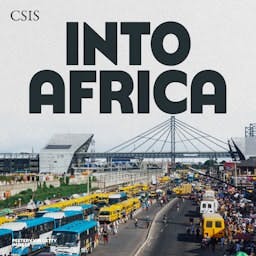
Into Africa
CSIS | Center for Strategic and International Studies
Fearless music activists. Savvy tech entrepreneurs. Social disrupters. Into Africa shatters narratives that dominate U.S. perceptions of Africa. With the world’s youngest population, the decisions made across Africa today—good or bad—will shape the world’s future. Featuring in-depth interviews, the CSIS Africa Program sits down with policymakers, journalists, academics, and other trailblazers in African affairs to shine a spotlight on the people and stories shaping cultural, political, and economic trends across the continent today and for decades to come.
Episodes
Mentioned books

Nov 30, 2023 • 36min
Angola’s Paradox of Abundance
Oil and diamonds typically hint towards a strong and robust economy. However, there is a noticeable disconnect between the mineral richness of Angola and the lack of Foreign Direct Investment. This incongruity lingers, although the nation’s civil war ended in 2002, because the reconciliation process has not addressed the core issues that caused the war. Foreign investor and local stakeholder engagement in post-conflict Angola remains timid. This leaves civil society and economic agents unsatisfied with the political and economic landscape of Angola. Sergio Calundungo, Founder of Social Observatory of Angola, and Carlos Rosado de Carvalho, Journalist and Radio Host on MFM Radio, join Mvemba to discuss the “paradox of abundance” that Angola faces.
Nov 16, 2023 • 36min
Taking Africa's Pulse with Afrobarometer
Although data is a powerful tool in decision-making, data collection and production in Africa have proven to miss the mark in pattern prediction. Afrobarometer is a Pan- African, non-partisan, non-profit research network with headquarters in Ghana that conducts public attitude surveys on democracy, governance, the economy, and society in Africa. Dr. Joseph Asunka, the CEO of Afrobarometer, speaks with Mvemba about the challenges in data collection in Africa as well as the ways Afrobarometer is building data collection methodologies for various contexts in Africa.
Nov 2, 2023 • 38min
Cooking Up a Storm from Dakar to Brooklyn
Yes, Chef! Mvemba is joined by Pierre Thiam, a renowned chef, author, and social activist. Hailing from Senegal, Chef Thiam is best known for bringing West African cuisine to the global fine-dining world. Chef Thiam and Mvemba discuss making it in the fine dining world in New York City, the stunning diversity of food from the continent, finding inspiration in tradition, the miracle grain "fonio" and bringing Senegalese food to American supermarkets.
Oct 19, 2023 • 34min
CorpsAfrica: Peace Corps by and for Africans
Modeled after the Peace Corps, CorpsAfrica empowers African youth to work with local communities, emphasizing local ownership, collaboration, and participatory development. CorpsAfrica founder comments, “We’re creating a second Peace Corps, by and for Africans”. The organization aims to create a lasting impact by addressing community needs through a transformative and scalable model. Volunteers work for one year in high-poverty villages to direct scarce NGO resources to communities that need them. Operating in nine African countries, including Ethiopia, Gambia, Ghana, Kenya, Malawi, Morocco, Rwanda, Senegal, and Uganda, CorpsAfrica addresses two of Africa’s pressing challenges: creating opportunities for youth and helping rural communities overcome poverty. Mvemba is joined by Liz Fanning, Founder and CEO of CorpsAfrica, to discuss the ideas, challenges, and successes of CorpsAfrica as well as the ways African youth are engaging with the organization.
Oct 5, 2023 • 37min
A Look Inside the First Africa Climate Summit
For too long Africa’s role in the fight against climate change has been overlooked and underestimated. While world leaders and non-governmental organizations have tried to address the challenge, both sustainable solutions and actions have not been seen on the continent. The inaugural Africa Climate Summit brought together indigenous activists, African youth, and civil society organizations to discuss solutions to challenges felt by the most vulnerable and affected populations in this crisis. These voices highlighted what is often neglected in private sector-driven solutions by centering African voices, contributions, and demands. After attending the summit, Ikal Angelei, an indigenous rights activist in Kenya, and Serah Makka, Africa Executive Director at ONE, shared their reflections with Mvemba. They share insights from the summit as well as propose some steps to increase the autonomy of Africans in the fight against climate change.

Sep 21, 2023 • 38min
Nine Coups in Three Years
Burkina Faso (twice). Chad. Gabon. Guinea. Mali (twice). Niger. Sudan. The recent spate in coups has forced many to pause and ask difficult questions. Has democracy failed? Why do a minority of citizens support or tolerate military rule, and what does this backing say about the ineffectiveness of their previous governments?Kamissa Camara, Senior Advisor for Africa at the U.S. Institute of Peace and former Minister of Foreign Affairs of Mali, and Ken Opalo, Associate Professor in the School of Foreign Service at Georgetown University join Mvemba. They unpack the structural challenges enabling coups, the failure of the social contract, the very nature of militaries, and regional and international responses to the coups.
Sep 7, 2023 • 25min
Assessing Tinubu’s First 150 Days in Office
Mvemba is joined by Fyneface Dumnamene, the Executive Director of the Youth and Environmental Advocacy Center based in Port Harcourt, Nigeria. They assess President Bola Tinubu's 150 days in office, the economic challenges faced by the Tinubu administration, and Nigeria’s oil economy. They also discuss Nigeria's leadership in ECOWAS and how it has impacted the regional bloc's response to the Niger coup.
Aug 24, 2023 • 36min
Bobi Wine on Youth Movements and Liberation
Mvemba is joined by Robert Kyagulanyi Ssentamu, commonly known as Bobi Wine, to discuss youth movements' challenges in Africa, reflecting on his journey as a presidential candidate in the 2021 Uganda general elections. They highlight the challenges African youth movements face in pursuing democratic change. Mvemba and Bobi Wine dive into why democracy is crumbling in some African countries. Bobi Wine argues that African youth should participate in active politics to effect democratic change in their countries. They contend that the United States military assistance to African governments is used to subvert democracy and violate human rights. Bobi Wine illustrates social media's important role in mass mobilization amid media suppression from authoritarian African regimes.
Aug 10, 2023 • 27min
The Restitution of African Art
Mvemba is joined by Eric Kuikende-Banshona, a Provenance Researcher at the National Museum of the Democratic Republic of Congo. They highlight the importance of restituting African artifacts to move past European colonial history in Africa. They also urge African political leaders to focus on Africa’s cultural richness and collaborate with Western leaders to restore the history and cultures of the African people. They highlight the obligation of Western museums and private art collectors not to hide African artifacts but instead work with African provenance experts to write the authentic narratives of the artwork to preserve the meanings and knowledge they carry.
17 snips
Jul 27, 2023 • 40min
The Wagner Group: The Kremlin’s Indispensable Hand in Africa
Mvemba is joined by CSIS’s Catrina Doxsee, Associate Director and Associate Fellow with the Transnational Threats Project, and ICG’s Delaney Simon, Senior Analyst with the U.S. Program to discuss the Wagner Group’s African operations. They highlight the quasi-independent Russian paramilitary group’s atrocious activities and how they have caused social, humanitarian, and economic harm in Africa. Contrary to the widely held belief that the group is all over Africa, the discussants indicate it is active in Mali, Libya, Sudan, and Central African Republic. They illustrate how the private military company’s operations in those African countries have left a trail of instability, allowing Russia to expand its military footprint in Africa without accountability. They argue that it is a mistake for the United States to designate the Wagner Group as a Foreign Terrorist Organization (FTO) because the designation would trigger far-reaching and counterproductive reactions that would adversely affect critical facets of U.S. engagement in Africa.

