

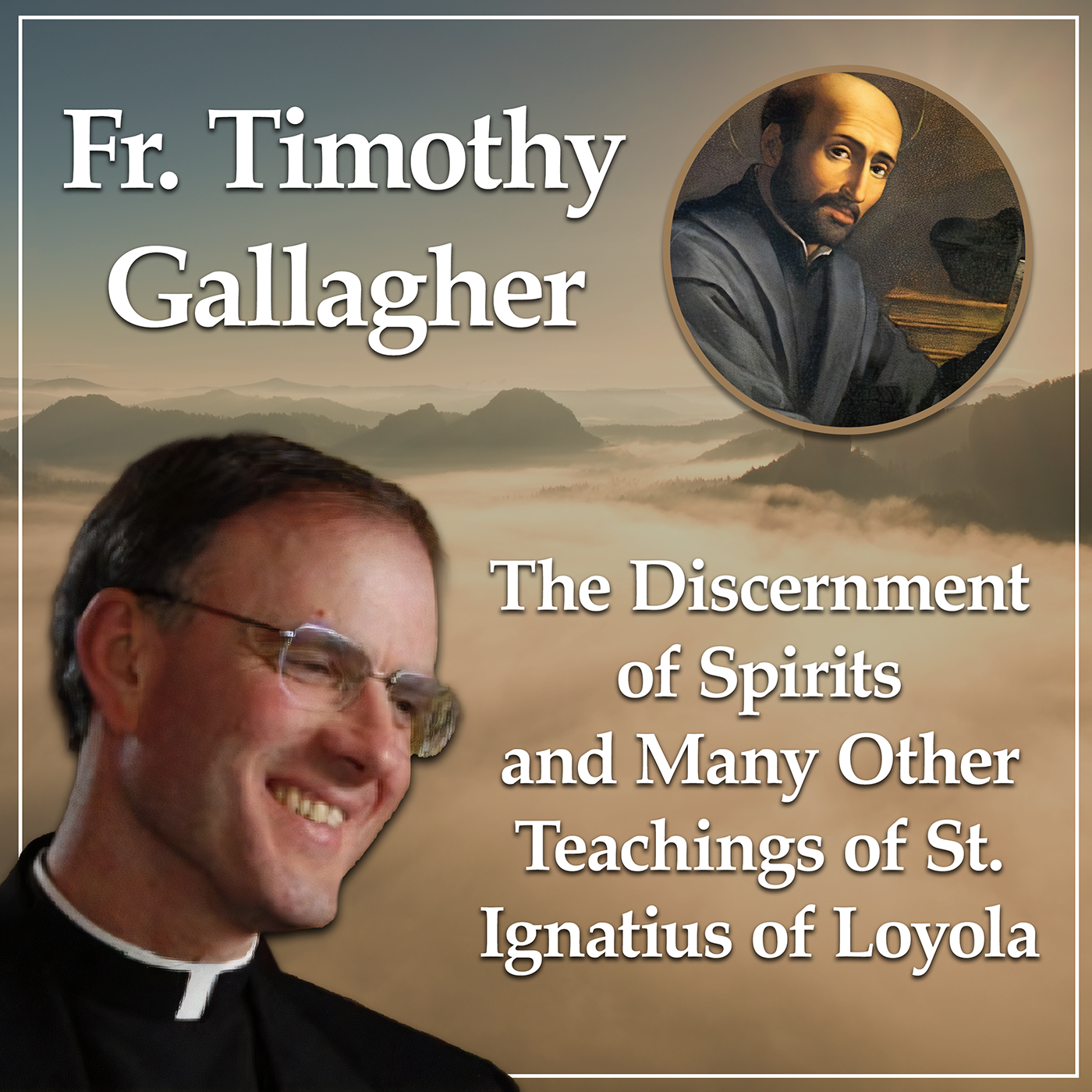
The Discernment of Spirits and many other teachings of St. Ignatius of Loyola with Fr. Timothy Gallagher
Discerning Hearts Catholic Podcasts
Join Fr. Timothy Gallagher as he passes on the teachings of St. Ignatius of Loyola. 1. The Discernment of Spirits 2. What is Spiritual Desolation. 3. The Second Week Rules of Discernment 4. The Daily Examen Prayer 5. Meditation and Contemplation 6. Contemplation to Attain the Love of God.
Episodes
Mentioned books

Dec 20, 2020 • 28min
DOS#9 The Seventh Rule – Discernment of Spirits w/ Fr. Timothy Gallagher – Discerning Hearts Podcasts
The 14 Rules of the Discernment of Spirits with Fr. Timothy Gallagher with Kris McGregor
Episode Nine: Rule Seven – Trusting God’s Grace in Spiritual Desolation
Episode 9 -The Seventh Rule:
Let him who is in desolation consider how the Lord has left him in trial in his natural powers, in order to resist the different agitations and temptations of the enemy; since he can with the Divine help, which always remains to him, though he does not clearly perceive it: because the Lord has taken from him his great fervor, great love and intense grace, leaving him, however, grace enough for eternal salvation.
Episode Nine of The Discernment of Spirits: Setting the Captives Free focuses on Rule Seven, which teaches how to endure spiritual desolation with trust, courage, and faith. Fr. Timothy Gallagher, in conversation with Kris McGregor, explains why this rule transforms desolation from a meaningless burden into a moment of spiritual growth.
Fr. Gallagher begins by describing a familiar experience. Prayer feels dry. Energy for spiritual things is low. Commitments that once brought joy now feel heavy. Without understanding, these moments seem pointless and exhausting. Rule Seven changes everything by revealing the meaning of desolation within God’s loving providence.
Ignatius invites the person in desolation to consider. This is a conscious act. The desolation is a trial permitted by God. It is not random. It is not abandonment. When the heart understands this, the burden becomes lighter. Suffering gains meaning. Endurance becomes possible.
To illuminate this truth, Fr. Gallagher turns to the life of Blessed Angela of Foligno. During a prolonged period of desolation, Angela felt abandoned by God. She could not pray. She could not praise God. Yet beneath the desolation, something remained untouched. Her firm resolve never to consent to sin endured. Grace was at work on a level deeper than feeling.
Fr. Gallagher explains that this is the heart of Rule Seven. In desolation, spiritual consolation may be taken away. Fervor may fade. Warmth may disappear. Yet God never withdraws the grace needed for salvation. Divine help always remains, even when it cannot be felt.
Ignatius teaches that desolation is permitted so the person may learn to resist it. Resistance strengthens the soul. Each time discouragement is resisted, spiritual capacity grows. Over time, the heart becomes rooted. Stability develops. A quiet strength forms that nothing can easily shake.
Fr. Gallagher shares personal experiences of encountering deeply peaceful and grounded individuals. These are often people who have passed through many trials. Their serenity is not accidental. It is the fruit of resisting desolation again and again with God’s help.
A recurring lie of desolation is the voice that says, “I can’t.” I can’t pray. I can’t persevere. I can’t continue. Rule Seven exposes this lie. Even when consolation is absent, sufficient grace remains. The heart can continue. Fidelity is possible. Love can still be chosen.
The episode also clarifies an important distinction. On the non-spiritual level, exhaustion or emotional strain may truly require rest. On the spiritual level, desolation never removes the grace needed to remain faithful. Recognizing this difference restores courage and confidence.
Episode Nine presents Rule Seven as a powerful source of hope. Desolation is never empty time. God is always at work. Grace is always present. When these truths are recalled in the moment of trial, trust grows. The heart is strengthened. Captives are set free.
Discerning Hearts Questions for Reflection and Study
Personal Reflection
Have you experienced times when prayer felt dry or burdensome?
How do you usually interpret spiritual heaviness when it arises?
Can you recall moments when you continued faithfully despite feeling empty?
What helps you remember that God’s grace remains even when it is not felt?
How does Rule Seven change your understanding of perseverance?
Group Reflection or Study
Why does Ignatius ask the person in desolation to consider specific truths?
How does the story of Blessed Angela help clarify Rule Seven?
What does it mean to say that desolation is a trial permitted by God?
How does resisting desolation strengthen the spiritual life over time?
How can this rule help parish leaders support others in discouragement?
The 14 Rules for Discerning Spirits –
“The Different Movements Which Are Caused In The Soul” as outlined by St. Ignatius of Loyola click here
For the other episodes in this series visit Fr. Timothy Gallagher’s “Discerning Hearts”click here
Father Timothy M. Gallagher, O.M.V., was ordained in 1979 as a member of the Oblates of the Virgin Mary, a religious community dedicated to retreats and spiritual formation according to the Spiritual Exercises of St. Ignatius. Fr. Gallagher is featured on the EWTN series “Living the Discerning Life: The Spiritual Teachings of St. Ignatius of Loyola”
The post DOS#9 The Seventh Rule – Discernment of Spirits w/ Fr. Timothy Gallagher – Discerning Hearts Podcasts appeared first on Discerning Hearts Catholic Podcasts.
Dec 20, 2020 • 28min
DOS#10 The Eighth Rule – Discernment of Spirits w/ Fr. Timothy Gallagher – Discerning Hearts Podcast
The 14 Rules of the Discernment of Spirits with Fr. Timothy Gallagher with Kris McGregor
Episode Ten: Rule Eight – Patience in Time of Spiritual Desolation
Episode 10 -The Eighth Rule:
Let him who is in desolation labor to be in patience, which is contrary to the vexations which come to him: and let him think that he will soon be consoled, employing against the desolation the devices, as is said in the sixth Rule.
Episode Ten of The Discernment of Spirits: Setting the Captives Free focuses on Rule Eight, which teaches that patience is the key virtue in time of spiritual desolation. Fr. Timothy Gallagher, in conversation with Kris McGregor, explains how Ignatian patience is not passive endurance but an active, hope-filled perseverance.
Fr. Gallagher begins by clarifying what Ignatius means by patience. The word comes from the Latin patior, meaning to suffer, to bear, and to endure without giving up. In desolation, patience means staying the course. Prayer continues even when it feels dry. Commitments remain even when energy is gone. Love is chosen even when it requires great effort.
To illustrate this virtue, Fr. Gallagher turns to the spiritual journal of Elizabeth Leseur. In the midst of physical suffering, emotional struggle, and deep interior darkness, Elizabeth writes of a will unshakably turned toward God. Though she feels no consolation, she continues in prayer, work, charity, and love. Her example reveals the deep strength that patience forms in the soul.
Fr. Gallagher explains that Rule Eight applies in very concrete situations. A person begins a time of prayer and immediately feels dryness. Everything urges shortening the prayer or giving up altogether. Another feels tempted to withdraw from a parish commitment or retreat that once brought great joy. In these moments, Ignatius gives clear guidance. Stay. Finish. Do not abandon what was freely chosen before the desolation began.
Ignatius then offers a powerful help for perseverance. The person in desolation is to think that consolation will soon return. Desolation lies by telling the heart that the darkness will last forever. Ignatius counters this lie with truth. Consolation does return. It returns much sooner than desolation suggests.
Fr. Gallagher uses a striking image to explain this. Two patients experience similar discomfort. One is told healing will take weeks. The other is told relief will come tomorrow. The second endures far more easily. In the same way, hope sustains patience when the heart knows desolation will pass.
The episode also clarifies an important distinction. Rule Eight does not describe the dark night spoken of by St. John of the Cross. The dark night is a purifying work of God and must be accepted. Spiritual desolation, by contrast, is the work of the enemy and must be resisted. Most people experience ordinary spiritual desolation, not the dark night.
Fr. Gallagher emphasizes that alternation between consolation and desolation is normal in the spiritual life. No one is exempt. There is no shame in desolation. Growth occurs on both sides of this movement. Consolation strengthens love and clarity. Desolation, when resisted with patience, strengthens perseverance and maturity.
The episode concludes by returning to Ignatius’s central insight. Patience in desolation is an act of faith and hope. It chooses truth over feeling. When patience is joined to prayer, examination, and small acts of courage, desolation loses its power. Consolation returns. The heart grows strong. Captives are set free.
Discerning Hearts Questions for Reflection and Study
Personal Reflection
How do you usually respond when prayer feels dry or difficult?
Have you noticed thoughts urging you to give up during discouragement?
What helps you stay faithful when spiritual energy is low?
How does remembering that desolation will pass affect your perseverance?
Where might God be inviting you to practice patience today?
Group Reflection or Study
Why does Ignatius call patience the key virtue in desolation?
How does Elizabeth Leseur’s example illuminate Rule Eight?
Why is hope essential for perseverance in spiritual struggle?
How does this rule protect parish leaders and volunteers from burnout?
What practices help communities remain faithful during difficult seasons?
The 14 Rules for Discerning Spirits –
“The Different Movements Which Are Caused In The Soul” as outlined by St. Ignatius of Loyola click here
For the other episodes in this series visit Fr. Timothy Gallagher’s “Discerning Hearts”click here
Father Timothy M. Gallagher, O.M.V., was ordained in 1979 as a member of the Oblates of the Virgin Mary, a religious community dedicated to retreats and spiritual formation according to the Spiritual Exercises of St. Ignatius. Fr. Gallagher is featured on the EWTN series “Living the Discerning Life: The Spiritual Teachings of St. Ignatius of Loyola
The post DOS#10 The Eighth Rule – Discernment of Spirits w/ Fr. Timothy Gallagher – Discerning Hearts Podcast appeared first on Discerning Hearts Catholic Podcasts.
Dec 20, 2020 • 28min
DOS#11 The Ninth Rule – Discernment of Spirits w/ Fr. Timothy Gallagher – Discerning Hearts Podcasts
The 14 Rules of the Discernment of Spirits with Fr. Timothy Gallagher with Kris McGregor
Episode Eleven: Rule Nine – Why God Allows Spiritual Desolation
Episode 11 -The Ninth Rule:
There are three principal reasons why we find ourselves desolate.
The first is, because of our being tepid, lazy or negligent in our spiritual exercises; and so through our faults, spiritual consolation withdraws from us.
The second, to try us and see how much we are and how much we let ourselves out in His service and praise without such great pay of consolation and great graces.
The third, to give us true acquaintance and knowledge, that we may interiorly feel that it is not ours to get or keep great devotion, intense love, tears, or any other spiritual consolation, but that all is the gift and grace of God our Lord, and that we may not build a nest in a thing not ours, raising our intellect into some pride or vainglory, attributing to us devotion or the other things of the spiritual consolation.
Episode Eleven of The Discernment of Spirits: Setting the Captives Free focuses on Rule Nine, where St. Ignatius addresses one of the most important questions in the spiritual life. If God loves us and we love God, why does He allow spiritual desolation? Fr. Timothy Gallagher, in conversation with Kris McGregor, explains why this rule completes and deepens the earlier teachings on desolation.
Fr. Gallagher begins by naming the problem directly. A person is sincere. Prayer has been faithful. Growth has been real. Then suddenly, consolation disappears. Prayer becomes difficult. God feels distant. Without Rule Nine, the spiritual life would be left with an unanswered wound. Ignatius does not avoid the question. He gives reasons.
Ignatius teaches that there are three principal causes for spiritual desolation. The first is straightforward. At times, desolation comes because of negligence or sloth in spiritual practices. Something has slipped. Prayer has been shortened. Attention has wandered. Desolation acts as a wake-up call. It alerts the heart so that healthy adjustments can be made and communion with God restored.
Fr. Gallagher offers a concrete example. A person begins daily prayer with Scripture and grows steadily. Life then becomes chaotic. Illness. Work pressures. Fatigue. Prayer is set aside for understandable reasons. When life settles again, prayer is not resumed. Over time, the sense of God’s closeness fades. Desolation reveals what has been lost and invites renewal.
Ignatius himself reflects on this in his spiritual diary. He recognizes that consolation withdrew when his attentiveness to God slipped. He concludes that it was better not to be consoled during his faults. God, who loves him more than he loves himself, permitted desolation for his greater good.
The second reason Ignatius gives is trial. God allows desolation to test the heart. The trial reveals how much a person seeks God apart from spiritual rewards. Growth occurs here. Something is learned that could not be learned otherwise. Fr. Gallagher notes that many people look back on periods of spiritual darkness and later recognize how much they grew through them.
To illustrate this, Fr. Gallagher recalls earlier examples and everyday spiritual life. Discernment is not lived only in peak moments or major decisions. It is lived while driving home, sitting at a kitchen table, or facing discouragement at the end of an ordinary day. This is where Ignatius’s wisdom meets real life.
Fr. Gallagher then turns to the words of St. Francis of Assisi. A brother approaches Francis during a time of temptation and heaviness. Francis responds with astonishing tenderness. He tells the brother that the more he is tempted, the more he is loved. Temptation overcome, Francis says, is like a ring by which the Lord espouses the soul to Himself. Trial becomes intimacy.
The third reason Ignatius gives is humility. Spiritual consolation is not something we produce. It is pure gift. Desolation teaches this truth in the flesh. When consolation is absent, the heart learns that devotion, tears, and love are not possessions. They belong to God. This protects the soul from subtle pride and roots it in humility.
Fr. Gallagher draws on the spiritual journal of Blessed Peter Faber. Faber describes repeated experiences of discouragement followed closely by God’s remedy. Each trial became a stimulus to deeper growth. Desolation never left him lukewarm. It called him forward.
The episode concludes with a personal reflection from Fr. Gallagher. Looking back on a painful season of darkness, he recognizes that it compelled him to grow, study, and take new steps that shaped his entire vocation. What felt destructive at the time became formative in hindsight.
Episode Eleven presents Rule Nine as a rule of deep reassurance. Spiritual desolation is never meaningless. God may allow it to correct, to strengthen, or to humble. In every case, God acts out of love. The God who allows desolation is the God who loves us more than we love ourselves.
Discerning Hearts Questions for Reflection and Study
Personal Reflection
How do you usually interpret spiritual heaviness when it appears?
Have you ever noticed desolation revealing an area of neglect in your spiritual life?
Can you recall growth that came through a time of trial or darkness?
How does knowing that consolation is pure gift change your perspective?
Which of the three reasons for desolation speaks most to your current experience?
Group Reflection or Study
Why is Rule Nine essential to understanding spiritual desolation?
How does Ignatius prevent us from assuming desolation always means failure?
What role does trial play in spiritual maturity?
How do the stories of St. Francis and Blessed Peter Faber illuminate this rule?
How can this teaching help parish leaders accompany others through discouragement?
The 14 Rules for Discerning Spirits –
“The Different Movements Which Are Caused In The Soul” as outlined by St. Ignatius of Loyola click here
For the other episodes in this series visit Fr. Timothy Gallagher’s “Discerning Hearts”click here
Father Timothy M. Gallagher, O.M.V., was ordained in 1979 as a member of the Oblates of the Virgin Mary, a religious community dedicated to retreats and spiritual formation according to the Spiritual Exercises of St. Ignatius. Fr. Gallagher is featured on the EWTN series “Living the Discerning Life: The Spiritual Teachings of St. Ignatius of Loyola
The post DOS#11 The Ninth Rule – Discernment of Spirits w/ Fr. Timothy Gallagher – Discerning Hearts Podcasts appeared first on Discerning Hearts Catholic Podcasts.
Dec 20, 2020 • 28min
DOS#12 The Tenth Rule – Discernment of Spirits w/ Fr. Timothy Gallagher – Discerning Hearts Podcast
The 14 Rules of the Discernment of Spirits with Fr. Timothy Gallagher with Kris McGregor
Episode Twelve: Rule Ten – Preparing for Desolation in Times of Consolation
Episode 12-The Tenth Rule:
Let him who is in consolation think how he will be in the desolation which will come after, taking new strength for then.
Episode Twelve of The Discernment of Spirits: Setting the Captives Free focuses on Rule Ten, which turns attention to what a person can do during times of spiritual consolation. Fr. Timothy Gallagher, in conversation with Kris McGregor, explains that this rule is still ultimately about facing spiritual desolation with strength and freedom.
Fr. Gallagher begins by noting that Ignatius never loses sight of the real struggle in the spiritual life. The greatest danger often arises when discouragement returns. For this reason, Ignatius teaches that times of consolation are not only gifts to be received, but opportunities to prepare. Consolation strengthens the heart. It also provides clarity and foresight.
Ignatius urges the person in consolation to think ahead. Desolation will return. This is normal in the spiritual life. The question is not whether it will come, but whether we will be ready. Fr. Gallagher compares this wisdom to the story of Joseph, who stored grain during years of abundance so that there would be food during famine. Consolation is a season of abundance meant to sustain future struggle.
To show how this works in lived experience, Fr. Gallagher reflects on a moving account from St. Elizabeth Ann Seton. As a young woman, Elizabeth experienced an overwhelming sense of God’s love while alone in nature. She described God as her Father and her All. That moment of deep peace and joy became a source of lasting spiritual growth. Fr. Gallagher explains that the first and primary response to consolation is exactly this. We receive it fully. We allow God’s love to take root.
Only after this does Ignatius add a second counsel. In times of consolation, we can consciously store strength for future desolation. Fr. Gallagher uses simple images to explain this. A sailor who anticipates changes in the wind braces himself. A passenger who sees a sharp turn ahead steadies his grip. Awareness makes the difference between falling and remaining secure.
Fr. Gallagher then offers practical ways to live Rule Ten. One is to ask God directly for help for future desolation while still in consolation. Another is to recall Scriptures and truths that have sustained us in past trials. These truths become readily available later, when clarity feels harder to find. Reflecting again on the reasons God may allow desolation, as taught in Rule Nine, also prepares the heart to endure it with trust.
The episode highlights the value of remembering past desolations. When we look back with God and see how growth came through struggle, confidence grows. The heart learns that God remains faithful even when consolation fades. This memory becomes a source of strength when darkness returns.
Fr. Gallagher and Kris McGregor also discuss the practice of journaling. Writing during times of consolation can preserve clarity. When desolation comes, those written words serve as a reminder of truth. They counter forgetfulness and discouragement. Journaling also helps patterns emerge and deepens self-awareness.
Finally, Fr. Gallagher encourages regular review of the rules themselves. Learning the rules once is not enough. They must be revisited and kept close. Some people post them visibly. Others carry summaries. The form matters less than the habit. What matters is keeping Ignatius’s wisdom within reach.
Episode Twelve presents Rule Ten as a rule of foresight and hope. Consolation is not only a moment of joy. It is a gift meant to strengthen the heart for future trials. When consolation is received fully and lived wisely, desolation loses its power. The spiritual life grows steady and resilient. Captives are set free.
Discerning Hearts Questions for Reflection and Study
Personal Reflection
How do you usually respond when you experience spiritual consolation?
Have you ever prepared for future struggles during a time of peace?
What Scriptures or truths strengthen you most during difficulty?
How does remembering past desolations change your outlook on current trials?
Would journaling help you retain clarity during times of consolation?
Group Reflection or Study
Why does Ignatius place Rule Ten after the rules on desolation?
How does the image of storing grain help explain this rule?
Why is it important to receive consolation fully before trying to prepare?
How can journaling or review strengthen communal spiritual life?
How might Rule Ten help parish leaders and retreat participants remain steady?
The 14 Rules for Discerning Spirits –
“The Different Movements Which Are Caused In The Soul” as outlined by St. Ignatius of Loyola click here
For the other episodes in this series visit Fr. Timothy Gallagher’s “Discerning Hearts”click here
Father Timothy M. Gallagher, O.M.V., was ordained in 1979 as a member of the Oblates of the Virgin Mary, a religious community dedicated to retreats and spiritual formation according to the Spiritual Exercises of St. Ignatius. Fr. Gallagher is featured on the EWTN series “Living the Discerning Life: The Spiritual Teachings of St. Ignatius of Loyola
The post DOS#12 The Tenth Rule – Discernment of Spirits w/ Fr. Timothy Gallagher – Discerning Hearts Podcast appeared first on Discerning Hearts Catholic Podcasts.
Dec 20, 2020 • 28min
DOS#13 The Eleventh Rule – Discernment of Spirits w/ Fr. Timothy Gallagher – Discerning Hearts Podcasts
The 14 Rules of the Discernment of Spirits with Fr. Timothy Gallagher with Kris McGregor
Episode Thirteen: Rule Eleven – Humility in Consolation and Trust in Desolation
Episode 13-The Eleventh Rule:
Let him who is consoled see to humbling himself and lowering himself as much as he can, thinking how little he is able for in the time of desolation without such grace or consolation. On the contrary, let him who is in desolation think that he can do much with the grace sufficient to resist all his enemies, taking strength in his Creator and Lord.
Episode Thirteen of The Discernment of Spirits: Setting the Captives Free focuses on Rule Eleven, a rule that brings balance and maturity to the spiritual life. Fr. Timothy Gallagher, in conversation with Kris McGregor, explains how Ignatius teaches the soul to remain steady whether it is experiencing spiritual consolation or spiritual desolation.
Fr. Gallagher describes Rule Eleven as a kind of spiritual portrait. Ignatius addresses the same person living through alternating experiences of consolation and desolation. Rather than treating these moments separately, this rule shows how to live both wisely and faithfully. The goal is balance. The result is spiritual maturity.
Ignatius first addresses the person in spiritual consolation. When God’s love is felt deeply and prayer is filled with joy, the temptation can be subtle. A person may begin to rely on personal strength rather than grace. Ignatius counsels humility. The one who is consoled should lower himself as much as possible, remembering how little he is capable of in times of desolation without God’s grace.
Fr. Gallagher illustrates this wisdom through Scripture and lived experience. He reflects on the words of Mary in the Magnificat. Her soul rejoices in God, yet she remains deeply aware of her lowliness. Consolation does not lead her to self-confidence. It leads her to humility and praise.
By contrast, Fr. Gallagher recalls the experience of St. Peter on Holy Thursday. Peter sincerely loved the Lord and believed he was strong enough to remain faithful. Yet he relied on his own resolve rather than grace. When trial came, his strength failed. Ignatius’s counsel protects the heart from this kind of spiritual fall.
Ignatius then turns to the person in spiritual desolation. Here the temptation is opposite. The heart feels weak. Prayer feels empty. Discouragement suggests failure is inevitable. Ignatius counters this lie directly. The person in desolation should remember that God’s sufficient grace remains fully present, even when it is not felt.
Fr. Gallagher explains that this truth restores courage. With God’s grace, the soul can resist every spiritual enemy. Nothing essential is lost in desolation. The capacity to remain faithful endures. By recalling this truth, the heart takes on new strength and regains confidence.
Rule Eleven holds these two movements together. In consolation, the soul avoids becoming naively high. In desolation, it avoids becoming despairingly low. Humility and trust work together. The soul moves forward steadily toward God.
Episode Thirteen presents Rule Eleven as the mark of a mature discerning heart. It teaches how to remain grounded in joy and courageous in struggle. In both states, the soul learns to rely on grace rather than feeling. Freedom deepens. Stability grows. Captives are set free.
Discerning Hearts Questions for Reflection and Study
Personal Reflection
How do you usually respond when prayer is filled with joy and clarity?
Do times of consolation ever lead you to rely on your own strength?
How do you tend to interpret your abilities during spiritual desolation?
What helps you remember that God’s grace remains even when it is not felt?
How does Rule Eleven invite you to greater balance in your spiritual life?
Group Reflection or Study
Why does Ignatius place Rule Eleven at this point in the series of rules?
How do humility and trust protect the soul in opposite spiritual states?
What do the examples of Mary and Peter reveal about consolation and trial?
Why is remembering God’s sufficient grace essential during desolation?
How might Rule Eleven help form mature discernment in parish communities?
The 14 Rules for Discerning Spirits –
“The Different Movements Which Are Caused In The Soul” as outlined by St. Ignatius of Loyola click here
For the other episodes in this series visit Fr. Timothy Gallagher’s “Discerning Hearts”click here
Father Timothy M. Gallagher, O.M.V., was ordained in 1979 as a member of the Oblates of the Virgin Mary, a religious community dedicated to retreats and spiritual formation according to the Spiritual Exercises of St. Ignatius. Fr. Gallagher is featured on the EWTN series “Living the Discerning Life: The Spiritual Teachings of St. Ignatius of Loyola
The post DOS#13 The Eleventh Rule – Discernment of Spirits w/ Fr. Timothy Gallagher – Discerning Hearts Podcasts appeared first on Discerning Hearts Catholic Podcasts.
Dec 20, 2020 • 28min
DOS#14 The Twelfth Rule – Discernment of Spirits w/ Fr. Timothy Gallagher – Discerning Hearts Podcasts
The 14 Rules of the Discernment of Spirits with Fr. Timothy Gallagher with Kris McGregor
Episode Fourteen: Rule Twelve – Standing Firm at the Beginning of Temptation
Episode 14-The Twelve Rule:
The enemy acts like a woman, in being weak against vigor and strong of will. Because, as it is the way of the woman when she is quarrelling with some man to lose heart, taking flight when the man shows her much courage: and on the contrary, if the man, losing heart, begins to fly, the wrath, revenge, and ferocity of the woman is very great, and so without bounds; in the same manner, it is the way of the enemy to weaken and lose heart, his temptations taking flight, when the person who is exercising himself in spiritual things opposes a bold front against the temptations of the enemy, doing diametrically the opposite. And on the contrary, if the person who is exercising himself commences to have fear and lose heart in suffering the temptations, there is no beast so wild on the face of the earth as the enemy of human nature in following out his damnable intention with so great malice.
Episode Fourteen of The Discernment of Spirits: Setting the Captives Free focuses on Rule Twelve, where St. Ignatius of Loyola reveals a decisive truth about temptation. Fr. Timothy Gallagher, in conversation with Kris McGregor, explains that the enemy is weak when faced with strength and strong only when met with weakness.
Fr. Gallagher begins by naming an important shift in the rules. Until now, Ignatius has focused primarily on spiritual desolation, the heaviness of heart that drains desire for prayer and goodness. In Rule Twelve, Ignatius turns directly to temptation, which is a deceptive suggestion that may initially feel attractive and may not include heaviness at all. Temptation often appears as a small invitation. It seems harmless. It feels manageable. This is precisely where its danger lies.
Ignatius presents a striking metaphor to describe the enemy’s behavior. While the original image is intentionally unsettling, Fr. Gallagher offers a clearer substitute. The enemy is like a spoiled child whose power depends entirely on the response of the parents. When the parents hesitate or appease, the child’s behavior escalates. When the parents are firm, the behavior stops immediately. The enemy, Ignatius teaches, operates in exactly the same way.
Fr. Gallagher explains the central teaching of Rule Twelve. When a person stands firm at the beginning of a temptation, the enemy loses heart and withdraws. When a person hesitates, reasons, or begins to give way, the temptation grows stronger. The enemy’s apparent power comes only from delay. Strength exposes weakness. Firmness brings freedom.
To make this concrete, Fr. Gallagher uses the image of a snowball at the top of a mountain. At the very beginning, it can be stopped with a single finger. Once it gains speed and mass, it becomes dangerous and difficult to stop. Temptation follows the same pattern. The earliest moment is the easiest moment to resist. Every delay increases difficulty and sorrow.
This rule is illustrated through Scripture. Fr. Gallagher contrasts Eve, who enters into dialogue with the tempter and allows the snowball to begin, with Jesus, who immediately counters temptation in the desert with the word of God. One response allows temptation to grow. The other ends it at once.
The episode also draws wisdom from the saints. St. Benedict counsels that wrongful thoughts should be dashed against Christ as soon as they arise. St. Francis of Assisi responds to the slightest sign of discouragement by immediately turning to prayer. Both saints lived the wisdom of Rule Twelve long before it was written.
Fr. Gallagher shares pastoral examples that show how easily temptation escalates when firmness is delayed. A shortened prayer leads to further neglect. A small compromise opens the door to greater discouragement. In contrast, a single firm decision at the beginning often prevents deep spiritual harm.
The episode concludes with a powerful reminder. Rule Twelve is not about extraordinary heroism. It is about timing. The enemy’s tactic succeeds only when allowed to continue. When temptation is met quickly and firmly, freedom is restored. Sorrow is spared. The spiritual life becomes lighter and clearer.
Episode Fourteen presents Rule Twelve as one of the most practical and hope-filled teachings in the Discernment of Spirits. When this rule is remembered and lived, the snowball never begins. The heart remains free. Captives are set free.
Discerning Hearts Questions for Reflection and Study
Personal Reflection
Can you recognize early moments when temptation first appears in your daily life?
What usually happens when you delay responding to a troubling thought?
Have you experienced freedom by acting firmly at the beginning?
What small decisions help you remain faithful in prayer and discipline?
How does Rule Twelve change your confidence in facing temptation?
Group Reflection or Study
Why does Ignatius focus on the beginning of temptation in Rule Twelve?
How does the spoiled child image help clarify the enemy’s weakness?
What role does delay play in strengthening temptation?
How do the examples of Jesus, St. Benedict, and St. Francis confirm this rule?
How might this rule help parish communities prevent discouragement and burnout?
The 14 Rules for Discerning Spirits –
“The Different Movements Which Are Caused In The Soul” as outlined by St. Ignatius of Loyola click here
For the other episodes in this series visit Fr. Timothy Gallagher’s “Discerning Hearts”click here
Father Timothy M. Gallagher, O.M.V., was ordained in 1979 as a member of the Oblates of the Virgin Mary, a religious community dedicated to retreats and spiritual formation according to the Spiritual Exercises of St. Ignatius. Fr. Gallagher is featured on the EWTN series “Living the Discerning Life: The Spiritual Teachings of St. Ignatius of Loyola
The post DOS#14 The Twelfth Rule – Discernment of Spirits w/ Fr. Timothy Gallagher – Discerning Hearts Podcasts appeared first on Discerning Hearts Catholic Podcasts.
Dec 20, 2020 • 28min
DOS#15 The Thirteenth Rule – Discernment of Spirits w/ Fr. Timothy Gallagher – Discerning Hearts Podcasts
The 14 Rules of the Discernment of Spirits with Fr. Timothy Gallagher with Kris McGregor
Episode Fifteen: Rule Thirteen – Breaking the Spiritual Silence
Episode 15 – The Thirteenth Rule:
Likewise, he acts as a licentious lover in wanting to be secret and not revealed. For, as the licentious man who, speaking for an evil purpose, solicits a daughter of a good father or a wife of a good husband, wants his words and persuasions to be secret, and the contrary displeases him much, when the daughter reveals to her father or the wife to her husband his licentious words and depraved intention, because he easily gathers that he will not be able to succeed with the undertaking begun: in the same way, when the enemy of human nature brings his wiles and persuasions to the just soul, he wants and desires that they be received and kept in secret; but when one reveals them to his good Confessor or to another spiritual person that knows his deceits and evil ends, it is very grievous to him, because he gathers, from his manifest deceits being discovered, that he will not be able to succeed with his wickedness begun..
Episode Fifteen of The Discernment of Spirits: Setting the Captives Free focuses on Rule Thirteen, which reveals one of the enemy’s most effective tactics. The enemy seeks secrecy. Freedom comes through bringing spiritual burdens into the light. Fr. Timothy Gallagher, in conversation with Kris McGregor, explains why this rule is among the most important and grace-filled in the entire set of rules.
Ignatius begins Rule Thirteen with a vivid metaphor. The enemy acts like a false lover who seeks secrecy in order to succeed. As long as his words remain hidden, his influence continues. The moment they are revealed to the proper authority, his power collapses. Ignatius applies this image directly to the spiritual life. When troubling thoughts, temptations, doubts, or discouragements are kept secret, they grow stronger. When they are spoken openly to a wise spiritual person, they lose their grip.
Fr. Gallagher explains that this rule touches very deep places in the heart. Many people carry a spiritual burden for years. Sometimes for decades. It may be a past event. It may be a recurring temptation. It may be a painful doubt that quietly resurfaces whenever God’s love is spoken of. These burdens often remain powerful for one reason. They have never been put into words.
Drawing from years of pastoral experience, Fr. Gallagher describes the grace that unfolds when a person finally speaks. He recalls parish missions where people, feeling safe for the first time, shared spiritual burdens they had carried silently for most of their lives. Again and again, he witnessed the same result. When the burden was spoken, freedom followed. Captives were set free.
Ignatius gives clear guidance about to whom one should speak. The first is one’s good confessor. By “good,” Ignatius does not mean simply kind or holy. He means a confessor who understands the enemy’s deceits and malicious designs. This knowledge allows the confessor to recognize what is happening and guide the soul toward freedom.
The second option Ignatius gives is another competent spiritual person. This person may be in any state of life. The key is wisdom. This is someone who understands the spiritual life and the enemy’s tactics. Speaking to the wrong person can increase confusion. Speaking to the right person brings clarity and peace.
Fr. Gallagher then offers one of the most moving illustrations of Rule Thirteen from the life of St. Thérèse of the Child Jesus. On the evening before her final vows, after years of absolute clarity about her vocation, Thérèse was suddenly overwhelmed by doubt. The darkness was intense. Her vocation appeared to her as an illusion. She believed she had been mistaken all along.
The temptation included a powerful lie. If she spoke about this doubt, everything she hoped for would collapse. Silence seemed safer. Yet Thérèse chose the opposite. With great courage, she asked to speak with her novice mistress and revealed everything. The result was immediate. As soon as she finished speaking, the doubt vanished. Peace flooded her soul. The next morning, she professed her vows in deep consolation.
Fr. Gallagher highlights the decisive moment. The imagined outcome of speaking was catastrophic. The real outcome was freedom. This contrast reveals the heart of Rule Thirteen. The enemy always exaggerates the cost of speaking. The truth is always gentler than the fear.
The episode then addresses common excuses that keep people silent. “The priest is too busy.” “I don’t have time.” “They won’t understand.” “Nothing can change this anyway.” Fr. Gallagher explains that when months or years pass under these justifications, Rule Thirteen should come to mind. Someone does not want this burden brought into the light.
Fr. Gallagher offers practical ways to live this rule. Regular confession can provide brief but meaningful guidance. Retreats offer safe spaces for spiritual conversation. Spiritual friendships, prayer groups, and even the companionship of spouses can support openness. He shares a striking story of a missionary priest who recorded his spiritual struggles on cassette tapes and mailed them across the ocean to his spiritual guide. The message is clear. Accompaniment is always possible.
The episode concludes with a powerful reminder. We are not meant to live the spiritual life alone. The moment a burden is spoken to the right person, its power diminishes. Freedom begins. As Ignatius teaches, secrecy is the enemy’s shelter. Truth spoken in love brings light. Captives are set free.
Discerning Hearts Questions for Reflection and Study
Personal Reflection
Are there spiritual burdens you have carried without speaking about them?
What fears arise when you consider bringing these struggles into the light?
Have you ever experienced relief simply by speaking honestly to a wise person?
Who might be a good confessor or competent spiritual person for you?
How does Rule Thirteen invite you to greater freedom and trust?
Group Reflection or Study
Why does Ignatius insist that secrecy strengthens spiritual burdens?
How does the story of St. Thérèse illuminate Rule Thirteen?
What distinguishes a wise spiritual person from a well-meaning listener?
What excuses most commonly keep people silent about spiritual struggles?
How can parish communities create safe spaces for spiritual accompaniment?
The 14 Rules for Discerning Spirits –
“The Different Movements Which Are Caused In The Soul” as outlined by St. Ignatius of Loyola click here
For the other episodes in this series visit Fr. Timothy Gallagher’s “Discerning Hearts”click here
Father Timothy M. Gallagher, O.M.V., was ordained in 1979 as a member of the Oblates of the Virgin Mary, a religious community dedicated to retreats and spiritual formation according to the Spiritual Exercises of St. Ignatius. Fr. Gallagher is featured on the EWTN series “Living the Discerning Life: The Spiritual Teachings of St. Ignatius of Loyola
The post DOS#15 The Thirteenth Rule – Discernment of Spirits w/ Fr. Timothy Gallagher – Discerning Hearts Podcasts appeared first on Discerning Hearts Catholic Podcasts.
Dec 20, 2020 • 28min
DOS#16 The Fourteenth Rule – Discernment of Spirits w/Fr. Timothy Gallagher – Discerning Hearts Podcasts
Fr. Timothy Gallagher, an expert on the Spiritual Exercises of St. Ignatius of Loyola, discusses the tactics of the enemy in targeting our vulnerabilities for spiritual gain. They emphasize the importance of identifying and strengthening our weakest points in the spiritual life. They also highlight the need to stay true to ourselves as created in the image and likeness of God. The podcast mentions resources on Ignatian spirituality and ends with a message of encouragement to never lose heart in the practice of discernment.
5 snips
Dec 19, 2020 • 37min
SD1 – Journey Through Desolation – Spiritual Desolation: Be Aware, Understand, Take Action with Fr. Timothy Gallagher – Discerning Hearts Podcast
Fr. Timothy Gallagher discusses the concept of spiritual desolation and its importance in the spiritual life, exploring the teachings of St. Ignatius and the transformative power of hardships. They also discuss common thoughts and feelings during this state and the dangers of comparison. Finally, they emphasize the importance of prioritizing spiritual consolation and understanding the two spirits - the good spirit and the enemy.
9 snips
Dec 19, 2020 • 35min
SD2 The Practical Guidance of Rules 5-9 – Spiritual Desolation: Be Aware, Understand, Take Action with Fr. Timothy Gallagher – Discerning Hearts Podcast
Fr. Timothy Gallagher, Catholic priest, provides insights on spiritual desolation. Topics include: Different methods of the enemy in spiritual desolation, characteristics of the good spirit and the evil one, importance of recognizing and rejecting evil tactics, understanding and overcoming spiritual desolation, navigating and overcoming challenging times, recognizing the temporary nature of desolation, and active means to combat it.

