

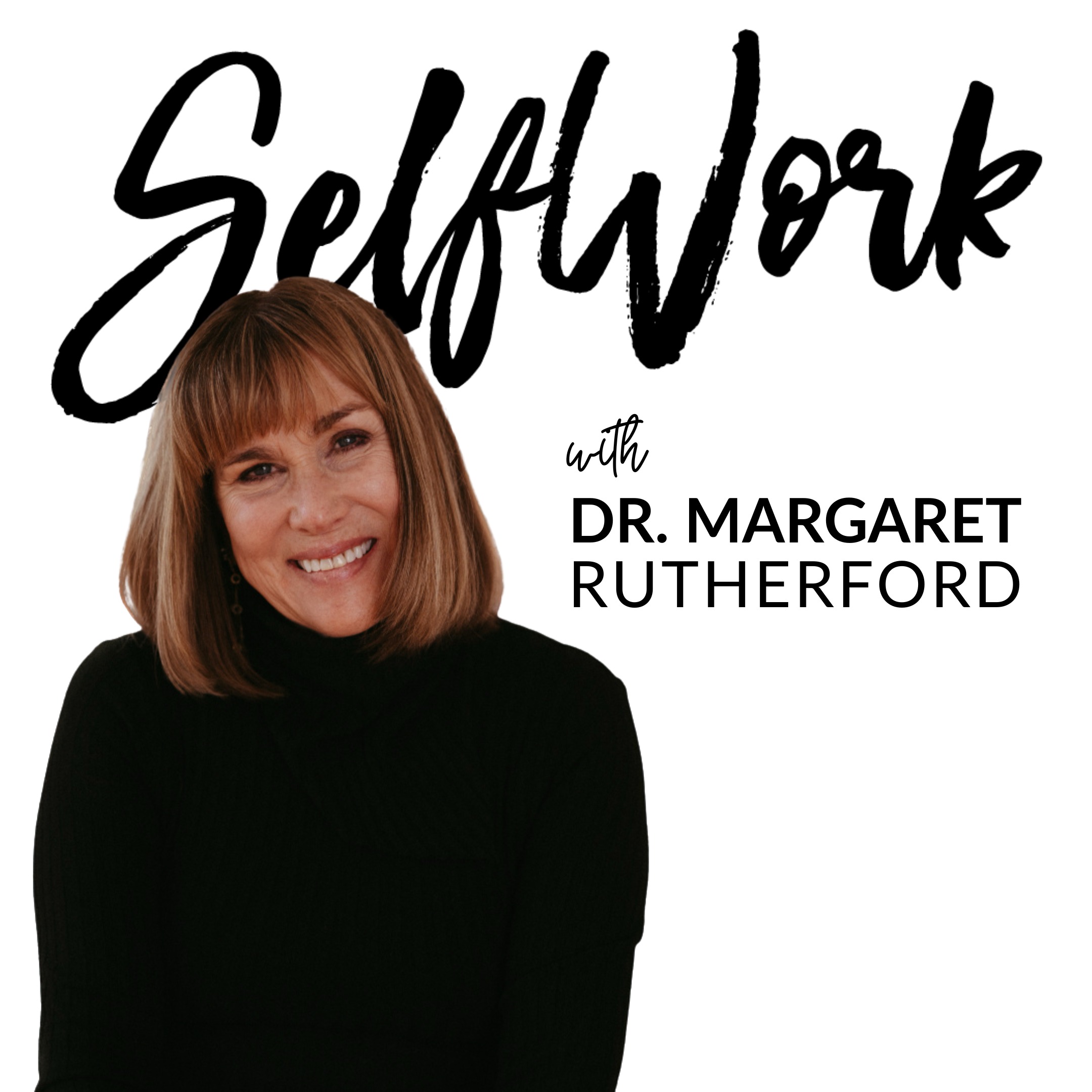
The SelfWork Podcast
Margaret Robinson Rutherford PhD
I'm Dr. Margaret, a psychologist for over 30 years, TEDx speaker, and the author of Perfectly Hidden Depression. I created The SelfWork Podcast in 2016 to explain mental health treatment and to give you the chance to consider therapy without thinking it's weird or that it somehow suggests you can't fix your own problems. My team is very honored that nine years later, SelfWork has earned nearly 5 million downloads! Each episode features the popular listener question as well as interviews with outstanding guests, authors, and experts, adding to the wide diversity of topics listeners so appreciate. Regularly rated as one of the top mental health/depression podcasts out there (ranked as a top .5% internationally) I keep it short, casual, and focused on "what you can do about it." I'd love to hear from you. Please join me.
Episodes
Mentioned books

May 25, 2021 • 6min
SelfWork YGTG: Pharmacogenomics: The Wave of the Future For Medications? (and you try to say it.. lol)
Today's YGYG (You Get The Gist) is focusing on the promise of there being genetic tests that would help your doctor choose the most effective medication for you. It's exciting to consider due to the fact that many people have to try several medications before finding one that works for them - while at the same time managing ongoing mental and emotional problems. But there's lots of debate and new research happening - so here's a rundown from the experts. I'd certainly recommend that you talk to your doctor about it! Important Links: To give you an example, there's the most prominent text I reviewed. FDA 2018 Warning 2019 Research by Harvard Most recent information from The Mayo Clinic and their researchers And another Mayo article specifying a test that holds lots of promise You can hear more about mental health and many other topics by listening to my podcast, SelfWork with Dr. Margaret Rutherford. Subscribe to my website and receive one weekly newsletter including my weekly blog post and podcast! If you’d like to join my FaceBook closed group, then click here and answer the membership questions! Welcome! My book entitled Perfectly Hidden Depression has arrived and you can order here! Its message is specifically for those with a struggle with strong perfectionism or need for control which acts to mask underlying emotional pain. But the many self-help techniques described can be used by everyone who chooses to begin to address emotions, long hidden away, that are clouding and sabotaging your current life. And there’s a new way to send me a message! You can record by clicking below and ask your question or make a comment. You’ll have 90 seconds to do so and that time goes quickly. By recording, you’re giving SelfWork (and me) permission to use your voice on the podcast. I’ll look forward to hearing from you! Advertising Inquiries: https://redcircle.com/brands
May 21, 2021 • 26min
232 SelfWork: Are Only Children Lonely? Are Oldest Children Smarter? And What Role Does Temperament Play?
Before we get started, I wanted you to know that Facing Depression, my new course all about depression - what causes it and what you can do about it - is available now, exclusively on Himalaya Learning. Himalaya Learning is an audio learning platform that provides an extensive library of courses straight to your ears from the world's greatest minds like Malcolm Gladwell, Tim Ferriss, Seth Godin, and more. To listen to this course and others like it, go to himalaya.com/depression and enter promo code OVERCOMING at checkout to get your first 14 days free. I hope to see you there! In this episode of SelfWork, sponsored by Athletic Greens, we’re going to look into the facts about being an only child, about birth order in general, and about the parent/child fit or the role temperament plays in a parent/child relationship.. I’ve had many a patient who said, “My mother never liked me.” or “It was obvious she was closer to my older sister." Often recognizing that the fit between their temperaments was not so easy, is healing. It can ease the tension in the present, and help both parent and adult child to establish a better relationship with one another. One article (link below) outlined what you can do as a parent to understand the fit between your temperament and your child's. And there are five steps: 1.) Identify your child’s temperament traits. Notice how they interact with the world - what their temperament is. 2.) Describe what you are observing to the child. This helps her learn about her behavior style, how to handle it, and what you expect from her, “You don’t like new places. You like to watch until you feel comfortable.” 3.) Identify your own temperament traits. Notice how they affect your behavior. 4.) Consider whether your temperamental traits and those of your child fit together easily. If not, recognize any difficulties which the differences may cause. For example, a parent who has low sensitivity has difficulty being patient with her high sensitivity child who can’t tolerate the feel of the tags on his shirts. 5.) Avoid criticizing or labeling your child with words such as forgetful, wild, fussy, quitter, shy. The listener voicemail asks a question about how to handle a partner not being emotionally available. She asked it after listening to the episode on trauma bonding – but wanted to hear more as she herself had ended a relationship with a covert narcissist. She says, “I keep attracting people who aren’t emotionally supportive and I keep craving it when I know they can’t give it.” So I’ll answer her – what would you say? Important Links: Click this link to try Athletic Greens wonderful offer as a SelfWork Listener! The work of Alfred Adler concerning birth order The work of Toni Falbo, dispelling the myth of the "only child syndrome" Emily Oster's article on only children in The New York Times Scientific American article on birth order NIH article on temperament - survey of studies What do you do to ensure a better parent/child fit? You can hear more about mental health and many other topics by listening to my podcast, SelfWork with Dr. Margaret Rutherford. Subscribe to my website and receive one weekly newsletter including my weekly blog post and podcast! If you’d like to join my FaceBook closed group, then click here and answer the membership questions! Welcome! My book entitled Perfectly Hidden Depression has arrived and you can order here! Its message is specifically for those with a struggle with strong perfectionism or need for control which acts to mask underlying emotional pain. But the many self-help techniques described can be used by everyone who chooses to begin to address emotions, long hidden away, that are clouding and sabotaging your current life. And there’s a new way to send me a message! You can record by clicking below and ask your question or make a comment. You’ll have 90 seconds to do so and that time goes quickly. By recording, you’re giving SelfWork (and me) permission to use your voice on the podcast. I’ll look forward to hearing from you! Advertising Inquiries: https://redcircle.com/brands
May 14, 2021 • 29min
231 SelfWork: How To Go From Languishing To Flourishing: What Positive Psychology Has To Say
Before we get started, I wanted you to know that Facing Depression, my new course all about depression - what causes it and what you can do about it - is available now, exclusively on Himalaya Learning. Himalaya Learning is an audio learning platform that provides an extensive library of courses straight to your ears from the world's greatest minds like Malcolm Gladwell, Tim Ferriss, Seth Godin, and more. To listen to this course and others like it, go to himalaya.com/depression and enter promo code OVERCOMING at checkout to get your first 14 days free. I hope to see you there! Today’s episode, sponsored by BetterHelp, covers two topics – each one of them important to understand. The first topic is what positive psychologists (those that study what makes life worth living) call languishing – as its touted as the major emotion caused by the pandemic. What is languishing? It’s defined as a lack of well-being – or as one definition put it, an absence of a positive emotion about life. Researchers in the positive psychology camp say it’s different than actual depression and identify how you can go from languishing to flourishing or true happiness by stabilizing your life with these five pillars - focusing on positive emotions, being highly engaged, having quality relationships, identifying with something meaningful or broader than yourself, and feeling a sense of accomplishment. The listener email is particularly poignant: it’s from a woman whose child died a decade ago. And her grief doesn’t seem to be remitting in any way. I’ll answer her using the words of other mothers who’ve lost their children. Important Links: BetterHelp, the #1 online therapy provider, has a special offer for you now! Article about Martin Seligman and the Five Pillars of Happiness Article by Corey Keyes NY Times article by organization psychologist Adam Grant on languishing Six areas of psychological well-being Episode 90 of SelfWork: Interview with Dr. Susan Averitt about grieving the death of a child Best Online Grief Support Groups HuffPost Article on Grieving the Death of a Child You can hear more about mental health and many other topics by listening to my podcast, SelfWork with Dr. Margaret Rutherford. Subscribe to my website and receive one weekly newsletter including my weekly blog post and podcast! If you’d like to join my FaceBook closed group, then click here and answer the membership questions! Welcome! My book entitled Perfectly Hidden Depression has arrived and you can order here! Its message is specifically for those with a struggle with strong perfectionism or need for control which acts to mask underlying emotional pain. But the many self-help techniques described can be used by everyone who chooses to begin to address emotions, long hidden away, that are clouding and sabotaging your current life. And there’s a new way to send me a message! You can record by clicking below and ask your question or make a comment. You’ll have 90 seconds to do so and that time goes quickly. By recording, you’re giving SelfWork (and me) permission to use your voice on the podcast. I’ll look forward to hearing from you! Advertising Inquiries: https://redcircle.com/brands
May 11, 2021 • 6min
SelfWork YGTG: Maybe Women Don't "Suffer" From Imposter Syndrome After All?
Hello and welcome to another five minute interlude or what we call You Get The Gist! YGTG. Today I’m revealing some new thoughts about imposter syndrome – I did an episode on it now years ago. But what I was intrigued to read recently was some research coming out of Harvard – critiquing the whole idea of women "suffering" from this horribly insecure feeling. Now, with the impetus of the #metoo movement, women of all ethnicities are realizing that perhaps it's been the workplace that's been most of the problem. As these Harvard researchers state, "Even if women demonstrate strength, ambition, and resilience, our daily battles with microaggressions, especially expectations and assumptions formed by stereotypes and racism, often push us down." Important Link: Harvard article Stop Telling Women They Have Imposter Syndrome You can hear more about mental health and many other topics by listening to my podcast, SelfWork with Dr. Margaret Rutherford. Subscribe to my website and receive one weekly newsletter including my weekly blog post and podcast! If you’d like to join my FaceBook closed group, then click here and answer the membership questions! Welcome! My book entitled Perfectly Hidden Depression has arrived and you can order here! Its message is specifically for those with a struggle with strong perfectionism or need for control which acts to mask underlying emotional pain. But the many self-help techniques described can be used by everyone who chooses to begin to address emotions, long hidden away, that are clouding and sabotaging your current life. And there’s a new way to send me a message. You can record by clicking below and ask your question or make a comment. You’ll have 90 seconds to do so and that time goes quickly. By recording, you’re giving SelfWork (and me) permission to use your voice on the podcast. I’ll look forward to hearing from you! Advertising Inquiries: https://redcircle.com/brands
May 7, 2021 • 24min
230 SelfWork: The Painful Reality of Sexual Addiction: Josh Duggar Is Far From Alone
There are so many times when I don’t think things are going to go well and I hope I'm wrong. And sometimes, I certainly am. But I wrote a post back in 2015 right after a young Josh Duggar’s problems with sexual abuse came to be known. My post focused on how his family had missed a wonderful opportunity to model openness and honesty about the difficulties facing our kids in the realm of sexual abuse; to get help not only for the their daughters who'd been molested by Josh, but for Josh himself. The Duggars, rooted in a very conservative faith system, didn’t send him to appropriate treatment, which they could’ve well afforded. Now he’s been charged with alleged internet child porn charges – and has six of his own children with another on the way. So today I’m going to focus sexual addiction, in this episode sponsored once again by Athletic Greens. You may not believe sex addiction is actually real – but from my experience, it is. And very destructive. We also always talk about what you can do about it, and I'll share well-known researcher, author and speaker Dr. Patrick Carnes' ideas about not only sexual addiction but its treatment. The listener email for today is from a man whose girlfriend suffers from depression – and with whom he was deeply in love – and she suddenly and to him inexplicably broke up with him. He’s asking for some kind of information or understanding as he tried to face what has happened. What would you advise? Important Links: Click this link to try Athletic Greens wonderful offer as a SelfWork Listener! Recent article on the present charges against Josh Duggar Another article on these charges WHO designates compulsive sexual impulse disorder An interview with Dr. Patrick Carnes Other thoughts on sexual addiction One man's addiction story published in the Irish Times CSAT information You can hear more about mental health and many other topics by listening to my podcast, SelfWork with Dr. Margaret Rutherford. Subscribe to my website and receive one weekly newsletter including my weekly blog post and podcast! If you’d like to join my FaceBook closed group, then click here and answer the membership questions! Welcome! My book entitled Perfectly Hidden Depression has arrived and you can order here! Its message is specifically for those with a struggle with strong perfectionism or need for control which acts to mask underlying emotional pain. But the many self-help techniques described can be used by everyone who chooses to begin to address emotions, long hidden away, that are clouding and sabotaging your current life. And there’s a new way to send me a message! You can record by clicking below and ask your question or make a comment. You’ll have 90 seconds to do so and that time goes quickly. By recording, you’re giving SelfWork (and me) permission to use your voice on the podcast. I’ll look forward to hearing from you! Advertising Inquiries: https://redcircle.com/brands
Apr 30, 2021 • 40min
229 SelfWork: Careers That Kill: Could Your Vet Be At Risk?
Dr. Kristina Kiefer reached out to me recently. Her email was simple and to the point. "I’m in vet med and veterinarians are in trouble." I was intrigued and looked up some statistics on my own. Nearly 400 veterinarians died by suicide between 1979 and 2015, according to a CDC study published in January that analyzed more than 11,000 veterinarian death records in that timeframe. The study also found that female veterinarians are up to 3.5 times more likely to kill themselves than members of the general population. She then introduced me to her friend and colleague, Dr. Kimberly Pope-Robinson who has spoken many times about this subject and is the author of the book “The Unspoken Life”, detailing what vets need to do to stay stable. I can tell you these two are a dynamic duo and told me things about the vet profession I’d never have believed. Even if you’re not a vet, many of us have pets and put our trust in them implicitly. Or so I thought. What vets contend with on a regular basis – from completely erratic schedules to problems with the people who bring their pets – or sadly, dump their pets on a vet. I do want to give a trigger warning for any of you who might be pet lovers – some of what they discuss might anger you. But I was also delighted to learn of efforts to help these animals who have no voice. But also to support those in vet med in their own mental health struggles. You might think it’s euthanasia that’s the problem. But it’s much more. So in this episode, sponsored by BetterHelp, let's learn more about the life of someone in vet med and the struggles they have. Important Links: BetterHelp, the #1 online therapy provider, has a special offer for you now! Statistics on veterinarian suicide You can hear more about mental health and many other topics by listening to my podcast, SelfWork with Dr. Margaret Rutherford. Subscribe to my website and receive one weekly newsletter including my weekly blog post and podcast! If you’d like to join my FaceBook closed group, then click here and answer the membership questions! Welcome! My book entitled Perfectly Hidden Depression has arrived and you can order here! Its message is specifically for those with a struggle with strong perfectionism or need for control which acts to mask underlying emotional pain. But the many self-help techniques described can be used by everyone who chooses to begin to address emotions, long hidden away, that are clouding and sabotaging your current life. And there’s a new way to send me a message! You can record by clicking below and ask your question or make a comment. You’ll have 90 seconds to do so and that time goes quickly. By recording, you’re giving SelfWork (and me) permission to use your voice on the podcast. I’ll look forward to hearing from you! Advertising Inquiries: https://redcircle.com/brands
Apr 23, 2021 • 24min
228 SelfWork: What's Up With Your Gut and Depression?
Today we’re going to focus on your gut – and how recent research is finding that it may have more to do with depression and anxiety than realized in the past. Believe it or not, there’s a second independent nervous system in your body called the enteric nervous system, located in your gut. And it constantly communicates with the brain through the vagus nerve. Certainly puts a different perspective on having a “gut” feeling… or “having butterflies”… We’ll also focus on half a dozen things you can do to stimulate the vagus nerve which (somewhat contradictorily sounding) slows down your heart rate and calms you down. We'll talk about some fascinating things for this 228th episode of SelfWork, one sponsored by Athletic Greens. Our listener email today is from someone who says that her mom laid a big guilt trip on her when she was a child.. and now she guilts herself for everything and far too readily feels guilty for too many things. She wants to know what she can do about! Important Links: Click this link to try Athletic Greens wonderful offer as a SelfWork Listener! Understanding the autonomic nervous system Johns Hopkins article on the brain gut connection Role of gut bacteria in anxiety and depression Science Magazine article on gut bacteria Six ways to calm your vagus nerve You can hear more about mental health and many other topics by listening to my podcast, SelfWork with Dr. Margaret Rutherford. Subscribe to my website and receive one weekly newsletter including my weekly blog post and podcast! If you’d like to join my FaceBook closed group, then click here and answer the membership questions! Welcome! My book entitled Perfectly Hidden Depression has arrived and you can order here! Its message is specifically for those with a struggle with strong perfectionism or need for control which acts to mask underlying emotional pain. But the many self-help techniques described can be used by everyone who chooses to begin to address emotions, long hidden away, that are clouding and sabotaging your current life. And there’s a new way to send me a message! You can record by clicking below and ask your question or make a comment. You’ll have 90 seconds to do so and that time goes quickly. By recording, you’re giving SelfWork (and me) permission to use your voice on the podcast. I’ll look forward to hearing from you! Advertising Inquiries: https://redcircle.com/brands
Apr 16, 2021 • 25min
227 SelfWork: Good Stuffing. Bad Stuffing. What's the Difference?
Compartmentalization (sometimes called stuffing away feelings) is a healthy skill much of the time. And you can tell when people don’t have that skill. Their emotions govern their lives and their choices. Something unpleasant or unwelcome ruins their day or causes them to have to leave their job or to yell at their kids. Or at you. So learning how to monitor and evaluate a situation – using mindfulness to be aware of something being emotionally difficult - and then being able to table those feeling until it’s the right time and place to work through those emotions can be a vital skill. But compartmentalization can also be damaging when it's connected with a need to escape, for example, through addictions; when you use it to avoid what's termed cognitive dissonance, as when you're behaving in a certain way that doesn't match your true values; or when it's part of a sociopathic or even psychopathic personality disorder. Our listener email is from a man whose ex is talking to their son in an inappropriate way – causing what he has read in my articles an “enmeshment” between the two of them. And he’s wondering what he can do.. What would you do?? So in this episode, sponsored by a new sponsor - Athletic Greens - we'll focus on the good and bad about compartmentalization. Links: Click this link to try Athletic Greens wonderful offer as a SelfWork Listener! A testimonial about compartmentalization Richard Castro's article about the dark side of compartmentalization You can hear more about mental health and many other topics by listening to my podcast, SelfWork with Dr. Margaret Rutherford. Subscribe to my website and receive one weekly newsletter including my weekly blog post and podcast! If you’d like to join my FaceBook closed group, then click here and answer the membership questions! Welcome! My book entitled Perfectly Hidden Depression has arrived and you can order here! Its message is specifically for those with a struggle with strong perfectionism or need for control which acts to mask underlying emotional pain. But the many self-help techniques described can be used by everyone who chooses to begin to address emotions, long hidden away, that are clouding and sabotaging your current life. And there’s a new way to send me a message! You can record by clicking below and ask your question or make a comment. You’ll have 90 seconds to do so and that time goes quickly. By recording, you’re giving SelfWork (and me) permission to use your voice on the podcast. I’ll look forward to hearing from you! Advertising Inquiries: https://redcircle.com/brands
Apr 14, 2021 • 7min
SelfWork YGTG: How Many Types of Narcissism Are There?
Today's "You Get the Gist" explains the four different types of narcissism. All of them share the major features of a constant need for admiration, an unrealistic sense of self-importance, a lack of empathy, and great difficulty forming meaningful relationships. What are they and how are both similar and dissimilar to one another? You'll find out more.. but they are the grandiose narcissist, the covert narcissist, the communal narcissist (I'd never heard of that one..) and the malignant narcissist. I use the excellent work of Darlene Lancer, an attorney and a mental health clinician (link below). However, I do offer one caveat - be careful about diagnostic labels. They were historically meant to aid in better communication but often go way beyond that. Links: Darlene Lancer Psych Central article Article on covert narcissism You can hear more about mental health and many other topics by listening to my podcast, SelfWork with Dr. Margaret Rutherford. Subscribe to my website and receive one weekly newsletter including my weekly blog post and podcast! If you’d like to join my FaceBook closed group, then click here and answer the membership questions! Welcome! My book entitled Perfectly Hidden Depression has arrived and you can order here! Its message is specifically for those with a struggle with strong perfectionism or need for control which acts to mask underlying emotional pain. But the many self-help techniques described can be used by everyone who chooses to begin to address emotions, long hidden away, that are clouding and sabotaging your current life. And there’s a new way to send me a message! You can record by clicking below and ask your question or make a comment. You’ll have 90 seconds to do so and that time goes quickly. By recording, you’re giving SelfWork (and me) permission to use your voice on the podcast. I’ll look forward to hearing from you! Advertising Inquiries: https://redcircle.com/brands
Apr 9, 2021 • 30min
226 SelfWork: 10 Things I Learned About Being A Good Therapy... From Being In Therapy
As many of you know, I was a professional singer before I began my journey to become a therapist and a psychologist. The only thing I knew about therapy was that I’d had lots of it and had never laid down on a couch. And that it had been extremely helpful many times. My decision was made in 1984 and I became licensed in 1993. Nine years is a long time. So, I couldn't wait to use all I'd learned in school. But the learning actually started when I began seeing patients on my own. And I also realized that many of the things I'd experienced from being in therapy myself - made me a better therapist. So today, in this episode sponsored by BetterHelp, I'll talk about ten things that a good therapist knows to do. In fact, here they are: The importance of timing. Sometimes it's better to wait. What true empathy is. Staying curious rather than assuming I know. When to listen to my gut. The vital importance of self-care. When personal sharing is helpful. The importance of being myself and not adopting some kind of therapeutic persona. To think outside of the box. How to hold a safe space. How and when to use gentle confrontation. The listener email is from a woman whose mother sends her what the listener calls “unfiltered” critical comments about her parenting – she’s caught between wanting to love her mom, but not being willing to receive the non-asked for feedback. It’s a tough place to be.. You can hear more about mental health and many other topics by listening to my podcast, SelfWork with Dr. Margaret Rutherford. Subscribe to my website and receive one weekly newsletter including my weekly blog post and podcast! If you’d like to join my FaceBook closed group, then click here and answer the membership questions! Welcome! My book entitled Perfectly Hidden Depression has arrived and you can order here! Its message is specifically for those with a struggle with strong perfectionism or need for control which acts to mask underlying emotional pain. But the many self-help techniques described can be used by everyone who chooses to begin to address emotions, long hidden away, that are clouding and sabotaging your current life. And there’s a new way to send me a message! You can record by clicking below and ask your question or make a comment. You’ll have 90 seconds to do so and that time goes quickly. By recording, you’re giving SelfWork (and me) permission to use your voice on the podcast. I’ll look forward to hearing from you! Advertising Inquiries: https://redcircle.com/brands

