

The Imperfect Buddha Podcast
The Imperfect Buddha Podcast
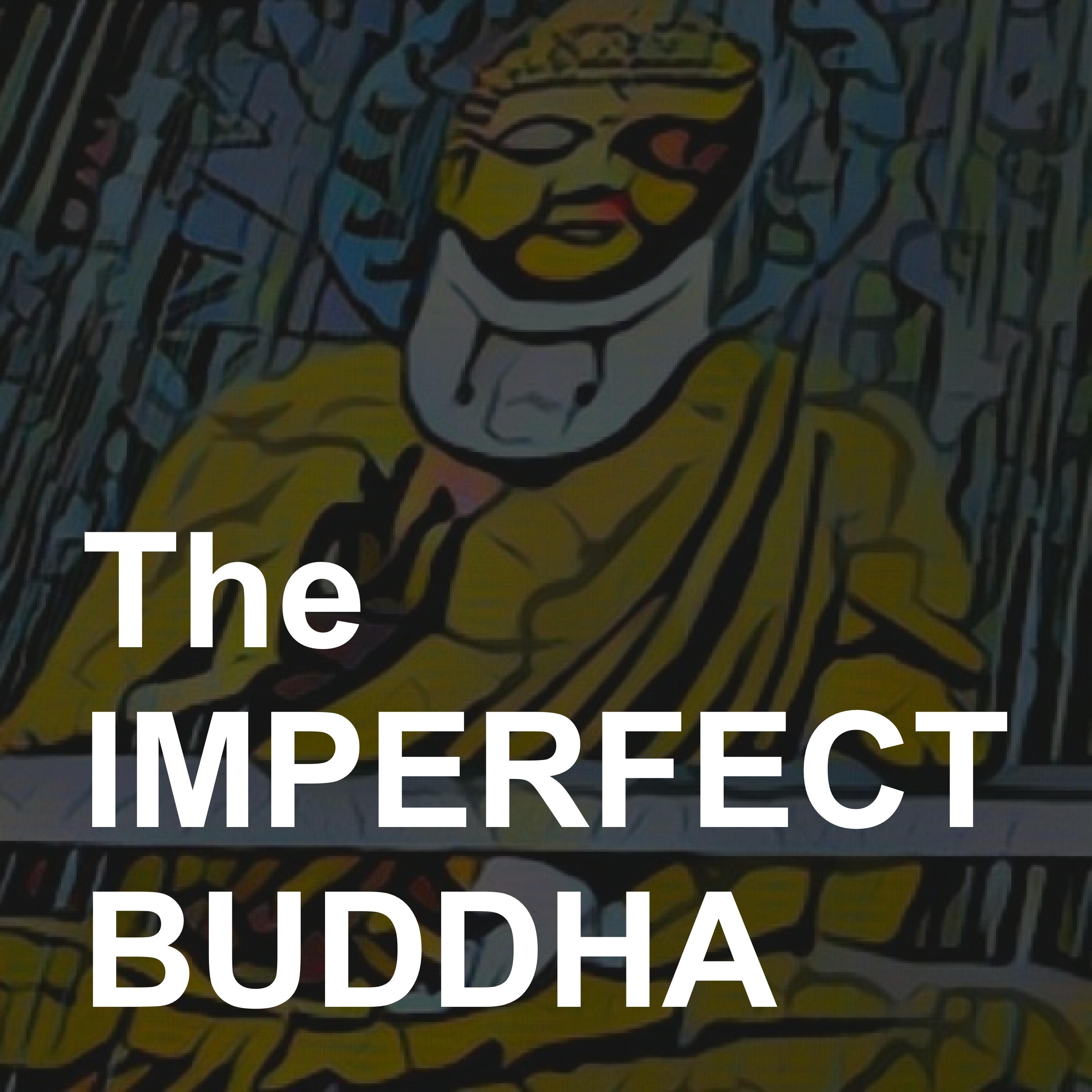
The Imperfect Buddha podcast has been addressing anti-intellectualism and ideological capture in western Buddhism and spirituality more broadly since its inception. It provides a space for dynamic conversations designed to bring out what is so often hidden and so often despised by critics and intellectuals engaging with contemporary forms of practice. Matthew O’Connell hosts the Imperfect Buddha podcast and writes at The Imperfect Buddha site. Email: imperfectbuddha@outlook.com. Twitter: @imperfectbuddha. Facebook: @imperfectbuddha. Original street art Buddha image by Bristol's Banksy.
Episodes
Mentioned books

Feb 19, 2019 • 1h 23min
46 David L. McMahan on Buddhism, Science, the Humanities, and Modernity
In this second part of the series on Buddhist modernism, Buddhist post-modernism, and what comes next, I interview David L. McMahan, who is the Charles A. Dana Professor of Religious Studies at Franklin & Marshall College in the US. David is the well-known author of The Makings of Buddhist Modernism, which had a serious impact on more learned, thinking Buddhists in the West who were willing to challenge some of their assumptions about Buddhism and its development here. David’s book acted as an analysis of the Western influences on how Buddhism was shaped and showed that they had an insipid influence in ways that practitioners were generally oblivious to. From the role of romanticism, to secularism, to notions of selfhood, David’s book was an incredible journey into the underlying structure of Western Buddhism itself, revealing how this often described ancient wisdom tradition was actually in great part the creation of Westerners. We touch on the book and discuss how he views it today and its influence, but most of our conversation is about work he has written since then, editing and making contributions to books including Meditation, Buddhism and Science from 2017 and Buddhism in the Modern World from 2012, and we touch on his first book, Empty Vision: Metaphor and Visionary Imagery in Mahayana Buddhism from 2002. David has an interest in the relationship between the humanities and science and how this affects Buddhism and is interested in maintaining an important role for the humanities in understanding Buddhism at a time when science has become fetishised and pushed to the forefront as a validating force for an idealised form of Buddhism and we talk about this in some detail. We also talk about phenomenology, Western philosophy, developments in contemporary Buddhism, and of course the issues of modernity and post-modern thought and its potential impact on the current Buddhist landscape. I was still rather ill when interviewing David so if you hear my voice stammering and weak, this is the reason why. I don’t think it gets in the way of the interview but it was strange to hear myself with an almost alien voice, panting, and unfortunately, sounding ready for the hospital. In two weeks the final part of this series will be available with Ann Gleig, a fellow Brit working in Florida, in which we explore her book American Dharma: Buddhism beyond Modernity, and it would be interesting to get some feedback on what you all think about all this. We are doing this for your benefit after all.Matthew O'Connell is a life coach and the host of the The Imperfect Buddha podcast. You can find The Imperfect Buddha on Facebook and Twitter (@imperfectbuddha). Learn more about your ad choices. Visit megaphone.fm/adchoices

Feb 11, 2019 • 19min
45 AK Thompson on the Culture of Revolt (Incite Seminars)
Date: Saturday, February 23, 9am-1pm, at Culture Works in Philadelphia Cost: Pay what you can, upwards to $90. For more than a decade, movement-based scholar AK Thompson has worked with Benjamin to weigh in on the key debates of our crisis-filled era. From engagements with pop culture’s latent promise to critiques of the cherished certainties that guide movement struggles, he has foregrounded the operational value of Benjamin’s insights. In Premonitions: Selected Essays on the Culture of Revolt (2018), Thompson reveals how we might do things with Benjamin today.Matthew O'Connell is a life coach and the host of the The Imperfect Buddha podcast. You can find The Imperfect Buddha on Facebook and Twitter (@imperfectbuddha). Learn more about your ad choices. Visit megaphone.fm/adchoices

Feb 6, 2019 • 1h 50min
44 Scott Mitchell on American Buddhism, Global Buddhism
“All Buddhism is Cultural Buddhism.” Scott Mitchell is the Rev. Yoshitaka Tamai Professor of Jodo Shinshu Buddhist Studies at the Institute of Buddhist Studies in Berkeley and the author of "Buddhism in America: Global Religion, Local Context"(2016). His research interests include Buddhism in Western contexts, Buddhist modernity, Pure Land Buddhism, translocal religions, ritual studies, and media studies. Scott and I had a lively conversation and covered a variety of topics including; what are the live issues in American Buddhism right now, what is the relationship between America, Europe and the rest of the world in terms of innovation in Buddhism, S. N. Goenka & the practice of meditation in Asia, the rise of China and its potential influence on global Buddhism, the lingering problem of a single/true Buddhism, post-modernism & Buddhism, heritage Buddhisms and decolonisation. This is the first episode in a three-part series on Buddhist Modernism, Post-Modernism and what comes after. Matthew O'Connell is a life coach and the host of the The Imperfect Buddha podcast. You can find The Imperfect Buddha on Facebook and Twitter (@imperfectbuddha). Learn more about your ad choices. Visit megaphone.fm/adchoices

Jan 21, 2019 • 1h 48min
43 Mikel Burley on Reincarnation, Rebirth, and Wittgenstein
Does western philosophy lack imagination when thinking about rebirth and reincarnation? What would Wittgenstein say? This episode features Dr Mickel Burley, a philosopher of religion from Leeds university in the UK. He wrote a fascinating book called Rebirth and the Stream of Life, which inspired me to have him on. He’s a big fan of Ludwig Wittgenstein too and we get to talking about a man who is widely considered the greatest philosopher of the 20th century as well as his thought and its uses for thinking about spirituality, Buddhism, rebirth and more. We also bridge the episode to our earlier discussion of karma and rebirth with Jayarava. Mick has also written on cannibalism, animal sacrifice, Hatha-Yoga, and the lack of imagination in philosophy surrounding rebirth and reincarnation. We manage to discuss philosophy East & West too. Matthew O'Connell is a life coach and the host of the The Imperfect Buddha podcast. You can find The Imperfect Buddha on Facebook and Twitter (@imperfectbuddha). Learn more about your ad choices. Visit megaphone.fm/adchoices

Jan 9, 2019 • 1h 58min
42 2019 Seasonal Special with Guest Host Gavin McCloskey
Hey, it’s 2019 and we’re off to a bang with two new episodes! The first one is quite the experiment with our first guest host filling in for the mysterious, ephemeral stranger that is Mr Stuart Baldwin. Our first intrepid visitor is Gavin McCloskey from Northern Ireland has been China based for quite some time. He is his own man of course, and he brought some fine questions along for us to discuss. I’m afraid I did most of the talking, but Gavin had some great contributions to make and it was good having him on. Our conversation touches primarily on practice and some of my more far out ideas emerge. You can hear Gavin’s views on Goenka and Mahasi Sayadaw and his experience of retreats with those lineages. We talk about innovation in practice, enlightenment, reincarnation, and much more. See what you think and let us know how it goes in this experimental conversation. Feedback would be appreciated! Matthew O'Connell is a life coach and the host of the The Imperfect Buddha podcast. You can find The Imperfect Buddha on Facebook and Twitter (@imperfectbuddha). Learn more about your ad choices. Visit megaphone.fm/adchoices

Dec 21, 2018 • 24min
41 Joshua Ramey on Money and Metaphysics (Incite Seminars)
Date: Saturday, January 19, 9am-1pm Cost: Pay what you can: Suggested amount: $90 Facilitator: Joshua Ramey is a writer, teacher, and activist who studies political economy and anti-capitalist political theory. He holds a Ph.D. in philosophy from Villanova University (2006) and is currently Visiting Assistant Professor in the Interdisciplinary Concentration in Peace, Justice, and Human Rights at Haverford College. He is the author of The Hermetic Deleuze: Philosophy and Spiritual Ordeal and Politics of Divination: Neoliberal Endgame and the Religion of Contingency. What is money? Money functions as a unit of account, a medium of exchange, and a store of value, but this is what money does, not what money is. There is a very deep paradox at the heart of money, because money is not itself, but what it represents. Money is the representation of social agreements—agreements about who is obliged to whom, about what is more or less valuable, about what can be changed or altered in the past and the future, and about what must stay the same over time. Far from being a simple thing, money is metaphysical: social, political, abstract, and weird. Although economists tend to think of money only as a “veil” that covers the true reality of exchange relationships, money actually has the power to control which exchanges and which economic activity take place, at all, because money is essentially a form of credit, an expression of approval and judgment of affirmation by some human beings in favor of the activities of others. However, most of us (and most economists) are either confused about or in denial of the fact that money is not a commodity, but a form of credit that is issued into existence almost entirely by private bank loans. And new money is created not on the basis of pre-existing savings or assets, but on the basis of demand for credit and willingness of bankers to supply it. This means that the private banking system has enormous power over not just their own investments, but over the amount and kind of credit available to the entire economy, whose priorities are wildly different from that of the speculative classes. This seminar will introduce the history of money and the formation of the modern monetary system based on private financing. It will then look at the contemporary politics of debt, austerity, and class warfare in order to explore possibilities for concrete struggle against the class power of bankers and megafinance. Matthew O'Connell is a life coach and the host of the The Imperfect Buddha podcast. You can find The Imperfect Buddha on Facebook and Twitter (@imperfectbuddha). Learn more about your ad choices. Visit megaphone.fm/adchoices

Dec 21, 2018 • 1h 46min
40 Jason Josephson Storm on the Myth of Disenchantment
Jason Ānanda Josephson Storm received his Ph.D. in Religious Studies from Stanford University in 2006 and is tenured at Williams College in their Religious Studies Department. He has three primary research areas: Japanese Religions, European Intellectual History, and Theory more broadly. He has been working to articulate new research models for Religious Studies in the wake of the collapse of poststructuralism as a guiding ethos in the Humanities. Jason and I discuss his book 'The Myth of Disenchantment: Magic, Modernity, and the Birth of the Human Sciences' from 2017 as well as his text on inventing religion in Japan. We delve into the role of enchantment and the myth of disenchantment, the role of enchantment in science and the fascinating indulgences of many of the great scientific thinkers in spiritualism and enchanted beliefs. We cover East & West philosophy, The Kyoto School, Metamodernism, and more. Our conversation also joins up nicely with previous guests and the desire to give emergence to something new after post-modernism and modernism, and for Buddhists, something beyond the cultural infiltration of both in contemporary western Buddhism. Music.Matthew O'Connell a life coach and the host of the The Imperfect Buddha podcast. You can find The Imperfect Buddha on Facebook and Twitter (@imperfectbuddha). Learn more about your ad choices. Visit megaphone.fm/adchoices

Dec 10, 2018 • 1h 45min
39 Dale S. Wright on Buddhist Enlightenment
Dale S. Wright is distinguished Professor of Religion at Occidental College in Los Angeles. He is author of The Six Perfections: Buddhism & the Cultivation of Character, and Philosophical Meditations on Zen Buddhism. He is also coeditor with Steven Heine of The Koan: Text and Context in Zen Buddhism, The Zen Canon: Textual Foundations of Zen Buddhism, Zen Classics: Formative Texts in the History of Zen Buddhism, and Zen Ritual: Studies of Zen Buddhist Theory in Practice. More importantly for our podcast, Dale is author of 'What is Buddhist Enlightenment?' A text that forms the basis for a good chunk of our conversation. We explore the notion of enlightenment in Buddhism and in particular the pluralism of definitions, a secular reframing of the thing, how western philosophy challenges Buddhist notions of enlightenment, myth and myths that are encased in different interpretations of enlightenment. As with so many of our podcast conversations, this one heads off into places unknown, exploring questions, reflections, intuitions and interesting ground that we hope you will find as stimulating as we did.Matthew O'Connell is a life coach and the host of the The Imperfect Buddha podcast. You can find The Imperfect Buddha on Facebook and Twitter (@imperfectbuddha). Learn more about your ad choices. Visit megaphone.fm/adchoices

Nov 16, 2018 • 2h 10min
38 William Edelglass on Shantideva, Levinas, and Philosophy for Buddhists
Our year long jaunt through the world of academic engagement with Buddhism continues. In this episode of the Imperfect Buddha Podcast, we talk to William Edelglass, professor of Philosophy, Environmental Studies, and Buddhist Studies at Marlboro College. William has been a teacher in a variety of settings, including a federal prison in New York, a Tibetan refugee settlement in Nepal, and for many years as a wilderness guide at Outward Bound. Before going to Marlboro, William taught Western philosophy at the Institute of Buddhist Dialectics, Dharamsala, India, to Tibetan monks, and Buddhist philosophy to American college students on a Tibetan studies program. William also teaches a range of fascinating courses at Barre Centre for Buddhist Studies. William and I cover quite a bit of ground in our 2-hour long conversation spanning Buddhism, Philosophy, and our current political climate. Here are just some of the questions we tackled; What stand out lessons have each phase of your professional life taught you? Which lessons continue to influence the way you work and think about what drives you? What philosophical challenges do the different Buddhisms present to Western Philosophical thought? What philosophical challenges does Western Philosophy present to Buddhist thought? How do you think Western practitioners might take a more critical and explorative approach to Buddhist thought? What are we to do with the challenges of nihilism as practitioners? What are we to make of mysticism? How can we renew philosophical thought for practitioners? Why is Shantideva such an important figure for you and what challenges do his work and thought raise? Why is Levinas an important figure for you what challenges do his work and thought raise for Buddhism? Music for this episode comes from George Glew and is called Higher. Matthew O'Connell is a life coach and the host of the The Imperfect Buddha podcast. You can find The Imperfect Buddha on Facebook and Twitter (@imperfectbuddha). Learn more about your ad choices. Visit megaphone.fm/adchoices

Oct 31, 2018 • 1h 49min
37 Yves Citton on the Ecology of Attention
What is attention? Where are the boundaries between 'my' individual attention and that of those around me? Whose paying attention to what? And, what are the consequences of how attention is manipulated and manufactured by the media and by ideology? Yves Citton explores these questions and many more on the podcast today with special attention paid to his fantastic book "The Ecology of Attention" which analyses attention-related phenomena emergent at a number of levels from the individual to the social arguing throughout that there are high stakes for how we understand and work with these phenomena: for teaching, performance, the environment, and freedom itself. Yves Citton is professor of Literature and Media at the Université Paris 8 Vincennes-Saint Denis and executive director of the Ecole Universitaire de Recheche ArTeC. He taught for 13 years at the Université Grenoble Alpes and for 12 years in the department of French and Italian of the University of Pittsburgh, PA. He got his PhD from the University of Geneva, Switzerland, and has been invited Professor at New York University, Harvard and Sciences-Po Paris. Music for these episodes is provided by the Bristol-based artist Something Anorak. Check out his work on the usual sites including Bandcamp. Matthew O'Connell is a life coach and the host of the The Imperfect Buddha podcast. You can find The Imperfect Buddha on Facebook and Twitter (@imperfectbuddha). Learn more about your ad choices. Visit megaphone.fm/adchoices

