


Hotel Bar Sessions
Leigh M. Johnson, Jennifer Kling, Bob Vallier
A podcast where the real philosophy happens.
Episodes
Mentioned books
Sep 3, 2021 • 1h 3min
Guns
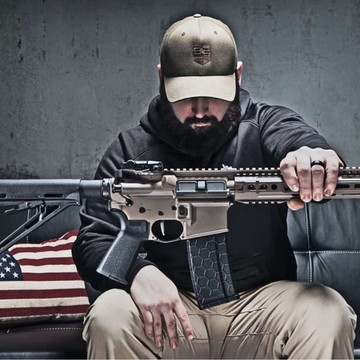
The HBS hosts try to figure out why there are 150 guns for every 100 Americans.In the midst of a pandemic, as COVID-related deaths creep closer towards 1 million, it's easy to forget the other public health epidemic plaguing the United States, namely, gun violence. Nearly 10,000 people had already been killed by gun violence by June of 2021, with no sign of slowing numbers. Schoolchildren regularly practice "active shooter" drills and, in states like Tennessee, gun-control laws have been relaxed so much that they are practically non-existent. A study published earlier this year shows that gun suicides are rising steeply in 2021, including among teenagers and children. Between January 1 and August 31 of 2021, there were 242 days. A mass shooting occurred in the United States on all but 44 of those days.How did we get here and who have we become? Who is suffering the most from gun violence in our country, and who is most guilty for gun deaths? Is the Second Amendment's guarantee that "the right of the people to keep and bear arms shall not be infringed" been interpreted too loosely? Should the Second Amendment be repealed? In this episode, we take a close look at all of those questions, as well as Dr. Carol Anderson's new book The Second: Race and Guns in a Fatally Unequal America. Full episode notes available at this link:
★ Support this podcast on Patreon ★
Aug 27, 2021 • 60min
Specialization
The HBS hosts discuss academic specializations and how to make the humanities more inclusive.Over the last several decades, there has been a long-overdue push for professors in the humanities to diversify their curricula to include more women, BIPOC, queer, disabled, and other under-represented thinkers and texts. Yet, the “add diversity and stir” model for syllabus design in many ways fails to address a lot of the problems that motivated this demand in the first place. It isn’t just syllabi in the humanities that have a diversity problem, it’s the humanities professoriate itself.First, academics from traditionally dominant demographic groups– white, male, straight, non-disabled, and middle-to-upper class– ought not presume that their academic training has necessarily equipped them with the knowledge, skills, or understanding to simply “take up” an unfamiliar field of specialization with the same level of knowledge, skill, and understanding as a specialist in that area possesses. Second, pressuring the current professoriate to “add diversity and stir” tends to de-emphasize the need for universities and individual departments to hire faculty from traditionally under-represented demographics with specialized training in the needed areas. BUT… third, we must be careful not to assume that every person’s scholarly specialization mirrors their personal identity.How can we think about strategies for diversifying both the curricula and the faculty in humanities fields without reproducing the same prejudices that have made the humanities so non-diverse?Full episode notes available at this link.
★ Support this podcast on Patreon ★

Aug 20, 2021 • 1h 3min
Superheroes
The HBS hosts discuss the role of superheroes in culture and popular media. In American graphic fiction and contemporary film, the superhero stands at the center of many popular narratives. Superhero stories published by DC Comics and Marvel are a multi-million dollar per year industry and, in 2019 alone, superhero movies grossed 3.19 billion dollars in revenue. Although it may seem to the novice as if these publishing houses and film studios just recycle the same stories (and sequels) over and over, connoisseurs of the genre know that the figure of the "superhero" has changed and evolved dramatically over the last half-century. What does the figure of the superhero represent? Who does it serve? How has it adapted to reflect broader cultural, political, and social changes?In this episode, Dr. Charles F. Peterson-- a bona fide connoisseur of comics and superhero films-- schools his novice co-hosts on the nuances of superheroes and their development, as well as the deep and often profound philosophical truths that they help to reveal about us ordinary (not super and not heroic) humans.Check out the full episode notes at this link.
★ Support this podcast on Patreon ★

Aug 13, 2021 • 58min
White Working Class
The HBS hosts take a critical look at the white working class and their grievances.Leading up to the 2016 election of President Donald Trump, and even more so afterwards, the U.S. found itself inundated with analyses of the allegedly “overlooked” grievances of the white working class. Were those legitimate grievances that should have been affirmed and addressed? Who belongs to the WWC in America, anyway? Do they share a “class consciousness” in the traditional Marxian sense, or are they primarily identifiable by their shared Whiteness? Are there multiple iterations of the “white working class” ? And, if so, are the many WWC’s compatible?Dr. Rick Lee is in the hot seat for this episode’s deep dive into the definition, evaluation, and analysis of the white working class, who are clearly (in Rick’s estimation) “lashing out” these days.Full episode notes available at this link: http://hotelbarpodcast.com/podcast/episode-22-white-working-class/
★ Support this podcast on Patreon ★
Aug 6, 2021 • 59min
Conspiracy Theories
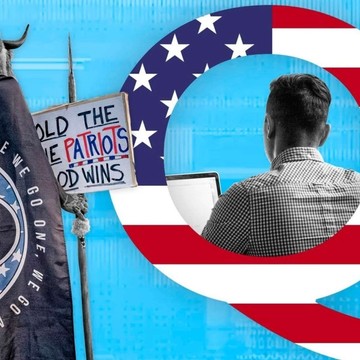
The HBS hosts discuss conspiracy theories and what motivates people to believe in them. The word "conspiracy" derives from the Latin con- ("with" or "together") and spirare ("to breathe"), and it seems like more and more people are breathing in the thin air of dubious explanations and bonding together over them. From Q-Anon to flat earthers to anti-vaxxers to climate change deniers to people convinced that a pedophilic, blood-drinking, sex-trafficking, deep state cabal is orchestrating our lives, conspiracy theories have captured the hearts and minds of many in the 21st C. United States. Is this new? Should we worry? And what really happened to Jeffrey Epstein?Leigh M. Johnson take the lead in this episode's conversation and, together with co-hosts Rick Lee and Charles Peterson, tries get to the bottom of what motivates people to believe in conspiracy theories. We take a brief tour through the history of conspiracy theories before getting to their benefits (making the world seem to make sense) and harms (too many to list), and then confronting the 800lb internet gorilla: QAnon. We also try to tease out the difference between believing in a conspiracy theory and "conspiratorial thinking," and we consider what Thi Nguyen's thoughts on echo chambers and epistemic bubbles might tell us about conspiracy theorists. Full episode notes available at this llnk.
★ Support this podcast on Patreon ★

Jul 30, 2021 • 55min
Vulgarity
The HBS hosts lower themselves into the muck in this NSFW episode.Dr. Charles F. Peterson is in the hot seat for this episode’s discussion of vulgarity. What is the difference between obscenity, profanity, and vulgarity? Who determines what is “appropriate”? Is the very concept of vulgarity elitist?Full episode notes available at this link.
★ Support this podcast on Patreon ★

Jul 23, 2021 • 58min
Laughter
In advance of Rick Lee’s forthcoming book on laughter, co-hosts Charles and Leigh ask him why he thinks all “theories” of comedy are inadequate. What exactly is the “joke” part of a joke? Is comedy fundamentally formulaic or does it escape systematic analysis? What is happening when we laugh together– as the HBS co-hosts do a lot in this episode!– and how does laughter connect us to other people?John Chrysostom once warned that “laughter often gives birth to foul discourse” and the HBS hosts are determined to prove him right in this episode. Definitely pour yourself a drink before sitting down to listen to this conversation, because it’s a helluva lot of fun!Check out the full episode notes at this link.
★ Support this podcast on Patreon ★
Jul 16, 2021 • 1h 4min
Digital Afterlives
Co-host Leigh M. Johnson is in the hot seat for this episode's discussion of digital afterlives. If we consider the "digital," information-based self to be distinguishable from the meatspace self, we should ask: how long can the Digital Me live on after my meatspace body dies? Technology already enables us to "re-animate" archives of personal information in many ways, and some futurists believe that we may, someday, be able to upload our consciousnesses to the cloud. Who owns that information? What are they currently allowed (or not allowed) to do with it? What would happen if we insisted that all of our information being "deleted" after we physically die?Whether or not you believe in a Heaven or Hell, all of us need to think more seriously about our digital afterlives. Rick, Charles, and Leigh work through some of that thinking-- and much more-- at the hotel bar!Check out the links below to learn more about thinkers and ideas referenced in this episode:Maggi Saven-Baden and Victoria Mason-Robbie, Eds., Digital Afterlife: Death Matters in a Digital Age (2020) Rebecca Skloot, The Immoral Life of Henrietta Lacks (2011)origin of the term "meatspace"A visualization of the length of Terms of Service for 14 popular appsTupac hologram performs with Snoop Dogg and Dr. Dre at Coachella 2012"Facebook told to grant grieving mother access to daughter's account" (The Guardian, 2011)Black Mirror episode "Smithereens" (on IMDB, or watch the episode on Netflix)Marshall McLuhan, The Medium is the Message (2001)"Everything You Need to Know About Twitter Direct Messages" (Livewire, 2020)What is data anonymization?"What Really Happens To Your (Big) Data When You Die?" (Forbes, 2017)"What Happens to Your Email and Social Media After You Die?" (MoneyTalks, 2020)"What Happens To Your Medical Data After You Die?" (The Medical Futurist, 2021)What is commodity fetishism?U.S. House of Representatives' antitrust report on Big TechJudith Butler, "Performative Acts and Gender Constitution: An Essay in Phenomenology and Feminist Theory" (1988)What is content curation?"Computerized job interviews: Artificial intelligence algorithm may judge you, determine whether you get hired" (Chicago Tribune, 2021)"Google's Grand Plan to Eradicate Cookies is Crumbling" (Wired, 2021)How to recognize a phone scam"Black women, AI, and overcoming historical patterns of abuse" (VentureBeat, 2021)"Black and Queer AI Groups Say They'll Spurn Google Funding" (Wired, 2021)Nick Bostrom, "Why I Want to be a Posthuman When I Grow Up" (2006)HBO series Years and Years"The race to stop ageing: 10 breakthroughs that will help us grow old healthily" (Science Focus, 2021)Anne Rice, The Vampire ChroniclesCheck out this episode on the HBS website here.
★ Support this podcast on Patreon ★
Jul 9, 2021 • 58min
Citizenship
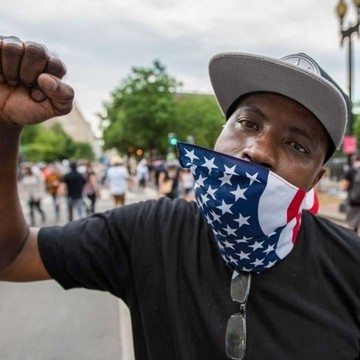
This episode explores the political and ethical dimensions of the category of “citizen”. In anticipation of his soon-to-be-released book Beyond Civil Disobedience: Social Nullification and Black Citizenship (August, 2021), Charles sits down in the captain's "hot" seat for this episode's discussion of the limits of citizenship, the failure of the state, and the construction of new categories of political, social and civic identity. Millions of people have taken to the streets in protest over the last decade. What are the questions those citizens are asking about the failures of their government? What do these protests say about how we think about the relationship between individuals and their communities, and the relationship of those communities to the State? How can we develop a more robust conception of engaged, healthy, responsible, and critical citizenship?"The people who are protesting have an amazing, although critical, view of the reality of citizenship, but they also have a very optimistic, idealistic sense of what citizenship should be. I think moving into the streets shows an amazing investment in what the society can be, an investment in trying to get the apparatuses of power to live up to the rhetoric of democracy and freedom and what it means to be a citizen in this type of state."= Charles F. PetersonFull episode notes available at this link.
★ Support this podcast on Patreon ★
Jul 2, 2021 • 56min
Private Cities
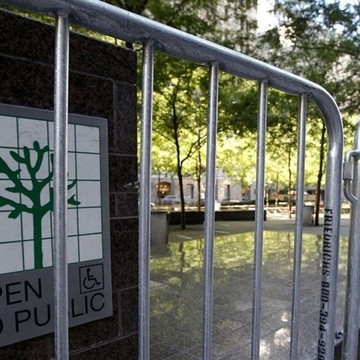
The HBS hosts discuss how cities, once considered hubs of public life and interaction, have become increasingly segregated, partitioned, disconnected, and privatized.Drawing on his experience using the city of a Chicago as a classroom, Rick Lee asks: can we identify the material markers of "privatization" in contemporary cities? How do we know which parts of the city are for "us," which parts of the city are for everyone, and which parts aren't? Is there anything like a "public commons" anymore and, if so, where is it? What can we learn from the fact that even park benches and bus stops are physically-engineered to prevent the unhoused from being able to find rest or shelter? How might we build a more just city? Full episode notes at this link.
★ Support this podcast on Patreon ★

