

Hotel Bar Sessions
Leigh M. Johnson, Jennifer Kling, Bob Vallier
A podcast where the real philosophy happens.
Episodes
Mentioned books
Apr 19, 2024 • 1h 6min
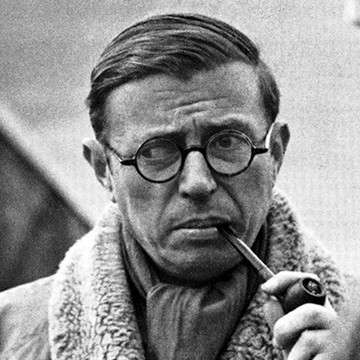
Jean-Paul Sartre's "Bad Faith"
The HBS hosts discuss the many and varied ways we lie to ourselves. For our final episode of each season, we take up a text or concept in philosophy that has crept out of the discipline and made it into the wider popular consciousness and culture. This week, we're talking about Jean-Paul Sartre’s idea of “bad faith” (mauvaise foi) from his text Being and Nothingness.[Trigger Warning: at around the 24-minute mark in this episode, we have a brief discussion of people ending their lives. You can jump ahead to minute 28:15 if you prefer to skip that part of our conversation.]As we end Season 9, we're sad to say goodbye to co-host Jason Read, who is stepping back from the microphone. Jason will still be writing books, like his most recent The Double Shift: Spinoza and Marx on the Politics of Work (click that link and buy his book!), doing amazing work as a public philosopher, and devoting more of his time to local activism. Rick and Leigh want to express their most heartfelt gratitude for Jason's work on HBS for the last 45 episodes (Seasons 6-9), and also to let him know that we've always got a barstool saved for him!Full episode notes available at this link:https://hotelbarpodcast.com/podcast/episode-135-jean-paul-sartres-bad-faith-------------------If you enjoy Hotel Bar Sessions podcast, please be sure to subscribe and submit a rating/review! Better yet, you can support this podcast by signing up to be one of our Patrons at patreon.com/hotelbarsessions!Follow us on Twitter/X @hotelbarpodcast, on Facebook, on TikTok, and subscribe to our YouTube channel!
★ Support this podcast on Patreon ★

Apr 12, 2024 • 56min
Companion Animals
The HBS hosts celebrate the paw-some impact of furry companions on our lives.Companion species, like dogs and cats, have been a part of human history for thousands of years. The first domesticated dog was over thirty thousand years ago, and the first cat over ten thousand years ago. So, much of what we call human civilization has always been a multispecies endeavor. In recent years, however, cats and dogs have seemed to have taken on increased significance, both in terms of what they offer us and in our dedication to them. With respect to the former, the term “emotional support animal” has gone from being a specialized term for service animals to a general understanding of an animal’s role in our life. With respect to the latter, many millennials and later generations have responded to the foreclosed possibility of having human offspring by focusing on their “fur babies." We spend more money on our animals, with doggie daycares and excursions, and we also spend more time with animals, going to cat cafes. What does the significance of dogs and cats tell us about ourselves, the world we live in, and about our connection to non-human animals?Full episode notes available at this link:https://hotelbarpodcast.com/podcast/episode-134-companion-animals-------------------If you enjoy Hotel Bar Sessions podcast, please be sure to subscribe and submit a rating/review! Better yet, you can support this podcast by signing up to be one of our Patrons at patreon.com/hotelbarsessions!Follow us on Twitter/X @hotelbarpodcast, on Facebook, on TikTok, and subscribe to our YouTube channel!
★ Support this podcast on Patreon ★
Apr 5, 2024 • 1h 1min
Psychoanalysis (with Benedetta Todaro)
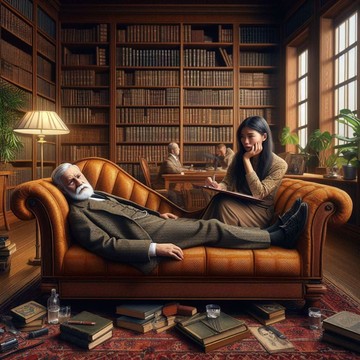
The HBS hosts take a break from the bar and lie down on the couch.Almost from the beginning of its theoretical elaboration and clinical practice, Psychoanalysis has had a profound impact on culture, particularly in the west. We all laugh at the idea that “sometimes a cigar is just a cigar!” And we speak freely of “Freudian slips.” And many are at least passingly familiar with the main concepts: Ego, Id, repression, sublimation, etc. Philosophy, in particular, has been in a fairly constant dialogue with Freud and psychoanalysis–some philosophers embracing it and using it to understand aspects of our moral, political, social, and cultural lives, others critiquing or even rejecting it. It seems that European philosophy and its heirs cannot get away from Freud and psychoanalysis. But what is so compelling about the theory? Why have philosophers turned to psychoanalysis but not to, for example, behaviorism? Is the influence of psychoanalysis on philosophy a good thing? And are there not really terrible things about psychoanalysis–that it simply helps bourgeois people adjust to their own alienation; that it turns social and political issues into psychological ones; and that it is not necessarily liberating but might instead be reactionary?This week, were are joined by philosopher and practicing psychoanalyst Benedetta Todaro to bring psychoanalysis on the couch, dig into its darkest recesses, understand its dreams, and see what is really going on.Full episode notes available at this link:https://hotelbarpodcast.com/podcast/episode-132-psychoanalysis-with-benedetta-todaro-------------------If you enjoy Hotel Bar Sessions podcast, please be sure to subscribe and submit a rating/review! Better yet, you can support this podcast by signing up to be one of our Patrons at patreon.com/hotelbarsessions!Follow us on Twitter/X @hotelbarpodcast, on Facebook, on TikTok, and subscribe to our YouTube channel!
★ Support this podcast on Patreon ★

Mar 29, 2024 • 53min
Whose Anthropocene?
The HBS hosts look for the cause of the Golden Spike.The term “Anthropocene” was coined in the 1980’s, although it wasn't until 2000 that Paul Crutzen and Eugene Stoermer suggested that we are living in a new geological epoch marked by the impact of humans on the Earth and its inhabitants. Geological epochs are determined by profound and measurable changes in the rock layers and changes in the fossil record. For example, the end of the last ice age marks the beginning of the Holocene, in which we find an explosion of a new and different fossils and profound changes in the composition of rock layers. There is no question that since that time, humans have expanded their presence and increased their populations. During that time, we have hunted various species of animals to extinction, turned millions of acres of forests, wetlands, and plains into farmland. The burning of fossil fuels has altered our climate in drastic and perhaps irreversible ways. Many scientists and scholars have argued this is why we are in a new geologic epoch. There are, however, reasons to push against this label. Many scholars have pointed out that it is not all of humanity that has had this profound impact, but mostly the well off (mostly white) countries of the global north. Others have argued that the changes are due to capitalism and not human existence as such and have proposed we call it the “capitalocene.” This week, we're rolling up our sleeves to dig into the sediment of the Anthropocene.Full episode notes available at this link:https://hotelbarpodcast.com/podcast/episode-133-whose-anthropocene-------------------If you enjoy Hotel Bar Sessions podcast, please be sure to subscribe and submit a rating/review! Better yet, you can support this podcast by signing up to be one of our Patrons at patreon.com/hotelbarsessions!Follow us on Twitter/X @hotelbarpodcast, on Facebook, on TikTok, and subscribe to our YouTube channel!
★ Support this podcast on Patreon ★
Mar 22, 2024 • 55min
Academic Freedom
The HBS hosts consider a case study testing the limits of academic freedom.Nathan Cofnas, holder of an Early Career Fellowship from the Leverhulme Trust, is being threatened with losing his position because he is a “race realist” and, in particular, has stated that there is a difference in natural intelligence in people of different races. What is more, he has argued that race realism, if widely adopted, would be the end of what he has called “wokism.” He unsurprisingly argues that he has the right, because of Cambridge University’s free speech policy “to work on a project on the biological basis of moral norms. I am free to express my views on science, politics, and culture.” This case raises several issues. Does a mathematics professor have the academic freedom and free speech right to teach that 2+2=7? Cofnas is not, himself, a biologist, physician, physiologist, or neuro-scientist. Does he have the right to teach something that is false or, at best, well outside the consensus of scientists researching the field? Is there an actual clash of values here? Finally, should we not consider the fact that Cofnas is on the record as wanting to “poke the bear” of “wokeism,” and, therefore, is more interested in controversy than truth? And can we finally put away the notion that there are “two sides” to every issue? Full episode notes available at this link:https://hotelbarpodcast.com/podcast/episode-131-academic-freedom-------------------If you enjoy Hotel Bar Sessions podcast, please be sure to subscribe and submit a rating/review! Better yet, you can support this podcast by signing up to be one of our Patrons at patreon.com/hotelbarsessions!Follow us on Twitter/X @hotelbarpodcast, on Facebook, on TikTok, and subscribe to our YouTube channel!
★ Support this podcast on Patreon ★

Mar 15, 2024 • 58min
Immediacy (with Anna Kornbluh)
The HBS hosts discuss the style of "too late" capitalism with Anna Kornbluh. Immediacy would seem to be the defining cultural style of our moment. From video to social media and from autofiction to autotheory, the tendency is towards direct intensity of experience and away from the mediations of form, genre, and representation. What drives this turn to the immediate in art, culture, and even politics? What do we lose in this turn to immediacy? Anna Kornbluh, author of Immediacy: Or, the Style of Too Late Capitalism, joins us to discuss the effects of "disintermediation."Full episode notes available at this link:https://hotelbarpodcast.com/podcast/episode-130-immediacy-with-anna-kornbluh-------------------If you enjoy Hotel Bar Sessions podcast, please be sure to subscribe and submit a rating/review! Better yet, you can support this podcast by signing up to be one of our Patrons at patreon.com/hotelbarsessions!Follow us on Twitter/X @hotelbarpodcast, on Facebook, on TikTok, and subscribe to our YouTube channel!
★ Support this podcast on Patreon ★

Mar 8, 2024 • 53min
Boredom
The HBS hosts discuss the many paradoxes of ennui. Most of our podcast episodes are about “big” issues, “interesting” topics, “provocative” conversations, or “important” matters… but the truth is that the overwhelming majority of our day-to-day lives is dominated by ennui. Boredom. Tedium. Lethargy. Lassitude. Or, in more common parlance, “the blahs.”Voltaire famously claimed (in The Prodigal Son) “all genres are allowed, except the boring genre." It’s easy to see why this is the case for artistic works of fiction, but it also seems to have been true for topics of philosophical reflection as well. Given that boredom is such a ubiquitous part of our human experience, why don’t we have a better theory of it?The curious thing about reflecting on the topic of “boredom” is, of course, that the very act of reflecting upon it makes it “interesting.” To wit, is it even possible to reflect on the experience of boredom as such?Full episode notes available at this link:https://hotelbarpodcast.com/podcast/episode-129-boredom-------------------If you enjoy Hotel Bar Sessions podcast, please be sure to subscribe and submit a rating/review! Better yet, you can support this podcast by signing up to be one of our Patrons at patreon.com/hotelbarsessions!Follow us on Twitter/X @hotelbarpodcast, on Facebook, on TikTok, and subscribe to our YouTube channel!
★ Support this podcast on Patreon ★
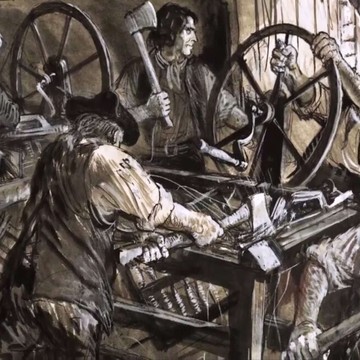
Mar 1, 2024 • 1h 10min
Breaking Things at Work (with Gavin Mueller)
The HBS hosts discuss how the Luddites were right about why we hate our jobs. The term “luddite” generally functions as an insult these days. It is something people are accused of, and a term that no one would claim for themselves. To adopt and adapt to new technologies is part of what it means to be progressive and modern, not to mention hip. However, the history of actually existing technologies paints a different picture, technologies from the laptop to the cellphone have been used to extend the working day and insert consumption into the pores of social life. Is it time to reconsider what it means to be luddite? Joining us to discuss Luddism is Gavin Mueller, author of Breaking Things at Work: The Luddites were Right About Why You Hate Your Job.Full episode notes available at this link:https://hotelbarpodcast.com/podcast/episode-128-breaking-things-at-work-with-gavin-mueller-------------------If you enjoy Hotel Bar Sessions podcast, please be sure to subscribe and submit a rating/review! Better yet, you can support this podcast by signing up to be one of our Patrons at patreon.com/hotelbarsessions!Follow us on Twitter/X @hotelbarpodcast, on Facebook, on TikTok, and subscribe to our YouTube channel!
★ Support this podcast on Patreon ★

Feb 23, 2024 • 54min
Lying
The HBS hosts parse the difference between mistakes, half-truths, embellishments, and outright lies. George Costanza (from the TV series Seinfeld) once insisted: “It’s not a lie if you believe it.” This seems both true and false. It's certainly wrong to claim that someone lied accidentally, so intention, and therefore knowing what you are saying is not true, appears to be a necessary part of what it is to lie. Yet, the “if you believe it” part often operates like a “get out of jail free" card, and none of us can really know the intentions of another. Kant famously argued that I have a duty to tell the truth in all cases, no matter the consequences... which leads one to wonder: if I'm aiding a friend by sheltering them from an abusive partner, when that partner knocks on the door and asks if my friend is inside, must I tell the truth? And what about a friend who asks you if you like their new tattoo?Finally, what happens to lying in an age, arguably like ours, when the truth counts for so little? Might we be in the awkward position of hoping for an age in which we can actually lie again?Full episode notes available at this link:https://hotelbarpodcast.com/podcast/episode-127-lying-------------------If you enjoy Hotel Bar Sessions podcast, please be sure to subscribe and submit a rating/review! Better yet, you can support this podcast by signing up to be one of our Patrons at patreon.com/hotelbarsessions!Follow us on Twitter/X @hotelbarpodcast, on Facebook, on TikTok, and subscribe to our YouTube channel!
★ Support this podcast on Patreon ★

Feb 16, 2024 • 56min
Growing Old(er)
The HBS hosts consider the sands through the hourglass. It seems as if, when we’re young, the solution to all of our problems is just getting older—when will people take me seriously? when will I understand my own body? when will I gain the confidence to assert my own will? or, just be myself? Then, as we age, it paradoxically occurs to us that the only solution to our problems is to be young again: if I only knew then what I know now, if I only had a chance to do that thing over, if I only could move like when I was young, if I only had my whole future ahead of me ….This week, we're talking about the phenomenology, the physicality, and the psychology of growing old(er). Full episode notes available at this link:https://hotelbarpodcast.com/podcast/episode-125-growing-older-------------------If you enjoy Hotel Bar Sessions podcast, please be sure to subscribe and submit a rating/review! Better yet, you can support this podcast by signing up to be one of our Patrons at patreon.com/hotelbarsessions!Follow us on Twitter/X @hotelbarpodcast, on Facebook, on TikTok, and subscribe to our YouTube channel!
★ Support this podcast on Patreon ★

