

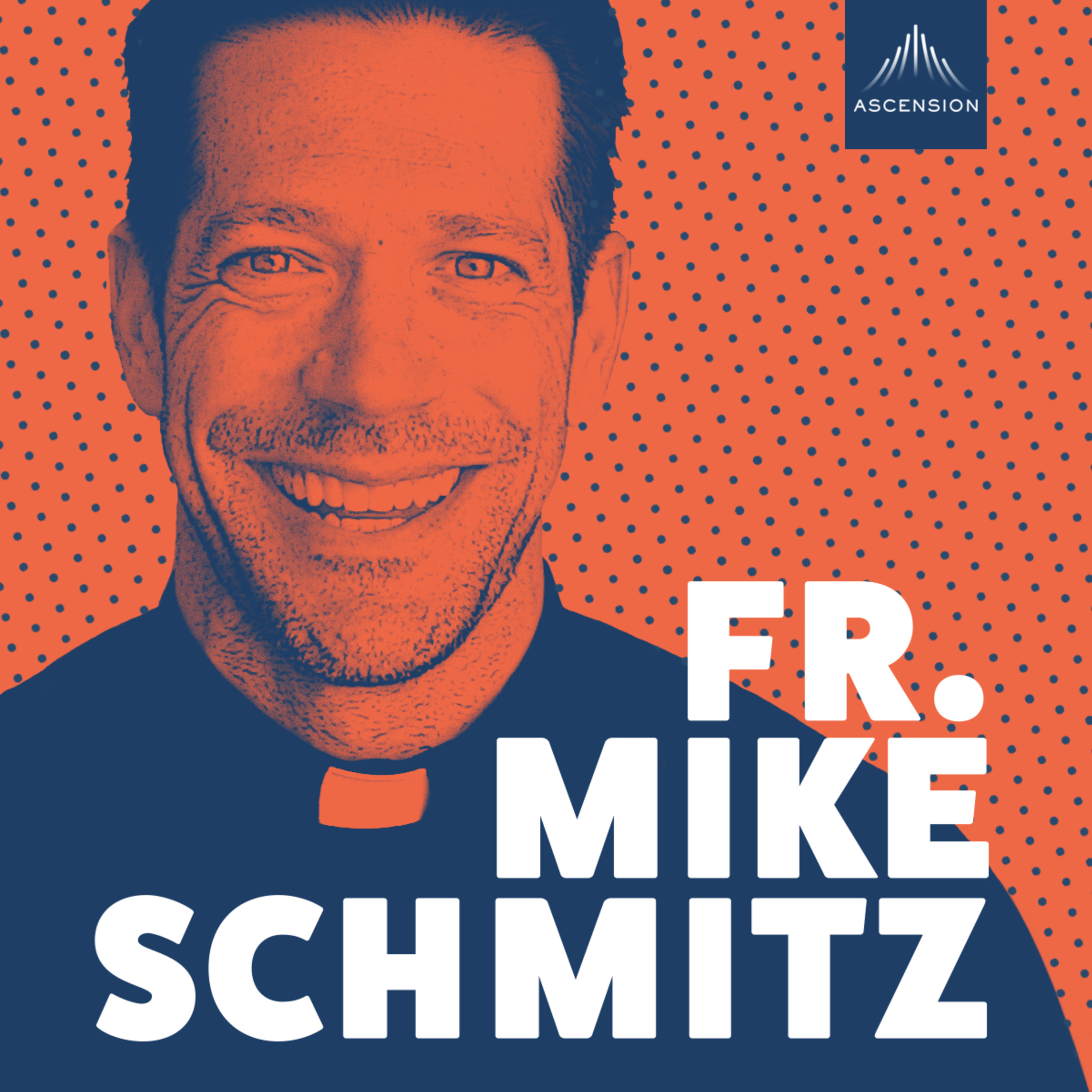
The Fr. Mike Schmitz Catholic Podcast
Ascension
Faith, pop culture, and headline reflections from Fr. Mike Schmitz.
Episodes
Mentioned books

Apr 1, 2021 • 7min
Pray Like Jesus Prayed This Holy Week
During Holy Week, as we contemplate the last hours of Jesus’ life, we get an intimate look at how Jesus prays to his Father.
Starting with our Lord’s prayer in the Garden of Gethsemane, we hear Jesus talking to God the Father about the upcoming moments of his life. He continues to pray through his Passion all the way until his last breath—a model that we as sons and daughters of God can follow as well. But what does Jesus show us about what it means to truly pray “Abba, Father”?
Ascension is proud to partner with authentically Catholic institutions and organizations committed to spreading the Gospel. Learn more about the sponsor of this episode, Ave Maria University. Support The Fr. Mike Schmitz Catholic Podcast
Mar 25, 2021 • 9min
Turn Your “No, But” into a “Yes, And”
When was the last time you said “yes” to God?
In improv, there’s a practice where participants are encouraged to never respond with “no, but” and to instead offer a “yes, and...” This allows for not only growth in the scene but in the actors as well. Similarly, God is always offering us different “scenes” to get us to sainthood. How are we responding? Turning our “no, but” into a “yes, and” opens our life to Christ’s will, and is the quickest path to sanctification.
Today, Fr. Mike explains how we can practice a better relationship with God by just saying “yes, and...”
Ascension is proud to partner with authentically Catholic institutions and organizations committed to spreading the Gospel. Learn more about the sponsor of this episode, Ave Maria University.Support The Fr. Mike Schmitz Catholic Podcast
Mar 18, 2021 • 11min
Blaming vs. Taking Responsibility
“Blame keeps us stuck...Taking responsibility gives us the opportunity to move forward.”
In our difficult, fallen world, we are bound to face struggle. Sometimes our natural response to that struggle is to blame other things or people for why it’s happening—even to blame ourselves. While this makes us feel temporarily better because we are justifying our hardship, it also negates the truth of why we experience struggle—and the graces that can come from it.
Today, Fr. Mike explains why it’s always better to take responsibility instead of playing the blame game.
Ascension is proud to partner with authentically Catholic institutions and organizations committed to spreading the Gospel. Learn more about the sponsor of this episode, Ave Maria University.Support The Fr. Mike Schmitz Catholic Podcast
Mar 11, 2021 • 9min
Why Did God Take On Our Humanity?
Every Christmas we celebrate the fact that Jesus took on our humanity and became one of us. But have we ever asked the question why? Why the Incarnation?
You’re definitely not the first to ask this question, and it’s a valid question. Why would God, an all infinite, perfect, and perfectly whole being come to earth to live as a human, and even die a horrible death on the cross? There is nothing he lacks, nothing he doesn’t know, and nothing he needs from us. So, why did he become man? Fr. Mike aims to answer this question today.
Ascension is proud to partner with authentically Catholic institutions and organizations committed to spreading the Gospel. Learn more about the sponsor of this episode, Ave Maria University.Support The Fr. Mike Schmitz Catholic Podcast
Mar 4, 2021 • 10min
Does God Need Us to Worship Him?
God is an infinite, perfect, communion of persons, responsible for the intentional creation of everything around us - which begs the question, if God is perfect, why does he need us to worship him? Well, he actually doesn’t. God doesn’t need us to worship him because there is nothing he lacks. Which leads to another question: why do we worship God if he doesn’t need us to? Fr. Mike answers this today, drawing from the earliest books of the Bible.
Ascension is proud to partner with authentically Catholic institutions and organizations committed to spreading the Gospel. Learn more about the sponsor of this episode, Ave Maria University. Support The Fr. Mike Schmitz Catholic Podcast
Feb 25, 2021 • 10min
Setting Boundaries for Yourself and Others
We often receive the behavior we are willing to tolerate, but what does that mean for our daily interactions?
Communication is the clearest way to let someone know how you are feeling. When meeting with someone who you feel is being rude, we may try to give outward signs of our discomfort, but we can’t guarantee they’ll understand unless we tell them directly. And obviously, this isn’t easy.
There aren’t many people who love confrontation, and even some that do anything they can to avoid it. We’re always so afraid that if we bring up something that we want changed, or share something that’s hurting us, that we’ll destroy that relationship. But more times than not, confronting these things head on and setting these boundaries won’t hurt the relationship but will strengthen it.
This isn’t just relevant for our relationships with other people either - it’s relevant to our relationship with ourselves. How many times have we made personal goals or aspirations but never changed our behaviors to make them possible? We get the behaviors that we’re willing to tolerate, even within ourselves.
St. Ignatius of Loyala had an exercise where he would imagine two sides, the side of the evil one and the side of the Lord. In this exercise, he would look at his decisions and choices for his life and decide, based on which side they fell on, who he would ultimately join: the evil one, or the Lord. By birth we belong to the evil one, but by baptism we belong to the Lord. Each side is battling for us to come over to their side, and if we are striving to be on the Lord’s side, then we have to recognize boundaries for ourselves that we can’t tolerate.
This battle does not need to be fought alone—in fact, it can’t be. We must rely on the infinite grace of God, which he is longing to give us every second of our day. What are the behaviors we need to remove from our lives for the glory of God?
Ascension is proud to partner with authentically Catholic institutions and organizations committed to spreading the Gospel. Learn more about the sponsor of this episode, Ave Maria University. Support The Fr. Mike Schmitz Catholic Podcast
Feb 18, 2021 • 9min
Why Love Is More than a Feeling
What if we were to make all our decisions solely based on how we felt in the moment?
You may be familiar with the four types of love: eros (love of desire), storge (love of affection), philia (love of friendship), and agape (self-giving love). While each of these forms of love are good in their own way, they have to be accounted for correctly.
Eros is the most temporary of all the loves. Feelings and desires are fleeting. So when we try and make decisions that are based on these desires we have, they’re bound to fail before we even make them, just because eros is so fragile. Imagine choosing your spouse, or your vocation, or your profession based on how you felt about it 5 years ago. Would you be happy with the outcome?
Eros has its place in our life, but we need to make sure we’re acknowledging the more important elements, especially when making decisions. Eros is fleeting, but the agape love God has for you isn’t. Focus on the things that last, and attend to the feelings that don’t, and enjoy the life God has laid before you.
Ascension is proud to partner with authentically Catholic institutions and organizations committed to spreading the Gospel. Learn more about the sponsor of this episode, Ave Maria University. Support The Fr. Mike Schmitz Catholic Podcast
Feb 11, 2021 • 7min
A Martyr for the Faith vs. a Victim of Circumstance
What’s the difference between a victim and a martyr?
A victim is always described as dying “of” or “from” something. But when you describe a martyr, you talk about what they died for. While a victim is hurt by something, a martyr is suffers for something or someone. While a victim is having something happen to them, a martyr is choosing what happens to them by their will.
“...I lay down my life, that I may take it again. No one takes it from me, but I lay it down of my own accord.” (John 10:17-18)
The word martyr comes from the Greek word for witness. So when we see Jesus in Acts 1 telling his disciples that they are called to be witnesses of the faith, he is also calling them to martyrdom for the sake of spreading the Gospel. The apostles were not victims—they were martyrs, because they lived their lives for Christ until death. This turns their death into the fulfillment of their lives—the crowning achievement—instead of something that defeated them.
While not all of us may be asked to lay down our lives for Christ at our death, we are all called to live our lives for the faith.Support The Fr. Mike Schmitz Catholic Podcast
Feb 4, 2021 • 8min
Learning Detachment from Your Stuff
Sometimes the things that we own end up owning us. Detachment prevents this from happening.
You may have heard of the minimalist movement that focuses on only having the things you need, and letting go of the things you don’t. Most people practice this by decluttering their house or storage, like you would if you were cleaning out a closet. But it’s not so much having a lot of stuff that’s the problem: it’s being attached to those things, and letting them have a sense of control over your life.
This can happen with anything we own, from entertainment resources like books or video games, to things like photos, letters from family and friends, or even notes from your favorite theology course. For some reason, our hearts hold on to certain things, even if we haven’t looked at them in years, just in case we need them someday. Maybe it’s because of sentimental value, or because we find joy in them, but most of the time, we keep these things for a sense of security.
There’s nothing wrong with having things, and there’s absolutely nothing wrong with finding joy in the things we do have. But if there are things sitting on our shelves, collecting dust because we’re keeping them “just in case,” maybe the question we need to ask ourselves is, “what does God want me to do with this?” Does he want us to keep it and use it, or give it away to someone who needs it, or just throw it away? But the important thing to remember is that everything we have should be looked at with the idea that we can do something good with it, and intend to use it for the glory of God.
If you still have use for it, then keep it. If it’s done all it can for you, and has more goodness for someone else, then give it away. And if all its goodness is used up, then toss it. But whatever we have, we need to give it to God, acknowledging that he gave it to us in the first place. Letting him decide what we do with the things we own is the perfect way to not only detach ourselves from our possessions, but to gain more freedom in our lives to bless others.Support The Fr. Mike Schmitz Catholic Podcast
Jan 28, 2021 • 7min
How to Keep Your Faith Alive and Growing
Why is it easier to fuel our faith at retreats and conferences? Can we have this same fire at home?
You can probably reflect on a certain moment or time period in your life that your faith seemed to flourish more than it ever has. Usually this happens when we go on retreats, mission trips, or faith conferences. But along with these moments of powerful formation comes the decline we experience when they’re over, and we go back home. Why is that?
Retreats offer us an opportunity to encounter our faith away from the distractions of the world. They are designed to make faith the center of our attention, which makes fueling our faith much easier. However, a lot of us don’t have that environment when we go home, and it can be really difficult to continue to keep that fire alive, especially when we live in a world that is constantly trying to extinguish it.
It comes down to our personal decisions, and how we choose to live. If we know that avoiding certain distractions, relationships, or environments help us grow closer to God, then it’s up to us to make those changes. It’s much easier to bring someone down than to lift someone up. The world won’t bring us into a deeper relationship with Christ—we have to make those choices ourselves.
Now, this might mean that we have to say goodbye to some aspects of our life, or even some people. It’s important to approach all these decisions with prayer and guidance from the Lord. He knows what you need better than anyone else in your life, so seek council knowing he will only allow what’s best for you in your path towards heaven. Try asking the Lord each day how you can become closer to him, and seek out ways to let your faith breath. Support The Fr. Mike Schmitz Catholic Podcast

