

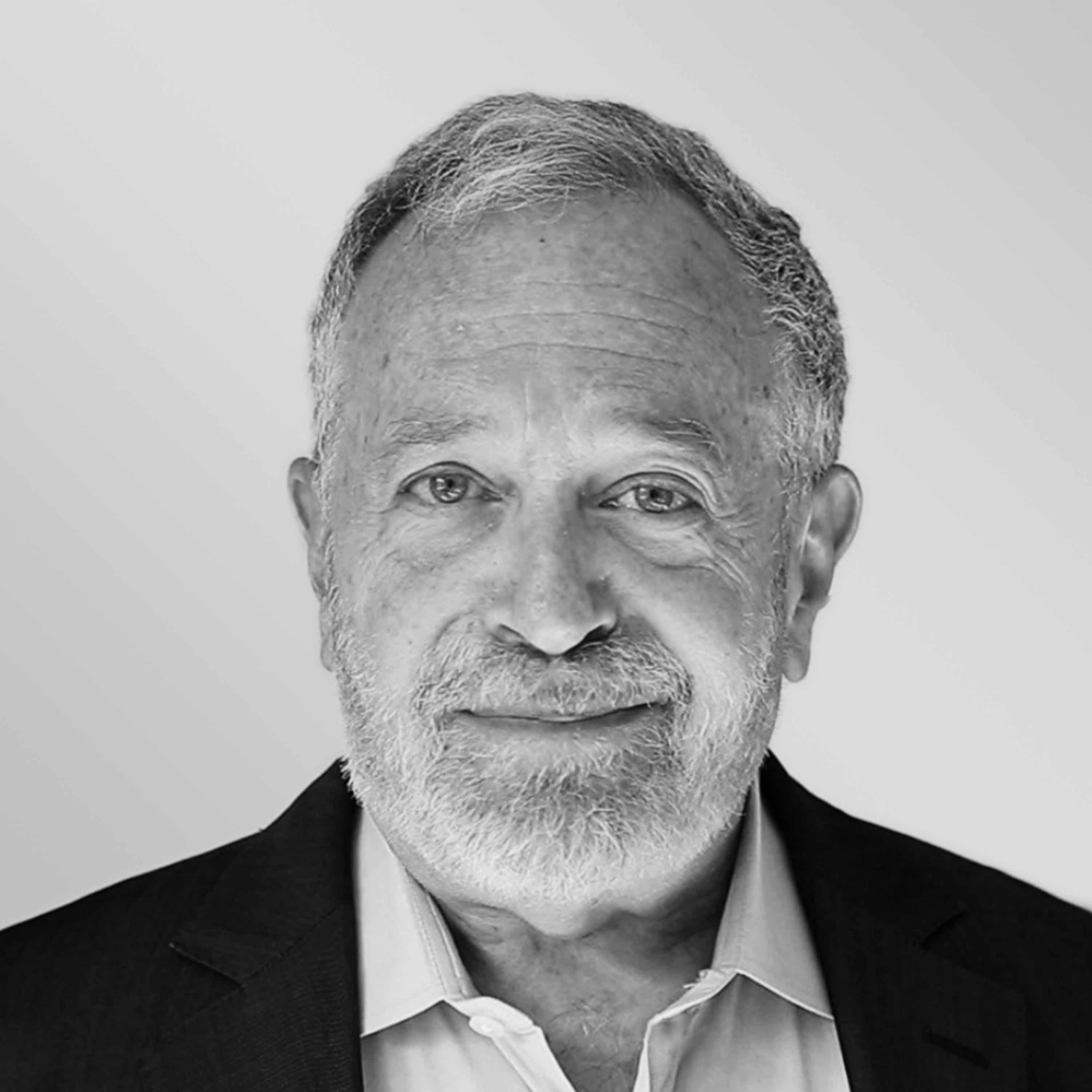
The Coffee Klatch with Robert Reich
Robert Reich
Former Labor Secretary Robert Reich exposes where power lies in our system — and how it's used and abused. robertreich.substack.com
Episodes
Mentioned books

Dec 27, 2021 • 7min
How to overcome the tyranny of stuff
‘Tis the time to cash in gift certificates, shop for post-Christmas bargains, and fill shelves and closets with more stuff. I for one don’t want anything more, thank you. My shelves are already overflowing with books. My attic is full of old chairs and tables, chafing dishes, pictures, games, children’s toys, ski equipment, stereos, a broken easel. My closet can’t fit any more clothes, most of which I haven’t worn in years. I’m drowning in stuff. Once a year (usually around the holidays), I drop off as much stuff as I can at Goodwill Industries or the Salvation Army. To be totally honest, I don’t just off-load stuff I no longer need. I also prowl around thrift stores on the off-chance I’ll find some quirky thing I’ve been looking for (or maybe a friend or relative would love to have) — say, a vinyl recording of Leonard Cohen from the late 1960s, a funny tie, memorabilia from one of FDR’s presidential campaigns. A few months ago my neighbors began putting stuff they no longer want on the sidewalk at the end of the street, hoping others will pick it up. I’ve started putting stuff there, too. I’ve even picked up a few things there, like some exercise weights I’d been looking for.In all these ways, I’ve become a small part of a recycled economy. Maybe you have, too. At different times of our life we want different things. When kids are small, they have certain needs; as they grow up, different needs and wants. When they leave home and we downsize, lots of stuff goes into the attic. Tastes change over the years, too. Technologies alter or advance. Besides all this are the gifts that don’t suit, the clothes that no longer fit, the purchases that are later regretted. All create a need for recycling. This got me wondering: What if we were all more intentional about recycling stuff? What if there were a systematic way of donating things we no longer need and of finding stuff we’d like to have? I’m talking about something far more radical than just recycling our garbage or waste. Imagine an entire system based on continuously recycling stuff — without any of it being bought or sold. Something like this already up and running in the form of “Buy Nothing” groups. Started in 2013 as a local network in Bainbridge Island, Washington, “Buy Nothing” groups now comprise 4.3 million members in 44 countries. Members can offer or request any item or service, as long as it’s legal. (Buying, selling and bartering are prohibited.) A Buy Nothing app, launched last month, has already been downloaded more than 125,000 times. If you’re curious, you might take a look here.Economic systems tend to be divided into “capitalist” and “socialist,” with gradations in between. Under capitalism (to drastically simplify) people buy stuff with the income they get from selling stuff. Under socialism, people share stuff. To state another way: Capitalism focuses on production and consumption. Socialism focuses on distribution. But what if there’s a third model — a recycling system in which all the stuff people no longer want is continuously recirculated to people who want it? This third model could be increasingly important as we face a worsening clash between infinite wants on a planet with finite resources. Imagine how much less waste there’d be if the stuff already out there were continuously recirculated. The United States now produces more plastic waste than any other country, according to the National Academy of Sciences. The average American generates about 287 pounds each year. And think of the greenhouse gas emissions we’d avoid in a recycled economy. A 2020 paper published in Nature attributes overconsumption and the relentless pursuit of economic growth to the explosive rise in greenhouse gas emissions now threatening our planet. But wait, you might say. Consumer spending is about 70 percent of gross domestic product. Our economy depends on consumption. Remember George W. Bush telling Americans that the most patriotic thing we could do after 9/11 was to buy? If consumer spending were substantially reduced because we recycled lots more stuff, the Gross Domestic Product would take a dive. Tens of thousands of retailers and wholesalers might close. Millions could lose their jobs and livelihoods. Hell, we just lived through a pandemic-induced recession that showed how bad things can get. But that’s not the inevitable tradeoff, for one simple reason: Life in a recycled economy would be a lot cheaper. We wouldn’t need to buy nearly as much. So we wouldn’t need to work and earn nearly as much. We’d stop measuring our wellbeing by the Gross Domestic Product or even by the unemployment rate, because part of our wellbeing would be outside the production-consumption system of capitalism. Nor would we be relying on generosity or social solidarity. Most of us already have too much stuff — or we have the wrong stuff for this particular time in our lives. We just need a better system for reallocating stuff already produced that’s not wanted or not being used by the people who have it, and getting it to the people who do want it. Not only would this generate less waste and a cleaner environment. It might also make a dent in poverty by more systematically getting stuff to people who really need it. Stuff is now inundating us. It’s strangling the world. Could a recycled economy be part of the solution? What do you think? This is a public episode. If you'd like to discuss this with other subscribers or get access to bonus episodes, visit robertreich.substack.com/subscribe

Dec 24, 2021 • 8min
How to stay hopeful in a time of despair
Friends, The reason I write this newsletter is not just to inform (and occasionally amuse) you, but also to arm you with the truth so you can fight more effectively for the common good.The forces undermining our democracy, polluting our planet, and stoking hatred and inequality have many weapons at their disposal — lobbyists, media megaphones, and money to bribe lawmakers. But their most powerful weapon is cynicism. They’re betting that if they can get us to feel like we can’t make a difference, we will give up — and then they can declare total victory.Which is why we have to keep up the fight even when feeling deeply discouraged. I’m not going to pretend. There’s a lot to be discouraged about right now — from Manchin’s torpedoing of “Build Back Better” to the surging Omicron variant of COVID-19 and the politicization of public health, from the Republicans’ assault on voting rights to environmental disasters all over the world. My message to any of you who feel overwhelmed, disappointed, or ready to drop out: I get it. I’ve been in the trenches for five decades and sometimes I despair as well. Again and again over the years I’ve seen hard-fought dreams go up in smoke. Or been sidelined. Or ridiculed. Or I’ve watched them succumb to bribery and corruption. Two of the leaders I counted on most in my lifetime were assassinated. But notwithstanding all this, we are better today than we were fifty years ago, twenty years ago, even a year ago. I can point out so many examples in our own country, or all across the world, where movements that were once small and stacked against seemingly impossible odds, ended up winning and making America and our earth a better place to live. From Martin Luther King, Jr., to Mahatma Gandhi, to more recent examples like Stacey Abrams and Greta Thunberg, people have repeatedly changed the course of history by refusing to believe that they couldn’t make a difference. It’s not only the famous leaders who are agents of change. Movements are fueled by individuals giving their time, energy, and hope. Small actions and victories lead to bigger ones, and the improbable becomes possible.Nothing strikes fear in the hearts of those who want to prevent progress more than a resistance that is undeterred. This fight, this struggle, all these big problems, can be exhausting. No one can go all in, all the time. That’s why we need to build communities and movements for action, where people can give what effort they can, and can be buoyed in solidarity with others. That’s what we’re doing in a small way in this forum. Building community. Strengthening our resolve. Sharing information and analyses. Fortifying ourselves. Over the next few years the fight will become even more intense. We are even battling for the way we tell the story of America. There are those who want to go back to a simplistic and inaccurate narrative, where we were basically perfect from our founding, where we don’t need to tell the unpleasant truths about slavery, racism, sexism, homophobia, xenophobia, and all the other injustices. But there is another story of America, one of imperfection but progress. In this story, which is far more accurate, reformers have changed this nation many, many times for the better. We got labor rights, civil rights, women's rights, and LGBTQ rights. We got clean water laws and clean air laws, and health insurance for most Americans. We’ve torn down Confederate statues and expanded clean energy. We’ve got a new generation of young, progressive politicians determined to make the nation better. The list goes on and on. The outcome of the fight ahead will not be determined by force, fear, or violence. It will be decided on the basis of commitment, tenacity, and unvarnished truth.Here’s my deal. I’ll continue to give you the facts and arguments, even sprinkle in drawings and videos. I’ll do whatever I can to help strengthen your understanding and your resolve. Please use the facts, arguments, drawings and videos to continue the fight. To fight harder. To enlist others. If at any time you feel helpless or despairing, remember that the struggle is long, that progress is often hard to see in the short term, and that for every step forward regressive forces are determined to push us backwards. Also remind yourself that the fights for democracy, social justice, and a sustainable planet are necessary and noble, that the stakes could not be greater or more important, and that we will — we must — win. I wish you a restful, enjoyable, restorative Christmas holiday. PS: Here’s a video I just did with my wonderfully talented young colleagues at Inequality Media (who fuel my optimism every day). Feel free to share! This is a public episode. If you'd like to discuss this with other subscribers or get access to bonus episodes, visit robertreich.substack.com/subscribe

Dec 23, 2021 • 6min
You want to know a really dirty secret? Here's why Democrats are protecting private equity's "carried interest" loophole
Democrats still hope they can salvage pieces of their ambitious tax agenda even after Sen. Joe Manchin blew up the legislation that included it. I’m sick of trying to fathom Manchin’s mind or motives but senate Democrats think he’s sincere about tax reform. In a Monday interview on a West Virginia radio station, Manchin pointedly said that ensuring people pay “their fair share” of taxes is the main reason he’s come this far in negotiations. “You have a chance to fix the tax code that makes it fair and equitable.” Well, if Democrats are willing to take another stab at tax reform, I’ve got just the candidate: Get rid of the “carried interest” loophole that lets private equity managers – among the wealthiest people in America – pay a tax rate lower than most Americans. The “carried interest” loophole is huge, and it’s a pure scam. Private equity managers get this tax break even though they invest other peoples’ money. They don’t risk a penny of their own. Bill Clinton, George W. Bush, and Barack Obama all promised to get rid of it. They didn’t. Hell, even Donald Trump promised to get rid of it. He didn’t, either. “I don’t know what happened,” said Larry Kudlow, the conservative economist who crafted Trump’s tax plan. “I don’t know how that thing survived,” he said, adding, “I’m sure the lobbying was intense.”You’d think that the carried interest loophole would be high on the Democrats’ list of revenue-raisers. After all, closing it could raise $180 billion over the next decade from among the richest Americans. That’s $180 billion that could go toward supporting vulnerable Americans and investing in America’s future.Think again. The loophole – which treats the earnings of private equity and hedge-fund managers as capital gains, taxed at a top rate of just 20 percent, instead of personal income, whose top tax rate is 37 percent – remains as big as ever. Bigger. Astonishingly, some influential Democrats, such as House Ways and Means Committee chair Richard Neal, defend the loophole. They say closing it would hobble the private equity industry, and, by extension, the US economy. This is pure rubbish. In fact, private equity firms generate huge social costs. They buy companies they see as ripe for “turnarounds” – a polite way of saying that once they buy these companies they’ll cut wages, outsource jobs, strip assets, and then resell what’s left, often laden with debt. Look no further than the strike by Alabama’s Warrior Met Coal mineworkers that’s been underway since April 1st. Warrior Met is owned by a group of private equity firms led by New York-based Apollo Global Management. Mineworkers gave up their pension plan, retiree health care and wages to make Warrior Met’s mines mines profitable, as Apollo and other private equity investors siphoned off hundreds of millions of dollars for themselves in special cash dividends.Since the pandemic began, private equity has been using the flood of cheap money to buy companies at a record pace, and then squeeze them (and their workers) dry. 2021 has been private equity’s biggest ever — reaching a record $1.1 trillion in deals.So why are Democrats subsidizing private equity’s predatory behavior with this tax loophole? How did the loophole survive the Clinton and Obama administrations when the Democrats controlled both houses of Congress? Why isn’t it even on the current list of tax reforms Democrats went to use to pay for the Build Back Better package, if they can resurrect it in January? What’s the dirty secret? Thanks for subscribing to my newsletter. If you’d like to help support it, please consider a paid subscription or a gift subscription. “This is a loophole that absolutely should be closed,” said Biden adviser Jared Bernstein. But “when you go up to Capitol Hill and you start negotiating on taxes, there are more lobbyists in this town on taxes than there are members of Congress.”Last year 4,108 individual lobbyists formally registered to lobby Congress and the executive branch on taxes. The private equity industry alone has contributed hundreds of millions of dollars to congressional campaigns – $600 million over the past decade, according to a New York Times analysis earlier this year. But here’s the thing. Most of these campaign contributions (bribes) have gone to Democrats. Nearly 60 percent of campaign donations from partners in the private equity industry during the 2020 election went to Democratic candidates for federal office. During the 2020 election, Biden’s presidential campaign received over $3 million from people working in private equity and related investment funds, according to the nonpartisan Center for Responsive Politics. Biden was the top recipient of campaign money from this industry.The dirty secret is Democrats have depended on campaign funding from private-equity partners — hugely wealthy people who are shafting workers across the land. Back in 2010, some courageous House Democrats squeaked through a tax plan that closed the loophole, but Democrats who controlled the Senate wouldn’t go along. Senator Charles Schumer was among those who argued against closing it. The United States, he said, “should not do anything” to “make it easier for capital and ideas to flow to London or anywhere else.” Oh, please. As if Wall Street needed billions in annual bribes to stay put.When I publicly criticized Schumer for this, he explained to me that he didn’t think it fair to close the loophole for private equity and hedge fund partners but to leave it in place for other partnerships, such as housing developers.Well, one person’s view of fairness may differ from another’s. But I don’t think there’s any question that the carried interest loophole is unfair to everyone except the fabulously rich who benefit from it.Democrats must close this loophole. Now. Your thoughts? This is a public episode. If you'd like to discuss this with other subscribers or get access to bonus episodes, visit robertreich.substack.com/subscribe

Dec 21, 2021 • 6min
Help! What will Omicron do to my holiday plans?
When it comes to the surging Omicron variant of COVID, just about all I’m hearing is advice about holiday planning. Should one attend a holiday party? Travel? Meet friends at a restaurant?Much of the answer boils down to how to calculate one’s tolerance for risk when so little is known about Omicron except that it spreads easily. Experts are throwing around a lot of numbers. Columnists are sharing their own personal calculations. I understand. We’re all a bit spooked and don’t know exactly what to do. Calculations offer a degree of reassuring certitude. But why does America need to turn this latest COVID surge — as we do so much else — into a question of individual risk, personal calculation, and self-concerned choice? Personal responsibility is important, of course. But I worry that this hubbub over individual risk assessment is distracting us from what we need to do now as a society to be readier for Omicron than we were for Delta or for the first COVID surge.It also plays directly into the hands of anti-vaxxers who want to believe COVID is only about personal choice. On Friday's Fox Business, Florida Governor Ron DeSantis was asked if he was getting the booster. DeSantis smirked, shook his head no, and then went into a long harangue about why people should make vaccine decisions “for themselves.”This past weekend, at Turning Point USA, the MAGA college Republican spin-off (whose founder died from COVID-19 last summer), Sarah Palin said it would be “over my dead body” that she got vaccinated (no pun intended). And Tucker Carlson (perhaps the most harmful person in America these days) railed against those who are urging vaccination, saying they just want to “punish people.” Carlson then praised the “naturally immune” who “earned it.”It’s too easy for the rest of us to respond to this rubbish by telling ourselves that anti-vaxxers will pay the price because they’re putting themselves at much higher risk of being hospitalized and even dying. But this kind of thinking reflects the same dangerous fallacy — that each of us must make such life-or-death decisions for themselves. On Friday, Jeff Zients, the White House COVID coordinator, inadvertently promoted this fallacy by telling reporters that while the administration will work to minimize Omicron disruption for the vaccinated, the unvaccinated should expect “a winter of severe illness and death for yourselves, your families....”In reality, all of us are in this together. And so far, all of us together are failing. America's rate of deaths from COVID is the highest of all advanced nations. Fewer than 62 percent of us are fully vaccinated — the lowest of all advanced nations. Those who continue to refuse to get vaccinated are endangering the rest of us — and not just because they’re increasing the risk of a “breakthrough” infection in those of us who have been fully vaccinated. As Omicron surges, the unvaccinated are likely to overwhelm hospitals throughout the land, making it harder for our entire health system to respond to all health needs and emergencies.The unvaccinated are also incubators for the next variant.Anti-vaxxers aside, the emphasis on individual risk is allowing us to forget the social needs that became exposed when the pandemic first hit in early 2020 — most of which are still unmet. Thanks for subscribing to my newsletter. If you’d like to support this work, please consider a paid or gift subscription. We’re still doing almost no contact tracing compared to other advanced nations. Rapid COVID tests are still difficult to find, and too expensive. (The free tests that the Biden administration is touting won’t be available until next month.) N95 masks are still in short supply. There’s still little or no coordination among different levels of government. Biden’s order that large businesses require employees to be vaccinated remains stuck in the federal courts. Hospitals in many places still don’t have enough Intensive Care Units. We could once again face a shortage of ventilators.In addition, too many workplaces are still unsafe. They’re still not required to test employees and report all COVID infections. They still don’t have to provide personal protective equipment. Workers still can’t stay home for fear getting the Omicron variant at work because we still don’t have a national system of paid leave (thanks to Joe Manchin and senate Republicans). They can’t quit their jobs because extended unemployment insurance has run out. I’m unable to advise you about whether you should attend that holiday party or cancel your travel plans. But I can assure you that what we’re facing is not just a matter of personal choice or individual risk tolerance. We’re facing another test of America’s capacity to respond to a public-health crisis. And the safety of every one of us depends on the nation doing better this time than we did before. What do you think? This is a public episode. If you'd like to discuss this with other subscribers or get access to bonus episodes, visit robertreich.substack.com/subscribe

Dec 20, 2021 • 8min
When Congress returns: Its first priority must be to save American democracy from the big lie, big anger, and big money (plus an end-note on Joe Manchin)
With the Senate now adjourned for the holidays and Joe Biden’s “Build Back Better” social and climate package stalled if not dead (Senator Joe Manchin went on Fox News yesterday to announce he won’t support it)*, Biden’s remaining agenda is now at the mercy of the 2022 midterm election year — a perilous time to get anything enacted. So what should be Biden’s and the Democrat’s first priority when the Senate returns in January? I’m sure Biden still wants his Build Back Better package passed. But it’s more important that the Senate now make voting rights its priority.Republican state legislatures will soon begin drawing partisan congressional maps that federal legislation could outlaw. Several states have already changed election laws in ways making it harder for people in minority communities to vote and giving Republican legislatures greater power over election outcomes.To be sure, any new national voting rights legislation depends on altering the senate filibuster so that the fifty Democratic senators (plus the Vice President) can pass it. (Senate Republicans have made it clear they won’t support any voting rights legislation.) Hence the necessity of senate Democrats agreeing to carve out voting rights from the filibuster (back to Manchin again). I want to emphasize the urgency of this. Since the 2020 election, the foundations of our democracy have been gravely weakened. Just last Saturday, three top retired generals warned of a potential civil war in 2024 unless action is taken soon. Saving American democracy requires stopping three powerful forces on the way to destroying it.The first is Trump’s big lie that the 2020 election was stolen from him. It’s now believed by some 60 percent of Republican voters. The lie conveniently fits with the Republican Party’s insight that demographic trends work against it unless it shrinks the electorate.The second is big anger spread by the media, especially Fox News and Facebook. It’s boosting their ratings and revenues by inciting divisiveness, racism, panic, and paranoia. As a result, it’s undermining the trust that democracy depends on. The third is big money from large corporations and wealthy individuals. It’s inundating political campaigns, supporting one-sided issue ads, and bribing lawmakers on both sides of the aisle to support measures that will further enrich corporations and the wealthy and block measures that will cost them.The big lie, big anger, and big money reinforce each other because they all depend on Americans believing that democracy is rigged against them. And, to a shameful extent, it is. Urgent steps must be taken to counter all three.The first step is to set national voting-rights standards in light of Trump’s Big Lie. Senate Democrats must enact the Freedom to Vote Act and the John Lewis Voting Rights Advancement Act as soon as possible in January, when they have a chance to prevent even more Republican state efforts to suppress votes and take over electoral machinery. If they fail to do this, they will be complicit with the Republican Party in using Trump’s big lie to shrink the electorate.Trump and his Republican co-conspirators must also be held accountable for their attempted coup in the months after the 2020 election, leading to the January 6 attack on the Capitol. Hopefully, the House committee now investigating it (with the crucial and courageous participation of Republican Representatives Liz Cheney and Adam Kinzinger) will report its findings early in the new year. Timing is essential. Republicans must not be allowed to delay the committee’s work. If they take control of the House next year they surely will shut the committee down. Armed with the committee’s findings, the Justice Department must take legal action against Trump and all lawmakers implicated in the attempted coup. Even before the committee reports, the Justice Department should impanel grand juries to weigh the evidence in its possession. The second step is to constrain big anger instigated by social media, Fox News, and other outlets. There are two ways to do this without undermining freedom of speech: Revoke Section 230 of the Communications Act, which now protects digital media providers from liability for the content posted by their users even if that content is harmful, hateful, or misleading. There is no continuing justification for this legal protection, particularly at a time when the largest of these providers have become vast monopolies. Create a new “fairness doctrine” requiring that all broadcasters, including cable, cover issues of public importance in ways that present opposing perspectives. This will be difficult to enforce, to be sure, but it would at least affirm the nation’s commitment to holding broadcasters to a higher standard than merely making money. The third step is to get big money out of politics. The current Supreme Court won’t reverse the Court’s shameful decision in Citizens United vs. FEC and related cases. A constitutional amendment allowing the government to limit money spent on campaigns is extremely unlikely. But campaign finance reform is possible by matching small donations with public dollars. This was in the original For the People Act and should be added to the Freedom to Vote Act.These are the minimal essentials for containing the big lie, big anger, and big money. All three steps are urgently needed. There is no time to waste. Biden, Democrats, and any remaining principled Republicans – along with the leaders of nonprofits, universities, labor unions, major foundations, grassroots organizations, racial-justice and environmental advocates, and business – must wage a war to save American democracy. This war must start immediately. Nothing else we do for America is as important. Nothing else that needs doing in America is possible unless we do this. What do you think?__* I can’t resist opining on West Virginia senator Joe Manchin’s motive for announcing yesterday he won’t support the “Build Back Better” social and environmental package. He delivered the deathblow on Fox News Sunday (after refusing to take Joe Biden’s phone call presumably asking him not to make the announcement).The reasons Manchin gave are absurd on their face. He must know that.He said he’s worried about inflation and the national debt. But Build Back Better would be paid for with tax increases on big corporations and the wealthy — so it won’t have any bearing on inflation or the debt. More to the point, its sticker price of $1.75 trillion covers 10 years, during which the Congressional Budget Office projects $288 trillion worth of economic output. So a Build Back Better plan of $1.75 trillion would amount to roughly 0.6% of gross domestic product — or slightly more than the 0.5% of GDP Americans spent last year on tobacco. And that doesn’t begin to cover all the benefits to the economy of investing in K-12 education, childcare, and so on. Manchin also claimed he’s worried about the impact of the latest COVID surge on the economy. But if COVID slows the economy, that’s even more justification for federal spending that strengthens social safety nets. And even more reason to support a program that could possibly stimulate the economy in the short run. He said he can’t face his constituents in West Virginia without renouncing “Build Back Better.” But on a per-person basis, West Virginians would be among the biggest beneficiaries of the legislation in all America. One out of four West Virginians over 65 have no natural teeth, for example — the highest rate in the nation. Biden’s original bill provided dental benefits under Medicare.So what’s really motivating Manchin? Four possibilities:West Virginia is a coal state, and Manchin doesn’t want to do anything that might dampen coal production (the bill has a number of environmental measures). Possibly, but Manchin must know there’s no long-term future in mining coal regardless of what happens to this legislation. There are far fewer coal jobs left in West Virginia than there are jobs in health care. The legislation would, however, help West Virginians transition from coal to new and better jobs. And help them survive in the meantime.He’s self-dealing. He owns stock valued at between $1 million and $5 million in Enersystems, a coal brokerage firm he founded in 1988? Last year he made half a million dollars in Enersystems dividends (roughly three times the $174,000 salary he made last year as a senator).He’s takes bribes. He collects more campaign money from coal, oil, and gas companies than any other senator. (In June, Exxon lobbyist Keith McCoy told the Greenpeace investigative unit that Manchin participated in weekly meetings with company operatives.)He loves the power and attention. Who ever heard of Joe Manchin before the Biden administration? A minor-league Democratic senator from a small, poor state suddenly has the national spotlight and has become the biggest spoiler in the Democratic Party.Frankly, your guess is as good as mine. This is a public episode. If you'd like to discuss this with other subscribers or get access to bonus episodes, visit robertreich.substack.com/subscribe

Dec 17, 2021 • 5min
Why I love teaching (but hate teaching remotely)
Rumor has it that I’ll be teaching remotely again this spring because of the Omicron variant. No official word from Berkeley yet, but the variant seems to be crashing through campuses all over the nation, even where almost everyone is vaccinated. Many universities are already closing classroom doors, as they did in March 2020. I’m glad universities are being careful. But I’ve got to tell you: I hate the idea of going back to teaching remotely. Teaching students through the lens of my laptop is like teaching a wall. The class I most enjoy teaching at Berkeley has over 800 undergraduates. I love being there in person — watching my students as I speak: their eyes, their faces, their body language; noting the moments when they sit up straighter in their chairs because they’re engaged and curious, witnessing times when their eyes light up because they’ve figured out something important. I don’t really lecture at them (although it’s described as a “lecture” in the course listings). I speak to them, and see and feel their reactions. A class this large takes on a life and personality of its own. The class as a whole gives me a huge amount of information about what they’re confused by, intrigued by, want more information about, or want more context for. Their unspoken reactions guide me — telling me what to say and do next. I’ve been teaching for forty years, so by now this iterative process is automatic, subconscious, immediate. My students don’t realize that minute-by-minute they’re telling me how and what to teach them. We’re in a tacit but dynamic dialogue — all 800 of them and me. Thanks for subscribing to my newsletter. If you’d like to support it, please consider a paid or gift subscription. I don’t teach from behind a lectern. I walk around a large stage, scanning their faces. Sometimes I’ll come down into the aisles and pose a question to them. A few brave souls will raise their hands, and we’ll spend a minute or two in a back-and-forth socratic-type discussion — the purpose of which isn’t to “catch” them but to demonstrate or reveal something to all the others in the lecture hall. After a few weeks, I might roam the aisles and call on students who haven’t raised their hands — a “cold call,” it’s termed. But by then everyone knows that my intent isn’t to embarrass or corner any particular student; it’s to engage everyone in a process of critical thinking.I make it a point not to give them my opinions or values. I want them to test their own opinions and values. I want them to reconsider, think more deeply, get provoked when facts and logic don’t confirm their points of view, be open to changing their opinions or values. I play “devil’s advocate,” taking the sides of arguments they least expect me to take. I tell them that the best way to learn is to talk with people who disagree with them. That way, they have to re-examine their assumptions, test them, defend them, or change them. I suggest they get onto the habit of doing this, in their dorms or over lunches and dinners.But when I’m teaching remotely — staring at the lens in the top of my laptop computer — none of this dynamic occurs. I assume they’re watching me on their own laptops, but I get no feedback from them because I can’t see their faces or read their body language. I can’t descend into the aisles and talk to them. There’s no tacit dialogue. I simply lecture. I do everything in my power to make the lecture interesting for them, challenging, sometimes humorous. I want to keep their attention. But I can’t help but worry about how much they’re actually learning. I shouldn’t complain. I have it easy. Remote teaching is far, far more difficult for high school teachers. I have no idea how an elementary school teacher manages. Children have a hard enough time focusing and maintaining attention in real classrooms. Besides, I tell myself: if the Omicron variant continues to spread, those of us who are getting up there in years probably shouldn’t take any unnecessary risks. Still, if I can’t get back into the classroom next semester, I’m going to sorely miss the presence of my wonderful, lively, joyful, brilliant students. This is a public episode. If you'd like to discuss this with other subscribers or get access to bonus episodes, visit robertreich.substack.com/subscribe

Dec 15, 2021 • 4min
Office Hours: Who would you select as person of the year (other than Elon Musk)?
Time magazine has named Elon Musk as its 2021 “Person of the Year,” calling him “the man who aspires to save our planet and get us a new one to inhabit.” Oh, please. This is the man who downplayed the pandemic — predicting in March 2020 that there would be “probably close to zero new cases” in the United States by the end of April, and that “the coronavirus panic is dumb.” As infections surged, he called quarantine measures “fascist” and demanded that officials return people’s “freedom.” He then kept his Tesla plant open in defiance of public health orders, with the result that over a hundred Tesla workers contracted COVID. They said the company covered up the outbreak. Then he fired workers after telling them they could take unpaid time off if they didn’t feel safe coming to work. This is the man who, when the epidemic plunged millions of Americans into near poverty, railed against coronavirus relief packages — claiming government aid wasn’t “in the best interests of the people.” Yet he’s been benefiting from government aid for years. He got a cool $465 million low-interest loan from the Department of Energy in 2010 to help kickstart Tesla. His Nevada Gigafactory was launched with the promise of $1.3 billion in tax breaks over two decades. And so on. This is also the man who threatened to rescind his employees’ stock options if they unionized. He broke 11 other labor laws by harassing pro-union employees. A court ruled that Musk and other company executives illegally sabotaged employee efforts to form a union -- harassing workers, passing out union pamphlets in the parking lot, banning employees from wearing pro-union T-shirts and buttons, repeatedly interrogating union organizers and eventually firing one of them, and distributing anti-union messages in tweets from Musk himself. Since 2010, he’s had at least 43 workers’ rights violations filed against his company.Meanwhile, six women who worked for Musk’s Tesla are suing the carmaker for alleged sexual harassment and discrimination, adding to two similar suits filed in the past month. Meanwhile, Musk’s SpaceX employees are speaking out about what they describe as a culture of harassment at the rocket company.He’s the richest person in the world who argues billionaires shouldn’t pay more taxes. He admits to taking no salary or bonus (he lives off his shares of stock) so pays little or no income tax. When Democrats proposed a billionaire tax he warned Americans that “eventually they run out of other people’s money and then they come for you.” When Bernie Sanders said the extremely wealthy should pay their fair share, he responded “I keep forgetting that you’re still alive.” This is Time Magazine’s person of the year? Look, I get it. America worships great wealth. It loves entrepreneurs. It celebrates mavericks. It extols rule-breakers. It reveres people who don’t give a rat’s ass. And it lauds ego-manics who combine all these qualities (it has even elected one President). But was it really necessary for Time Magazine to honor one of them?So here’s this week’s question: If it were up to you, who would you select as person of the year? As usual, I’ll chime in around 10 am PT, 1 pm ET.***Chiming in now (and will as well in the comments): Time Magazine hasn’t always risen to a standard that most of us would consider “honorable” in naming their “Person of the Year,” considering that the magazine has in past years anointed Adolf Hitler and Donald Trump. As several of you point out, Time has never been interested in the definition of honor. It just wants to sell more copies and attract more eyeballs.But Time’s peculiar annual rite does at least give us an opportunity to examine the important difference between notoriety and honor by asking ourselves who really deserves to be honored in these trying times. Already today, many of you have offered some superb examples.Understandably, most of you want to honor politicians. I can tell you from personal experience that the world of politics is a hard one. The past year has been especially grueling. The honorable ones deserve our gratitude. I agree with Oscar that Liz Cheney deserves a nod (although her normal politics are to the right of Attila). With great courage and determination, she has shown her loyalty to the American system of government — in sharp contrast with most of her Republican colleagues in the House and Senate. (I’d add Adam Kinzinger here as well.) Joan and several others nominate Nancy Pelosi, who I think is hugely deserving. Pelosi is probably the most gifted politician of our era. She has navigated America’s perilous political currents with deftness and calm. Some of you have put forward Joe Biden, and I can understand why. He has demonstrated steadfastness and resilience during this Republican chaos — although in coming months I hope Biden will invest more of his time and energy in securing voting rights, and protecting American democracy (which means getting rid of the filibuster or at least carving out a voting rights exception).A few of you have nominated Stacey Abrams, who hopefully will be the next governor of Georgia, and whose extraordinary gifts as a political organizer deserve our abiding gratitude.Mary Ann suggests Elizabeth Warren, Katie Porter, and the Squad – all of whom continue to display remarkable courage and tenacity. As long as we’re talking about courage and tenacity, let’s add Bernie Sanders to the honors list.All these people on the front lines of this perilous period of American politics deserve to be honored, and I could add several more.But when thinking about the past year, it seems to me that the people who deserve the greatest honors are those who have been on the front lines of the pandemic and the economy – nurses, hospital orderlies, emergency-room doctors, warehouse workers, meatpacking workers, delivery workers, teachers, firefighters, and all others whose work has been essential.Many of them have risked their lives so the rest of us could survive this past year (and the year before). Many are paid little and work long hours in poor working conditions. Few get the respect they deserve. (Some are now on strike, for good reason.) My brother-in-law and sister-in-law are nurses. I’ve been astonished and humbled by what they’ve seen and done. Their care and sacrifice -- and that of hundreds of thousands of people like them -- are in sharp contrast to the bombastic selfishness and mean-spiritedness of the Donald Trumps, Elon Musks, Mitch McConnells, Joe Manchins, Tucker Carlsons, and Marjorie Taylor Greenes who dominate the national stage. Such megalomaniacs too often blind us to the great good that the vast number of unsung heroes continue to do. So my person of the year is the worker on the front lines. Let us not only honor him or her with our words in this forum, but also express our gratitude directly to them whenever we can, and stand in solidarity with their efforts to get better pay and working conditions. This is a public episode. If you'd like to discuss this with other subscribers or get access to bonus episodes, visit robertreich.substack.com/subscribe

Dec 14, 2021 • 5min
Why I don't trust the mainstream media
I’m often asked how I keep up with the news. Obviously, I avoid the unhinged rightwing outlets pushing misinformation, disinformation, and poisonous lies.But I’ve also grown a bit wary of the mainstream media –- the New York Times, Washington Post, CNN, and other dominant outlets — not because they peddle “fake news” (their reporting is usually first-rate) but because of three more subtle biases.First, they often favor the status quo. Mainstream journalists wanting to appear serious about public policy rip into progressives for the costs of their proposals, but never ask self-styled “moderates” how they plan to cope with the costs of doing nothing or doing too little about the same problems.A Green New Deal might be expensive but doing nothing about the climate crisis will almost certainly cost far more. Medicare for All will cost a lot, but the price of doing nothing about America’s cruel and dysfunctional healthcare system will soon be in the stratosphere.Second, the mainstream media often fail to report critical public choices. Any day now, the Senate will approve giving $768 billion to the military for this fiscal year. That’s billions more than the Pentagon sought. It’s about four times the size of Biden’s Build Back Better bill, which would come to around $175 billion a year. But where’s the reporting on the effects of this spending on the national debt, or on inflation, or whether it’s even necessary?Third, the mainstream media indulge in false equivalences — claiming that certain Republican and Democratic lawmakers are emerging as “troublemakers” within their parties or that extremists “on both sides” are “radicalizing each other”.These reports equate Republican lawmakers who are actively promoting Donald Trump’s big lie that the 2020 election was stolen with Democratic lawmakers who are fighting to protect voting rights. Well, I’m sorry. These are not equivalent. Trump’s big lie is a direct challenge to American democracy.In the looming fight over whether to preserve the Senate filibuster, the mainstream media gives equal weight to both sides’ claims that the other side’s position is radical. But ask yourself which is more radical – abolishing the filibuster to save American democracy or destroying American democracy to save the filibuster?You see, the old labels “left” versus “right” are fast becoming outdated. Today, it’s democracy versus oligarchy. Equating them is misleading and dangerous.Why doesn’t the mainstream media see this? Not just because of its dependence on corporate money. I think the source of the bias is more subtle.Top editors and reporters, usually based in New York and Washington, want to be accepted into the circles of the powerful – not only for sources of news but also because such acceptance is psychologically seductive. It confers a degree of success. But once accepted, they can’t help but begin to see the world through the eyes of the powerful.I follow the mainstream media, but I don’t limit myself to it. And I don’t rely on it to educate the public about bold, progressive ideas that would make America and the world fairer and stronger. I read the Guardian, the American Prospect (which, full disclosure, I helped found thirty years ago), Mother Jones, and The Atlantic. I follow several blogs (Daily Kos and Talking Points Memo, for example). I listen to the always thoughtful Democracy Now. And I subscribe to a few newsletters (I hope you like this one and spread word of it). But even with news sources I trust, I still ask myself: how are choices being framed? What’s being left out? What big underlying issues are being assumed away or obscured? When our democracy is under assault from so many directions, I think we need to educate and re-educate ourselves (and our children) about how to learn what’s really going on — how to absorb the news critically. Isn’t this a minimal responsibility of democratic citizenship?What do you think? This is a public episode. If you'd like to discuss this with other subscribers or get access to bonus episodes, visit robertreich.substack.com/subscribe

Dec 11, 2021 • 4min
How to talk to people who are 50 years younger
It turns out that most of the people I deal with daily – the people I talk with, meet with, collaborate with, teach, zoom with, and have lunch and coffee with – are 50 years younger than I am. They’re in their mid-20s. I’m in my mid-70s. Most of the time I don’t think about the half-century gulf between us, but occasionally it slams me in the face. As when I catch our reflection in the window of a coffee shop and wonder, just for an instant, who that old man is hanging out with those young people. Or when I make a casual reference to someone like Humphrey Bogart or Archibald Cox and they stare back at me blankly. Or when I refer to “the Rosemary Woods stretch,” or being “Borked” or “swift-boated,” and they don’t have the slightest idea what I’m talking about.Recently we got into a conversation about clothing, and I mentioned that I’d stored my tony jacket in my valise above the chest of drawers in the den. I might as well have been talking ancient Greek.Thank you for subscribing to my newsletter on power, politics, and the real economy. If you’d like to support this week, please consider becoming a paid subscriber. But I miss lots of what they say, too. Yesterday, one of them opined that “inflation is, high-key, skyrocketing right now." I got the skyrocketing part. But high-key? Another told me, reassuringly, that the “vibe” of something I’d written was “immaculate.” I was not reassured. When one asked another if she’d seen me “clap back at Elon Musk," I didn’t know whether to feel complimented or ashamed.This morning one of my graduate students, referring to another who had driven a Mustang to someone’s weekend baby shower, exclaimed “What a flex!"A “flex?” I asked.“A flex! A flex!” she said more loudly, as if she were talking to someone hard of hearing.I am becoming hard of hearing, damnit. But that wasn’t the problem.Face it. A half-century is a chasm in the landscape of living memory. A person who tries to speak across it can seem to warp the time-space continuum. When I was a boy, I remember my father telling me that when he was a boy he watched veterans of the Civil War march in New York City. I was astonished. How could he be that old? How could the Civil War have occurred that recently? Most of my undergraduate students were born after 9/11. They don’t remember a time when the United States was united over anything. They have a hard time believing I’ve lived most of my life so far before the Internet. When I tell my undergraduates that I once advised Barack Obama, they’re somewhat impressed. Labor Secretary to Bill Clinton? Their eyes begin to glaze over. Worked for Jimmy Carter? Not particularly interested. Campaigned for Eugene McCarthy? They look puzzled, as if I’ve entered the misty expanses of ancient history. Sometimes I follow this by telling them I started my career as an assistant to Abraham Lincoln. This used to elicit a laugh. I’m beginning to fear it won’t much longer. But every day I consider myself especially blessed for having the great good fortune to spend most of my time with these wonderful people. They're going to inherit the mess my generation has bequeathed them. But instead of being bitter or angry, they have all sorts of ideas for how to clean it up, fix it, make the world better. And they have the energy and determination to succeed. They keep me optimistic and sane. They keep me young. This is a public episode. If you'd like to discuss this with other subscribers or get access to bonus episodes, visit robertreich.substack.com/subscribe

Dec 10, 2021 • 6min
One small step for Starbucks workers, one giant leap for workers across America
Thank you for subscribing to my newsletter on power, politics, and the real economy. If you’d like to support this work, please consider becoming a paid subscriber. Workers in one Starbucks store, in Buffalo, New York, made history yesterday by becoming Starbuck’s first unionized workplace. It’s a watershed for the biggest coffee seller in the world, which operates 8,953 stores in the United States — and which has done everything in its power to keep its workers from forming a union. The vote itself was tiny. Nineteen baristas and shift supervisors voted in favor of unionizing, 8 voted against. But it marked a huge victory, nonetheless. Starbucks had waged a massive anti-union campaign in Buffalo — sending out-of-town managers and even executives into stores to discourage unionizing, closing down some stores, and packing remaining stores with new employees in order to dilute pro-union employees’ voting power. For years, Starbucks workers have complained about the company’s labor practices, claiming that chronic understaffing has created a chaotic work environment, erratic hours, and difficulty in taking sick days. Despite episodic commitments by Starbucks management to change, the complaints have continued. They intensified during the pandemic when overstretched Starbucks employees also had to deal with new health risks and safety protocols.The union election marks one of the highest-profile union wins in memory for U.S. restaurant workers, who are among the least unionized in the country and whose pay and benefits are among the lowest in all of corporate America. It’s certain to encourage more unionizing efforts among workers in restaurant chains.What occurred yesterday at one Starbucks store is part of a much larger pattern — a surge in strikes and labor actions across America. Kellogg’s striking workers are still holding the line and refusing to allow the company to separate employees into tiers (with newer workers getting lower pay and benefits). Today, Kellogg's said it will start hiring permanent replacements for the striking workers. Hiring permanent replacements is technically legal, but rarely done because it can poison labor-management relations for years. Amazon warehouse workers in Bessemer, Alabama will get another chance to unionize (the National Labor Relations Board found that Amazon used unfair labor practices in the recent election there). The United Mine Workers have been striking at the Warrior Met Coal company in Alabama for the last eight months, one of the longest strikes this century.Three thousand student workers at Columbia University have been on strike for six weeks to demand better pay and health care (on Tuesday, at least one hundred members of the Columbia faculty joined them on the picket line). What’s going on? Partly, low-wage workers have more bargaining leverage now than they’ve had in years. As the pandemic recedes (let’s hope it continues to), consumers are spending at a higher rate than they have in over twenty months. To respond to this surge in pent-up demand, employers are seeking workers. But at the same time, workers across America are taking a fresh look at their jobs. Record-high “quit” rates and near record low rates of labor-participation suggest that a significant number are asking themselves if they want to go back to their old jobs — and are answering “no.” Part of the “no” is an unwillingness to settle for their former wages and working conditions — especially in big companies (like Starbucks, Amazon, and Kelloggs) whose profits have been sky-high. (Or even in richly-endowed universities like Columbia.) That “no” is also reverberating across America in the form of strikes. Many of these workers were on the front lines in the pandemic, and now they feel (with some justification) it’s time for their efforts to be rewarded. At a deeper level, I suspect the pandemic itself has caused many people to reevaluate what they’re doing with their lives and to set different priorities for themselves (although I can’t prove this). For years, many big corporations like Starbucks have sold themselves as “socially-responsible” — offering consumers the soothing reassurance that in buying their products they’re somehow advancing the common good. That was always b******t. Corporations exist only to make money. Corporate social responsibility is a jejune form of public relations. Starbucks’s aggressively marketed “socially responsible” business model turns out to be no different. When corporations like Starbucks fight their workers’ legal right to form a union, the PR veil is lifted for all to see what’s really going on. Starbucks calls its workers “partners,” but they’re not in fact partners. They don’t share in the firm’s profits. Between January and September of this year, Starbuck’s revenue soared to $20.9 billion — compared to $17.3 billion in the same period last year. Its president and chief executive officer, Kevin Johnson, made $14,665,575 in total compensation last year and is on the way to getting a far larger package this year. Yet current average hourly pay at Starbucks is $14, or $28,000 a year. It’s all about power — the power of workers to join together to gain the bargaining clout they need for better pay and working conditions, up against corporate power to keep wages so low that shareholders and executives can make even more. The victory yesterday at one Starbucks store in Buffalo, New York, is a small step on the long trail toward rebalancing such power in America. What do you think?By the way, here’s a video my colleagues and I at Inequality Media just did about labor history that got us to this point. Hope you find it useful. This is a public episode. If you'd like to discuss this with other subscribers or get access to bonus episodes, visit robertreich.substack.com/subscribe

