

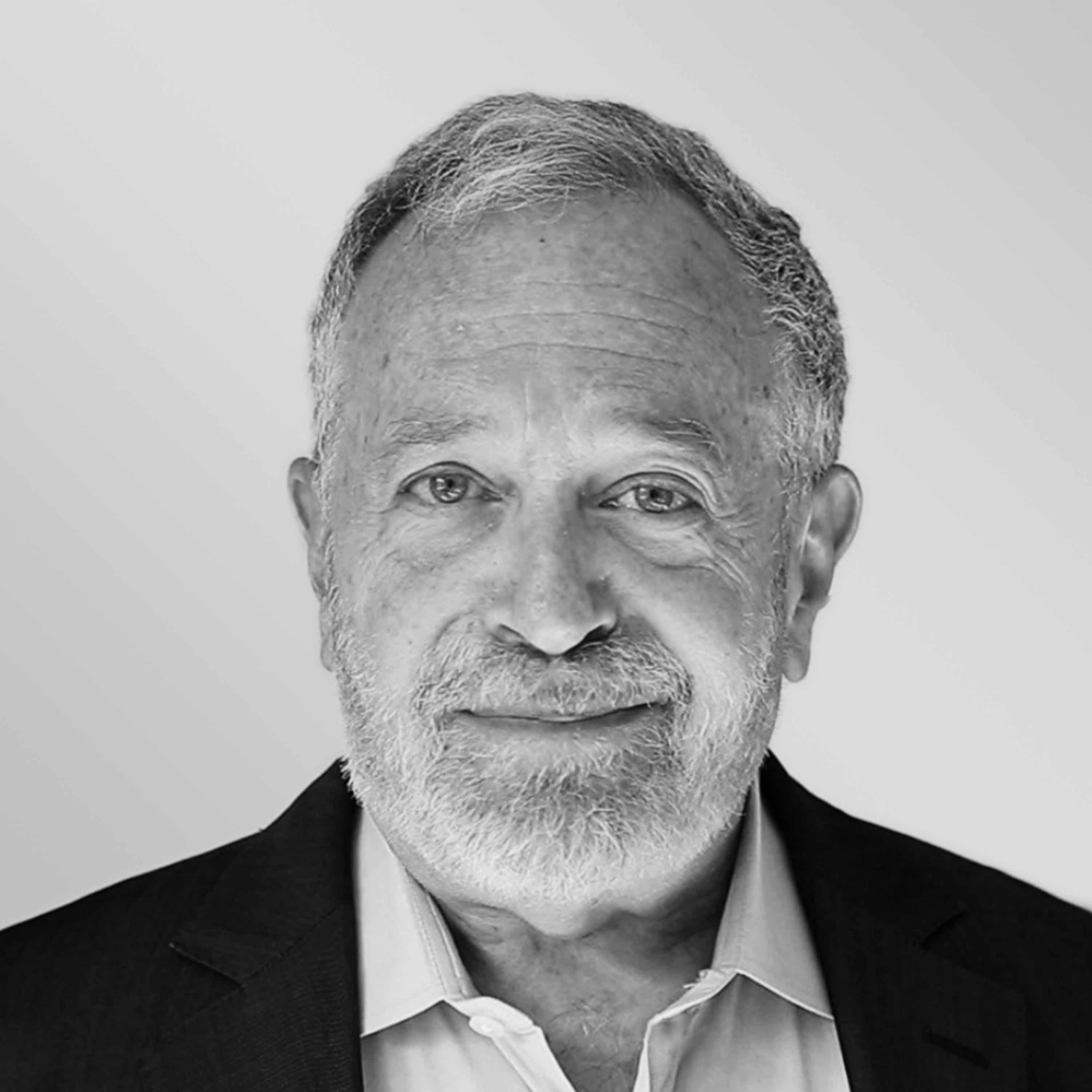
The Coffee Klatch with Robert Reich
Robert Reich
Former Labor Secretary Robert Reich exposes where power lies in our system — and how it's used and abused. robertreich.substack.com
Episodes
Mentioned books

Aug 26, 2022 • 13min
My father and Senator Joe McCarthy
When Robert Draper of the New York Times recently asked Rose Sperry, a state committeewoman for Arizona’s G.O.P., to name the first Republican leader she ever admired, she immediately mentioned former Wisconsin senator Joe McCarthy. “I grew up during the time that Joe McCarthy was doing his talking,” Sperry said. “I was young, but I was listening. If he were here today, I would say, ‘Get him in there as president!’”I also grew up during the time Joe McCarthy was “doing his talking,” and I was young and listening, too. But I would not want Joe McCarthy to be president. Neither, let me add, did my father. Ed Reich called himself a liberal Republican, in the days when such creatures still existed. He voted for Thomas Dewey in 1948 (cancelling my mother’s vote for Harry Truman), and then for Dwight Eisenhower in 1952 and 1956 (cancelling my mother’s votes for Adlai Stevenson), and he thought highly of New York State’s Republican governor, Nelson Rockefeller, and its Republican senator, Jacob Javits — neither of whom would last a second in today’s G.O.P.But Ed Reich could not abide bullies and he detested Joe McCarthy. My father thought that anyone who had to bully someone else to feel good about himself was despicable. Bullying led to antisemitism and antisemitism had led to the holocaust. In 1947, Ed Reich moved us from Scranton to a little village in the country some sixty miles north of New York City, called South Salem, so as to be within equal driving distance of his two women’s clothing stores, in Norwalk, Connecticut, and Peekskill, New York. Soon after we arrived, a delegation of older men from the village came by to inform us that South Salem was a “Christian community” and we were not welcome there. That was the day my father decided we’d stay put in South Salem. “I’ll show those b******s,” he said. Senator Joseph McCarthy had a special place in Ed Reich’s pantheon of evil bullies. McCarthy didn’t just attack those he claimed were members of the Communist Party. He did it with malice. McCarthy’s crusade against “subversives” extended into the mainstream of America and American politics, as he ridiculed the “pitiful squealing” of “those egg-sucking phony liberals” who “would hold sacrosanct those Communists and queers.” Every time McCarthy’s image came across the six-inch screen on the Magnavox television in our living room, my father would shout “son of a B***H” so loudly it made me shudder. In Many are the Crimes: McCarthyism in America, historian Ellen Wolf Schrecker describes a movement that “punished thousands of law-abiding Americans and scared millions more into silence, destroying much of the left and seriously narrowing the political spectrum.” McCarthyism was the byproduct of the Republican Party’s postwar effort to eradicate the New Deal by linking it to communism. The G.O.P. portrayed the midterm election of 1946 as a “battle between Republicanism and communism.” The Republican National Committee chairman claimed that the federal bureaucracy was filled with “pink puppets.” According to John Nichols, in The Fight for the Soul of the Democratic Party, Southern segregationist Democrats joined the red-baiting rhetoric. Mississippi senator Theodore Bilbo, a Klansman who had filibustered to block anti-lynching legislation, described multiracial labor unions’ advocacy for civil rights as the work of “northern communists.” Representative John Elliott Rankin, a fiercely racist and antisemitic Mississippi Democrat who helped establish the House Un-American Activities Committee as a standing congressional committee, called the CIO’s Southern organizing campaign “a communist plot” and charged that it would lead to more Black voting rights. “We’re asleep at the switch,” he warned. “They’re taking over this country; we’ve got to stop them if we want this country.”The backlash was successful. In the 1946 midterms, Democrats lost control of both the Senate and the House. Wisconsin ended its era of progressive Republican La Follettes and sent Joe McCarthy to the Senate. California replaced New Dealer Jerry Voorhis with a young Republican lawyer who had already figured out how to use red-baiting as a political tool. His name was Richard Nixon. In December 1946, at the founding convention of the Progressive Citizens of America, FDR’s former vice president, Henry Wallace, saw the red scare for what it was — a tool of the most powerful economic forces in America. “We shall … repel all the attacks of the plutocrats and monopolists who will brand us as Reds,” he said. If it is traitorous to believe in peace — we are traitors. If it is communistic to believe in prosperity for all — we are communists. If it is unAmerican to believe in freedom from monopolistic dictation — we are unAmerican. We are more American than the neo-Fascists who attack us. The more we are attacked the more likely we are to succeed, provided we are ready and willing to counterattack.But there was no counterattack. The red scare continued to gain ground, encouraged by J. Edgar Hoover, the first director of the F.B.I. Soon after the release of Frank Capra’s loving ode to America, “It’s a Wonderful Life” in January 1947, the F.B.I. (using a report by an ad-hoc group that included Fountainhead writer and future Trump pin-up girl Ayn Rand) warned that the movie represented “rather obvious attempts to discredit bankers by casting Lionel Barrymore as a ‘scrooge-type’ so that he would be the most hated man in the picture.” The movie “deliberately maligned the upper class, attempting to show the people who had money were mean and despicable characters. This … is a common trick used by Communists.” The F.B.I. report compared “It’s a Wonderful Life” to a Soviet film, and alleged that Frank Capra was “associated with left-wing groups” and that screenwriters Frances Goodrich and Albert Hackett were “very close to known Communists.”President Truman succumbed to the mounting anti-communist hysteria. On March 21, 1947 he signed Executive Order 9835, the Loyalty Order that ushered in loyalty oaths and background checks, and created the Attorney General’s List of Subversive Organizations. Yet the progressive left remained silent. As the 1950 election approached, a Times headline announced that the “Left is Silent in Campaign.” Even the American Civil Liberties Union, whose roots lay in the first Red Scare of the World War I era, was reluctant to take the lead in opposing the threat to civil liberties in the second Red Scare of the 1950s. California Representative Helen Gahagan Douglas, dubbed the “Pink Lady” for her supposed communist sympathies, tried for the Senate in 1950. She survived a bitter primary battle only to be beaten in November by red-bater Richard Nixon. On June 9, 1954, I sat at my father’s side on our living room couch, watching the Army-McCarthy hearings. McCarthy had accused the U.S. Army of having poor security at a top-secret facility. Joseph Welch, a private attorney, was representing the Army. McCarthy charged that one of Welch’s young staff attorneys was a communist. “Son of a B***H,” my father shouted.As McCarthy continued his attack on Welch’s staff attorney, Welch broke in, “Until this moment, Senator, I think I never really gauged your cruelty or your recklessness.”I was spellbound. McCarthy didn’t stop. “Son of a B***H,” Ed Reich shouted ten times more loudly. The earth shook. At this point, Welch demanded that McCarthy listen to him. “Let us not assassinate this lad further, Senator,” he said. “You have done enough. Have you no sense of decency?” Almost overnight, as the Senate Historical Office recounts, “McCarthy’s immense national popularity evaporated. Censured by his Senate colleagues, ostracized by his party and ignored by the press, McCarthy died three years later, 48 years old and a broken man.”***During the Army-McCarthy hearings, McCarthy’s chief counsel was Roy Cohn. Cohn had gained prominence as the Department of Justice attorney who successfully prosecuted Julius and Ethel Rosenberg for espionage, leading to their execution in 1953. The Rosenberg trial had brought the 24-year-old Cohn to the attention of J. Edgar Hoover, who convinced McCarthy to hire Cohn as chief counsel for McCarthy’s Senate Permanent Subcommittee on Investigations, where Cohn became known for his aggressive questioning of suspected communists. My father thought Roy Cohn almost as despicable as Joe McCarthy. After McCarthy’s downfall, Cohn proved useful to a young New York real estate developer named Donald Trump who was then undertaking several large construction projects in Manhattan and needed a fixer and mentor. Cohn filled both roles. Fred Trump had got his son’s career started by bringing him into the family business of middle-class rentals in Brooklyn and Queens. Cohn established Donald in Manhattan, introducing him to New York’s social and political elite, and defending him against a growing list of enemies.In 1973, the Justice Department accused Trump of violating the Fair Housing Act of 1968 in thirty-nine of his properties, alleging that Trump quoted different rental terms and conditions to prospective tenants based on their race, and made false “no vacancy” statements to Black people seeking to rent. Representing Trump, Roy Cohn filed a countersuit against the government for $100 million, asserting that the charges were “irresponsible and baseless.” Although the countersuit was unsuccessful, Trump settled the charges out of court in 1975, asserting he was satisfied that the agreement did not “compel the Trump organization to accept persons on welfare as tenants unless as qualified as any other tenant.” Three years later, when the Trump Organization was again in court, this time for violating terms of the 1975 settlement, Cohn called the charges “nothing more than a rehash of complaints by a couple of planted malcontents.” Trump denied the charges. Cohn was also involved in the construction of Trump Tower, helping secure concrete during a city-wide Teamster strike through a union leader linked to a mob boss. At about this time, Cohn introduced Trump to another of Cohn’s clients, Rupert Murdoch. During Ronald Reagan’s 1980 presidential campaign, Cohn helped a young Roger Stone arrange for John Anderson to be nominated by New York’s Liberal Party, thereby splitting the state’s opposition to Reagan and allowing Reagan to carry the state with 46 percent of the vote. Stone later recounted that Cohn gave him a suitcase to be dropped off at the office of a lawyer influential in Liberal Party circles. Speaking after the statute of limitations for bribery had expired, Stone said, “I paid his law firm. Legal fees. I don't know what he did for the money, but whatever it was, the Liberal Party reached its right conclusion out of a matter of principle.”In 1986, Cohn was disbarred by the New York State Bar for unethical conduct after attempting to defraud a dying client by forcing the client to sign a will amendment leaving Cohn his fortune. (Cohn died five weeks later from AIDS-related complications.)In his first and best-known book, “The Art of the Deal,” Trump distinguished between integrity and loyalty — and made clear he preferred loyalty. Trump compared Roy Cohn to “all the hundreds of ‘respectable’ guys who make careers out of boasting about their uncompromising integrity but have absolutely no loyalty ... What I liked most about Roy Cohn was that he would do just the opposite.” This is a public episode. If you'd like to discuss this with other subscribers or get access to bonus episodes, visit robertreich.substack.com/subscribe

Aug 25, 2022 • 5min
The Trump Republican violence machine
Among the many ironies and hypocrisies leading up to the 2022 midterms, one deserving special mention is Trump’s and the GOP’s unremitting claim that America has become more violent and dangerous under Biden and the Democrats.“Our country is now a cesspool of crime,” Trump said in a recent speech to the America First Policy Institute. “We have blood, death, and suffering on a scale once unthinkable because of the Democrat Party’s effort to destroy and dismantle law enforcement all throughout America.”The truth is that although Americans experience far more gun violence than the inhabitants of other advanced nations, that’s largely because of widespread gun ownership — championed, encouraged, and defended by Republican lawmakers. As to recent violence, shootings are down 4 percent this year compared to the same time last year. In big cities, murders are down 3 percent. If the decrease in murders continues for the rest of 2022, it will be the first year since 2018 in which they fell in the U.S.The larger threat of violence is coming from Trump Republicans whose incendiary statements are fueling violence and threats of violence across America. In the year and a half since a pro-Trump mob stormed the U.S. Capitol, such threats and attacks have escalated.Yesterday, a federal jury found Barry Croft and Adam Fox guilty in a plot to kidnap Michigan governor Gretchen Whitmer at her summer home and to blow up a bridge that would stop rescuers from reaching her. They hoped to spark a second American Revolution. The Trump Republican violence machine is affecting — and sometimes intimidating — election workers, flight attendants, school board officials, librarians, members of the Biden administration, and members of Congress.In Houston, a former Marine stepped down as the grand marshal of a July 4 parade after a deluge of threats that focused on her support of transgender rights. A few weeks later, the gay mayor of an Oklahoma city quit his job after what he described as a series of “threats and attacks bordering on violence.” His tires were slashed, he was harassed by residents at a council meeting, and followed near his home. “I was afraid what would they do next if I don’t step down.”As I mentioned yesterday, Dr. Anthony Fauci and his family have received credible death threats and required a security detail. In December, authorities in Iowa arrested a California man with an assault rifle and ammunition, and a “hit list” that named Dr. Fauci and Joe Biden, among others. Congresswoman Liz Cheney has also received credible death threats, and also has a security detail. Threats have been issued against the federal judge who authorized the warrant to search for classified material at Mar-a-Lago, and against his family. (In that search, F.B.I. agents carted away boxes of highly sensitive documents.)During that search — from which F.B.I. agents carted away boxes of highly sensitive material — Trump described his home as “under siege.” In the wake of the search, Trump’s social media platform, Truth Social, erupted in calls for violence. Twitter saw a tenfold increase in posts mentioning “civil war” (according to Dataminr, a tool that analyzes Twitter data). There was also a spike in social media users calling for “violence toward law enforcement,” as Representatives Carolyn B. Maloney, chairwoman of the House Oversight Committee, and Stephen Lynch, chairman of its National Security Subcommittee, noted in a letter last week to eight social media companies.Republican lawmakers have fueled the fire. Representative Kevin McCarthy, the Republican leader, has accused the Justice Department of being “weaponized” against Trump. Senator Rick Scott, Republican of Florida, and Representative Lauren Boebert, Republican of Colorado, have drawn comparisons between the F.B.I. and the Nazi secret police. Joe Kent, a Trump-endorsed House candidate in Washington State, charged (on a podcast run by Stephen Bannon) that “we’re at war.” Kari Lake, the Republican nominee for governor of Arizona, declared: “These tyrants will stop at nothing to silence the patriots who are working hard to save America,” adding that, “if we accept it, America is dead.”The incendiary talk has led to violence. On August 11, a Trump supporter identified as Ricky W. Shiffer mounted an armed attack on an F.B.I. office in Ohio, and was killed. According to a subsequent review of his social media posts, Shiffer was incensed about the search at Mar-a-Lago and wanted revenge.Robert Pape, a professor at the University of Chicago who studies political violence, has conducted half a dozen nationwide polls since the Jan. 6 attack on the Capitol and repeatedly found that between 15 million and 20 million American adults believe that violence would be justified to return Trump to office.Trump’s claim that America has become more violent and dangerous over the last year and a half is true. But this is not because of Biden and the Democrats. It is largely because of Trump — and the Republican violence machine he has created. This is a public episode. If you'd like to discuss this with other subscribers or get access to bonus episodes, visit robertreich.substack.com/subscribe

Aug 23, 2022 • 5min
Why CNN cancelled Brian Stelter
For several years, Brian Stelter’s Sunday CNN show, “Reliable Sources,” has been a reliable source of intelligent criticism of Fox News, rightwing media in general, Trumpism, and the increasingly authoritarian lurch of the Republican Party.Last week, CNN abruptly canceled the show and effectively fired Stelter and his staff. Why? The show had good ratings and was commercially successful. (More people watched it than MSNBC.)The show was cancelled by Chris Licht, CNN’s new chairman and CEO, who has said he wants less criticism of Trump and the Republican right. Licht has told staff they should stop referring to Trump’s “Big Lie” because the phrase sounds like a Democratic Party talking point. Licht also wants more conservative guests.What’s motivating Licht? Follow the money. CNN’s new corporate overseer is Warner Bros. Discovery, Inc., which now owns what used to be Time Warner, including CNN. The CEO of Warner Bros. Discovery is David Zaslav. Zaslav has been prodding Licht to reposition CNN to have more “straight news reporting” and fewer “opinionated” views from hosts. Zaslav says he wants CNN to be for “everybody … Republicans, Democrats.”But CNN is never going to be a network preferred by Republicans. Fox News has that sewn up. As Republicans move further rightward into the netherworld of authoritarianism, there’s even less possibility that CNN’s news coverage will be able to satisfy them, nor should CNN even try. If we’ve learned anything from Trump and his lapdogs at Fox News, it’s that facts, data, and logic are no longer relevant to the Republican base.Even “straight news reporting” depends on what stories are featured, which facts are highlighted, and the context surrounding the news. How is it possible to report on Trump or Rudy Giuliani or any number of today’s Republican leaders and not speak of the Big Lie, or say they’ve broken norms if not laws?The anti-democracy movement in America (as elsewhere) is among the biggest issues confronting us today. Is reporting on it considered “straight news” or “opinion?” Wouldn’t failing to report on it in a way that sounded alarms be a gross dereliction of duty?So what’s motivating Zaslav? Keep following the money. The leading shareholder in Warner Bros. Discovery is John Malone, a multi-billionaire cable magnate. (Malone was a chief architect in the merger of Discovery and CNN.) Malone describes himself as a “libertarian” although he travels in rightwing Republican circles. In 2005, he held 32 percent of the shares of Rupert Murdoch’s News Corporation. He is on the board of directors of the Cato Institute. In 2017, he donated $250,000 to Trump’s inauguration.Malone has said he wants CNN to be more like Fox News because, in his view, Fox News has “actual journalism.” Malone also wants the ‘news’ portion of CNN to be “more centrist.” Early last spring, Brian Stelter wrote in his newsletter that Malone’s comments “stoked fears that Discovery might stifle CNN journalists and steer away from calling out indecency and injustice.” (A source told Deadline’s Dominic Patten and Ted Johnson that even if Malone didn’t order Stelter’s ouster, “it sure represents his thinking.”)When you follow the money behind deeply irresponsible decisions at the power centers of America today, the road often leads to rightwing billionaires. On Sunday, his last show, Stelter said:It’s not partisan to stand up for decency and democracy and dialogue. It’s not partisan to stand up to demagogues. It’s required. It’s patriotic. We must make sure we don’t give platforms to those who are lying to our faces.Precisely. Sadly, there are still many in America — and not just billionaires like Malone — who believe that holding Trump accountable for what he has done (and continues to do) to this country is a form of partisanship, and that such partisanship has no place in so-called “balanced journalism.” This view is itself dangerous. This is a public episode. If you'd like to discuss this with other subscribers or get access to bonus episodes, visit robertreich.substack.com/subscribe

Aug 22, 2022 • 7min
The 6 secrets to becoming a fabulously rich con artist
As the saying goes, in America everyone is entitled to a second chance — especially con artists. Herewith the 6 rules for getting a second (or third or fourth) chance to sell a giant con:1. Market a mundane idea as “disruptive.” Adam Neumann, the founder of WeWork, hyped his office-sharing startup as the first “physical social network.” In reality it was nothing more than what you’d find in any coffee shop with customers at their laptops, but Neumann made it sound so revolutionary — “disruptive,” to use the high falutin con word — that JPMorgan, SoftBank, and other investors sank hundreds of millions into his company. At its height it was valued at some $47 billion.2. Pocket the money. Neumann used some of his investors’ money to buy buildings that he then leased back to WeWork. He also borrowed against his own stake in the company. And he was going to charge WeWork almost $6 million to use his trademark of the word “We” after the company rebranded itself the “We Company.” He lived like a mogul, with his own jet and penthouse apartments. WeWork never made a nickel of profit. The prospectus for its initial public offering was widely ridiculed as incoherent. After Neumann was forced to disclose his personal conflicts of interest, the IPO fell apart and the company’s estimated value plummeted from $47 billion to about $4 billion (after being rescued by SoftBank).3. Make sure your investors have their own investors, so they’ll want to salvage whatever they can and won’t sue you. Neumann wasn’t convicted of criminal fraud. His early investors didn’t want to sue him because they wanted to salvage whatever of their investment they could, and didn’t want to admit to their own investors that they’d been conned. In fact, they paid Neumann over $1 billion to exit the board and give up his voting rights. Neumann collected another $185 million in consulting fees from WeWork. Meanwhile, other WeWork employees were left holding near-worthless stock options and thousands were laid off.4. Do the same thing again. Neumann has just launched a new company called Flow, which he says will “transform” the residential rental real estate market with reliable services and “community” features (he used the term “community” a lot with WeWork, too). What about Neumann’s previous con? It’s been forgotten. “Flow” has already attracted $350 million of financing from the venture capital firm Andreesen Horowitz — the largest check it’s ever written in a round of funding a company. Andreesen values Flow at more than $1 billion before Neumann has even opened its doors. Last week, Marc Andreesen explained in a blog post on his firm’s website that the rental real estate market is “ripe for disruption,” especially now that so many people are working from home and “will experience much less, if any, of the in-office social bonding and friendships that local workers enjoy.” If this sounds a lot like the language Neumann employed to hype WeWork, that’s no accident. It worked once, so why not again? As Andreesen wrote, “we love seeing repeat-founders build on past successes by growing from lessons learned,” and that for Neumann “the successes and lessons are plenty.”5. Never admit fault or defeat. Adam Neumann’s con is small change compared to Donald Trump’s — who has also managed to fail upward but far more spectacularly. The master con artist has defrauded customers, renters, students, hoteliers, contractors, and, finally, American voters. He never admits defeat. Trump has leveraged every fraud into an even bigger fraud. As he infamously claimed, he could shoot someone in the center of Fifth Avenue and get away with it. Trump “disrupted” American democracy with his Big Lie and attempted coup. Now, it seems, he’s about to seek a second chance at the presidency.6. Don’t be poor or Black or brown. Not everyone in America gets a second chance. This is especially true of people who are poor or of color, particularly those convicted of crimes without jury trials through plea-bargains with prosecutors (who threaten worse penalties if they won’t plead guilty). An estimated 5.2 million Americans couldn’t vote in the last presidential election because of felony “convictions,” including one in every 13 Black adults, according to the Sentencing Project. Last Thursday, Florida Governor Ron DeSantis touted the arrests of 20 people on charges of “voter fraud,” who had voted in 2020 but had been convicted of crimes for which Florida made them ineligible to vote. (Many said they would not have voted had they known they were ineligible.)Many millions more can’t get jobs because employers don’t want to consider people who have broken the law. (Unlike Marc Andreesen, most employers don’t “love seeing people grow from lessons learned.”) Although some states and localities now prohibit employers and landlords from considering conviction or arrest records in their initial screening of applicants, it’s still the case that one big mistake on the part of someone who’s poor or of color can end their careers and perhaps their freedom.But if you’re not poor or a person of color, you can get away with the giant cons Adam Neumann and Donald Trump have gotten away with. Just follow the steps enumerated above. Hell, you might even become President. This is a public episode. If you'd like to discuss this with other subscribers or get access to bonus episodes, visit robertreich.substack.com/subscribe

Aug 20, 2022 • 12min
Do people really understand the fight we're in?
Hello friends,On Saturdays I have a cup of coffee with my colleague Heather Lofthouse and we invite you to join us and chime in with comments. She asks questions that many of you also want to discuss. Heather is the Executive Director of Inequality Media Civic Action, and my former student. We cover both the highlights and lowlights, and aim to provide a larger context for the news. I’m somewhat on vacation this week but we did our best to record at a distance, cups of joe in hand. (Please forgive the sound quality.)In today’s coffee klatch we cover: * The Inflation Reduction Act victory lap. Will the wind at Biden and the Democrats’ back last? * The anti-democracy GOP. It’s no longer right versus left, it’s democracy versus authoritarianism. What’s the difference between authoritarianism and fascism? What’s the difference between a republic and a democracy? * Nearly half of teenagers say they use the internet “almost constantly.” How are young people consuming information, and what does it mean for our democracy?* How to remain upbeat. It can be easy to despair, but I find hope in the vibrant pro-democracy forces (many led by young people) that are gaining ground in this country.And more Coffee Klatch theme songs: Over 30 of you talented, generous Substack listeners have composed original tunes for us to play for these weekly recordings. What a treat, including during these trying times. Today we feature two more of the melodious results from this “contest.” Thank you, Dwight and Barry.Here is today’s theme song #1 by Dwight Stone:Here is today’s song #2 by Barry Hillman:And here’s an actual shot of us recording:Looking at the poll results this morning, I’m delighted how optimistic so many of you are about the fight we’re in — especially the midterms, some 90 days from now. I’m also feeling better about the possibility of Dems retaining control over the Senate (I’ve even let myself dream that Dems will have enough of a margin that they won’t have to be dependent on Manchin and Sinema.) But I don’t feel nearly as optimistic as most of you do about the House. Redistricting, retirements, voter suppression, and difficulties in getting out the vote (especially of young people) worry me. And then, of course, there are all the worries about state races, and the Trump Republican efforts to take over election machinery. But that’s for another day. Enjoy your Saturday! This is a public episode. If you'd like to discuss this with other subscribers or get access to bonus episodes, visit robertreich.substack.com/subscribe

Aug 19, 2022 • 6min
The Beginning
I was born on June 24 in 1946 to Mildred Freshman Reich and Edwin Saul Reich at the Mercy Hospital in Scranton, Pennsylvania.That was ten days after Donald John Trump was born to Fred Trump and Mary Anne MacLeod Trump at the Jamaica hospital in the borough of Queens, New York.It was 12 days before George Walker Bush was born to Barbara Pierce Bush and George Herbert Walker Bush at Grace-New Haven Hospital in New Haven, Connecticut.And 56 days before William Jefferson Blythe III, whose name was changed to Bill Clinton, was born to Virginia Cassidy and William Jefferson Blythe, Jr., at the Julia Chester Hospital in Hope, Arkansas.I did not become President. But my grandmother, Minnie Reich — with whom I spent a great deal of time as an infant and toddler when Mildred was helping Ed at the store — told me repeatedly that I would be the first Jewish president. (In hindsight, I think she was seeking to reassure herself that despite my being a runt — a full head shorter than others my age — I would one day make her proud.) All of us — little Donald, George W., Billy, and I — were conceived in the weeks following America’s victory over Hitler’s Germany and Hirohito’s Japan, the previous September.Ed Reich had been a medic during the war. Fred Trump had built barracks for Navy personnel. George H.W. had been a Navy pilot. Bill Blythe had repaired ships and tanks. At the end of the war, Ed, Fred, George, and Bill returned to Mildred, Mary Anne, Barbara, and Virginia, respectively — to stoke what would be known as the post-war baby boom. (More babies were born in 1946 than ever before — 3.4 million of us little darlings, 20 percent more than the year before.)We were born into an America that felt proud of its war victories but was also exhausted by war. Surprising almost everyone, the nation emerged economically stronger than it had been before the war. During the war, almost everyone had been put to work and almost every factory run at full capacity — thus ending the Great Depression more effectively than any of the many programs FDR had tried. We were born to men and women whose futures were suddenly filled with more possibility than they had been for almost a decade and a half — for most of their young lives — but who were also shaken by the Depression and war, and by the brutality they had witnessed or heard about or would soon learn of. They had survived an economic cataclysm. They had fought fascism. They saw the results of genocide.Because of the challenges they had faced together, this generation of young Americans felt more connected to other Americans than any generation before them. Black Americans and women were still second-class citizens, to be sure. But the nation emerged from World War II far more certain of the virtues of American democracy and more confident about the American system than it would be seventy-six years hence, and more determined to overcome its faults. The two world wars and Depression decade between had also obliterated the entrenched fortunes of the Gilded Age — thereby leveling the playing field of the American economy and opening the way to the largest middle class the world had ever seen. When I was a toddler, Ed had saved just enough money to rent a store on Lakawanna Avenue in Scranton and buy the only things he had learned how to sell during a job before the war — women’s dresses and blouses. He called it the Beverly Shop, named after his sister. When Donald was a toddler, Fred was a real-estate developer in the Bronx who had acquired a mortgage-servicing company with access to the titles of many properties nearing foreclosure, which he bought cheaply and sold at a profit.When little George was a toddler, George H.W. was in the oil business in Texas. Bill’s father had been a traveling salesman who died in an automobile accident three months before Bill was born. Four years after Bill’s birth, Virginia married Roger Clinton, co-owner of an automobile dealership.So what did Donald, George, Bill, I, and millions of other boomers do for the next 76 years? Did we make America better, more inclusive, more tolerant? Did we strengthen American democracy? What’s the legacy we are leaving to future generations? As you might imagine, I have lots to say about this. More to come. This is a public episode. If you'd like to discuss this with other subscribers or get access to bonus episodes, visit robertreich.substack.com/subscribe

Aug 18, 2022 • 8min
How Biden did it
The Clean Air Act of 1970 authorized the government to regulate air pollution. The Inflation Reduction Act, which Joe Biden just signed into law, allocates more than $300 billion to energy and climate reform, including $30 billion in subsidies for manufacturers of solar panels and components, wind turbines, inverters, and batteries for electric vehicles and the power grid. Notice the difference?The Inflation Reduction Act is a large and important step toward slowing or reversing climate change. It also illustrates the nation’s shift away from regulating businesses to subsidizing businesses. From 1932 through the late 1970s, the government mainly regulated businesses. This was the era of the alphabet soup of regulatory agencies begun under Franklin D. Roosevelt (the SEC, ICC, FCC, CAB, and so on), culminating in the EPA of 1970.The government still regulates businesses, of course, but the biggest thing the federal government now does with businesses is subsidize them. Consider Joe Biden’s biggest first-term accomplishments:— the CHIPS and Science Act (with $52 billion of subsidies to semiconductor firms, plus another $24 billion in manufacturing tax credits); — the Infrastructure Investment and Jobs Act ($550 billion of new spending on railroads, broadband, and the electric grid, among other things);— and now the Inflation Reduction Act (including, as I noted, $30 billion specifically for solar and wind manufacturers). This shift from regulation to subsidy isn’t just a central feature of the Biden administration. It has characterized every recent administration. Trump’s “Operation Warp Speed” delivered $10 billion of subsidies to Covid vaccine manufacturers. Obama’s Affordable Care Act subsidized the health care and pharmaceutical industries (indirectly, through massive subsidies to the purchasers of health care and pharmaceuticals). And Obama spent some $489 billion bailing out the financial industry (and, notably, never fully restored financial regulations that previous administrations had repealed), as well as GM and Chrysler. Before the 1980s, America would have done all this differently. Instead of subsidizing broadband, semiconductors, energy companies, vaccine manufacturers, health care and pharmaceutical businesses, and the financial sector, we would have regulated them. Corporations would have had to produce public goods (or avoid the public “bads” like, say, pollution or a financial meltdown) as conditions for staying in business. If this regulatory alternative seems far-fetched today, that’s because of how far we’ve come from the regulatory state of the 1930s to the 1970s, to the subsidy state beginning in the 1980s. Why this big shift? Because of the change in the balance of power between large corporations and government. Today it’s politically difficult, if not impossible, for government to demand that corporations (and their shareholders) bear the costs of public goods. For one thing, corporations now have more clout in Washington than any other political player. Spending by corporations on lobbying increased from $1.44 billion in 1999 to $3.77 billion in 2021 and is on track to exceed $4 billion this year, according to OpenSecrets.org, a nonprofit that tracks lobbying spending. Industries that have spent the most on lobbying and campaign contributions are those that have been engaged in the most dramatic shift from regulation to subsidy: the healthcare industry (which, between 1998 and June 2022 has spent $10.8 billion); finance ($10.2 billion); communications and electronics ($8.4 billion); and energy ($6.9 billion). I saw this first-hand. Bill Clinton’s healthcare plan was blocked by the pharmaceutical and health care industries, which would have had to sacrifice some profits. By contrast, Obama got the Affordable Care Act by paying off these industries — all but guaranteeing them larger profits from a massive inflow of newly subsidized customers. A second thing: This tidal wave of corporate money has occurred at the same time large American corporations have globalized, to the point where many are able to play off the United States against other nations — demanding government bribes in return for creating jobs and doing their cutting-edge research in America. The new CHIPS Act is a flagrant example of how powerful and highly-profitable semiconductor manufacturers, such as American-based Intel, can extract billions of dollars in a global shakedown for where they’ll make semiconductor chips.Many of the subsidies now being handed out to corporate America come in the form of tax credits. (Note that in economic terms, a dollar of tax credit is exactly the same as a dollar of government spending.) These credits — plus the rising political power of corporations and their ability to play off countries against each other — explain the dramatic decline in corporate income tax revenue as a share of GDP over the last thirty years. (Not even the 15 percent minimum corporate tax built into the Inflation Reduction Act will substantially change this trajectory.)All this is also reflected in the dramatic rise in stock prices relative to the median family’s income — a big reason why income and wealth inequality have soared. [Data from Federal Reserve Bank of St. Louis. Historical S&P 500 and NASDAQ values from Yahoo Finance.]In the 1980s, yours truly was involved in a national debate over what was called “industrial policy.” The question, put simply, was whether the government should subsidize certain industries that generate large social benefits in the form of new technologies. I argued that the government was already engaged in a hidden industrial policy, disguised, for example, as grants to the aerospace and telecom industries by the Department of Defense and to the pharmaceutical industry by the National Institutes of Health — and that it would be far better to do industrial policy in the open, so that the public could assess what it was paying for and getting in return. Opponents, which included just about every Republican, were indignant at the very idea that government ought to be “intruding” on their blessed free market. How far we’ve come. Today’s subsidies are far larger, but industrial policy is no longer considered a dangerous idea. Republican Senator John Cornyn, in arguing recently for the CHIPS Act, was explicit in his support for it: “What we are doing is industrial policy unlike people of my free-market background have done before. It’s not that we are trying to become partners with companies. That would be the death knell of innovation. But they need some help.”Large corporations really don’t need the government’s help. The three decades-long shift in power to them has transformed industrial policy into a system for bribing them to do the sorts of things government once demanded of them as the price for being part of the American system. This is a public episode. If you'd like to discuss this with other subscribers or get access to bonus episodes, visit robertreich.substack.com/subscribe

Aug 15, 2022 • 9min
Liz Cheney and the Dick Morris paradox
Tomorrow, Wyoming Republicans will determine the fate of Representative Liz Cheney — whom Trump has targeted for revenge ever since she criticized him for inciting the January 6 attack on the Capitol. Six days after that attack — when no other Republican in the House or Senate was willing to rebuke Trump — she said on the House floor: “The President of the United States summoned this mob, assembled the mob, and lit the flame of this attack. Everything that followed was his doing. None of this would have happened without the President. The President could have immediately and forcefully intervened to stop the violence. He did not. There has never been a greater betrayal by a President of the United States of his office and his oath to the Constitution.”The very next day, on January 13, Cheney joined nine other House Republicans and 222 Democrats in voting to impeach Trump. So far, three of these ten principled Republican lawmakers have lost their primaries. Two have won them. The remaining four are retiring.As vice-chair of the House of Representatives’ January 6 committee investigating the causes of that attack, Cheney has ceaselessly and tirelessly helped lay out the case against Trump during eight public hearings held in June and July, with more to come. In response, Trump has done everything possible to end Cheney’s career. He made sure House Republicans revoked her status as the third-highest-ranking leader of the Republican caucus and that Wyoming Republicans censured her. Her life has been threatened and she has a security detail. But she has not wavered. Trump also selected Cheney’s opponent in the Republican primary, Harriet Hageman — who has rallied behind Trump and amplified his false claims that the 2020 election was stolen. Hageman has a commanding double-digit lead over Cheney. (According to some reports, Cheney has been reluctant even to venture into Wyoming to campaign, due to death threats.) If Liz Cheney loses her House seat, as seems likely, I hope she doesn’t disappear from public life. Although her views on countless substantive issues are the opposite of mine, I salute her. She has displayed more courage and integrity than almost any other member of her party — indeed, given the pressure she was under, perhaps more than any lawmaker now alive. The role Cheney has played raises larger issues about the meaning of representative democracy. Is it the responsibility of elected officials to represent the views of their constituents or their own principles? How far should they compromise their principles to get and retain power? These questions aren’t limited to Republicans. As the midterms draw closer, some Democratic operatives and pundits argue that Biden and the Democrats must move to the “center” in order to win. But where is the center? Halfway between democracy and fascism? Midpoint between social justice and oligarchy? And if Democrats have to go either of these places in order to win, what’s the point of winning? A personal note. In 2002, I ran for the Democratic nomination for governor of Massachusetts — the first time I’d run for elected office. (I don’t remember ever sleeping. I gained weight because I went to too many goddamn receptions and ate too many meatballs, pretzels, crackers and cheese. I talked so much I had to binge on throat lozenges. I smiled so much my cheeks ached. I got carsick from bouncing around Massachusetts in a cheap camper whose air conditioning continuously went out and whose springs were shot. I had to kiss the derrieres of too many rich liberals in order to finance the campaign.)During my campaign I was asked lots of questions. Should Cardinal Bernard Law resign over allegations that he allowed priests to molest children? I said yes. My campaign manager had a fit. “This is a Catholic state. You’re Jewish. You can’t just say that!” What would I do about Massachusetts’s yawning budget deficit? My answer: Raise capital gains taxes. My campaign manager was apoplectic. “People hate tax increases. The rich especially hate capital gains tax increases!” Did I support gay marriage? I said yes. My campaign manager went ballistic. “You might as well end the campaign right here. You’ve just lost!” On these and many other issues throughout the interminable nine months of that campaign, I gave my unfiltered views. As I repeatedly told my campaign manager, “If I don’t say what I believe, I won’t have any mandate from the public to act on those beliefs once I’m elected.” His retort: “You keep saying what you believe, you won’t get elected.”I was not elected. Five other candidates were seeking the nomination. I came in a respectable second. (This robbed me of the opportunity to take on the Republican nominee, Mitt Romney, who rocketed into the state with piles of money. Had I won the Democratic nomination, I would have whipped Romney’s assets.)So, was I wrong to stick to my principles? I call this the Dick Morris paradox. You’d be forgiven if you didn’t remember: In early 1996, Bill and Hillary Clinton summoned pollster Dick Morris to the White House to make sure Bill would be reelected. Morris’s advice to Clinton was to move to the center (“triangulate”) and say nothing in his re-election campaign except that the economy was terrific and would be even better in the second term. Whenever I ran into Morris slithering around the West Wing (to this day I think of him as a snake), I suggested he urge Bill to advance some policies for the second term’s agenda — a hike in the minimum wage, universal pre-K, paid family leave, Medicare for all. Morris’s invariable response: “If Clinton pushes any of these, there won’t be a second term.” I said there was no point in having a second term without an agenda to do something important in the second term. He argued back that there was no use having an agenda without a second term. I began calling this the Dick Morris paradox. If the only way to get or keep power is to say nothing to the public about what you believe or intend to achieve, or to mislead the public, what’s the point of having power? To Morris and most other political operatives, this question makes no sense. Politics is about getting and keeping power — nothing more or less. Principles have nothing to do with it. A candidate’s beliefs and values are beside the point. Operators like Dick Morris defend themselves by saying politicians have a responsibility to mirror whatever the public wants or believes.But what if the public has been lied to by a conman who tells them the last election was stolen? What if he has cynically exploited their bigotry, ignorance, or distrust?Under these circumstances, should candidates merely reflect what the conman has stirred up, as Harriet Hageman has done in Wyoming and other Republican candidates are doing with Trump’s Big Lie elsewhere? Or should candidates risk losing political power (or never gaining it) by standing on their own principles? The dilemma on the Democrats’ side is not nearly as dangerous for the nation, but it exists nonetheless. Some of today’s Democratic candidates are moving to the so-called “center” because they’ve convinced themselves they must do so in order to gain or hold power, which is better than not having any. But is gaining or holding power more important than telling the public what one truly believes, and speaking truth? This is a public episode. If you'd like to discuss this with other subscribers or get access to bonus episodes, visit robertreich.substack.com/subscribe

Aug 13, 2022 • 14min
Will we get lost in the fog of Trump?
On Saturdays I have a cup of coffee with my colleague Heather Lofthouse, and we press record on my laptop so you can listen and chime in with any comments. Heather is the Executive Director of Inequality Media Civic Action, and my former student. She asks me about the economic and political happenings of the past week (this past one was a doozy). We cover both the highlights and lowlights, and aim to provide a larger context around what we’re all being presented with (or not) in the news. We often address our generational divide. And we always work to avoid being too cynical.In today’s coffee klatch we cover: * The FBI search of Mar-a-Lago.* Democrats’ successes. How much is a subsidy of business?* What does the GOP stand for other than Trump?* Back to school already? * And more Coffee Klatch theme songs: Over 30 of you talented, generous Substack listeners have sent us original tunes for us to play as an intro (and outro!) for these weekly recordings. What a treat, including during these trying times. Today we feature a few more of the results from this “contest.” Special thanks to Syliva B., Anahata I., Corey K. & Deirdre B., and Peter L. Grab a cup and pull up a chair. Thanks for listening. This is a public episode. If you'd like to discuss this with other subscribers or get access to bonus episodes, visit robertreich.substack.com/subscribe

Aug 12, 2022 • 5min
Follow the money! Small donors, big donors, and the midterms
Notably, the Inflation Reduction Act didn’t attract a single Republican vote in the Senate. (And at least one Democratic senator — Kyrsten Sinema — made sure its tax provisions wouldn’t raise tax rates on rich individuals.) Why? We talk a lot about money in politics, but there’s a huge and growing difference between the big money (campaign donations of $1 million or more), most of it pouring into Republican coffers and small money (individual donations of $200 or less), mainly pouring into the Democrats. (Corporations have been giving to both sides, in roughly equal measure.)The significance of this difference is growing. With the midterms elections looming, the gap between the two sources is larger than ever. Democrats are far outpacing Republicans in small-dollar donations. The most recent reports (through June 30) show, for example, that: — In Georgia, incumbent Senator Raphael Warnock has raised $14 million in small donations; Republican senate candidate Herschel Walker has raised only about $8 million in small donations. — In Florida, Val Demings, the Democratic challenger to Senator Marco Rubio, has raised more than $24 million in small donations; Rubio himself has reported $12.7 million in small donations. — In Arizona, Democratic Senator Mark Kelly's re-election campaign has raised nearly $23 million from small-dollar donors. His GOP challenger, Blake Masters, less than $2 million from small donors. But the GOP’s big money donors are making up the difference.— Billionaire Peter Thiel has so far poured over $25 million into the races of Blake Masters in Arizona and J.D. Vance in Ohio. — Kenneth C. Griffin, the CEO of giant hedge fund Citadel, is bankrolling Republican super PACs to the tune of nearly $50 million. — Stephen A. Schwarzman, chairman of giant hedge fund Blackstone, has so far contributed a combined $20 million to the main House and Senate Republican super PAC. — Banking heir Timothy Mellon (descendant of the robber baron Andrew Mellon) has so far contributed $10 million to the main House GOP super PAC.— Ditto billionaire Patrick R. Ryan. — Miriam Adelson (whose husband, Sheldon Adelson, was one of the GOP’s most generous contributors until his death last year) just made her first $5 million donation. The list goes on. — And, of course, Rupert Murdoch, Charles Koch, et al. Small donors are ramping up their giving to Democrats because they’re aware of how nuts the Republican Party has become on issues ranging from abortion to democracy. Trump has pulled into the GOP white supremacists, Christian nationalists, QAnon paranoids, xenophobic cultists, antisemites, misogynists, and rightwing militias. Plus a StarWars cantina of grifters, crackpots, and thugs who — as the January 6 attack showed — pose a clear and present danger to American democracy. Big donors are ramping up their giving to Republicans because they now have so much money that any Democratic-led tax increase on them (or Republican-led tax cut for them) will invariably have large financial consequences. The Inflation Reduction Act reveals just how much damage Democrats could do to the bottom lines of the rich.Many big donor billionaires (e.g., Peter Thiel) are trying to justify their donations as “libertarian,” but they know damn well the current Republican Party has nothing to do with personal freedom. It’s busy intruding on reproductive rights, pushing book bans in libraries and classrooms, barring young transgender people from playing on certain sports teams or using certain bathrooms, refusing to allow teachers to talk about aspects of American history they don’t want young people to know, and actively suppressing votes. Liberty my foot. No, the billionaires aren’t libertarian. They want only one thing: more tax cuts.The extraordinary growth of small donors to Democrats is all about justifiable fears of what Republicans will do with more power. The growth in big dollars to Republicans is all about greed. What do you think? This is a public episode. If you'd like to discuss this with other subscribers or get access to bonus episodes, visit robertreich.substack.com/subscribe

