93. Guidelines Series: GINA Guidelines – Asthma Diagnosis and Assessment
whatshot 46 snips
Feb 4, 2025
Explore key insights from the GINA guidelines on asthma diagnosis and management. The hosts break down complex information, using clinical cases to emphasize the importance of identifying symptoms and environmental triggers. Learn about essential diagnostic tools and how continuous assessment can tailor treatments effectively. They also introduce the '247' mnemonic to differentiate asthma symptoms, enhancing clinical decision-making. Plus, discover practical measures for patient empowerment in monitoring their condition.
51:21
forum Ask episode
web_stories AI Snips
view_agenda Chapters
auto_awesome Transcript
info_circle Episode notes
insights INSIGHT
Diagnostic Sensitivity
Higher thresholds for FEV1 improvement increase diagnostic sensitivity for asthma.
Empiric treatment is acceptable, even in guidelines, when confirmatory testing is unavailable.
volunteer_activism ADVICE
Phenotyping Asthma
Asthma phenotypes help distinguish diagnoses for prognosis and treatment.
Consider eosinophil levels, especially in cases of suspected asthma-COPD overlap.
insights INSIGHT
Type 2 vs. Non-Type 2 Asthma
Differentiating between type 2 and non-type 2 asthma is crucial, especially for biologic therapies.
Consider a patient's inflammatory markers, triggers, steroid responsiveness, and treatment options.
Get the Snipd Podcast app to discover more snips from this episode
Today we are launching a new Pulm PEEPs initiative! We are going to be reviewing some of the major guidelines that are available in pulmonary and critical care. We are starting by diving into the Global Initiative for Asthma (GINA) guidelines on asthma. The goal of this initiative is to breakdown the guidelines into digestible and helpful discussions, and to talk about key issues that are pointed out by the guideline authors. Our first episode will be the start of the GINA guidelines and we’re discussing the initial diagnosis and evaluation of patients with asthma.
Meet OurCo-Hosts
Rupali Sood grew up in Las Vegas, Nevada and made her way over to Baltimore for medical school at Johns Hopkins. She then completed her internal medicine residency training at Massachusetts General Hospital before returning back to Johns Hopkins, where she is currently a second year pulmonary and critical care medicine fellow alongside Tom. Rupali’s interests include interstitial lung disease, particularly as related to oncologic drugs. And she also loves bedside medical education.
Tom Di Vitantonio is originally from New Jersey and attended medical school at Rutgers, New Jersey Medical School in Newark. He then completed his internal medicine residency at Weill Cornell, where he also served as a chief resident. He currently is a second year pulmonary and critical care medicine fellow at Johns Hopkins, and he’s passionate about caring for critically ill patients, how we approach the management of pulmonary embolism, and also about medical education of trainees to help them be more confident and patient centered in the care they have going forward.
Key Learning Points
Understanding Asthma & the GINA Guidelines
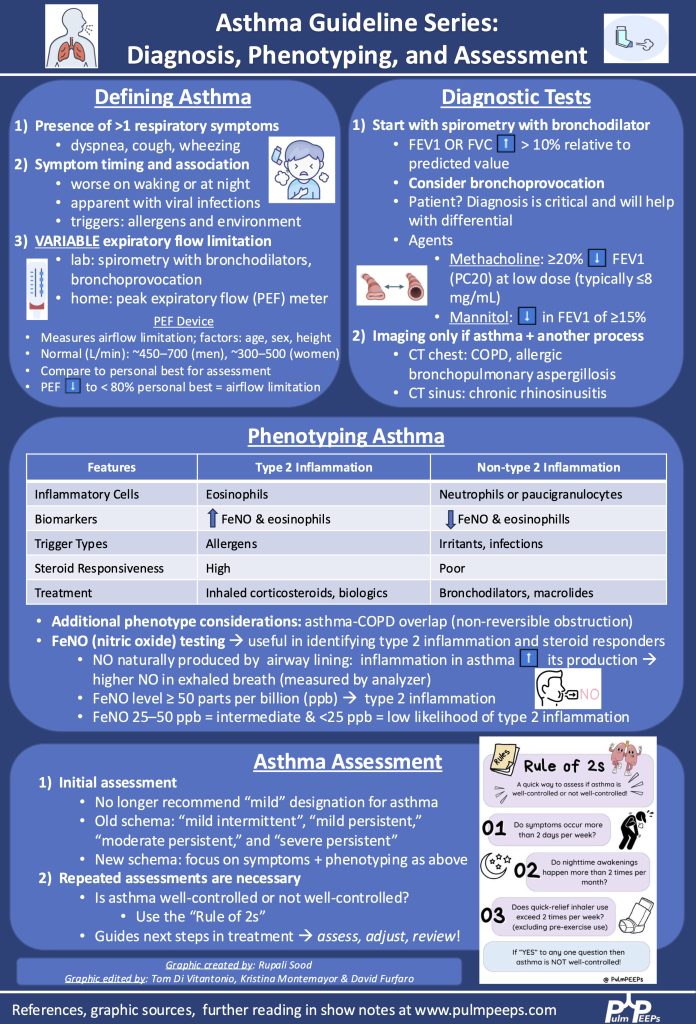
Asthma is a heterogeneous disease characterized by recurring respiratory symptoms (breathlessness, wheezing, cough, chest tightness) with variable airflow limitation.
The 2023 & 2024 Global Initiative for Asthma (GINA) guidelines emphasize phenotyping asthma to improve diagnosis and treatment.
Asthma differs from other obstructive lung diseases due to reversible airway obstruction, which can be demonstrated through diagnostic testing.
Diagnosing Asthma
Clinical history is crucial, particularly identifying symptom triggers (cold air, exercise, allergens).
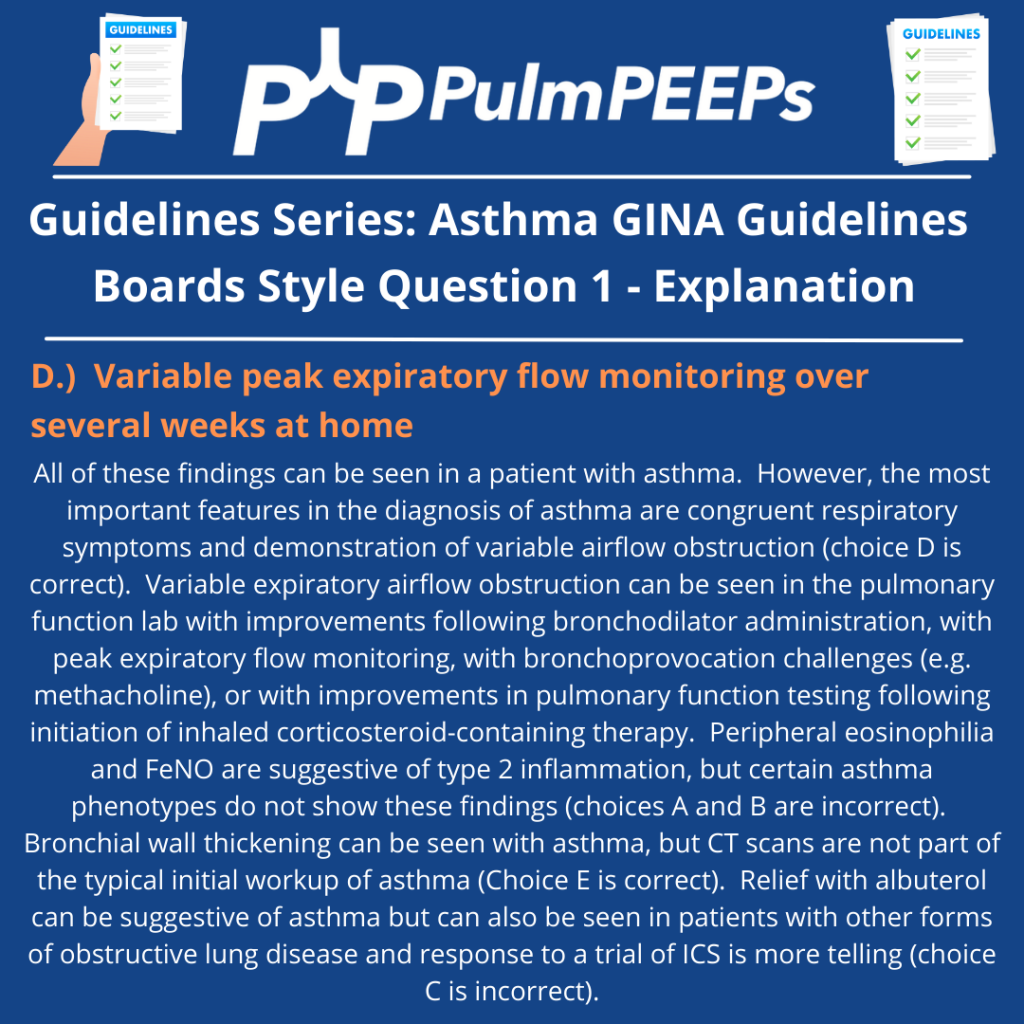
Spirometry is the standard diagnostic tool, looking for an increase in FEV1 or FVC ≥12% and 200 mL after bronchodilator use.
Alternative tests include:
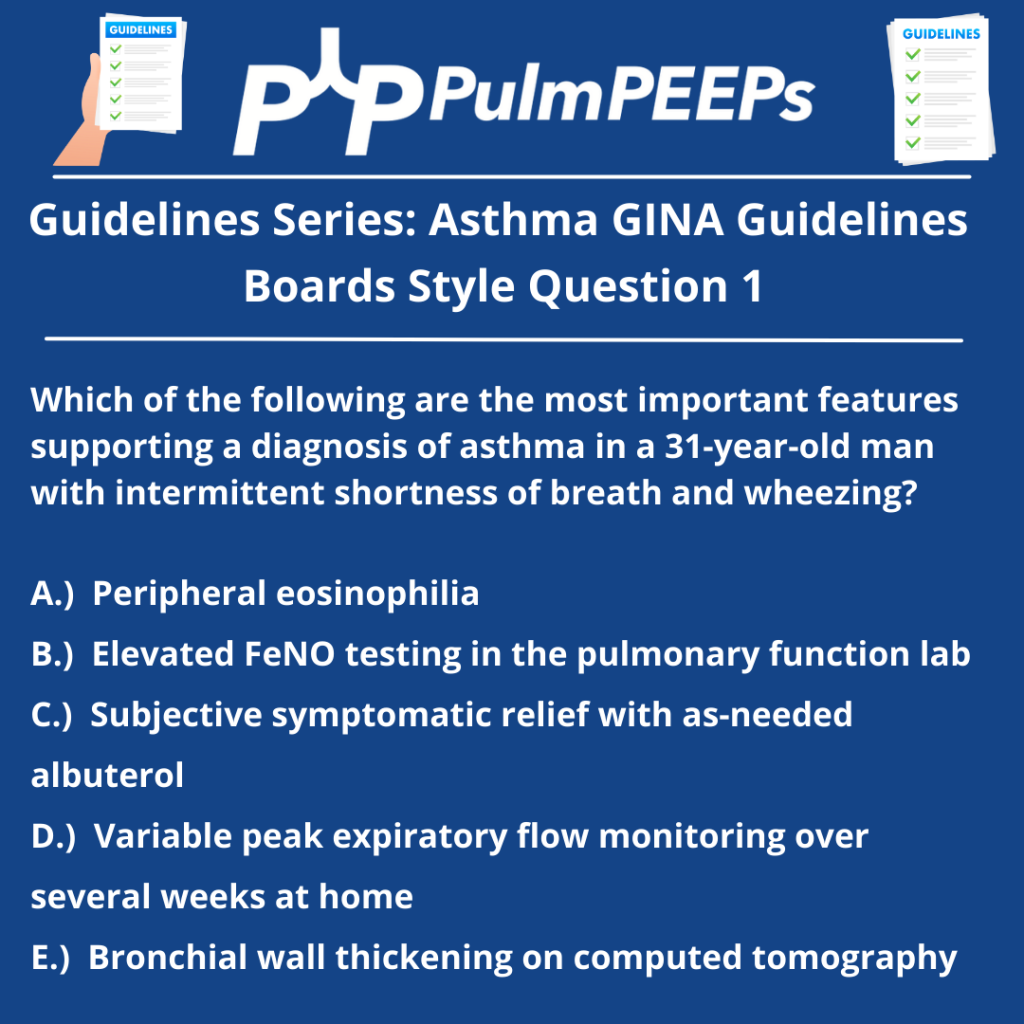
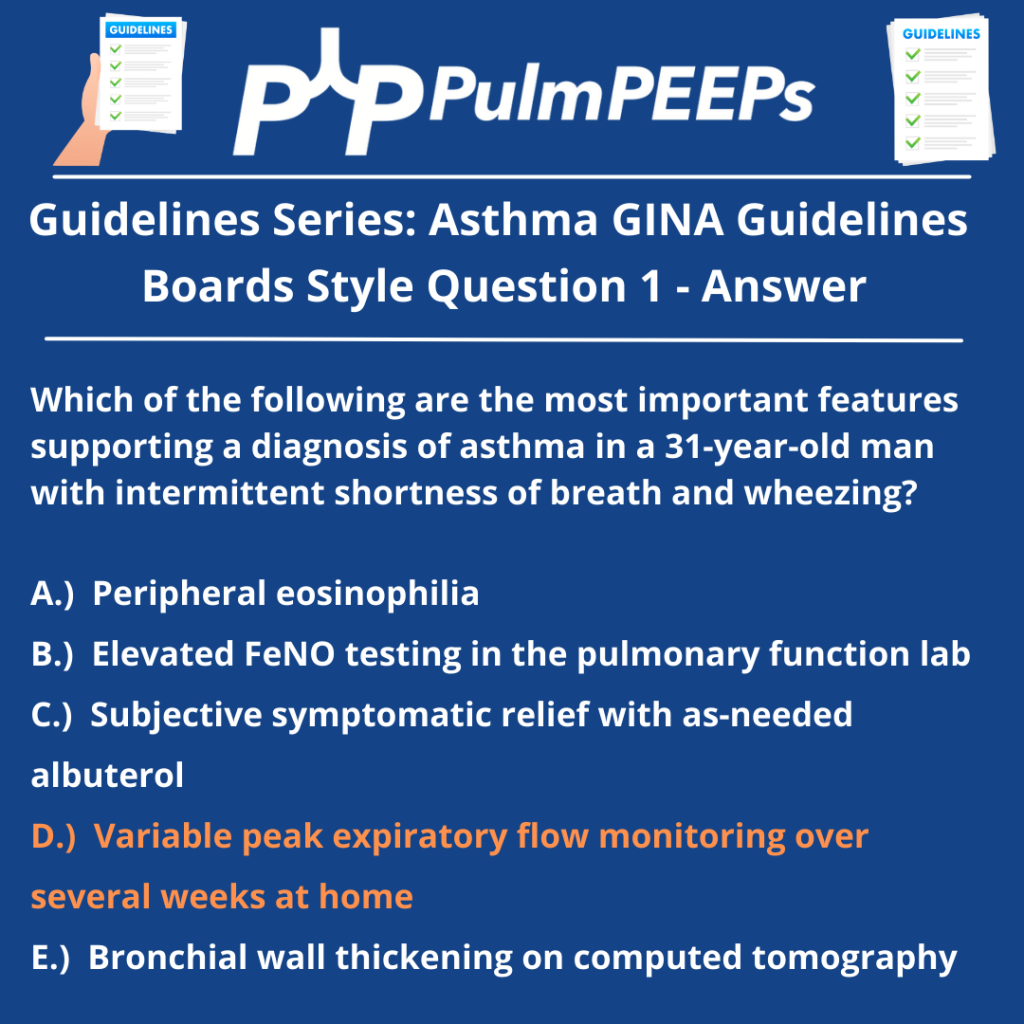
Peak expiratory flow monitoring over time.
Bronchoprovocation tests (e.g., methacholine challenge) to assess airway hyperresponsiveness.
Fractional exhaled nitric oxide (FENO) and blood eosinophils as markers of type 2 inflammation.
Asthma Phenotypes & Precision Medicine
Different asthma phenotypes guide personalized treatment approaches:
Type 2 inflammation: Characterized by eosinophilic inflammation, high FeNO, good steroid responsiveness, and potential for biologic therapy.
Non-Type 2 inflammation: Associated with neutrophilic inflammation, poor steroid responsiveness, and potential benefit from macrolides or bronchodilators.
Asthma-COPD overlap requires a distinct treatment approach due to persistent obstruction.
Imaging & Adjunctive Tests
Imaging is not routinely needed in asthma but can be useful for:


 PulmPEEPs