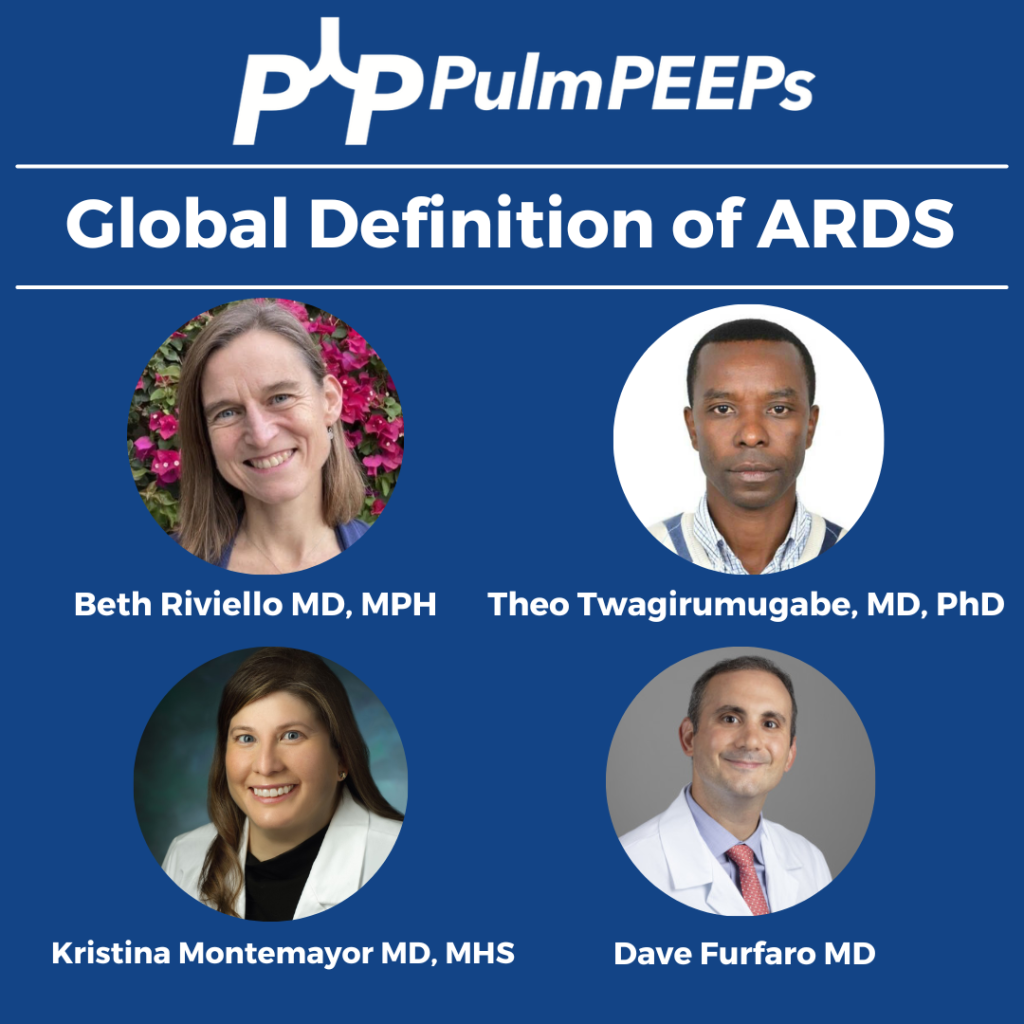
Dr. Elisabeth Riviello, an Assistant Professor at Harvard Medical School, and Dr. Theogen Twagirumugabe, a leading Anesthesiologist from Rwanda, dive into redefining Acute Respiratory Distress Syndrome (ARDS). They discuss the limitations of previous definitions and highlight the importance of a universal ARDS definition to enhance patient care globally. The conversation also touches on challenges in oxygen saturation measurement, innovative diagnostic tools like lung ultrasound, and the role of non-invasive ventilation in ARDS management, advocating for improved practices in resource-limited settings.
We have had a number of episodes on Acute Respiratory Distress Syndrome or ARDS. These episodes have ranged from how to titrate PEEP, subphenotypes in ARDS, and the future of ARDS research. Today, we are talking about how we all think about and define ARDS, and work that has highlighted a newer global definition of ARDS.
Meet our Guests
Dr. Elisabeth Riviello is an Assistant Professor of Medicine at Harvard Medical School, and a PCCM physician at Beth Israeal Deconess Medical Center. She is also an Affiliate of the HMS Department of Global Health and Social Medicine and an honorary Associate Professor of Emergency Medicine and Critical Care at the University of Rwanda. She is passionate about improving critical care delivery in resource limited settings and has served on Committees for the World Health Organization. She is the Principal Investigator of BREATHE or the (Building Respiratory Support in East Africa Through High flow versus standard flow oxygen Evaluation); a RCT looking at HFNC in five sites in Kenya, Malawi, and Rwanda.
Dr. Theogen Twagirumugabe is an Anesthesiologist and Intensivist at the College of Medicine and Health Sciences, and a Professor at the University of Rwanda. In addition to clinical work, he has his PhD in Medical Sciences. He is a widely succesful researcher with over 70 publications in critical care and anesthesia delivery and is also a lead investigator in the BREATHE initiative.


 PulmPEEPs