

 theAnalysis.news
 U.S. and China Must Cooperate to Reduce Threat of Nuclear War and Deal With Climate Crisis

{"@context":"http:\/\/schema.org\/","@id":"https:\/\/theanalysis.news\/u-s-and-china-must-cooperate-to-reduce-threat-of-nuclear-war-and-deal-with-climate-crisis\/#arve-youtube-vtkh5df1uwg64cd3c9511a40808017430","type":"VideoObject","embedURL":"https:\/\/www.youtube.com\/embed\/vTKH5dF1UWg?feature=oembed&iv_load_policy=3&modestbranding=1&rel=0&autohide=1&playsinline=0&autoplay=1&enablejsapi=1","name":"U.S. and China Must Cooperate to Reduce Threat of Nuclear War and Deal With Climate Crisis","thumbnailUrl":"https:\/\/theanalysis.news\/wp-content\/uploads\/2023\/08\/talia-and-paul-pt-2.jpg","uploadDate":"2023-08-04T13:59:41+00:00","author":"theAnalysis-news","description":"Talia Baroncelli and Paul Jay discuss Russian threats to use tactical nuclear weapons against Western Europe and what role China can play in solving the existential crisis of climate and threats of nuclear war\u2014part 1 of 2. Russian Anti-War Activist - Boris Kagarlitsky - Paul Jay (part 1\/2) Transcrip"}
Talia Baroncelli and Paul Jay discuss Russian threats to use tactical nuclear weapons against Western Europe and what role China can play in solving the existential crisis of climate and threats of nuclear war—part 1 of 2.
Russian Anti-War Activist – Boris Kagarlitsky – Paul Jay (part 1/2)
 U.S. and China Must Cooperate to Reduce Threat of Nuclear War and Deal With Climate Crisis
 Russian Anti-War Activist – Boris Kagarlitsky Arrested – Paul Jay
 How Will the War in Ukraine End? – Boris Kagarlitsky
 Russian Invasion a War of Aggression – Offer of Ukraine in NATO a Provocation – Paul Jay
 Class and the War in Ukraine – Paul Jay (pt 1/3)
 Chomsky und Ellsberg über die derzeitige Bedrohung (Ukraine & Taiwan)
 Nord Stream Pipeline Sabotage and One Year Since Russia’s Invasion of Ukraine – Larry Wilkerson
 The Ultimate Serial Killer is Nuclear War – Paul Jay
 How Will the War in Ukraine End? – Boris Kagarlitsky
 Ukraine: Compromise or War to the End – Paul Jay
 Ukraine: Zelenskyy’s Visit to Washington | With Colonel Wilkerson (Ret.)
 Debatte über den Krieg in der Ukraine mit preisgekrönten Journalisten
 Class and the War in Ukraine – Paul Jay pt 1/2
 Retired US Army Colonel on Ukraine, Iran & the State of the US Empire
 Risking Nuclear War to Avoid Humiliation – Ellsberg (pt 1/2)
 Ukraine a Pawn in a Larger Struggle – Vijay Prashad pt 1
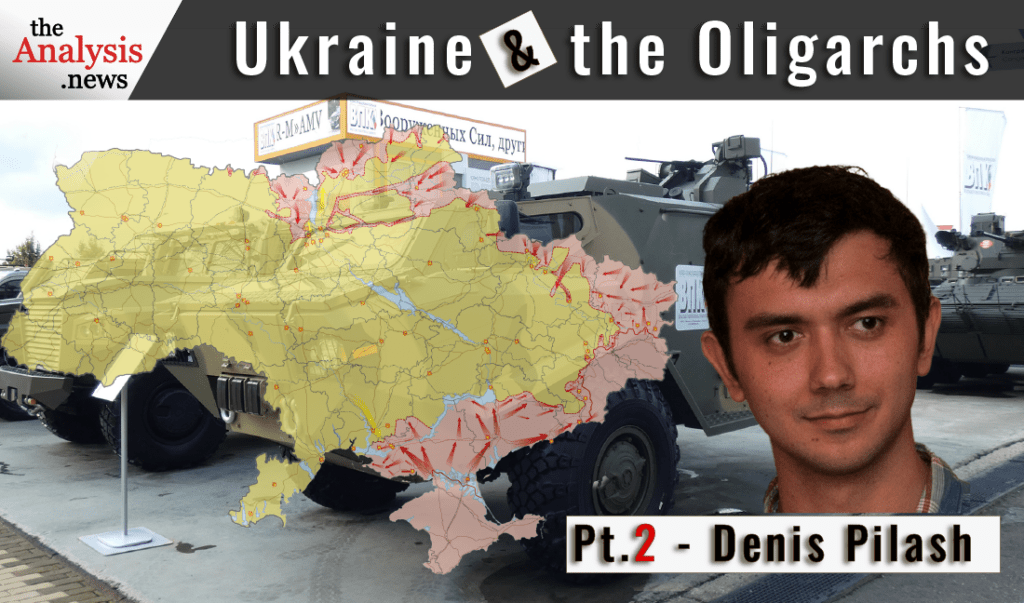 Putin’s War Crimes Follow in the Steps of American War Crimes – Denis Pilash pt 2/2
This is an auto-generated version of the transcript. An edited version will be arriving shortly.
Talia BaroncelliHi, I’m Talia Baroncelli, and you’re watching theAnalysis.news. I’ll shortly be joined by your other host, Paul Jay, for part two of my discussion with him on the recent arrest of Russian anti-war thinker Boris Kagarlitsky. Hopefully, you’ve already watched part one and have enjoyed that content. If so, please consider donating to the show so that we can continue making these episodes. You can go to our website, theAnalysis.com.news, and hit the donate button at the top right corner of the screen and get onto our mailing list; that way, you won’t miss any future episodes. See you in a bit with Paul.
Paul JaySo I don’t think China’s position is so socialistic, let’s put it that way. There’s a real mix of what I would say a kind of central planning rationality mixed with a nationalist, geopolitical, great nation mentality. If you compare Chinese decision-making to American decision-making, I think the Chinese are more rational when it comes to geopolitics, generally speaking. As a state-managed capitalism, it’s been brilliant in the way it’s accomplished its external commercial relationships.
In terms of Chinese national interest, China is now the major trading partner of almost every country on Earth. The U.S. talks about competing with China. In many ways, China’s already won in terms of the trading relationships. It has. China, I believe, is the number one trading partner of the United States, never mind just about everybody else. It’s the number one trading partner of most of Western Europe, certainly most of Latin America, Africa, and there’s nothing the U.S. can do about it, and that’s part of the American quandary.
That said, I don’t get why China isn’t more urgently dealing with climate. If you look at the heat maps, what the world looks like at two, three and then four degrees, China is already in record-breaking heat waves. This is just the beginning. We’re at 1.2 degrees warming. We’ll be at 1.5 within a decade, and some people think even faster. If you look at three and four degrees, there’s not much of China left. That said, there isn’t much of the U.S. left either in terms of agriculture, especially in the Midwest and the West Coast. I don’t get why China isn’t urgently screaming about this.
I think the Chinese argument that the Americans are being completely hypocritical about this is very legitimate. I think the U.S. talks a lot more than it does. The lack of phasing out of fossil fuel is the critical issue, obviously, and it’s not happening. They keep talking about carbon sequestration and such, and that’s mostly nonsense. They don’t want to do what obviously needs to be done: nationalize the fossil fuel companies, America, and phase them out quickly. As quickly as that energy can be replaced, and it can be replaced quickly with a massive investment in sustainable energy sources.
I don’t know what to say about nuclear. There are various people making the argument, even James Hansen, the climatologist that you can’t get out of this without nuclear. Others are arguing, well if that’s true, then maybe we have to reduce the size of the economy. Maybe, I don’t know if that’s politically possible. I do know we need as an absolute to phase out fossil fuel as quickly as possible and phase in forms of sustainable energy. We also have to figure out how to decarbonize. That’s going to take, I guess I said that already. There needs to be a massive, massive investment in a publicly run for the public interest, not some private sector boondoggle project to figure out what real effective decarbonization is. Not greenwashing. Not dangerous geoengineering that nobody even knows if it won’t do more damage. We do need to combine the phasing out of fossil fuel with decarbonizing the ocean and the growing of massive amount of trees, regenerative agriculture. We’re not putting much resources into any of that because it’s basically really being left up to the private sector in the marketplace with some government money to juice it. Even if we move more quickly to electric cars and such, okay, it’s something, it’s maybe better than nothing, but we’re still not transforming how electricity is produced. So that’s where our focus needs to be.
Ukrainians, as difficult as it is, when you have soldiers, Russian soldiers, slaughtering your people, you got to see the bigger picture because there won’t be a Ukraine in the future. Do not believe that the West is going to rebuild you when the West is in such a crisis. I don’t know how much the West would rebuild Ukraine even if there wasn’t such a climate crisis. Maybe they would. Maybe it’d be like a South Korea, which is they want to show how wonderful Ukraine is rebuilt as a model to try to undermine Russia and try to prove to the Russian people.
Talia BaroncelliThey’re already giving out contracts to different companies for rebuilding.
Paul JayOne way or another it’s going to be a boondoggle.
Talia BaroncelliIt’s not going to be rebuilding in a way which is sustainable.
Paul JayYeah, without getting further on the climate thing and all the rest right now to get back to it. So that’s why I think there must be a settlement of this more or less along the lines of where things are. Without this war of attrition, Russia seems dug in. Even if a Ukrainian offensive has some success and I have no idea what’s really going on in the battlefield, I don’t know who to believe.
Eric Schmidt, who used to run Google, is a scientific advisor to Biden. He was on TV the other day and his assessment was very pessimistic that the Ukrainians could breach the Russian defenses. He said maybe they could do something with hundreds of thousands of drones, which they don’t have. So it would mean the West would have to supply drones, and a ridiculous amount of drones. Who knows if the Russians wouldn’t figure out a way to fight that.
A war of attrition that goes on for years is going to be devastating for the Ukrainian people, devastating for the Russians that are thrown wave after wave into this battle and devastating to the world. Never mind what it’s doing in terms of grain exports and how much that’s going to devastate parts of Africa, maybe Asia, and so on, but what it does to global politics.
I hope China and the U.S., and I don’t know whether these recent meetings of [Antony] Blinken going and [Janet] Yellen and before them, maybe more importantly, the big tech leaders. [Bill] Gates was there, the head of Apple was there, and Larry Fink from BlackRock was there. The real power brokers of America, the leaders of the billionaire class, they went to China and they seemed to have sent the Biden administration a message to cool this thing down. This is getting nuts over Taiwan. Don’t you jeopardize this Chinese market for us. We know that Gates understands the threat of climate. We know Larry Fink gets it. They’re not doing much about it, but we know they get how serious it is. They know there’s no solution without a Chinese American collaboration.
The Chinese are saying something interesting, which is not illegitimate. They said this to John Kerry, the American climate czar or whatever he is.
Talia BaroncelliCzar.
Paul JayThey said, okay, fine, let’s collaborate on climate. But how do we take him seriously? Number one, when the last president of the United States didn’t believe there was a climate crisis and we don’t know who’s next. So what if we make all these agreements with you and in 2024 we’re dealing with a climate denier? Two, you’re waging chip wars against us, trying to restrain our economy, and then you want to have a collaboration on climate. Three, you’re sanctioning the technology we have to make better batteries for dealing with the climate crisis to make better solar and wind power energy. The batteries are sort of the weak link in the chain there.
The Chinese position isn’t illegitimate, and then they get caught up in the conflict over Taiwan, which is all nuts because it’s clear the Chinese don’t want to invade. But the more the Americans provoke them, the more the hawks in China. That’s the thing, we’re not dealing with some monolithic entity in China. There are a lot of splits and divisions, as there is in every country. The hawks in China are saying, okay, this has gone too far. You’re offending our national dignity. These elements of humiliation and national dignity are an important part of the narrative of how the elites in every country maintain control. So even though they’re objectively nonsensical, the issue of humiliation and national dignity have brought us to the brink of nuclear war many times. Right now we’re looking at it again.
Why won’t Putin get the hell out of Ukraine? Why doesn’t he go back to the February 23 [boarder]? There’s no strategic reason. It’s got nothing to do with NATO. It’s clear Ukraine’s not getting into NATO. Why? Because it would be humiliating. There’s no other real reason for it. It would be humiliating.
Why did [John F.] Kennedy blockade Cuba? Not because Cuba was any threat. The Soviet missiles in Cuba, they were no threat. [Robert] McNamara told Kennedy, this is a political problem for you domestically. There’s no objective strategic issue of these missiles. There’s nothing these missiles could do in Cuba that the Russian subs can’t already do. Kennedy risked nuclear war to avoid humiliation. The problem is, we live in that world, so you got to deal with it as a factor.
So what’s the conclusion of all this? And this is where Boris and I disagree. The West, with China’s help, does need to give a way for the Putin state to get out of this without looking the fool.
Talia BaroncelliWell, you were speaking about China’s reaction to the U.S.’s attempt to decouple its economy from the Chinese economy, which is incredibly difficult to do, given that they rely on each other’s markets for exports. Some analysts have said that this attempt to decouple the U.S. economy from China, if it goes too far and it antagonizes the Chinese and doesn’t have the desired effect, it could actually lead to China being emboldened to invade Taiwan.
Paul JayI don’t think the U.S. is serious about decoupling. They can’t. Are you giving up on a market of a billion and a half people? There’s no seriousness. What there is seriousness in is trying to strengthen American productive capacity to better compete with China in the global economy and not be so dependent on China for production. The issue of chips is a big issue because the chips that matter are made in Taiwan.
Now, the company that’s the leading chip manufacturer is itself fairly integrated into China. Much of the Taiwanese chip production actually happens in China in plants designed by and run by the Taiwanese company. The guy that owns the major manufacturing chip company is actually for less antagonistic relations with China. One must understand, Taiwan is not monolithic on this issue of relationships with China. Much of Taiwan, both elites and the population, just want the status quo. They’re not looking for independence. There are sections of the Taiwanese elites and some of the population that are pushing full fledged independence. The far right of the United States is pushing it, too. Other than some crazy ideological motives which exist in the U.S. and maybe in Taiwan, it’s an almost war that really serves the military-industrial complex of the United States, and for that matter, Taiwan.
For years, apparently, Taiwan has been buying these weapon systems, which cost Taiwan a fortune, because it’s not like some other place like Israel that gets all kinds of subsidies from the United states. Taiwan actually pays for these weapons. A lot of the weapon systems Taiwan was buying were ridiculous because they were so massive they couldn’t have been used against a Chinese invasion. It was like one paying tribute to the U.S. for protectionism. Ellsberg used to call NATO a protection racket. Well that’s to a large extent what the U.S. has going on with Taiwan. Also domestic players make a lot of money in these contracts, whether it’s through outright corruption and bribery or other ways getting local spin off contracts off the US military weapons purchases. So there’s a lot of money to be made in almost war, not actual war, an actual war most analysts think goes nuclear pretty fast or if it stays conventional, the Chinese win. So there’s a conflict of economic forces.
Like I’ve said this before, Boeing is a good example and Taiwan is an important purchaser of Boeing weapon systems and military aircraft. Maybe. I think Taiwan might be in the top 20 purchasers of Boeing military stuff. But China at least till recently and I think still because one of the things China is not as advanced in is commercial aircraft. China was and I think still is one of the biggest purchasers of Boeing commercial aircraft. So in one company, one part of the company wants less tension with China and sell more commercial aircraft. And another arm of the company wants more tension over Taiwan so they can sell more arms. The system is not rational. It’s filled with these contradictory interests and the policy reflects that. The foreign policy and especially Americans don’t know what the hell to do. But to get back to your question, the only country place in the world right now that’s really well positioned to try to bring Ukraine war to an end is China. Will they do it? I don’t know. Maybe they’re making some noises that way. When one of the senior people in the Chinese Foreign Ministry was asked, why don’t you come right out and condemn the invasion?
When you say you support the UN charter and the issue of sovereignty, his answer was, well somebody’s got to be able to be able to mediate this thing. Well if that’s the reason, they won’t come out and condemn it. And I don’t think that’s the only reason. I think right now Russia’s being turned into practically a satellite of China. So there’s know from a pure nationalist interest, there’s geopolitical interest to have let it carried on this long. But I think that interest is coming to an end. The longer this stalemate goes on, the weaker and more bled Russia becomes, the more desperate it becomes. And we were going to talk about this and we might as well now some of the voices in Russia leading foreign policy voices are calling for using tactical nuclear weapons against Poland, not against Ukraine, because they still want to act as if Ukraine are our brothers. And all this as they slaughter tens of thousands, but against Poland, because the only real threat Russia has here, the only real weapon, is the nuclear threat. And nobody, they’re saying, will really take it seriously if you don’t do a it’s part of the Russian military doctrine.
It’s called escalate to de escalate. And it actually, I was just being this was explained to me yesterday by an expert in Soviet and Russian nuclear planning. It was at a time when the NATO forces were far weaker, conventional NATO forces were weaker than Russian. The NATO always had as an option, if we started losing on a conventional battleground, we would go nuke to balance things. And the threat of going nuke made up for our weakness conventionally. Well, now things are flipped around the other way. Western Europe, the NATO forces in Europe are conventionally much stronger than Russia. If it was a straight conventional fight without nukes, the west would win. I’m told by everybody knows these things we can see right now they can’t even win. Russians aren’t even winning in Ukraine, never mind against the whole of NATO, including the US. So the Russian are doing what NATO said. If we start to lose conventionally, we will have to prove we’re willing to use nukes. And the way to prove it is to do it. And there’s voices in Russia that are saying, if this thing goes on for years, it SAPS our ability.
There’s only so long we can sustain war of attrition in Ukraine. And if we start to lose, the only answer we’re going to have is give up the collapse of the Russian state, which means the resignation of whether it’s Putin or whoever’s next with Putinism after Putin. And that’s the most likely thing right now that follows Putin is another Putin or even someone more hawkish or use nukes. And they’re saying, if that’s where this ends up, we might as well do it now, right?
Talia BaroncelliTo give some context to our viewers, the expert or analyst you’re speaking of is Sergey Karaganov from the Russian equivalent of the Council on Foreign Relations. And I believe at the beginning of June, he published a piece called Difficult but Necessary Decision, which sparked a huge debate among other policy thinkers in Russia. He was essentially arguing that the threshold for using nuclear weapons should be lowered because the west is no longer really scared or fearsome of Russian saber rattling, so to speak, and that some sort of preemptive attack would essentially be the way to go if the US. And Europe were to continue supporting Ukraine. And I think that did spark a debate. There were some people and other policy circles in Russia which condemned this position and said that there would never be an instance in which a preemptive strike would be justified, because that would just spell the end of Russia and Europe, obviously. And in response to that, he actually wrote another piece called there is no Choice. Russia will have to launch a nuclear strike on Europe. So he even doubled down on that position. And so I do think he represents a certain segment of Russian debates, and it’s pretty insane, but the person who actually has the nuclear codes is President Putin.
And we don’t really know what he’s thinking. In the Russian state policy documents from 2020, it does say that a nuclear or a tactical nuclear attack or the use of nuclear weapons could be justified if the existence of this state were to be put into jeopardy. And that’s a really tricky categorization, because what does that mean? If the regime is put into jeopardy? If Putin’s regime is put into jeopardy, does that then justify a strike? Or does that doctrine just refer to the Russian state? If the Russian state is put into jeopardy, so we don’t know how he’s.
Paul JayYeah, what you’re referring to is very important. What’s this guy’s name again?
Talia BaroncelliKaraganov.
Paul JayKaraganov is not a nobody. This equivalent of the Council on Foreign Relations goes back into Soviet days. It is the assembly of the leading foreign policy thinkers of Russia. When they have their annual conferences, Putin speaks there sometimes. The most recent one, Lavrov spoke there. They are a very serious body. And this guy, Kraginoff is the chairman of the Presidium. So he’s like the leader of this thing. He’s a serious foreign policy voice. And I’ve talked to people that know him, and he’s been a hawk since Soviet days, hawk in the Soviet and then Russian terms, which means the way to deal with the west is with the most aggressive posture possible. And of course, the west has given lots of reasons to think that. So the congress that happened just after he wrote those pieces, when Lavros spoke, Lavros didn’t say what he said, but he also didn’t say anything against what he said. But what they did say at this congress and this is where the issue of what does it mean, the Russian states at threat. They define what’s happening now in Ukraine as a war with the west. This is not a war against Ukraine.
Now, the Ukrainians, of course, don’t agree with that. And when this is called a proxy war in the west by some Westerners and people of the south, that’s only partly true. You can’t discount the agency and right of the Ukrainian people to resist this. But the Vietnam War was the same. Know, the Vietnamese waged a national liberation war, and this was their war. But that didn’t mean it wasn’t a form of proxy war. This was for the United States. They didn’t really care what the hell happened in Vietnam. This was all about national liberation movements moving towards socialism. And thus an alliance was what people thought was socialist Soviet Union. I mean, you can debate whether it really was or wasn’t, but that doesn’t matter. It was going to take vietnam and then other national liberation movements out of the Western sphere of capitalism. And that was the reason for the war. And that’s the reason for the Ukraine war. The Russians do not want Ukraine to be part of the Western sphere of capitalism. They want Ukraine part of the Russian sphere of capitalism. And why is there a separate Russian sphere of capitalism?
Because the west didn’t want Russia in the EU. Because they didn’t want to have to deal with the potential.
Talia BaroncelliThey didn’t want Ukraine in the EU?
Paul JayNo. Didn’t want Russia. The west? No. The west.
Talia BaroncelliOh, I see. You mean?
Paul JayYeah. The west wants Ukraine and the EU. They want to extend the Western sphere of capitalism, but they didn’t want Russia because they didn’t think they could control Russia. The history, the culture, the size of the country, the size of the armed forces, the fact it was a know, an equal nuclear power. They didn’t want that in the EU because the EU would have become such a rival of the United States that it may have really become its own sphere of capitalism rather than the EU being part of the American sphere. And the West European elites didn’t want it either. They didn’t know for historic reasons and more contemporary reasons, they didn’t trust how powerful Russia would get within the EU and then all the other EU and even the Germans to some extent. But imagine if there’d been a German Russian alliance in the mean leading the EU. What would that do American hegemony? So the reason Russia is fighting for a Russian sphere of capitalism, because they were excluded. The west wanted Russia to be an oil producing rump state. And that was okay with the Russian oligarchs for quite a while because they were cashing in, they had their yachts and this and that.
But as time went on, the Russian state became stronger. And now we’re at a stage where I’m quoting, more or less from this recent congress of this foreign policy group, where they’re calling Russia a state civilization, which is the Russian nation, the Russian people, the Russian language, the russian religion. The Russian values which they stress over and over again means family values between a man like, marriages between men and women, like, it’s very homophobic. The values are toxic and not very different than American Christian nationalism. In fact, it really is a form of Russian Christian nationalism. I think they’re very similar phenomena. So within that context, they’re saying there being these foreign policy, russian foreign policy elites, a long, drawn out battle in Ukraine might lead to such a weakening of the Russian economy and this government. But this government means the Russian state, which means Russian civilization. They identify the state. And Putin not like a political party in the west. Like, if Biden goes down, somebody else comes. Know which party comes to power in the United States doesn’t threaten the state. At least it never has. So far, the state is much stronger than any particular one leader or particular party.
But in Russia, that doesn’t seem to be the case. The Putin and the bureaucracy around him, the military around him, they’re too and anyway, the analysis seems to be, if I’m understanding it correctly, long drawn out war in Ukraine is a threat to the Russian state civilization. If it’s a threat to the state civilization under this doctrine, there’s justification for the use of a tactical nuclear weapon to prove to NATO and the west that we’re willing to do anything to defend this state civilization. Now, China has actually warned about know, I read this thing, Global Times all the time, which is essentially an English language website run by the Chinese party, and they have said, be careful what you wish for, west. If Putin gets desperate enough, if they think this is going to be the downfall of this Russian state, and then, to use the Russian terminology, state civilization, you don’t know what might happen. Meaning nukes are not out of the question. So we’re in a very, very dangerous moment. I just talked to Nikolai Sokov, who worked in the Soviet and for a couple of years under Putin, under Yeltsin, in the Soviet arms negotiations.
He was a top negotiator with the US. He knows Soviet thinking and Russian thinking very well. He says he has never, ever in his life, 40 years involved in this, heard public statements about using tactical nuclear weapons. He says sometimes privately, there were conversations like that that may come to this. He’s never heard about it, that such things could be declared at such senior levels. So then the argument goes, well, you can’t submit to Russian black nuclear blackmail. Why not? Somebody has a gun to your head. You don’t submit to the blackmail with getting shot. Mad I would of course, it’s up to the Ukrainians. They don’t want to submit to it, okay. That’s their right to keep fighting, but we don’t have to risk it. And more importantly, as I said, the climate issues are even more threatening than the rhetoric coming out on nuclear weapons, but it shouldn’t be taken so unseriously. So in the final analysis, what does it mean? I think, and this is where I go back to boris didn’t agree with me on this. Boris’s thinking was, if this war goes on long enough, sections of the Russian military will overthrow Putin.
There’s sections of the oligarchs that want this war over. And thus he thought Ukraine should keep fighting because it will lead to the downfall of Putin and what do they call it, the nomenclature, the bureaucracy around Putin, and will create an opening for more revolutionary politics in Russia. I can’t say he’s wrong. Obviously, he knows domestic politics way better than I do. I mean, Russian domestic politics. I only know this, I should just say, as a Russian revolutionary, which is what he is, his perspective, his frame, he looks at this in is how to advance revolutionary politics in Russia. And he thinks the victory success of Ukrainian war leads to the downfall of Putin. I don’t know, it’s a hell of a risky know, lots of people who analyze this, including Russians who are against the war, are not so sure what follows Putin isn’t worse right now. Sokov is telling me Putin’s main battle is not with the Kardalisky’s, it’s not with the left, it’s not with the liberals. His actual main battle is with the hawks who want an even more aggressive approach to the war in Ukraine. I think Putin’s calculation is that the Russian population doesn’t want more bodies coming home.
And he’s got a fine line there about how many lives he can risk. And digging in is the better strategy, which is what he seems to be doing. But the right in Russia apparently is very strong. So I think as a progressive living in North America, I advocate, for whatever it’s worth, not that that many people care what I advocate anyway, that no further arms should go to Ukraine without being late to an insistence on negotiations. Two, those negotiations need to include referendum, UN run referendums. There should be like an immediate ceasefire and immediately, as quickly as possible, organized referendums. There may be other steps that have to be taken. But let me address one thing, this issue of war crimes. And Zelensky has said no negotiations with Putin. He should be charged with war crimes and all this. Yeah, of course Putin should be charged with war crimes, but by who has the legitimacy and credibility to charge and try Putin for war crimes? The only way to do it is that the United States would arrest George Bush and Dick Cheney and put them on trial for war crimes in Iraq, for launching the Iraq war.
And you might even consider arresting Barack Obama because under international law, as I understand it, he actually had an obligation to pursue, investigate and charge Bush Cheney for war crimes, that if you don’t pursue them, you become implicated. And Obama may have other blood. We know he has other blood on his hands in terms of journal warfare and, you know, certainly not the British government who was hogged in in the Iraq war. And in terms of history, nobody has more blood on their hands than the British Empire. I mean, go on. Where exactly is it that has some credibility? Because even some of the countries that weren’t so involved in the to Canada really wasn’t much involved, but is a complete collaborator with the US and every other kinds of wars and war crimes. So any serious talk, no negotiations without charging Putin, all it’s complete nonsense. It’s only said because to avoid any negotiations or as a propaganda.
Talia BaroncelliYeah, I’ve discussed this also with Colonel Larry Wilkerson in the past too, that John Bolton was the one who. Negotiated certain deals with other countries so that they wouldn’t be held liable for war crimes or for other crimes they had committed before the International Criminal Court. So essentially, the International Criminal Court has no jurisdiction anymore to try American war crimes and hostilities.
Paul JayYeah, and the US never signed the agreement to be in the So, as did Israel and such. Anyway, it is beyond stupidity to have that kind of rhetoric. Maybe Zelensky has to go before these negotiations can take place. I don’t know hagiography about Zelensky. I mean, he could have taken NATO off the table and maybe this wouldn’t have happened. So to turn him into this great hero, the Ukrainian people are fighting a heroic fight, there’s no doubt, and they have a right to.
Talia BaroncelliBut the thing is, though, is Zelensky would probably be the only one with legitimacy if he actually did decide to negotiate with Russia and to say that there should be some sort of ceasefire. I feel like probably more people would follow him.
Paul JayBut the Americans are saying, we won’t do it if the Ukrainians don’t want to. And there’s no reason why the US. Can’t say, well, fine, don’t negotiate if you don’t want to, but we don’t have to give you arms if we don’t want to. So obviously the US has enormous leverage, but so does the know. The Chinese can say, listen, you negotiate or we’re going to find our fossil fuel somewhere else.
Talia BaroncelliAnd to a certain extent, Turkey as well. I mean turkey under President erdogan, for example. They were the ones who negotiated the Black Sea grain deal. And some argue that Russia pulled out of the deal because they were upset with, you know, giving back five Azov fighters who were fighting in Mariupol for giving them back to Ukraine instead of to what? I mean, initially they agreed that they would keep them in Turkey until the end of the war, and that allegedly upset the Russians. And so I don’t know who has more leverage in their relationship in Turkey and Russia’s relationship, but potentially Turkey can emerge as also negotiating some sort of ceasefire. But it seems like they’re also, for Ukraine joining NATO.
Paul JayWell, all things nuts, because Russia’s pissed Turkey off with canceling this grain deal because Turkey was making a lot of money out of this grain now. So in some ways, Russia’s pushing Turkey closer into NATO. Of course, Turkey’s already in NATO, but anyway, the whole thing is nuts. But to go to the very beginning of all this, I hope people do watch the Kardelitsky interviews. Actually, we’ll put them all up on one page. And let’s not forget, Boris right now is sitting in jail somewhere in Russia. They moved him to somewhere in the outskirts, and it’s very possible he’s looking at seven years and maybe more. His daughter said in the interview. That’s just the beginning, not the charges. They can come up with a lot more charges. So Morris could be looking at quite a bit of jail time here.
Talia BaroncelliWell, thanks, Paul, for joining me to speak about Boris’s arrest and the war in Ukraine. We obviously hope that Boris will be released as soon as possible and our thoughts are with his family. If you enjoy this content and you enjoyed watching Boris Kagarlitsky’s interviews that Paul has done with him in the past, then please go to our website, theAnalysis.news. Consider donating to the show, getting on the mailing list so you’re always updated whenever there’s a new interview published. Also go to the YouTube channel, theAnalysis-news. You can hit the bell so that you’re notified every time there’s a new episode and like and subscribe to the channel. See you next time.
Select one or choose any amount to donate whatever you like- any amount
- $5
- $15
- $25
- $50
- $100
- $500
- $1,000
var gform;gform||(document.addEventListener("gform_main_scripts_loaded",function(){gform.scriptsLoaded=!0}),window.addEventListener("DOMContentLoaded",function(){gform.domLoaded=!0}),gform={domLoaded:!1,scriptsLoaded:!1,initializeOnLoaded:function(o){gform.domLoaded&&gform.scriptsLoaded?o():!gform.domLoaded&&gform.scriptsLoaded?window.addEventListener("DOMContentLoaded",o):document.addEventListener("gform_main_scripts_loaded",o)},hooks:{action:{},filter:{}},addAction:function(o,n,r,t){gform.addHook("action",o,n,r,t)},addFilter:function(o,n,r,t){gform.addHook("filter",o,n,r,t)},doAction:function(o){gform.doHook("action",o,arguments)},applyFilters:function(o){return gform.doHook("filter",o,arguments)},removeAction:function(o,n){gform.removeHook("action",o,n)},removeFilter:function(o,n,r){gform.removeHook("filter",o,n,r)},addHook:function(o,n,r,t,i){null==gform.hooks[o][n]&&(gform.hooks[o][n]=[]);var e=gform.hooks[o][n];null==i&&(i=n+"_"+e.length),gform.hooks[o][n].push({tag:i,callable:r,priority:t=null==t?10:t})},doHook:function(n,o,r){var t;if(r=Array.prototype.slice.call(r,1),null!=gform.hooks[n][o]&&((o=gform.hooks[n][o]).sort(function(o,n){return o.priority-n.priority}),o.forEach(function(o){"function"!=typeof(t=o.callable)&&(t=window[t]),"action"==n?t.apply(null,r):r[0]=t.apply(null,r)})),"filter"==n)return r[0]},removeHook:function(o,n,t,i){var r;null!=gform.hooks[o][n]&&(r=(r=gform.hooks[o][n]).filter(function(o,n,r){return!!(null!=i&&i!=o.tag||null!=t&&t!=o.priority)}),gform.hooks[o][n]=r)}});
Never miss another storySubscribe to theAnalysis.news – Newsletter
Email(Required) Name(Required)
First
Last
Δdocument.getElementById( "ak_js_1" ).setAttribute( "value", ( new Date() ).getTime() );
gform.initializeOnLoaded( function() {gformInitSpinner( 10, 'https://theanalysis.news/wp-content/plugins/gravityforms/images/spinner.svg', true );jQuery('#gform_ajax_frame_10').on('load',function(){var contents = jQuery(this).contents().find('*').html();var is_postback = contents.indexOf('GF_AJAX_POSTBACK') >= 0;if(!is_postback){return;}var form_content = jQuery(this).contents().find('#gform_wrapper_10');var is_confirmation = jQuery(this).contents().find('#gform_confirmation_wrapper_10').length > 0;var is_redirect = contents.indexOf('gformRedirect(){') >= 0;var is_form = form_content.length > 0 && ! is_redirect && ! is_confirmation;var mt = parseInt(jQuery('html').css('margin-top'), 10) + parseInt(jQuery('body').css('margin-top'), 10) + 100;if(is_form){jQuery('#gform_wrapper_10').html(form_content.html());if(form_content.hasClass('gform_validation_error')){jQuery('#gform_wrapper_10').addClass('gform_validation_error');} else {jQuery('#gform_wrapper_10').removeClass('gform_validation_error');}setTimeout( function() { /* delay the scroll by 50 milliseconds to fix a bug in chrome */ }, 50 );if(window['gformInitDatepicker']) {gformInitDatepicker();}if(window['gformInitPriceFields']) {gformInitPriceFields();}var current_page = jQuery('#gform_source_page_number_10').val();gformInitSpinner( 10, 'https://theanalysis.news/wp-content/plugins/gravityforms/images/spinner.svg', true );jQuery(document).trigger('gform_page_loaded', [10, current_page]);window['gf_submitting_10'] = false;}else if(!is_redirect){var confirmation_content = jQuery(this).contents().find('.GF_AJAX_POSTBACK').html();if(!confirmation_content){confirmation_content = contents;}setTimeout(function(){jQuery('#gform_wrapper_10').replaceWith(confirmation_content);jQuery(document).trigger('gform_confirmation_loaded', [10]);window['gf_submitting_10'] = false;wp.a11y.speak(jQuery('#gform_confirmation_message_10').text());}, 50);}else{jQuery('#gform_10').append(contents);if(window['gformRedirect']) {gformRedirect();}}jQuery(document).trigger('gform_post_render', [10, current_page]);gform.utils.trigger({ event: 'gform/postRender', native: false, data: { formId: 10, currentPage: current_page } });} );} ); theAnalysis.news theme music written by Slim Williams for Paul Jay’s documentary film “Never-Endum-Referendum“. Never-Endum-Referendum Artist Website Paul Jay’s Documentaries