Teaching in Higher Ed
 The public and the private in scholarship and teaching
5 snips
Nov 12, 2015 Kris Shaffer, a music theorist and educator at the University of Colorado Boulder, discusses the nuanced landscape of public scholarship and student privacy. He emphasizes the importance of making knowledge accessible and critiques the traditional boundaries that confine research. Kris shares insights on the impact of social media in community building and the ethical considerations when assigning public-facing work to students. He also highlights the collaborative nature of projects like Open Music Theory, advocating for clearer communication and engagement over personal branding.
AI Snips
Chapters
Books
Transcript
Episode notes
Actively Curate Your Public Profile
- Post quality public work or curate others' work so search results surface things you choose, especially early-career scholars.
- Avoid leaving only sparse or private traces that let public-record sites dominate your profile.
Building Open Music Theory Together
- Kris Shaffer and coauthors built Open Music Theory by sharing and collaborating on GitHub and crowdfunding a beta textbook.
- They prioritized text-based, low-bandwidth, skills-focused resources for diverse student needs.
Public Scholarship Is Ethical And Collaborative
- Public scholarship includes open access, accessible writing, and open-source practices that let others build on work.
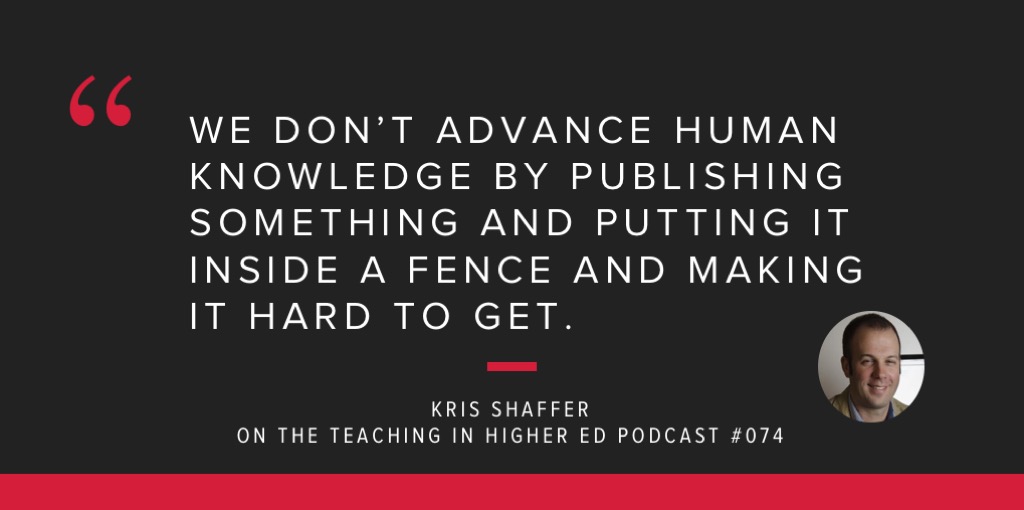
- Kris Shaffer frames public scholarship as ethical: knowledge advances poorly when locked behind paywalls.