

 The Religious Studies Project
 Studying Tantra from Within and Without
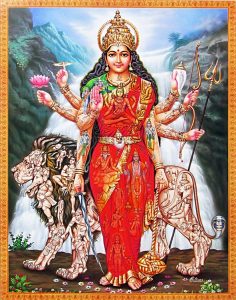
Douglas R. Brooks, Professor of Religion at the University of Rochester, discusses how he became involved in the academic study of Hinduism, specifically Tantra and goddess-centered traditions. He begins with his training in Sanskrit and Tamil at Middlebury College, where he found that little English work had been done on Hindu traditions for some years. Living intermittently in India during the 1970s–80s, Brooks found a lack of secular studies of Hinduism, as opposed to religious devotional studies. Given these challenges, Brooks has had to study Tantric Hinduism from within and without the traditions. On the one hand, his friendship with Dr. Gopala Aiyar Sundaramoorthy introduced him to the lived practice as well as venerable philosophical traditions of Tantra and tantric yoga. Working with Sundaramoorthy, Brooks was “within” a vibrant Hindu tradition. As he refined his work at Harvard Divinity School, however, Brooks articulated a critical, non-religiously invested perspective on Hinduism — in short, observing Tantra from “without,” treating the religion like any other secular subject worthy of study. This approach caused Brooks to clash with older scholars at HDS, who assumed that Judeo-Christian terms and concepts were universally applicable to all religions. Later in the interview, Brooks discusses his interpretation of Tantric yoga, giving particular attention to the philosophy’s doctrine of application to daily problems. This kind of yoga is distinct from the New Age, exercise-based style of yoga that B.K.S. Iyengar and others popularized in the West. In recent years, Brooks has attended many popular yoga workshops with the goal of educating the general public about genuine Tantric philosophy from India. He concludes with some reflections on public service as an academic and his plans for a new book on Tamil pilgrimages.