
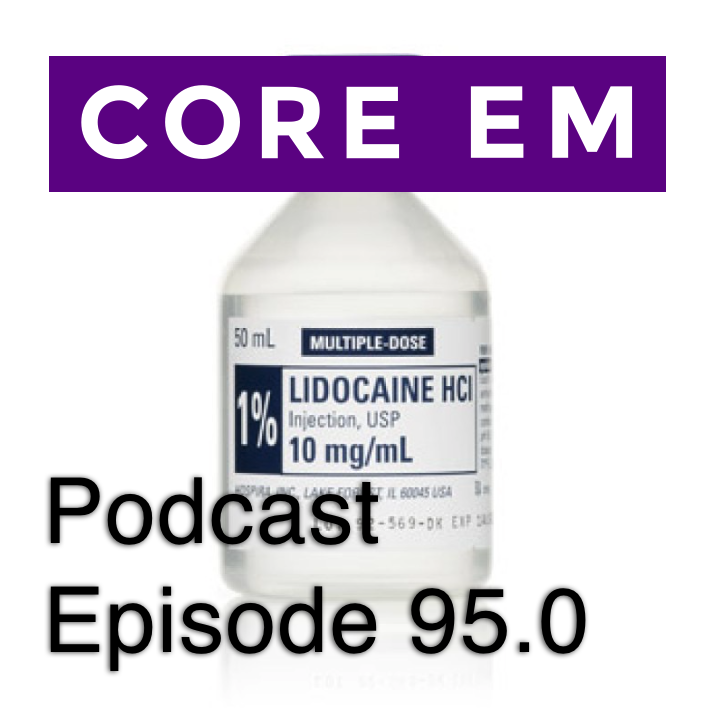
This week we discuss the identification, prevention and treatment of local anesthetic systemic toxicity.

 Core EM - Emergency Medicine Podcast
 Episode 95.0 – Local Anesthetic Systemic Toxicity (LAST)
7 snips
May 1, 2017 They cover how local anesthetics can become systemically toxic and the typical timing and scenarios that precipitate it. They review dosing math, risk factors, and why bupivacaine is especially dangerous. They describe clinical signs in the brain and heart, prevention and injection technique, and when to use intralipid therapy and ACLS-based hemodynamic support.
AI Snips
Chapters
Transcript
Episode notes
Always Calculate Lidocaine Max Dose
- Calculate maximum lidocaine dose before every use using weight and concentration.
- Example: 1% = 10 mg/mL; toxic dose 5 mg/kg without epinephrine or 7 mg/kg with epinephrine (70 kg ≈ 350 mg ≈ 35 mL of 1%).
Breaking Up Large Wound Repairs To Avoid Overdose
- Large laceration repairs can approach toxic lidocaine doses if done all at once.
- The host recalls breaking up a multi-wound repair to let lidocaine wear off and avoid toxicity.
Sodium Channel Block Explains Symptom Patterns
- LAST affects CNS and cardiovascular systems because local anesthetics block sodium channels.
- Lidocaine shows CNS signs first; bupivacaine often causes abrupt cardiovascular collapse without warning.