

PB051: How to Make Money As a Blogger Through Affiliate Marketing
ProBlogger Podcast: Blog Tips to Help You Make Money Blogging
Understanding and Implementing Successful Affiliate Marketing on Your Blog
Exploring the concept and benefits of affiliate marketing, including the importance of perceived authority, trust, and reader engagement. Learn how to find the right products for your audience and maintain trust for successful affiliate marketing.
Note: you can listen to this episode above or load it up in iTunes.
My Tips for Making Money As a Blogger Through Affiliate Marketing
Today’s episode is all about how to make money as a blogger through affiliate marketing. Making money through affiliate marketing is not easy money, but there are things you can do to increase your chances of earning a regular stream of income from it. I share insider tips about what’s worked for me in making money through affiliate marketing on my blogs.

In This Episode
You can listen to today’s episode above or in iTunes or Stitcher (where we’d also LOVE to get your reviews on those platforms if you have a moment). In today’s episode:
- What is affiliate marketing?
- Why affiliate marketing works
- Why the rewards from affiliate marketing can be greater than advertising
- Real-life examples of affiliate marketing
- 3 different types of affiliate programs you can use
- 3 things you can do to make sure affiliate marketing will work on your blog
Further Reading and Resources for Making Money As a Blogger Through Affiliate Marketing
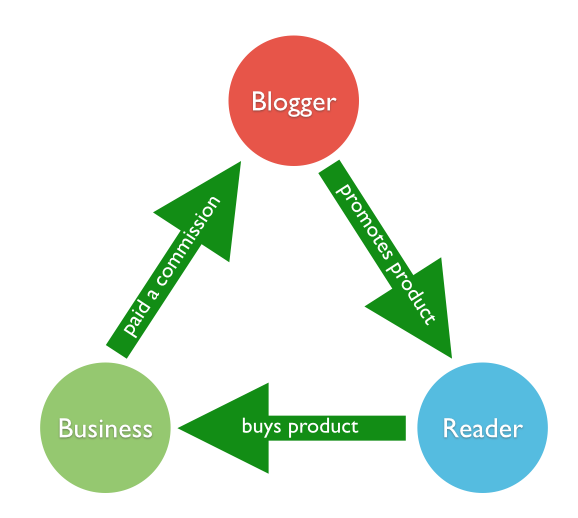
What is an affiliate promotion (infographic):
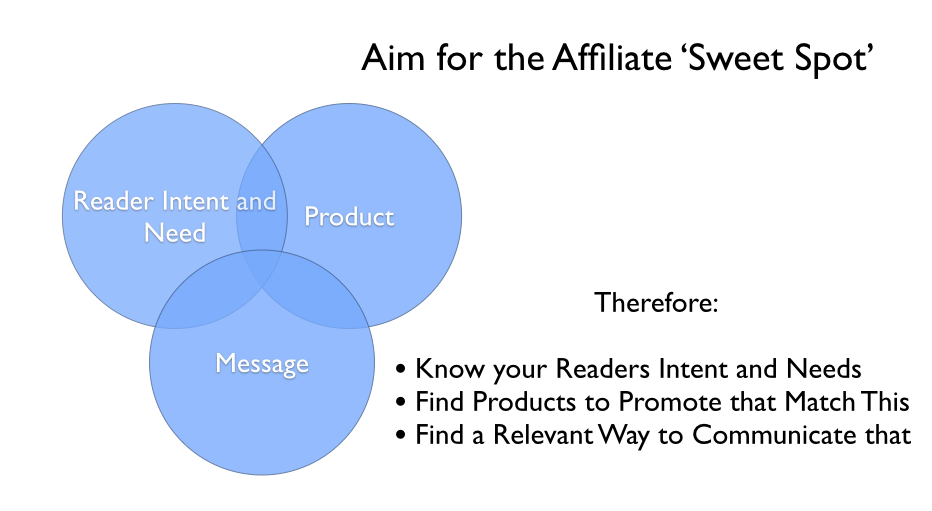
The affiliate sweet spot graphic mentioned:
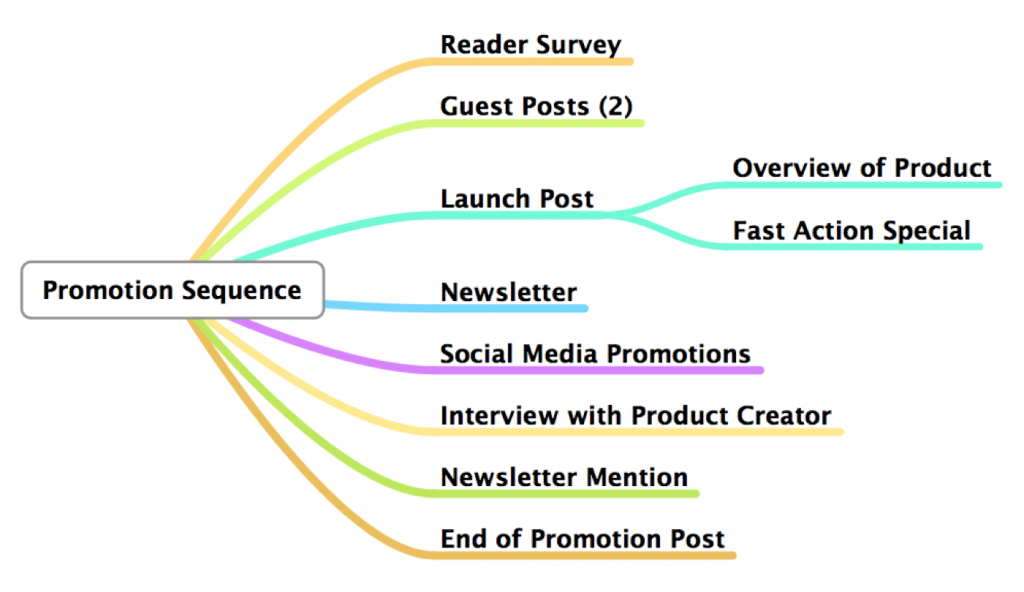
Here’s the Promotion Sequence mentioned:
Best Seller List Examples:
- The 30 Most Popular DSLR Lenses with our Readers
- The 19 Most Popular DSLRs Among our Readers
- The 19 Most Popular Compact System and Mirrorless Cameras with Our Readers
Affiliate Networks Mentioned:
Creating great content. Finding an audience. Engagement. Monetizing your blog. This is ProBlogger.
Let’s start with the question: what is affiliate marketing? I don’t want to spend too long on this because I know many of you already do some affiliate promotions on your blog. In short, as a blogger, when you do an affiliate promotion, you promote a particular product. It might be an ebook, or it could be a physical product. Really, there’s a whole heap of things that you can be promoting. When you promote it, you’re promoting it to your readers with a special link which has a tracking code in it. Or, you might be using a coupon code, which also tracks the sales that you send. If the reader buys the product, they go to the business’s website that has that product. They buy it as a result of clicking on your link which has that tracking code. The business knows that you referred that business, and then they pay you a commission for promoting that product.
In my digital photography site, occasionally, we will mention a camera. It might be a Sony Cyber-shot DSC-HX50V camera. Bit of a mouthful there, but that’s what a camera is called there. When we mention that camera, we link to Amazon. Amazon, the bookstore, but also has a whole heap of other products. When someone goes to Amazon and buys that camera—it might be a $300-camera—and someone buys that, we earn a 4% commission on that. We might make $15 or so dollars for that sale. It doesn’t sound like a lot but when you refer a lot of business to Amazon, that adds up over time.
Other affiliate programs might pay you a higher commission. For example, on an ebook that you might be promoting, you might get paid 40% or even 50% of the sale. It’s a way of you promoting products to your audience, and then earning a commission if there is a purchase made.
Why does affiliate marketing work? Why is it an alternative to advertising as an income stream for your blog? Advertisers like affiliate marketing, because they only have to pay you when there’s a conversion. If they advertise on your site, they don’t know if there’s going to be a conversion. They’re paying you to get exposure with no guarantee of reward. They’re taking all the risk. With affiliate marketing, the advertiser is not really taking any risk at all. You, as the publisher, are taking the risk; but the rewards can be greater than with advertising.
Let me give you an example. I was doing some business with a company who was advertising on Digital Photography School. They were advertising using a banner ad on my site. They’re paying me $2,000 for a one-month campaign to have their banner ad on my site for a whole month. At the end of the month, they did not renew that campaign. When I asked them why, they said, “Well, we didn’t really see too many conversions from it. It wasn’t worth our time that we’re paying out more than what we earned as a result of that.” So, they went away.
I approached them a few months later when I noticed they started an affiliate promotion for their product. I said to them, “How about we try something different? How about I promote your product as an affiliate with a post on my site?” I wrote a post reviewing their product. I did a few promotions on social media as well of that particular post. That post generated over $9,000 in sales for their product. They earned $4500 of that, I earned $4500 of that because it was a 50% affiliate commission.
With an affiliate promotion in the content on my site, it completely outperformed the banner ad. The advertiser was happy, and we were happy. Everyone got something out of that. You can see here, it’s a different model to advertising. There can be real rewards there. It doesn’t cost you anything apart from the time that it takes you to set it up. It doesn’t cost your advertiser anything unless there’s a sale. In some ways, it’s a no-risk type approach, because no one is actually out of pocket. Unless there’s a sale where in that case, everyone’s got money in their pocket.
Affiliate marketing works best on blogs that have three things. Firstly, on blogs that have perceived authority or expertise on their topic. If you are seen as someone who knows what they’re talking about, can be trusted, and has authority, then that works. The second one is trust and relationship between the reader and the blogger. It really works a whole heap better if your readers feel like they know you, and they trust you, and they’re in a relationship with you. That’s really important in affiliate marketing, and something that you’re going to hear me talk about a number of times during this podcast.
The last factor is, I think, it works best when the readers of your blog are in a buying mood. Some blogs, readers come for different reasons. If they’re coming to your blog with some mood for buying, then that works even better. The first photography blog that I had was a blog about reviewing cameras. Pretty much anyone who came to that blog was in a buying mood because they were there to learn about, and to research whether a particular camera was good. On that blog, affiliate promotions worked really, really, really well. They can work on blogs where people are there for other motivations, but that certainly is one factor that comes into play.
Before I get into the tips, I want to address one thing. This is not easy money. There are things that will increase the chances of affiliate marketing working on your blog, I’ve already mentioned three of those. But it’s not easy money, even if you’ve got those three things. Effective affiliate marketing relies upon having traffic to your blog. The more traffic, the better. It’s got to be the right traffic as well. You can get a whole heap of traffic from Reddit or another blog that might send you a whole heap of traffic, but if they’re not the right type of reader, and they’re not interested in the product that you’re promoting, it’s not going to work. Traffic is one thing. Finding relevant products to promote to your readers is another thing. That’s really important that you find products that really fit with your audience.
If I’m a photography blog, and I’m promoting fashion, shoes or bags—unless they’re camera bags—that’s not going to work with my audience. You need to find products that really relate to your audience. You need to find quality products as well. That is partly to get people to buy those products. It’s also about the relationship that you have. If you’re recommending relevant products that are rubbish— that are going to fall apart, and your readers are not going to get a good experience from that—that then reflects badly upon you. That destroys trust.
Effective affiliate marketing really does rely upon that trust with your readers. You might be able to get a sale by recommending a rubbish product today, but you won’t get a sale tomorrow as a result of that. Having your readers in that buying mood is a part of it as well. Being able to communicate effectively is another factor that comes into play.
Let me touch briefly upon how I do affiliate marketing. I actually make income on my blogs from a number of different forms, ebooks. I do sell some advertising on my site and use some ad networks as well. Depending on the month, affiliate marketing probably makes up between 12% and 20% of my income from month to month. It’s not my main source of income, but it’s an important one. There are certain times of the year where that goes up. For example, for December, we do a big promotion. I’ll talk a little bit about that later in this podcast. That promotion includes selling some of our own products, but also some affiliate products as well. We do see our affiliate income going up in December.
There are three types of affiliate programs that we generally promote on my blogs. As you look around at the options for you, you’ll probably find that you are drawn more to one of these particular types.
Firstly, there’s where you promote a product from a particular store, like Amazon or a site like eBay. They have their own affiliate programs. Amazon is a place where many bloggers start out to get a feel for what an affiliate promotion is. It’s also good because they’ve got a lot of variety in their store. You can promote everything from books, to clothes, to food, to all kinds of stuff there. I actually would like to record a podcast in a couple of episodes’ time on how to promote as an affiliate Amazon because I think it is a great place to start. It actually can convert really well. I have over $500,000 over the last 12 or so years through that particular program. It’s one that you definitely would want to consider. That’s the first type. This is where you’ve got a big online store that has its own program.
Many other online stores don’t have the resources to set up their own program. They use what is called an affiliate network. This is what most online stores today would use. They sign up to a network, and then the network offers for you as an affiliate to join their network, and then promote a variety of different products and different suppliers. One of the big ones is Rakuten, also known as LinkShare, I think they merged at some point. You can find them at linkshare.com. I’ll put that link and some other links in today’s show notes. They have a variety of programs that you can join once you join their network. Commission Junction, which is at cj.com, is another one that is similar. Event Gate, ClickBank, ShareASale are other ones.
Once you check out those links, you’ll see that you need to sign up and join the network. In most cases, you can apply to promote a particular product or a particular supplier. Some call them ‘particular advertisers’. Within that, there’s often thousands of different products that you can promote. You will find, if you are in a particular geographical area, that there may be affiliate networks that are more specific to your area. I know here in Australia, there are programs that are more specific to Australian stores that you might like to join. That’s the second type of affiliate program.
The third one is where you might want to promote an ebook or a course. There would be more of a private affiliate program that is set up. For example, on our photography blog, we have ebooks for sale. We have our own affiliate program, which other photography blogs can join. We pay 40% commission on our ebooks. You’ll find a lot of ebook makers, bloggers who have an ebook, or a blogger who has a course will have an affiliate program associated with that. If they don’t, it’s sometimes quite easy to set up. You might like to actually approach anyone who’s got a relevant ebook to your audience to ask them if they’d set up a program.
Let’s get into some tips for affiliate marketing on blogs. The first thing that I really want to emphasize is that you should not do affiliate promotions without a really high commitment to your readers. You need to take that relationship that you have with your readers really seriously because you can do a lot of damage by promoting the wrong product to your audience. You want to really value that trust and not break that trust. They’re not going to buy your products again in the future if you recommend the wrong product, if you’re just doing it for a quick buck. They’re not going to continue to read your blog if you rip them off either.
I’ve seen a lot of bloggers really get into trouble with this. You can make a lot of money with some affiliate programs, particularly ones where you refer someone, and then if that person signed someone up as a multi-level type thing. You can make a lot of money that way, but you can also damage your reputation if you put people into the wrong type of program. I want to emphasize that right up front, don’t promote stuff that’s rubbish. Don’t promote stuff that’s not relevant to your audience, because it’s just going to break that trust.
Tip number two is to aim for the affiliate sweet spot. There are three things that need to be relevant here, that are really connected here. Your readers intent—their need, where they’re at, their problem that they have, the challenges that they face—needs to come into play. The more you understand about that, the better, because then you’re able to choose a product to promote to them that fulfills some of those needs and that seats well with that intent. Here, it’s about finding the sweet spot between who your reader is and the products that you promote.
The third part of the sweet spot is how you promote that to them, thinking about how to communicate with your readers. I’ll share a little graphic in today’s show notes at problogger.com/podcast/51, which shows you this sweet spot. You really want to match the needs and intent of your reader with the products you promote and the way that you promote it.
Third tip is to really think about choosing the right products for your audience. By this, it’s partly about relevancy, which I’ve already mentioned. You want to be thinking about, “My readers are interested in this, so I’ll promote something that’s relevant.” Also think about the right products in terms of the price of the products that you promote.
On Digital Photography School, if I promote a $2,000-course with my readers—and there are $2,000-photography courses around—I know my readers are very unlikely to buy that. Because they’re largely beginners who don’t have a lot of discretionary income to spend. They’re much more likely to buy a $20 ebook or a $5 ebook, something at that low end. That’s just who my reader is. I need to choose the right product for my audience. At times we do promote higher value products, but it’s usually where we give them another option as well at a lower price.
The last part about choosing the right product for your audience is thinking about the source of that product as well. You want to be recommending trusted stuff. That’s actually why I think Amazon works well for my particular audience because Amazon is a trusted brand. Whilst they don’t pay the highest commissions, people have confidence that when they buy something on Amazon, they’re going to get that product delivered to them. That does come into play as well. Choose the right products for your audience.
Tip number four is to go beyond banner ads. Many of these affiliate programs that you’ll set up will give you the option to promote the product that you’re promoting in a number of ways. They will say, “Here’s the link that you can promote on social media,” just the raw link. They might also give you the option to get a banner ad, or to get a button for your sidebar. These can work, but they’re not going to work anywhere near as well as other forms of promotions. I see a lot of bloggers saying, “Well, I’m going to become this affiliate, and then I just put banner ads or whatever at this site.”
People become incredibly blind to any kind of advertising on a site. In fact, many browsers these days will block those banner ads from being seen. What I find works best is when you use your affiliate link in one of two places. Firstly, in the blog post. Actually writing about the product, reviewing the product, mentioning the product in a contextual way in a blog post is probably the ultimate way. Two, in emails, sending an email to your newsletter list, writing about that product, calling your readers to buy that product.
There are two places that affiliate links will work the best. You can also share links in social media. That can work particularly if you have social media followers who are in the right mood, and they have the intent of buying. That can particularly work well there. I tend to find in blog posts or emails, they work better. Yes, you can use the banner ads, but it’d be much more likely to see success if you actually wrote about the products that you’re going to recommend.
Tip number five is really related to this genuine, personal reviews and recommendations work best. Write your blog post but make your review really transparent and genuine. If you’re writing about a product and it isn’t perfect, I actually find when I talk about the imperfections of the product, as well as the good things about it, my readers really respond well to that. Quite often, when I’m writing a review of a camera, I’ll say this is the type of person who’s going to find this really useful. This may not be the most high-end product, but it’s useful for you if…
People actually make a purchasing decision saying, “Yeah, I actually fit that category of type of person that this is relevant to.” Other people are saying, “Yeah, that one’s probably not right for me, but I respect the fact that Darren said that it’s not for me. He’s not just after the quick buck.” Genuine recommendations point out the pros and the cons of the purchase. You can also mention other things that might be more relevant for that particular audience that you’re writing for.
Tip number six is to use social proof. If you’ve been into a bookstore, or a DVD store—if they still even exist today—you’ll find that, in many cases, they have best seller lists. I remember going into CD stores back in the day. You’d go in and you’d see a whole wall full of the top selling CDs and top selling DVDs. The top selling books, they work like crazy in retail. People like to make their purchasing decisions based upon what other people buy. You can use that same technique on your blog, particularly if you’re using an affiliate network that gives you really good detail on what people have been buying as a result of your affiliate links.
Amazon is a great example of this. I know when I promote cameras on Amazon that at the end of the month, I can see exactly what my readers bought. I don’t know which reader bought it, but I can see a report that shows me what products people bought on Amazon. That’s really useful information for working out what promotions have worked and tracking. It’s also really great for creating these bestseller lists.
I’ll give you an example in today’s show notes of some bestseller lists that we’ve created on Digital Photography School, but the best ones that we’ve done have been best-selling camera lists. Every now and again, usually every three months on the blog, I write a post saying these are the best-selling camera lenses from our audience. I can report back to my readers, here’s the top 10 Canon lenses that have been purchased over the last three months. Here’s the top 10 Nikon. Here’s the top 10 Sony. Here’s the top 10 Pentax. My readers love that type of information.
Those lists, just basically the top 10 cameras, link back again to Amazon. All of the links in those lists are affiliate links, which again, drive more sales. People actually find that content really useful, but it is also very profitable to do. If you can get that information from the things that you’re promoting, that can work very well because people do make their purchasing decisions upon what other people are buying.
Tip number seven is to drive traffic to your best converting promotions. When we do these bestseller lists, I know they convert very well for us. I drive as much traffic to those posts as I possibly can, that’s through social media. I send an email out to our audience driving traffic to those posts. I include them in our site navigation. Our banners and navigation menus across the site are also linked to other blog posts on the site. Pretty much any way that you can get people to see those posts is a great thing.
Tip number eight is to be transparent and to use disclaimers. When you are promoting a product and you have a financial benefit in promoting the product, in many cases around the world, it is your legal responsibility to disclose that you are making something from that. I also think ethically you probably should be doing that as well. That’s my view on that. Other people may take a different stance, but I actually think that it comes back into play with this building of trust and the relationship that you have with your audience. If you’re making something, I don’t think your readers should have that hidden from them. I think they need to understand any motivations you might have in writing that post.
If you write your post in such a way that points out the good and the bad about the product, that is very clear about who that product is ideal for. If you’re genuine in the way that you write, I think most people will see that you’re not just in it for the money. You’re actually there to serve your readers as well. I actually find that some of my readers buy products through my links because they want to support me as well. To disclose that these are affiliate links, some people will actually say, “Well, I’m going to buy it through him because he’s given me value in the past.” Be transparent and disclose any benefits that you might get. I think that’s really important.
Tip number nine is to track the results. Many of the programs that you will sign up for, even the most basic ones, will have some kind of reporting system. Watch to see what works in your promotion. Some affiliate promotions will allow you to have different links so you can track what worked on social media versus what worked in email. Some are not that advanced, but in any way that you can track and work out what has worked is going to help you in future affiliate promotions.
Tip number 10. I’m coming to the end here on my tips. Tip number 10 is to try a multi-pronged promotion. Again, I’ll share with you a little graphic which outlines the promotion sequence that we do on Digital Photography School when we’re promoting an ebook, for example, as an affiliate. There’s a number of things that we might do if the ebook is one that we really think is going to go well with our readers. We don’t do all of these things for every promotion. You could actually do some guest posts from the author of the book. They could actually write a guest post for you to promote on your blog or you could do an interview with the product creator. You can write a blog post announcing the product, you could be emailing your list, you can be doing social media promotions, you can mention it in your newsletter. You might do another blog post at the end that promotes the deal that you might have negotiated with the product creator coming to an end.
There’s a variety of different things that you can do. Don’t just write a blog post and leave it at that. This is almost like a little event. We actually find that the affiliate promotions that work best on Digital Photography School are ones where there’s some limited time discount. When you’re promoting an ebook or a course, if you can negotiate with the creator of that ebook or course, they’ll put it on special or they’ll give you a coupon code for a week or two weeks or three weeks. That then enables you to treat it as a bit of an event. You might do an email and a blog post at the start and then another one at the end. In between, do an interview with the person who wrote the book. Anything that you can do to start it, to finish it, and then to have multiple things in between can really work quite well.
Tip number 11 is to try seasonal promotions, or events, or bundles. This is what I mentioned earlier, but at the end of every year, we do our 12 Days of Christmas campaign on Digital Photography School where we negotiate deals with different affiliates every day for 12 days before Christmas. We also throw in a few of our own books there. Every day for 12 days, we have a different deal that’s on offer for our particular audience. You don’t need to do 12 in 12 days, you might just look on Amazon and see if they’ve got something on special at Christmas time or Thanksgiving or Cyber Monday. Anything around those particular times, these times when people are in the mood to buy. It’s a good time to be sharing links to products that might earn you a commission if they do buy those products.
The last thing I’ll say, and this is Tip Number 12, is to balance the frequency of your promotions. It’s very easy to promote something every day. There are so many products out there that you could be promoting. Every time you promote something, you’re potentially gaining something, but you could actually be taking away from your readers. If you’re just promoting, promoting, promoting, promoting all the time, your readers will begin to get a bit sick of that. You really want to think about how you balance that out over time. Certainly, you don’t want every post to have an affiliate link in it. You want to be adding value in different ways as well.
What we actually do at Digital Photography School at the end of every year, we think about the year ahead. We assign certain periods of time where we will be doing a promotion. We know we launch four ebooks a year of our own. In between those, we might do three major affiliate promotions over the years. We know there are seven times during the year where we will be doing promotional activity. Between those times, we’re really conscious about not selling in those times. We just want to add value at those times and to build relationships with our readers as much as possible.
I think it’s really important to get that balance right, and to be very aware about any pushback that you might be getting from your readers as well. We know 12 Days of Christmas, that 12-day promotion we do, we actually send out an email every day for those 12 days. We try to make it a fun experience for our readers; but we know if we went any longer than 12 days, our readers would push back quite hard. We give people the option to opt out of all that promotional activity. It’s interesting how many people don’t because they want the deals at that time of year. We’re really always listening for how they’re feeling and how they’re responding to the promotions that we do.
If we’re doing an affiliate promotion, we might have a three or four-week period. We start to see that we’re getting a lot of pushback from our readers, we may shorten that to a three-week instead of four weeks. We may actually push that back to two weeks. We may give our readers a break for a week in the middle of a three-week campaign. Be very aware of how your readers are responding. If a promotion is not working halfway through, we’ve been known to just cancel that as well. Let it go away and not do any further emails as well.
I guess ultimately what I’m trying to say here with this point and also the first one that I made is that you want to be very aware of the relationship that you have with your readers. If you’re serving them, they’re going to allow you to sell to them from time to time, but you don’t want to get that balance out of whack.
If you found today’s podcast interesting and useful to you, if you’re starting out in your affiliate journey, or perhaps if you’re a little along the way, I’d love to hear your feedback on today’s show notes at problogger.com/podcast/51. I’d love to hear what affiliate promotions you do. Are you promoting Amazon or eBay? Are you using one of the affiliate networks? Perhaps are you promoting a private affiliate program in some way? What success have you had? What’s worked well for you? What hasn’t worked? Any questions that you’ve got, I’m more than happy to take a look at those and have a go at answering them for you. Like I said earlier, I want to do a podcast in a couple of episodes’ time, really focusing on the Amazon affiliate program because I think it is a good place to start for many people. You’ll learn a lot by using it, it can have some really good conversions if you’ve got the right type of traffic as well. Look forward to chatting with you at episode 52 of the ProBlogger Podcast.
You’ve been listening to ProBlogger. If you’d like to comment on any of today’s topics or subscribe to the series, find us at problogger.com/podcast. Twitter’s @problogger. Find us at facebook.com/problogger, or search ProBlogger on iTunes.
How did you go with today’s episode?
What did you learn from today’s episode? Do you already use affiliate marketing on your blog? What works for you? What will you do next to explore affiliate marketing on your blog?
I’d love to hear from you in the comments below.
Finally, if you have a moment we’d love to get your feedback on the ProBlogger Podcast with this short survey which will help us plan future episodes.
Enjoy this podcast? Subscribe to ProBloggerPLUS for free to get free blogging tutorials and podcasts in your inbox each week.
The AI-powered Podcast Player

