I'm going to teach you a secret. It's a secret known to few, a secret way of using parts of your brain not meant for mathematics... for mathematics. It's part of how I (sort of) do logarithms in my head. This is a nearly purposeless skill.
What's the growth rate? What's the doubling time? How many orders of magnitude bigger is it? How many years at this rate until it's quintupled?
All questions of ratios and scale.
Scale... hmm.
'Wait', you're thinking, 'let me check the date...'. Indeed. But please, stay with me for the logarithms.
Musical intervals as ratios, and God's joke
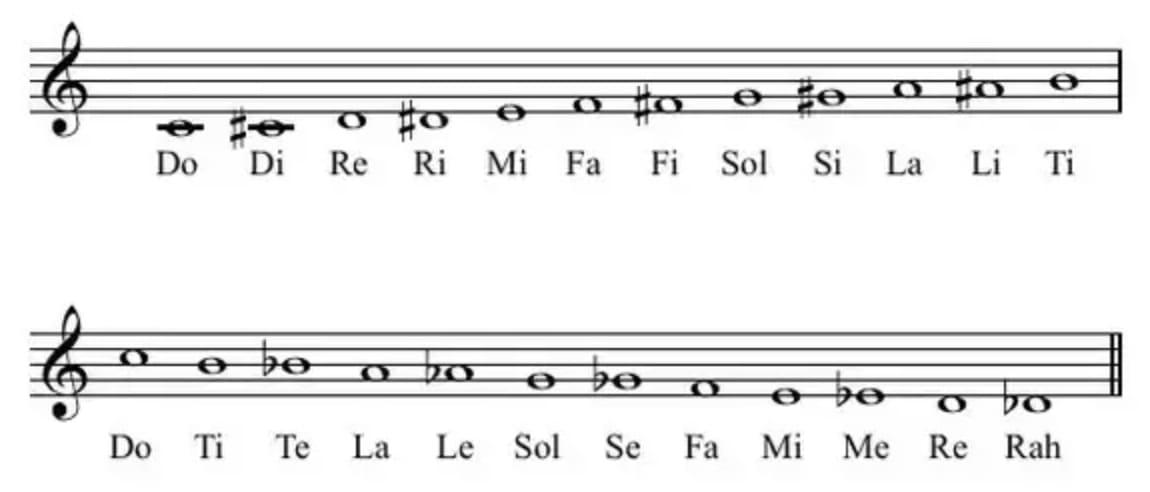
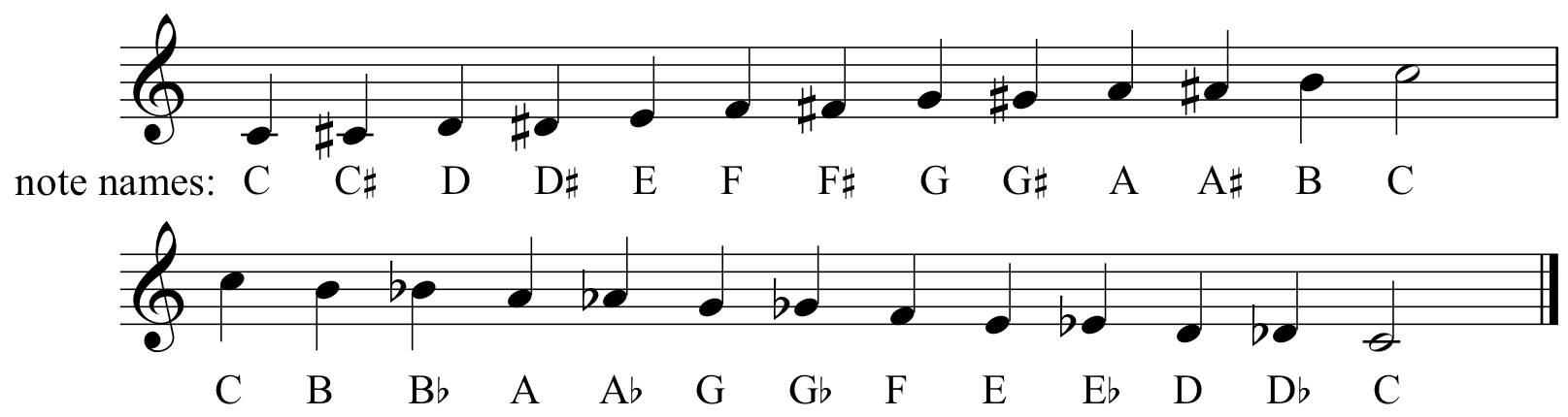
If you're a music nerd like me, you'll know that an octave (abbreviated 8ve), the fundamental musical interval, represents a doubling of vibration frequency. So if A440 is at 440Hz, then 220Hz and 880Hz are also 'A'. Our ears tend to hear this as 'the same note, only higher'.
That means the 'same' interval, an octave, corresponds to successively greater gaps in frequency. First a doubling, then a quadrupling, an octupling, and so on. Our perception, and musical notation, maps the space of frequencies logarithmically.
You'll also know [...]
---
Outline:
(01:02) Musical intervals as ratios, and Gods joke
(04:19) Harmonic series
(05:24) Combining the harmonic series with the chromatic scale: magic
(07:22) Base 10, if we really have to
(07:58) What
The original text contained 3 footnotes which were omitted from this narration.
---
First published:
April 1st, 2026
Source:
https://www.lesswrong.com/posts/BEBwcg2th5CqLawEk/orders-of-magnitude-use-semitones-not-decibels
---
Narrated by TYPE III AUDIO.
---